Discover engaging and educational Comparing Fractions Worksheets designed specifically for 8-year-olds! At Kids Academy, our carefully curated selection of printable worksheets helps young learners grasp the concept of fractions with ease. Through interactive exercises and fun visual aids, children will learn to compare and identify which fractions are greater, smaller, or equal. Our resources are perfect for reinforcing classroom lessons or providing additional practice at home. Boost your child’s confidence in math with these expertly crafted activities that make learning fractions an enjoyable adventure. Start your child's journey towards fraction mastery today!
Check out this FREE "Comparing Fractions" Trial Lesson for age 8!

Match Exactly the Same

Favorites
With answer key
Interactive
  • 8
  • Comparing Fractions
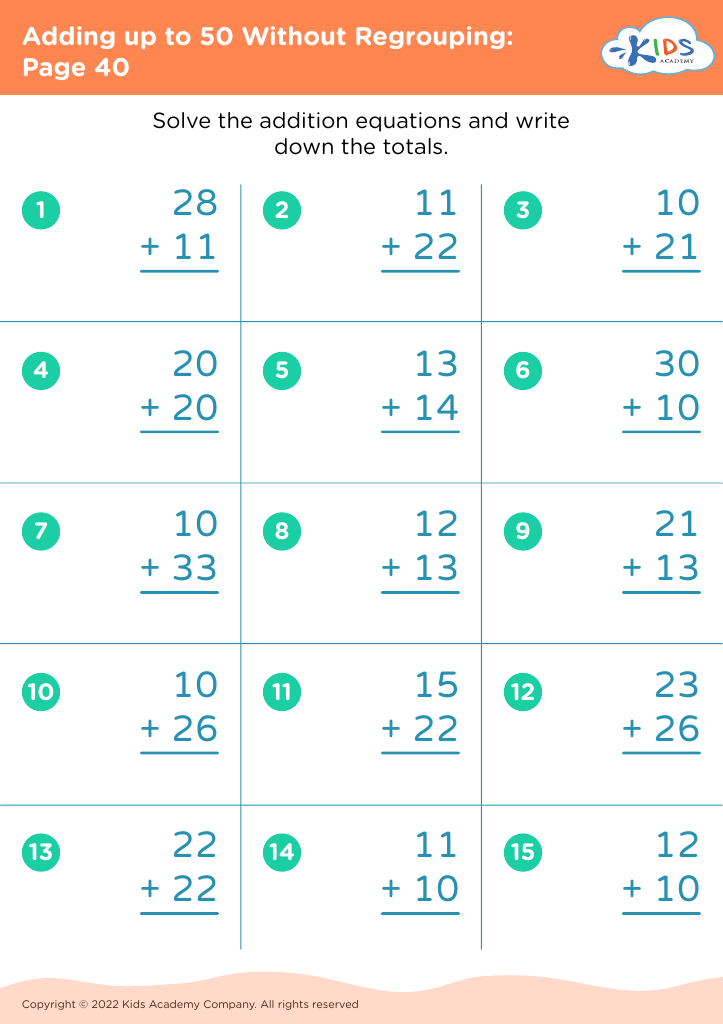
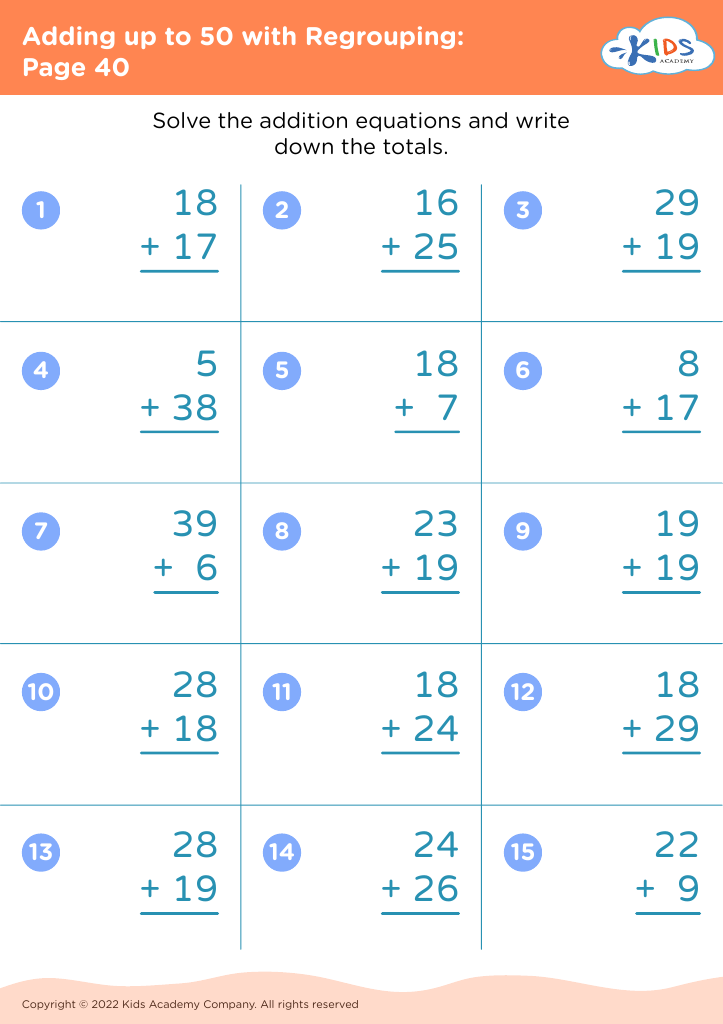
Adding up to 50 with Regrouping: Page 40
Worksheet
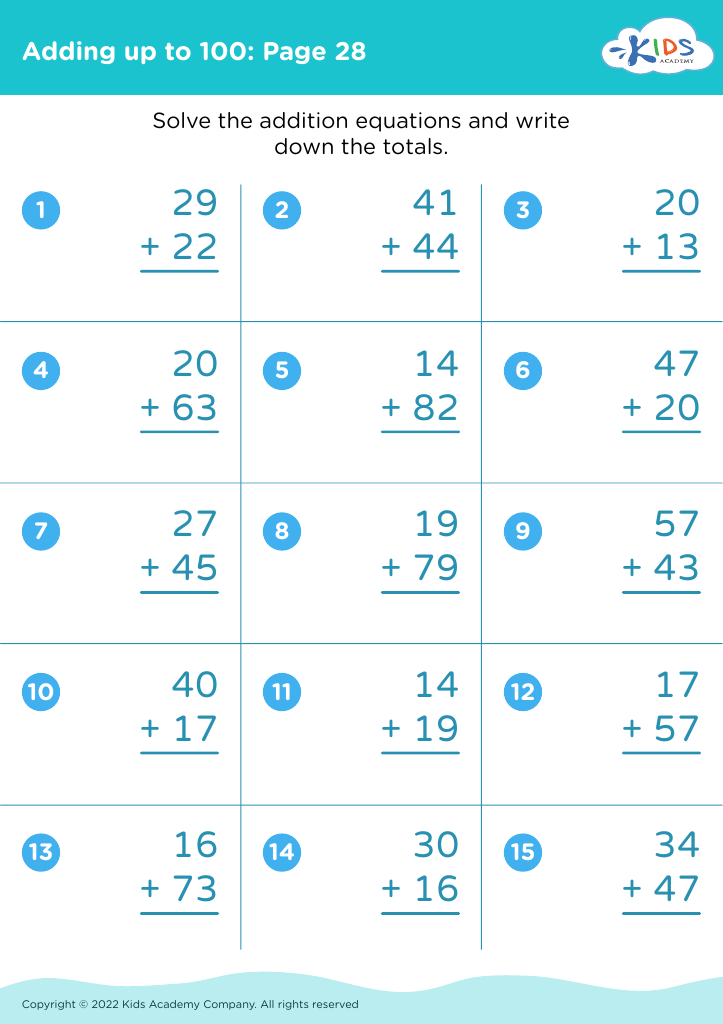
Adding up to 100: Page 28

Adding up to 100: Page 28

Adding up to 100: Page 28
Worksheet
Fractions: Assessment 1 Worksheet

Fractions: Assessment 1 Worksheet

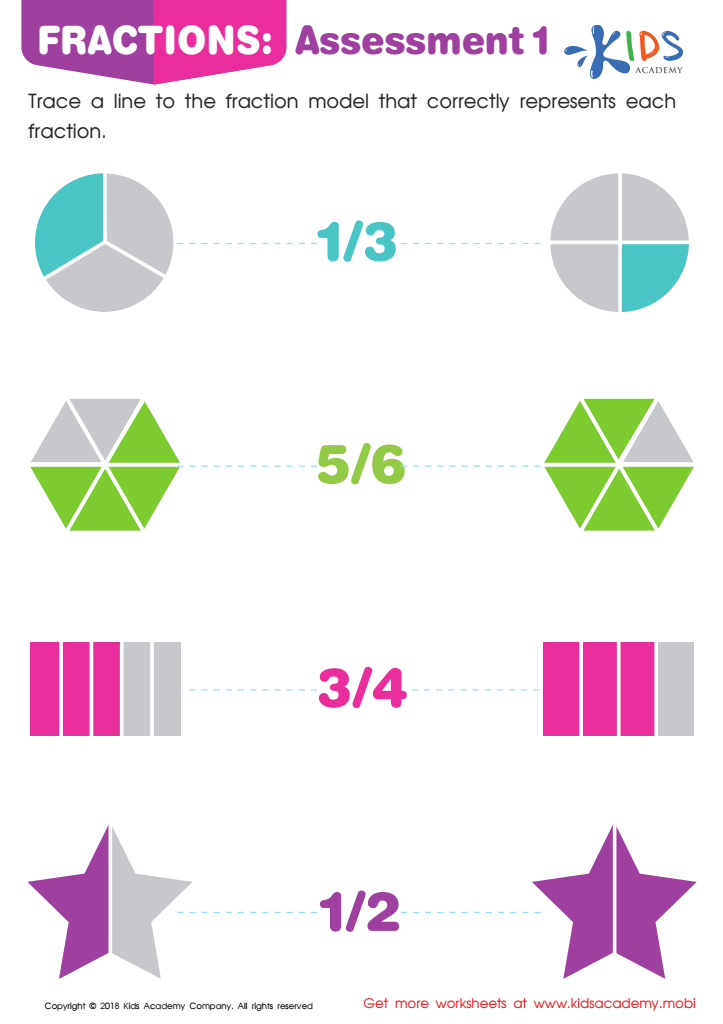
Master fractions easily with this worksheet! It has four sets of fraction models and fraction equations with two models each. Guide your kids to trace a line to the correct fraction model for each equation.
Fractions: Assessment 1 Worksheet
Worksheet
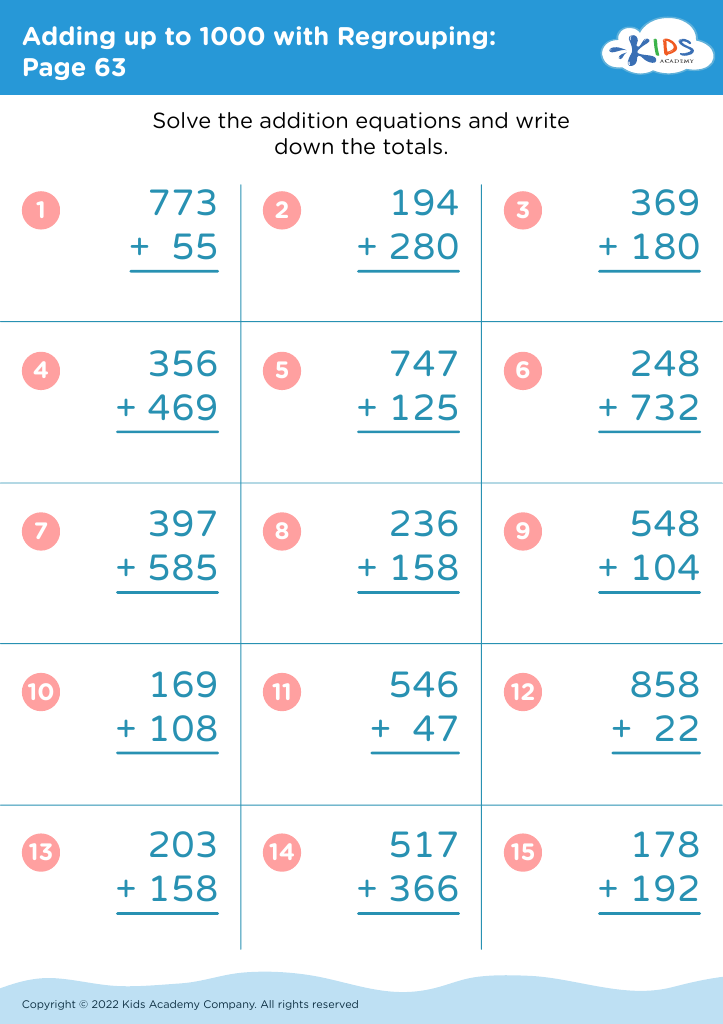
Adding up to 1000 with Regrouping: Page 63
Worksheet
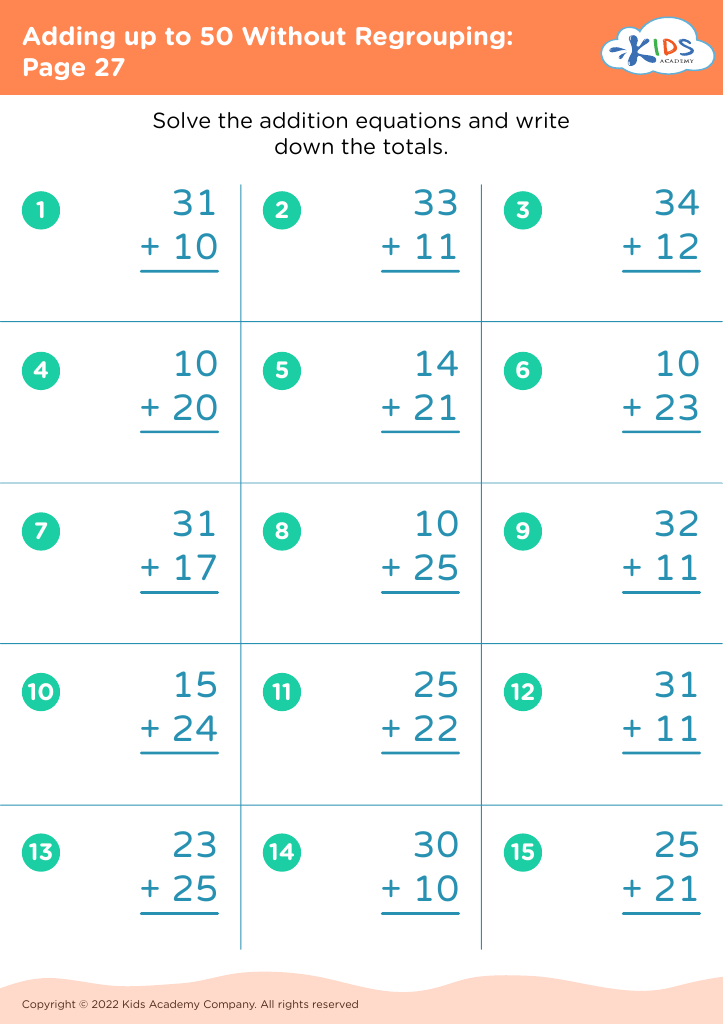
Adding up to 50 Without Regrouping: Page 27
Worksheet
Adding up to 50 Without Regrouping: Page 40
Worksheet
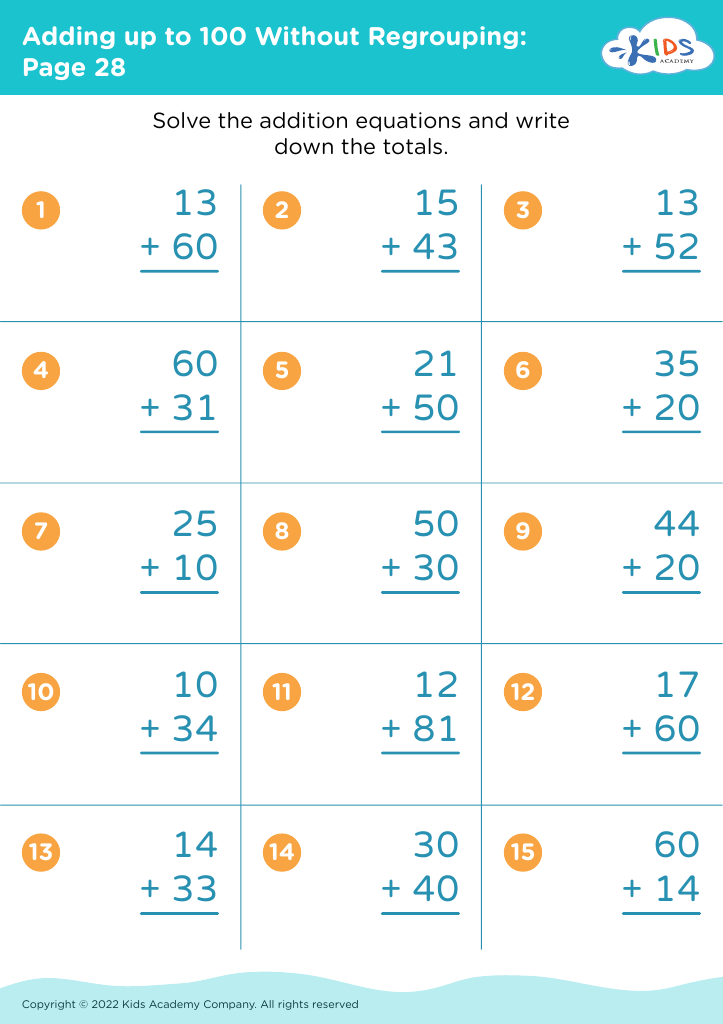
Adding up to 100 Without Regrouping: Page 28
Worksheet
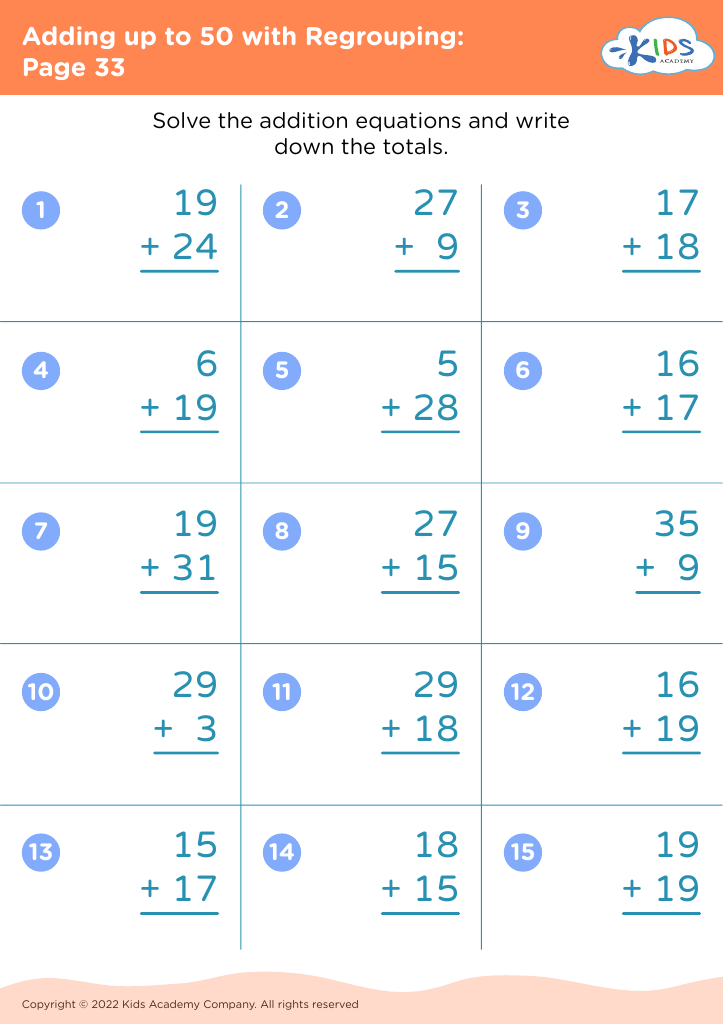
Adding up to 50 with Regrouping: Page 33
Worksheet
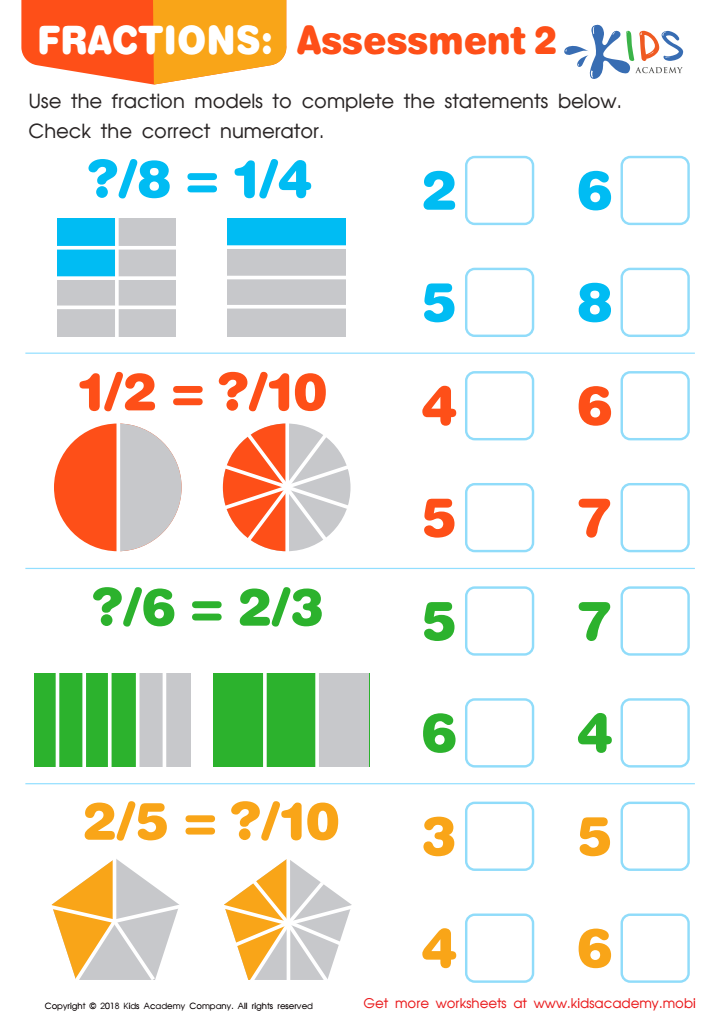
Fractions: Assessment 2 Worksheet
Fractions: Assessment 2 Worksheet

Help your kids understand fractions better with this worksheet. Ask them to complete the fraction statements using the fraction models on the left and then check the correct numerators. This can help clear up any confusion they may have with fractions and fraction models.
Fractions: Assessment 2 Worksheet
Worksheet
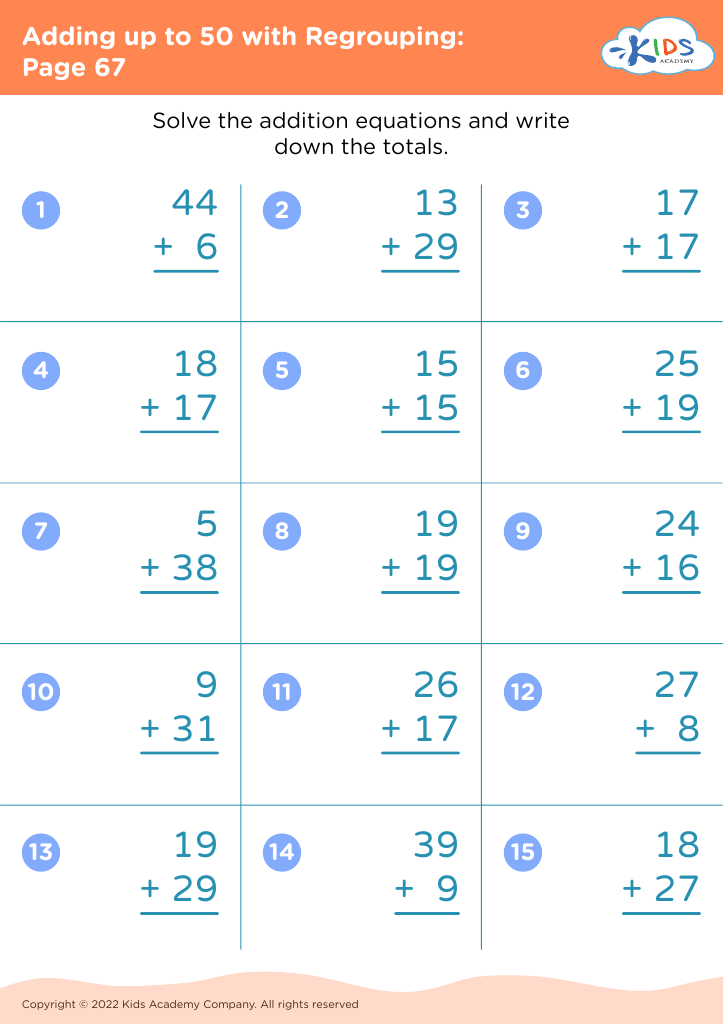
Adding up to 50 with Regrouping: Page 67
Worksheet
Tire Thirds and Fourths Worksheet
Tire Thirds and Fourths Worksheet
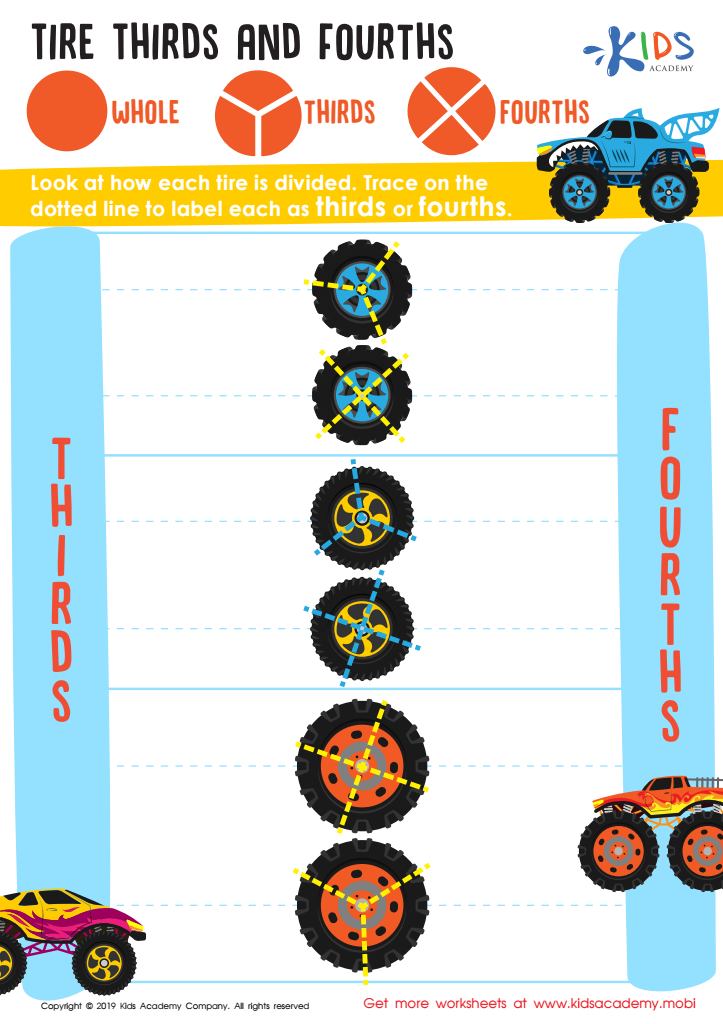
Learning geometry is key in your child's education. Have them identify and name shapes cut into 2, 3 and 4 parts. Test their knowledge with this worksheet - trace the dotted line to label each as third or fourth. Encourage them to keep learning!
Tire Thirds and Fourths Worksheet
Worksheet
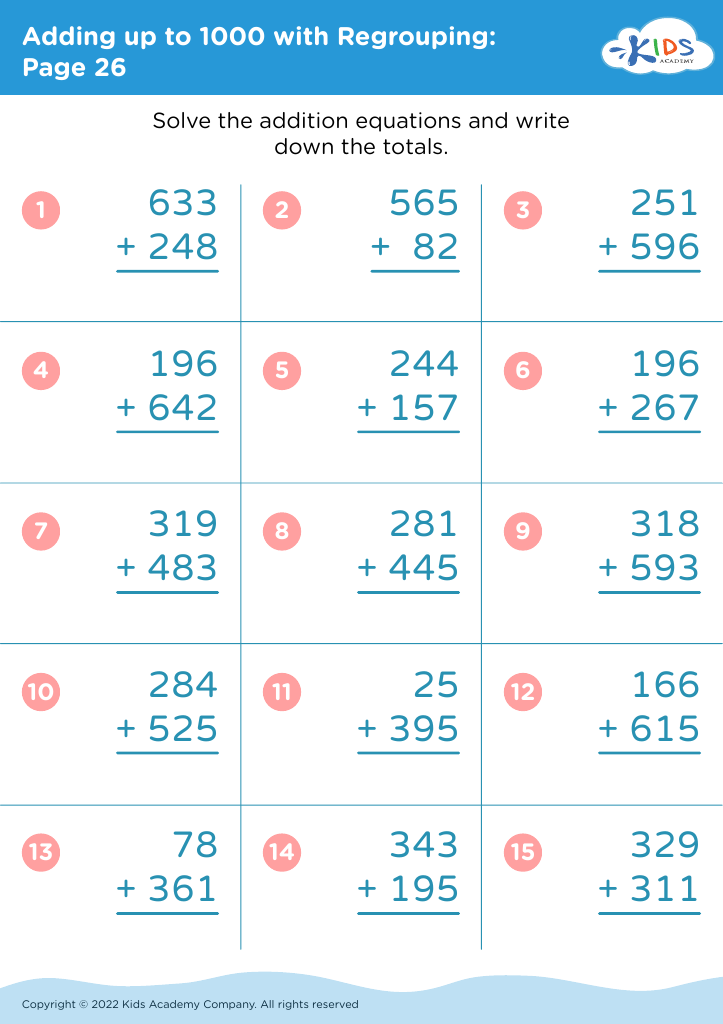
Adding up to 1000 with Regrouping: Page 26
Worksheet
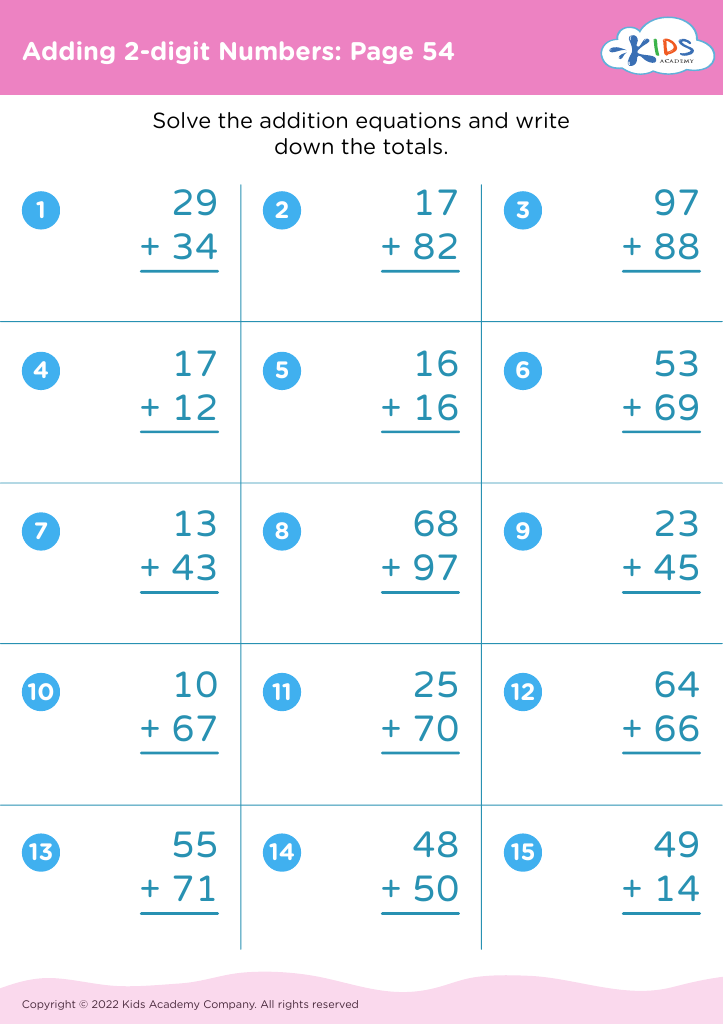
Adding 2-digit Numbers: Page 54

Adding 2-digit Numbers: Page 54

Adding 2-digit Numbers: Page 54
Worksheet
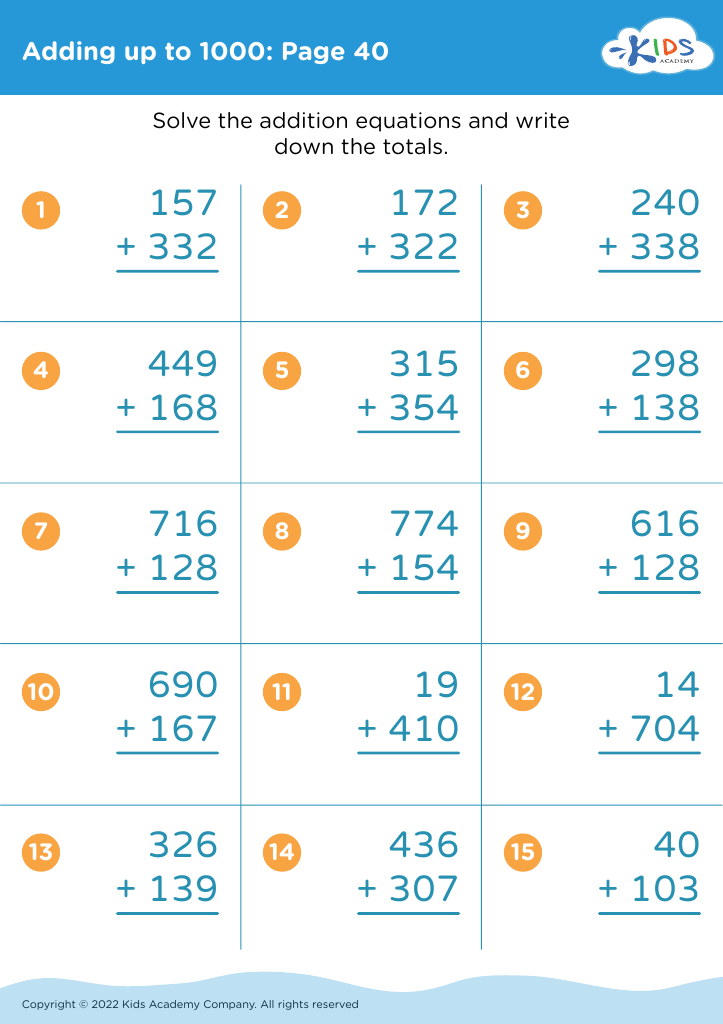
Adding up to 1000: Page 40

Adding up to 1000: Page 40

Adding up to 1000: Page 40
Worksheet
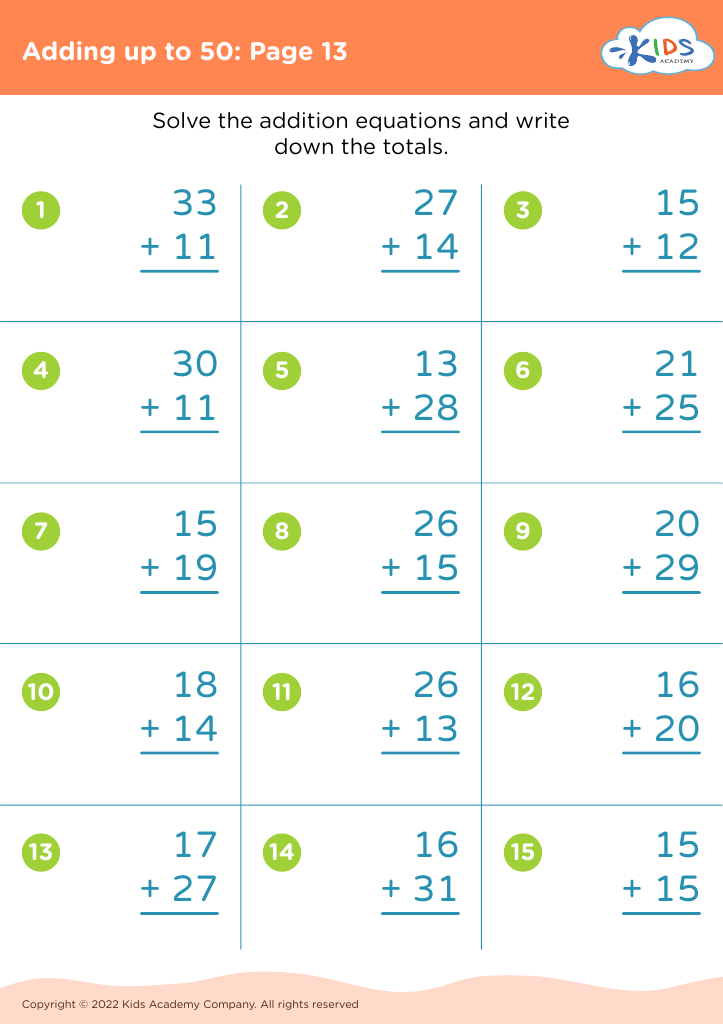
Adding up to 50: Page 13

Adding up to 50: Page 13

Adding up to 50: Page 13
Worksheet
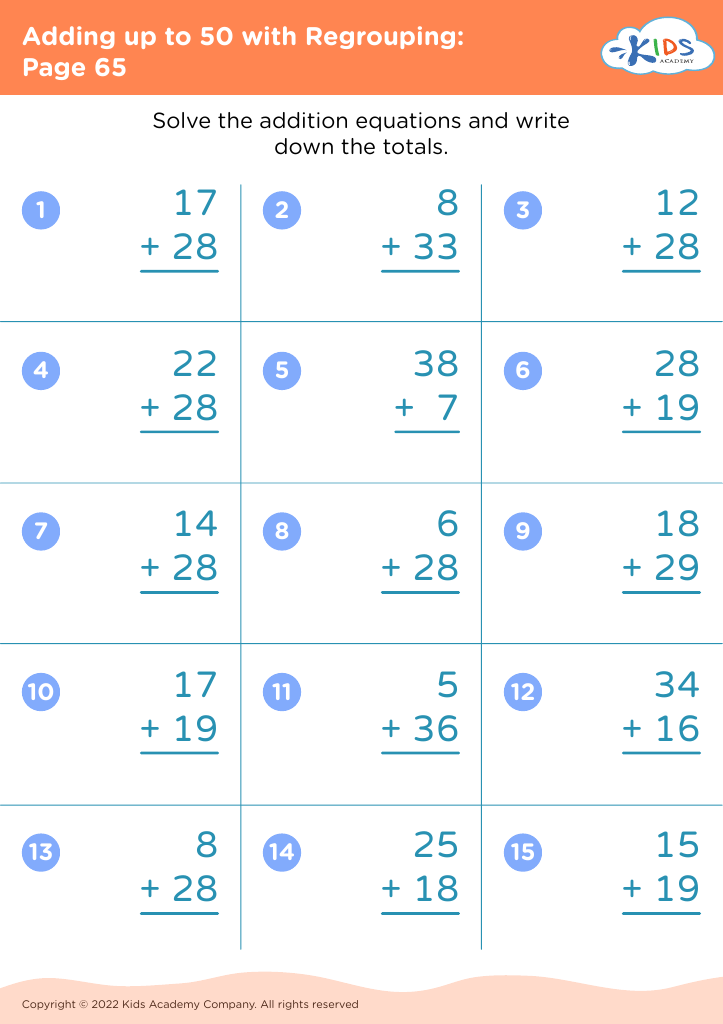
Adding up to 50 with Regrouping: Page 65
Worksheet
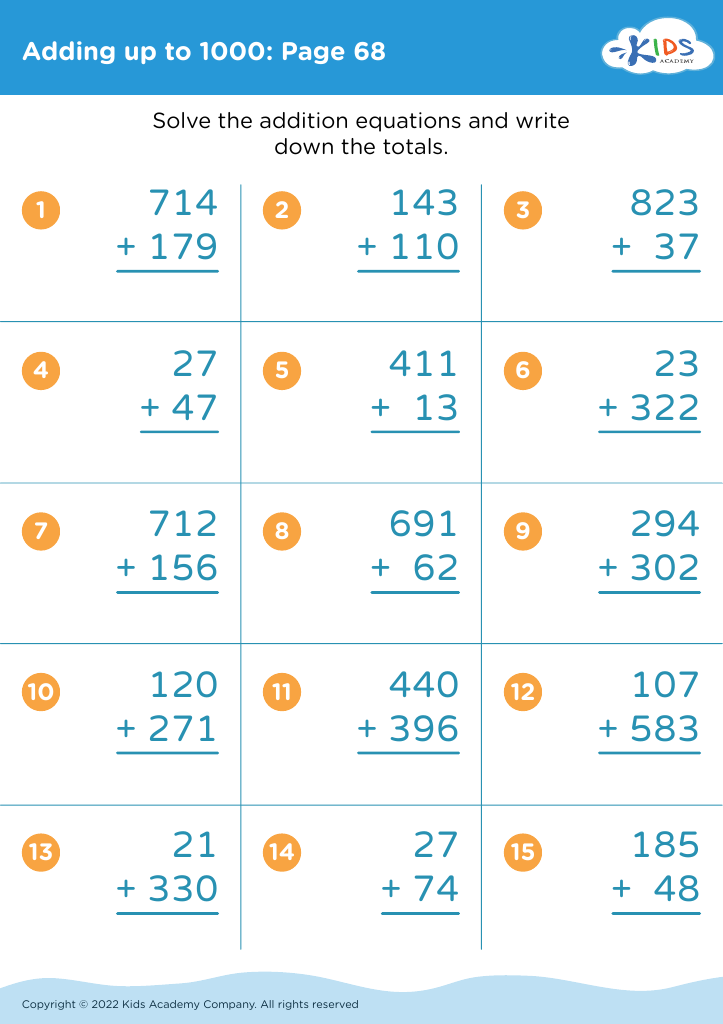
Adding up to 1000: Page 68

Adding up to 1000: Page 68

Adding up to 1000: Page 68
Worksheet
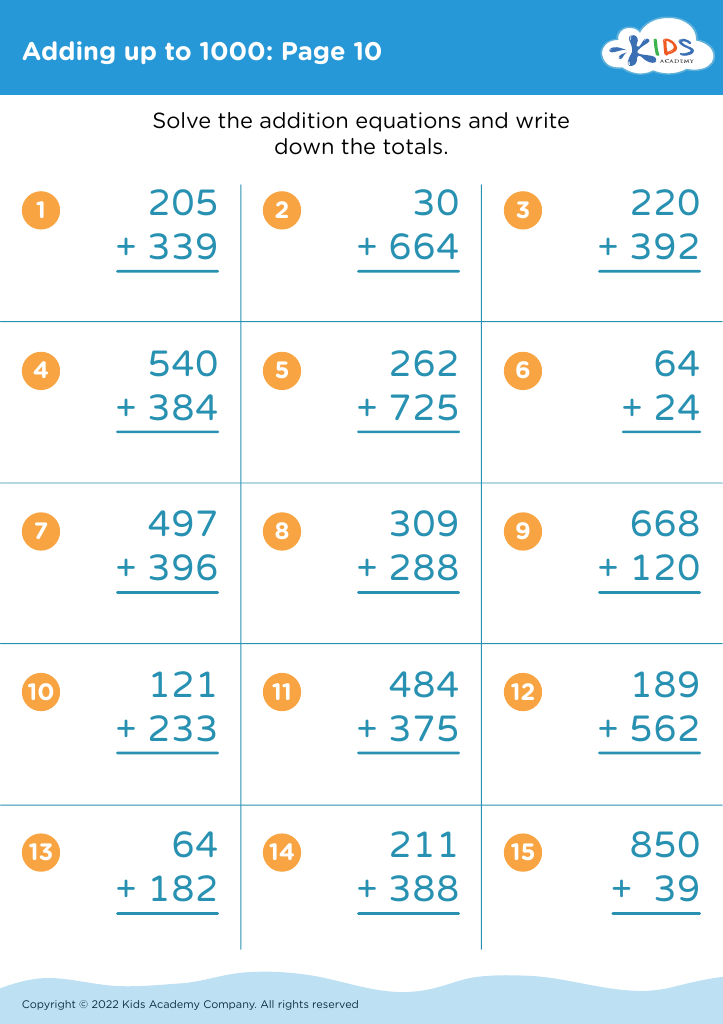
Adding up to 1000: Page 10

Adding up to 1000: Page 10

Adding up to 1000: Page 10
Worksheet
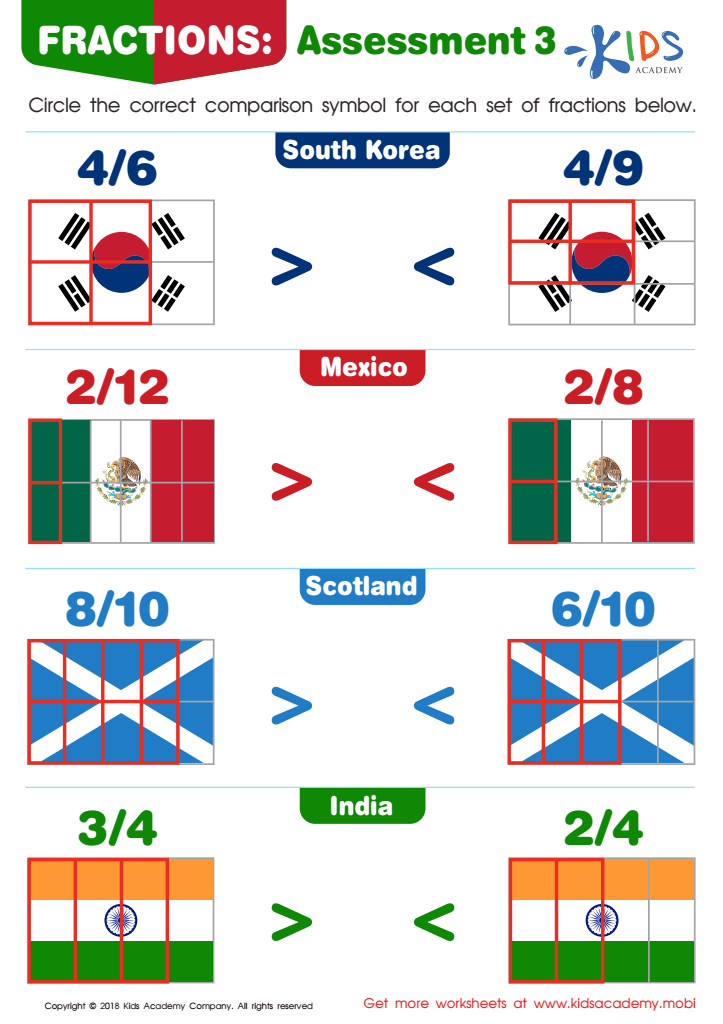
Fractions: Assessment 3 Worksheet
Fractions: Assessment 3 Worksheet
This worksheet helps teach kids about fractions and introduces them to countries and their flags. Have them read the country names and point to the flags. Then help them assess the fractions, and ask them to circle the symbol that shows their values.
Fractions: Assessment 3 Worksheet
Worksheet
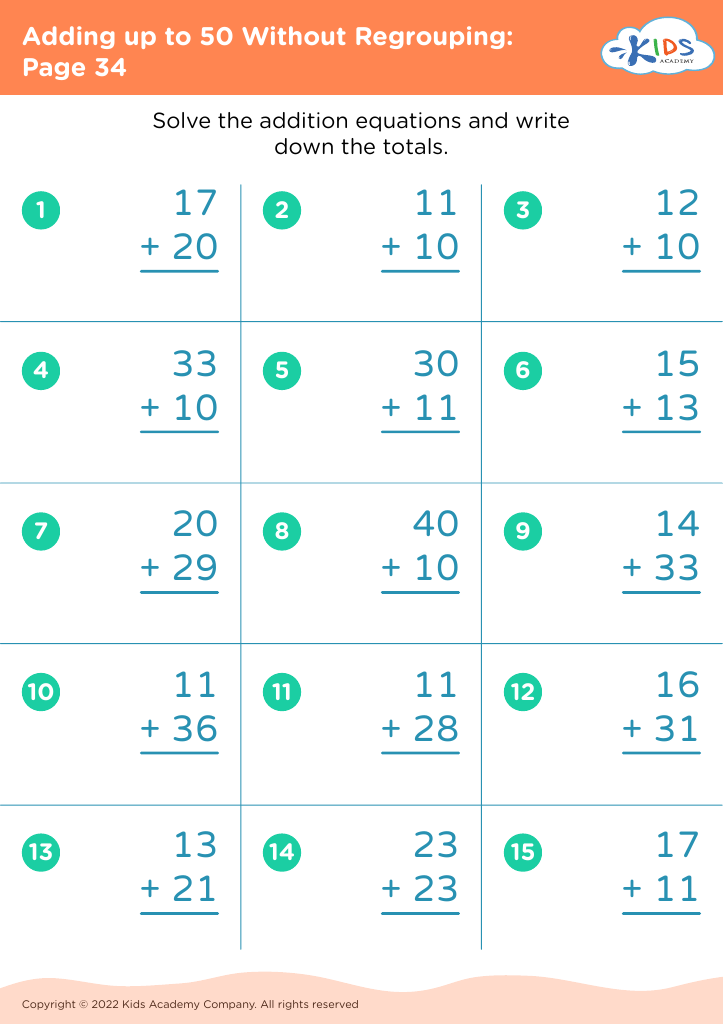
Adding up to 50 Without Regrouping: Page 34
Worksheet
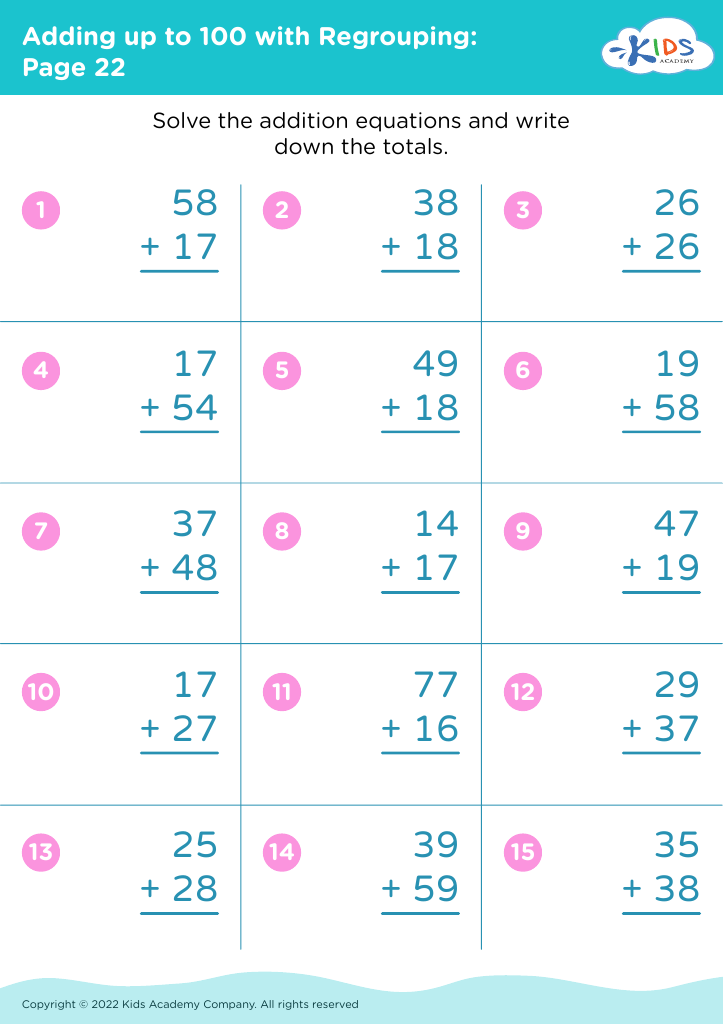
Adding up to 100 with Regrouping: Page 22
Worksheet
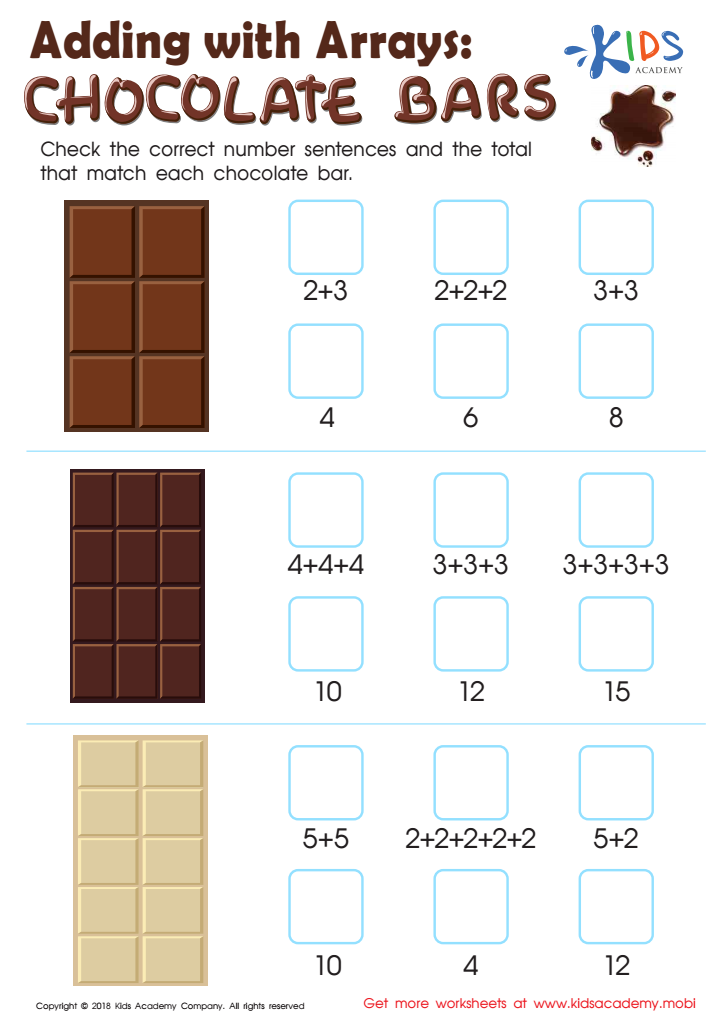
Adding with Arrays: Chocolate Bars Worksheet
Adding with Arrays: Chocolate Bars Worksheet

Kids love chocolates! Gauge how enthused your kids get when you mention them. This worksheet is a fun exercise about chocolates - get your kids to check the correct number sentences and totals for each chocolate bar. Reward their hard work with some chocolates - extra incentive for a job well done!
Adding with Arrays: Chocolate Bars Worksheet

Worksheet
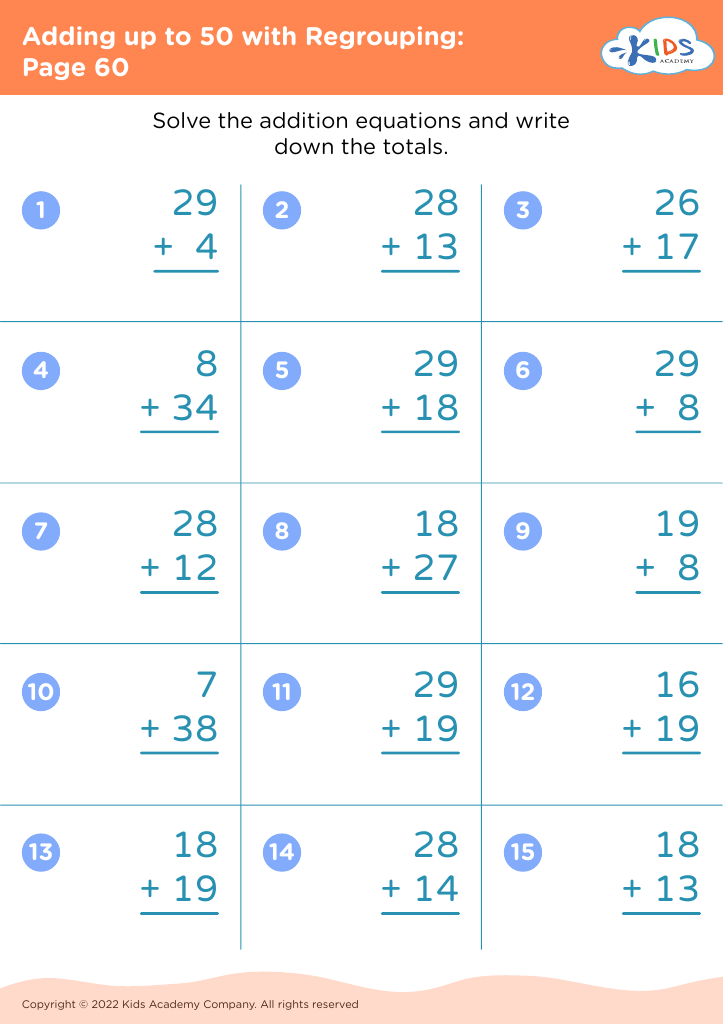
Adding up to 50 with Regrouping: Page 60
Worksheet
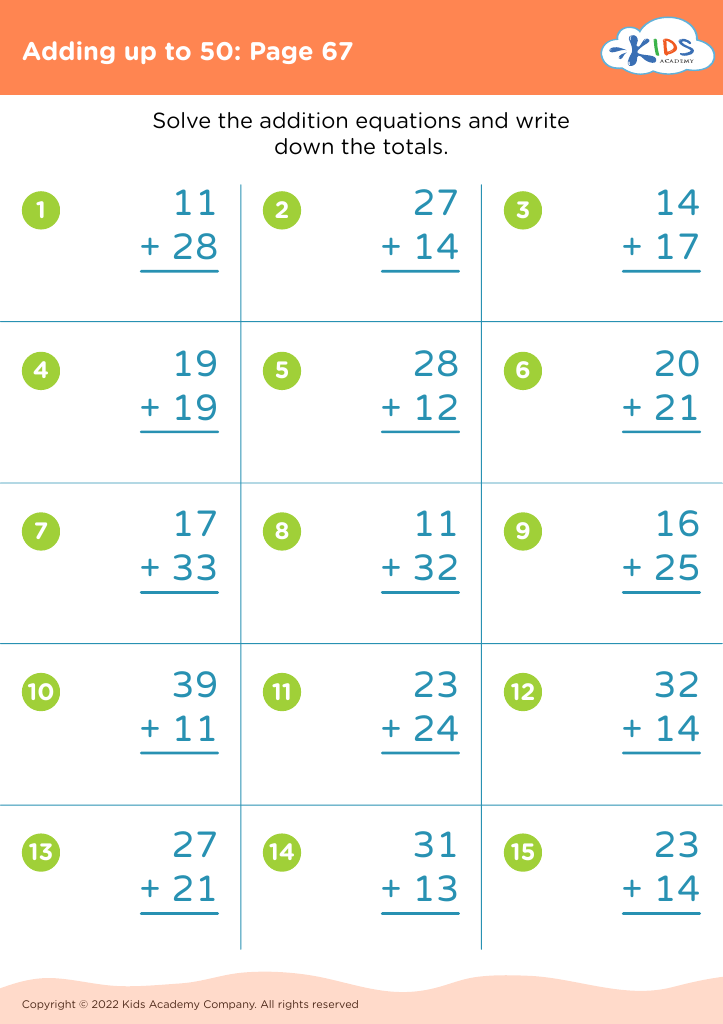
Adding up to 50: Page 67

Adding up to 50: Page 67

Adding up to 50: Page 67
Worksheet


Understanding fractions is a foundational math skill that children need to master early on, making it essential for parents and teachers to emphasize comparing fractions for 8-year-old students. At this age, children are transitioning from basic arithmetic to more complex mathematical concepts. Comparing fractions helps them grasp the idea of relative value and proportion, which is crucial for advanced topics such as algebra, geometry, and data interpretation.

First, comparing fractions enhances problem-solving and critical-thinking skills. It encourages children to think analytically about numbers, improving their ability to make mathematical connections. When students practice comparing fractions, they refine their thinking and logical reasoning, preparing them for tasks that require strategic thought.

Second, fractions are everywhere in real-life situations—cooking, dividing objects, or comparing distances. By understanding fractions early, children can better navigate these practical applications, making them more adept in everyday activities.

Finally, early mastery of fractions and their comparisons reduces math anxiety as children progress through school. When students build a strong mathematical foundation and gain confidence in their abilities, they are more likely to enjoy and excel in math. Therefore, parents and teachers should care deeply about teaching fractions to ensure successful, enjoyable, and fear-free learning experiences for 8-year-olds.