Mental math improvement Worksheets for 8-Year-Olds
7 filtered results
-
From - To
Boost your 8-year-old's math skills with our engaging Mental Math Improvement Worksheets! Designed specifically for young learners, these worksheets help children practice essential math concepts, enhance problem-solving abilities, and improve computational speed. With a variety of exercises that incorporate addition, subtraction, multiplication, and division, your child will build confidence in their math skills while having fun. Our printable resources offer clear instructions and appealing visuals to keep young minds motivated. Perfect for homeschooling, supplementary classroom activities, or extra practice at home, these worksheets are an invaluable tool in supporting your child's mathematical learning journey. Unlock their potential today!
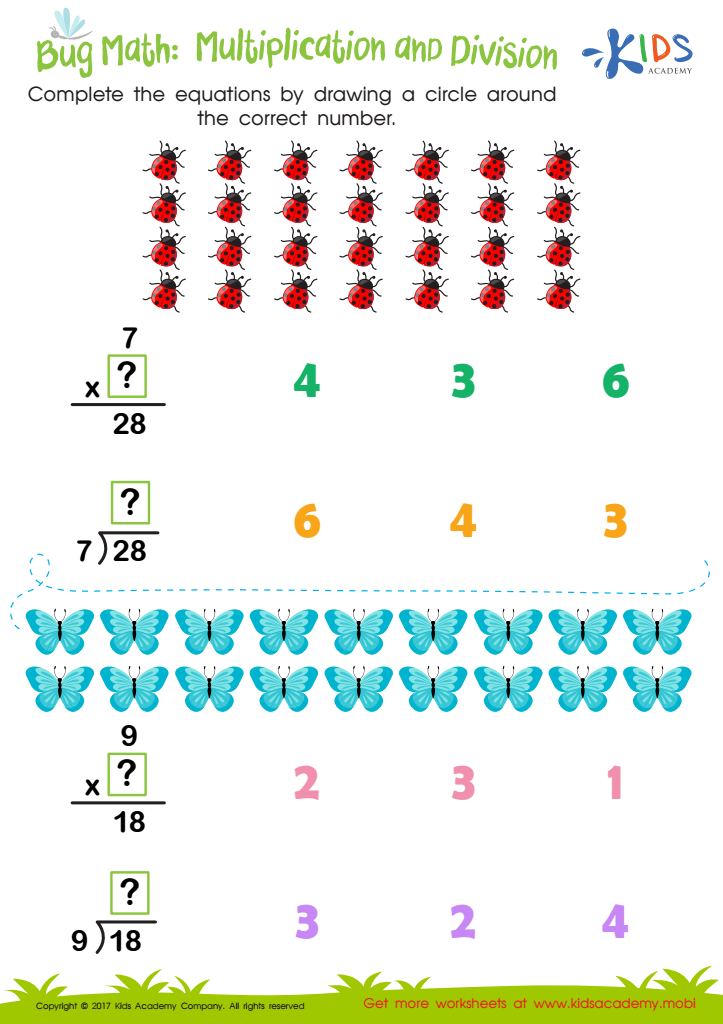
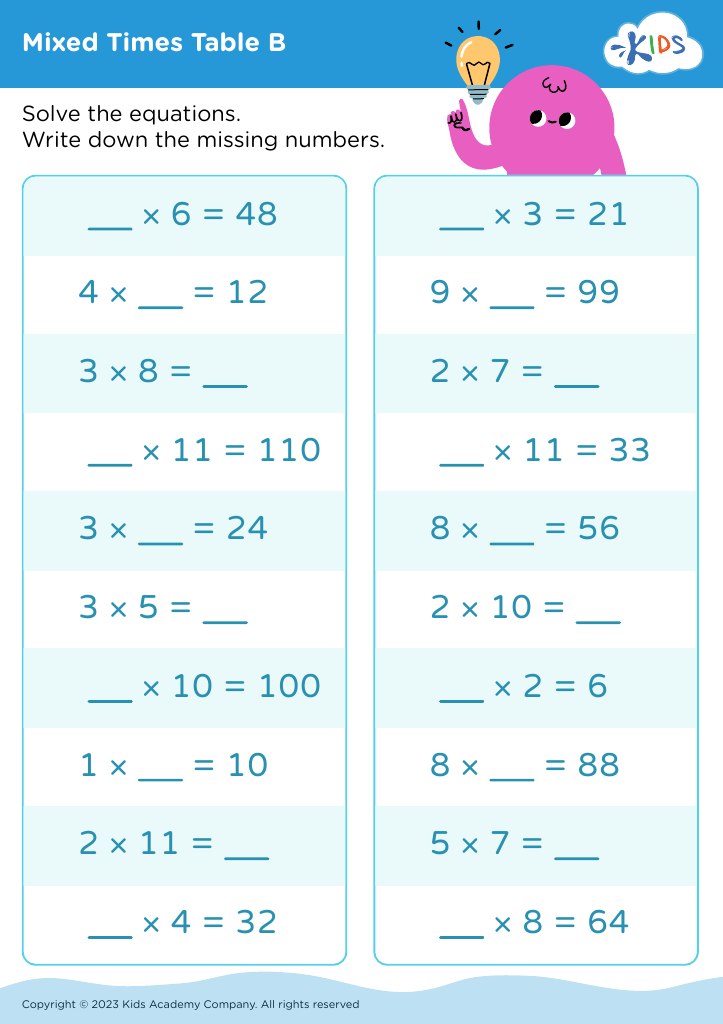
Multiplication and Division Worksheet
 Assign to My Students
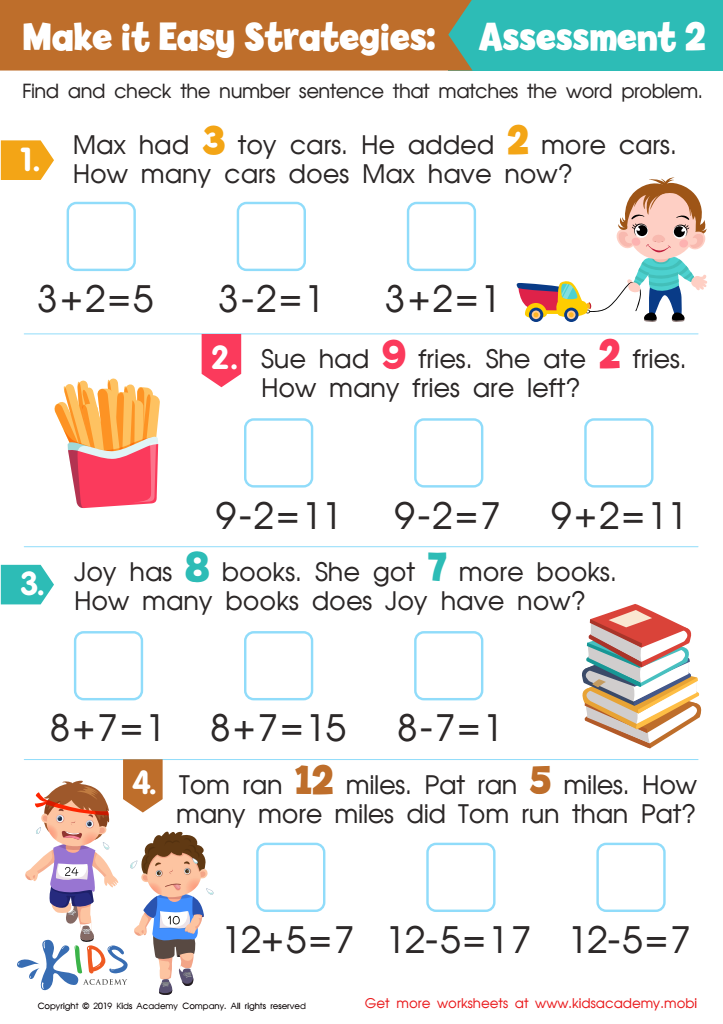
Make it Easy Strategies: Assessment 2 Worksheet
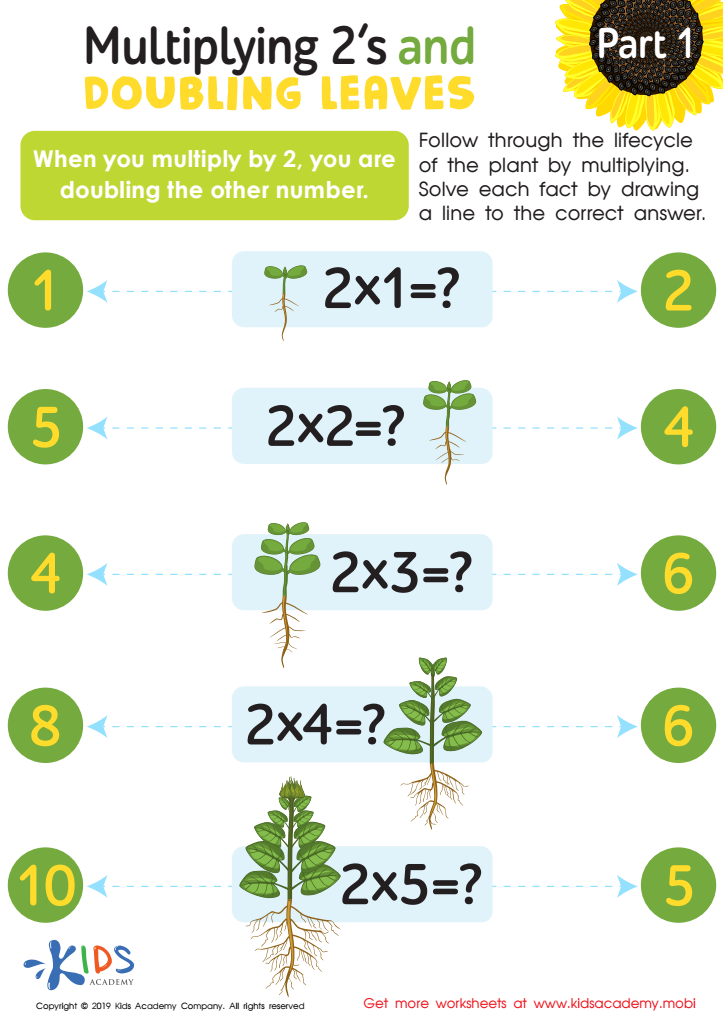
Multiplying 2’s and Doubling Leaves Part 1 Worksheet
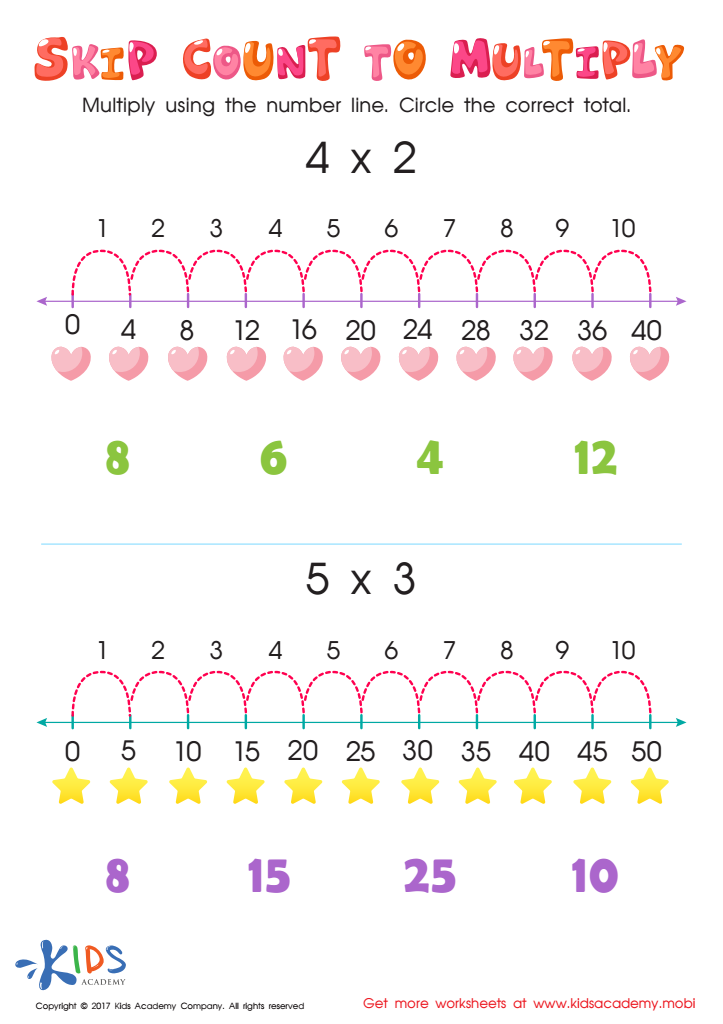
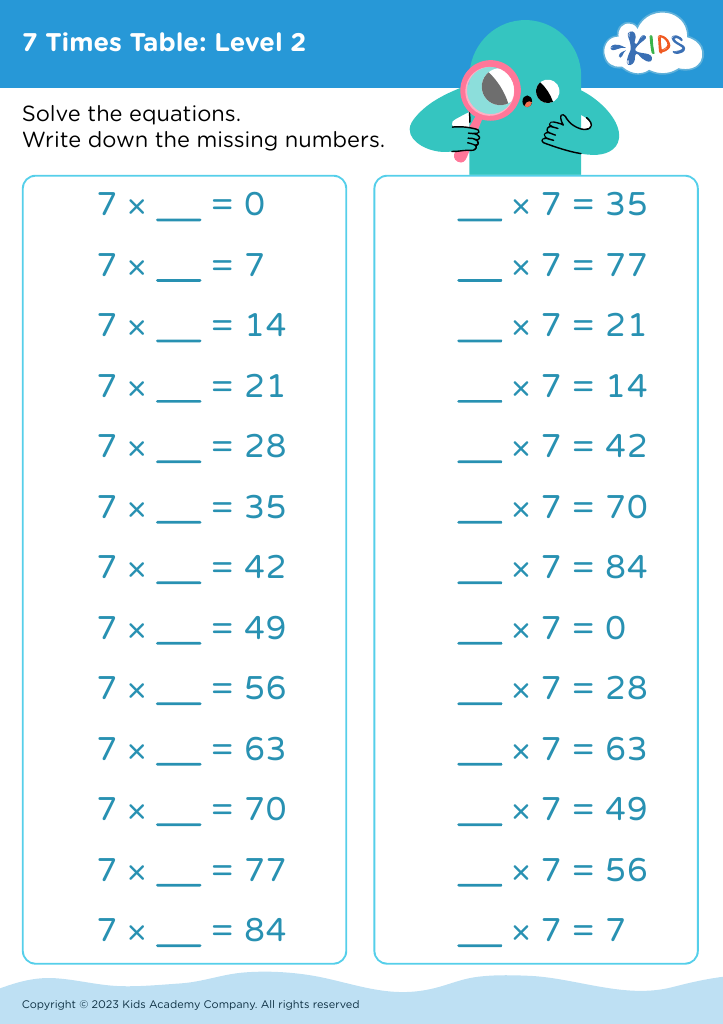
Skip Count Multiplication Worksheet








Mental math skills are crucial for 8-year-olds as they lay the foundation for future mathematical understanding and problem-solving abilities. At this age, children are developing cognitive skills that will support their academic growth, and enhancing their mental math can significantly boost their confidence and interest in mathematics.
Improved mental math skills encourage children to explore numbers, recognize patterns, and effectively manipulate mathematical concepts without relying solely on calculators or paper methods. This independence not only sharpens their calculation abilities but also fosters critical thinking skills necessary for tackling more complex mathematical problems in later grades.
Furthermore, being proficient in mental math has practical applications in everyday situations, such as budgeting allowance, estimating expenses, and understanding time and measurements. These skills improve decision-making and problem-solving capabilities outside the classroom.
For both parents and teachers, fostering a supportive environment that emphasizes mental math helps children develop a positive attitude toward math, reducing anxiety associated with the subject. Encouraging regular practice, through games or daily challenges, can make learning enjoyable, establishing a solid foundation that influences a child's lifelong relationship with mathematics. Ultimately, prioritizing mental math improvement equips children with essential life skills and prepares them for academic success.








