Understanding biodiversity Worksheets for 8-Year-Olds
4 filtered results
-
From - To
Discover our engaging "Understanding Biodiversity Worksheets" designed specifically for 8-year-olds! These interactive worksheets introduce young learners to the fascinating world of biodiversity, helping them explore various species, habitats, and ecosystems. Through fun exercises and activities, children will develop a deeper understanding of the importance of biodiversity in our environment. Each worksheet is tailored to encourage critical thinking, enhance observation skills, and foster a love for nature. Ideal for both classroom and at-home learning, these resources make the study of biodiversity enjoyable and accessible. Empower your child with knowledge and appreciation for the diverse life forms that share our planet!
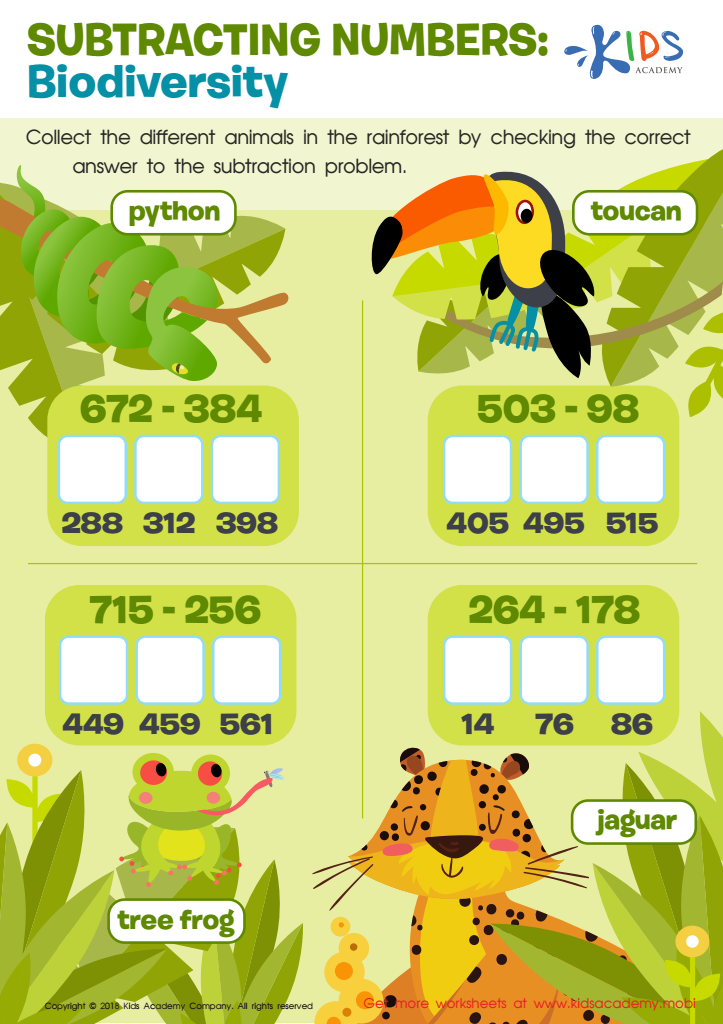
Subtracting Numbers: Biodiversity Worksheet
 Assign to My Students
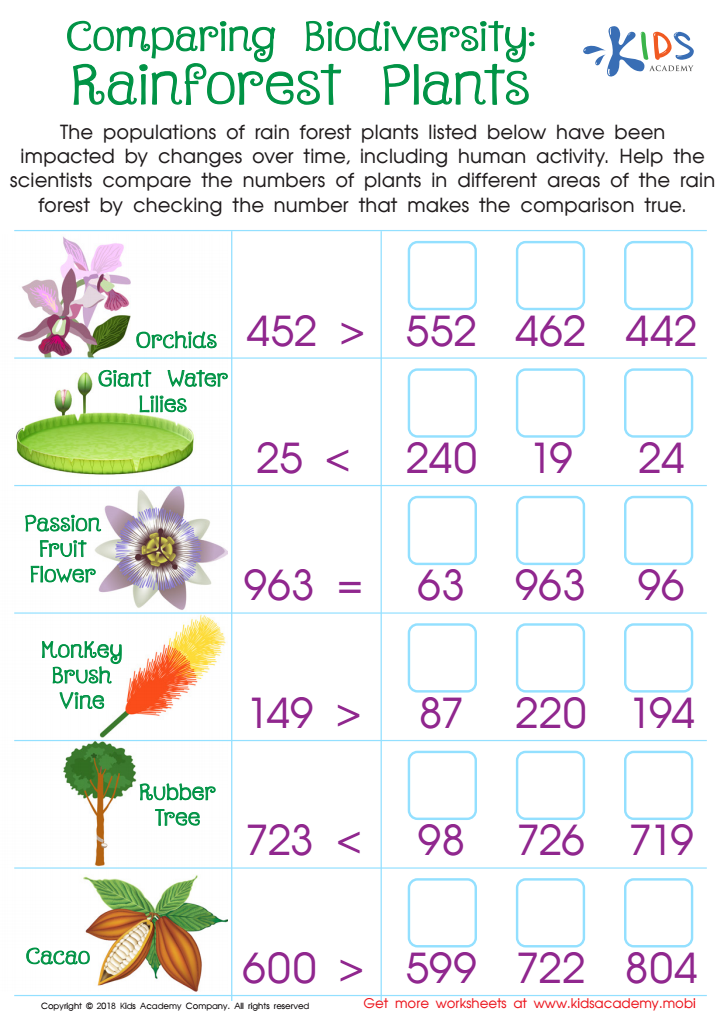
Comparing Biodiversity: Rainforest Plants Worksheet
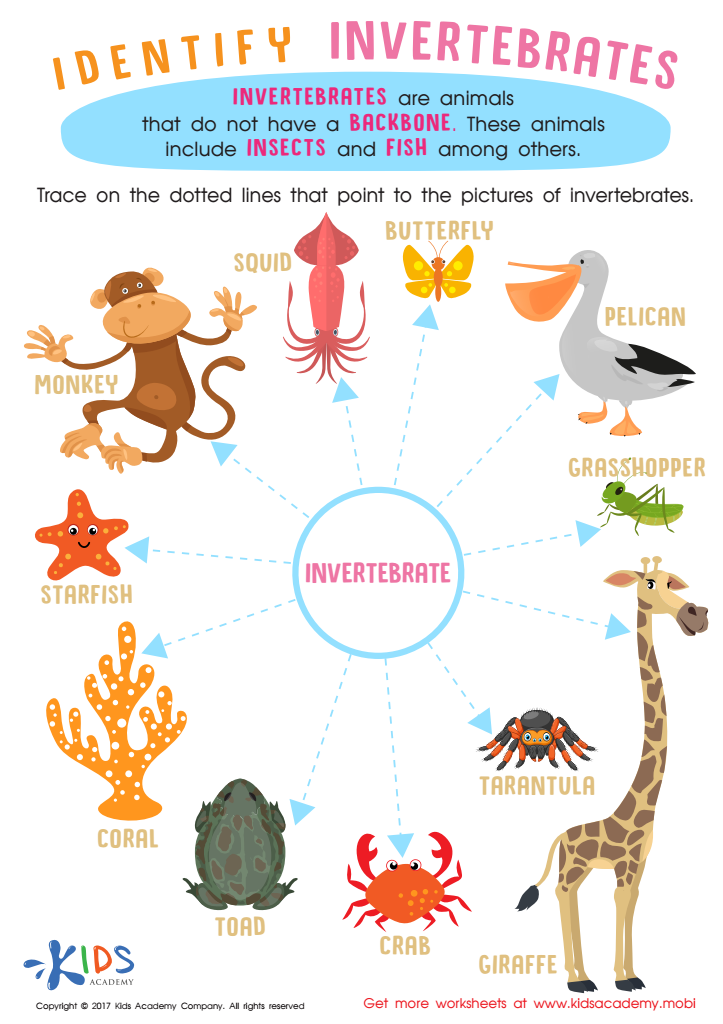
Invertebrates Worksheet for Grade 3
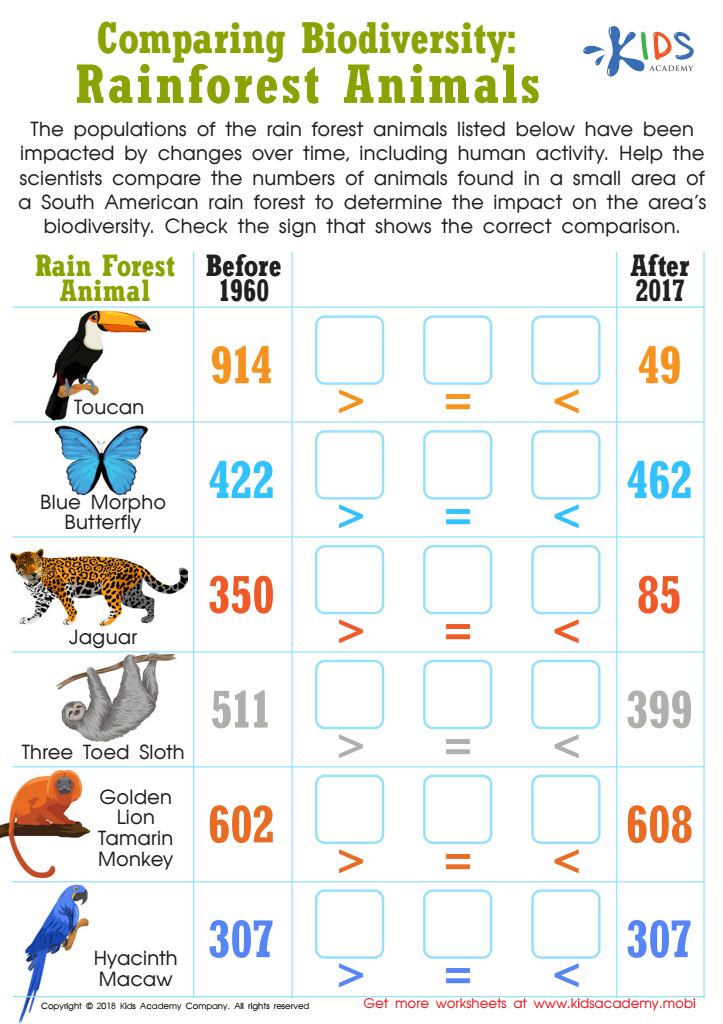
Comparing Biodiversity: Rainforest Animals Worksheet






Understanding biodiversity is essential for 8-year-olds because it lays the foundation for their appreciation of nature and the environment. At this age, children's curiosity is high, and learning about the variety of life on Earth can spark lasting interest in science and conservation. Biodiversity is not just about plants and animals; it illustrates how all living things are interconnected, highlighting the importance of every species in maintaining ecosystem balance.
Parents and teachers should care about nurturing this understanding because it cultivates environmental stewardship. When children grasp the significance of protecting different species and habitats, they develop empathy and responsibility towards the planet. This awareness can motivate them to participate in local conservation efforts, fostering a sense of agency and contribution.
Additionally, comprehending biodiversity supports critical thinking skills. It encourages young learners to observe, ask questions, and seek solutions concerning environmental issues they encounter. As future adults, these children will face challenges like climate change and habitat loss. By instilling a strong understanding of biodiversity now, we equip them with the knowledge and mindset necessary to take informed actions toward a sustainable future. Ultimately, educating children about the rich tapestry of life around them creates informed, caring citizens.








