Check out this FREE "Understanding fractions" Trial Lesson for age 8!

Exactly the Same, or Not

Favorites
With answer key
Interactive
  • 8
  • Understanding fractions
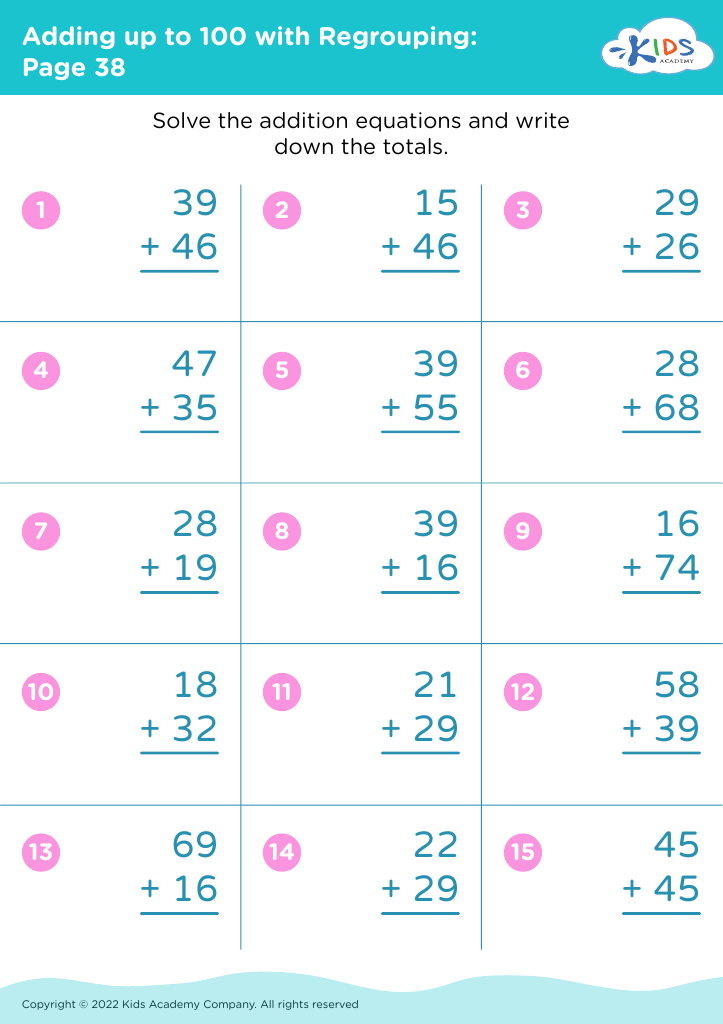
Adding up to 100 with Regrouping: Page 38
Worksheet
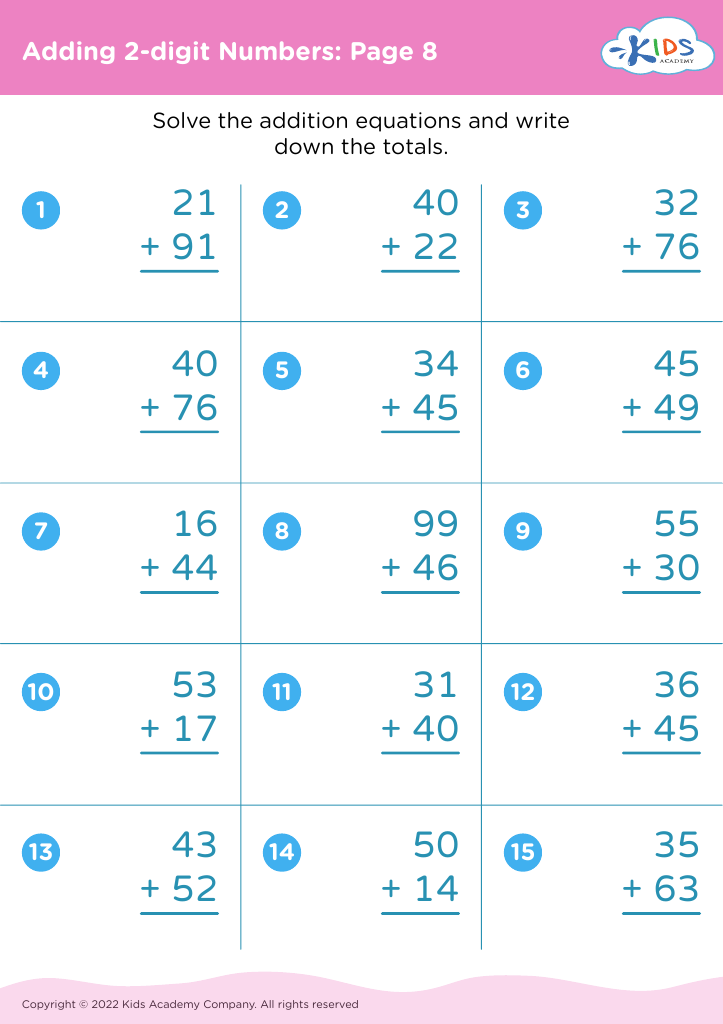
Adding 2-digit Numbers: Page 8

Adding 2-digit Numbers: Page 8

Adding 2-digit Numbers: Page 8
Worksheet
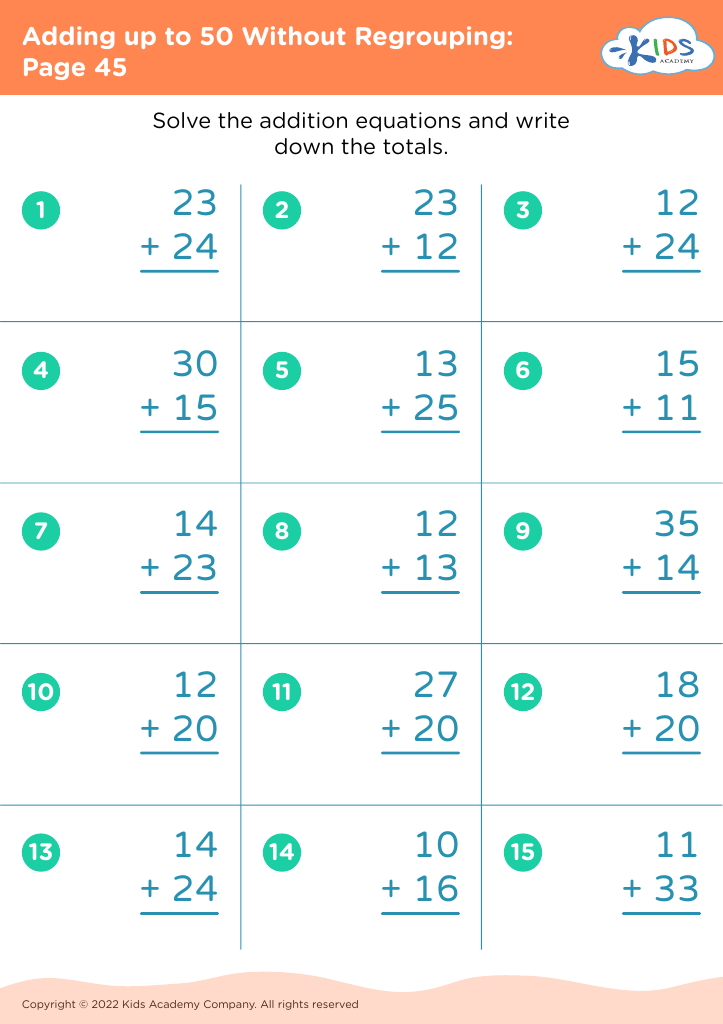
Adding up to 50 Without Regrouping: Page 45
Worksheet
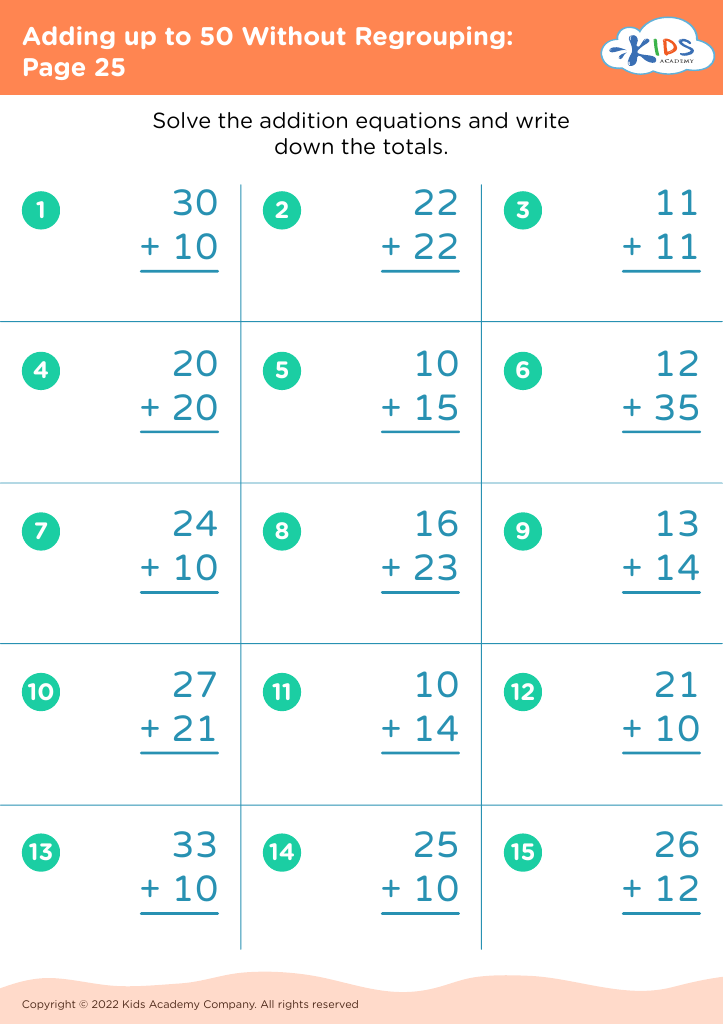
Adding up to 50 Without Regrouping: Page 25
Worksheet
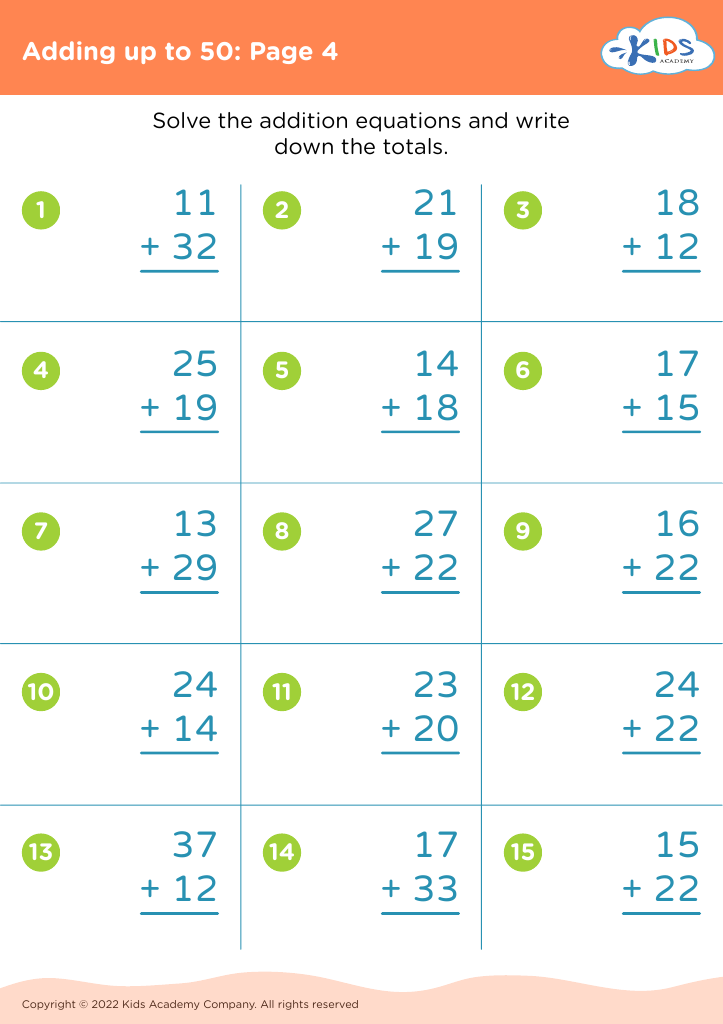
Adding up to 50: Page 4

Adding up to 50: Page 4

Adding up to 50: Page 4
Worksheet
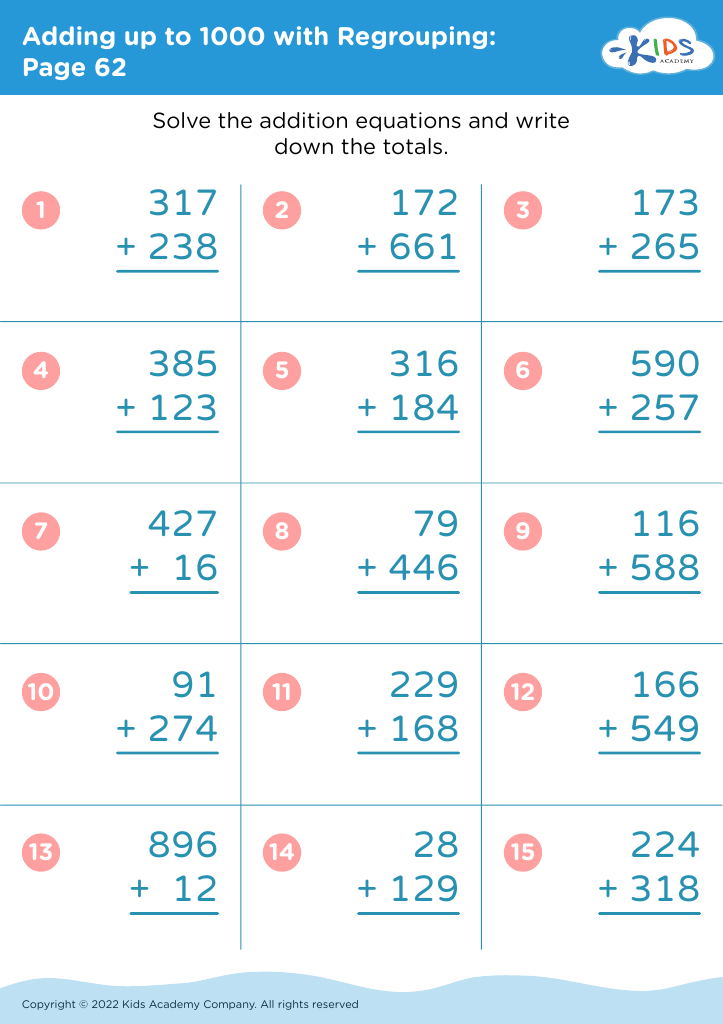
Adding up to 1000 with Regrouping: Page 62
Worksheet
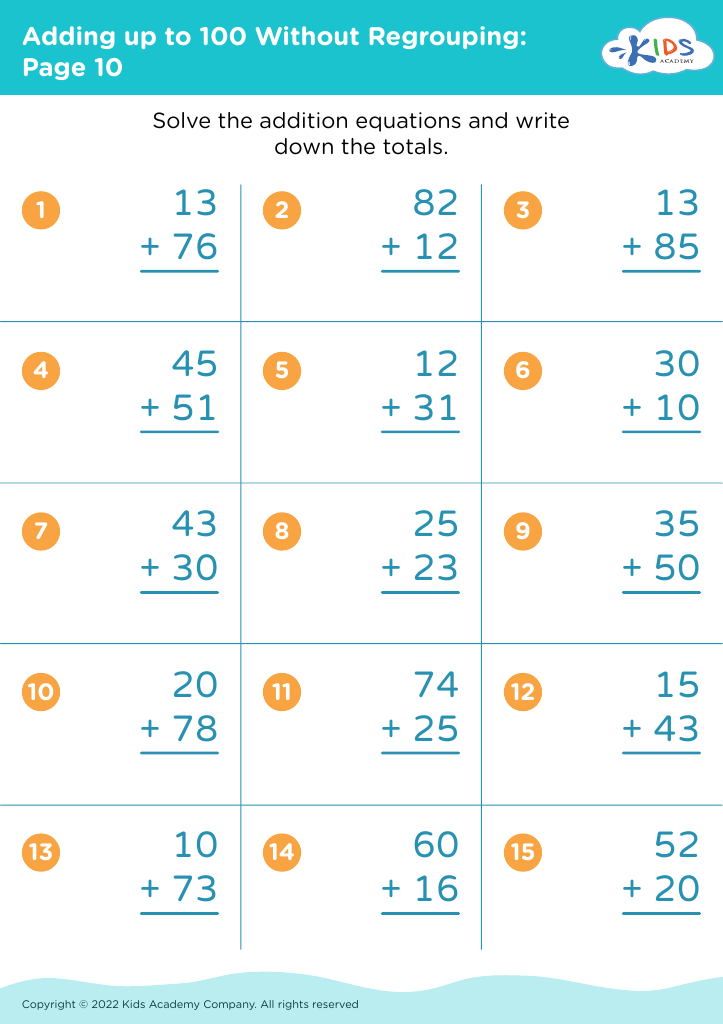
Adding up to 100 Without Regrouping: Page 10
Worksheet
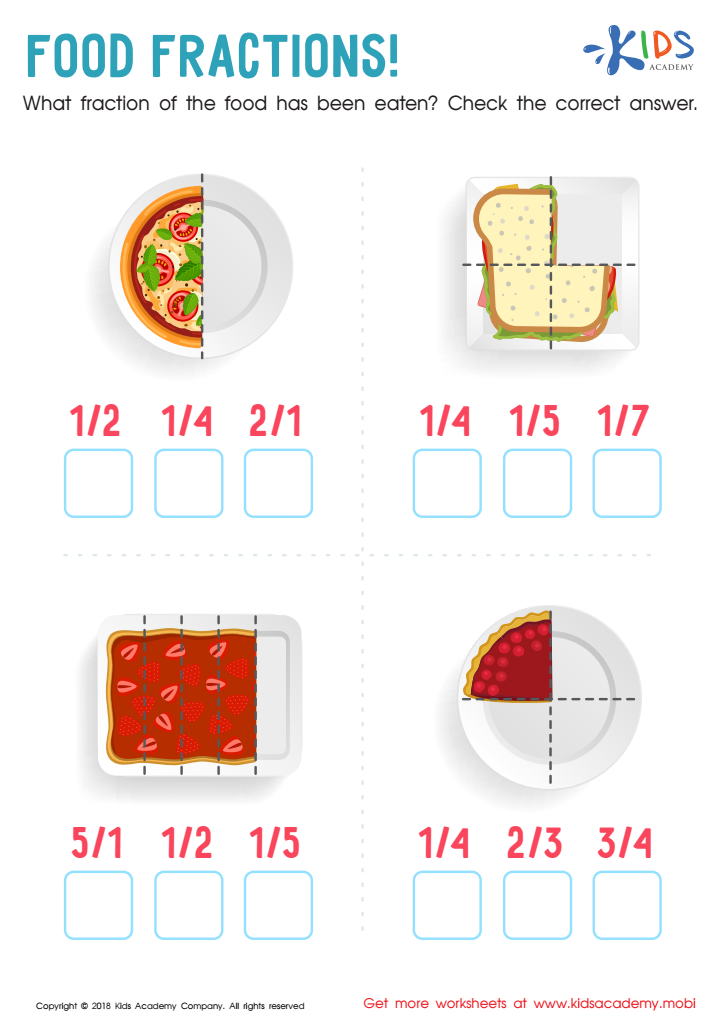
Food Fractions Worksheet

Food Fractions Worksheet

Test your child's understanding of fractions with this Food Fractions worksheet. Ask them to identify what fraction of the food in the four pictures has been eaten and select the correct answer from the options provided. See how well they understand your lessons!
Food Fractions Worksheet
Worksheet
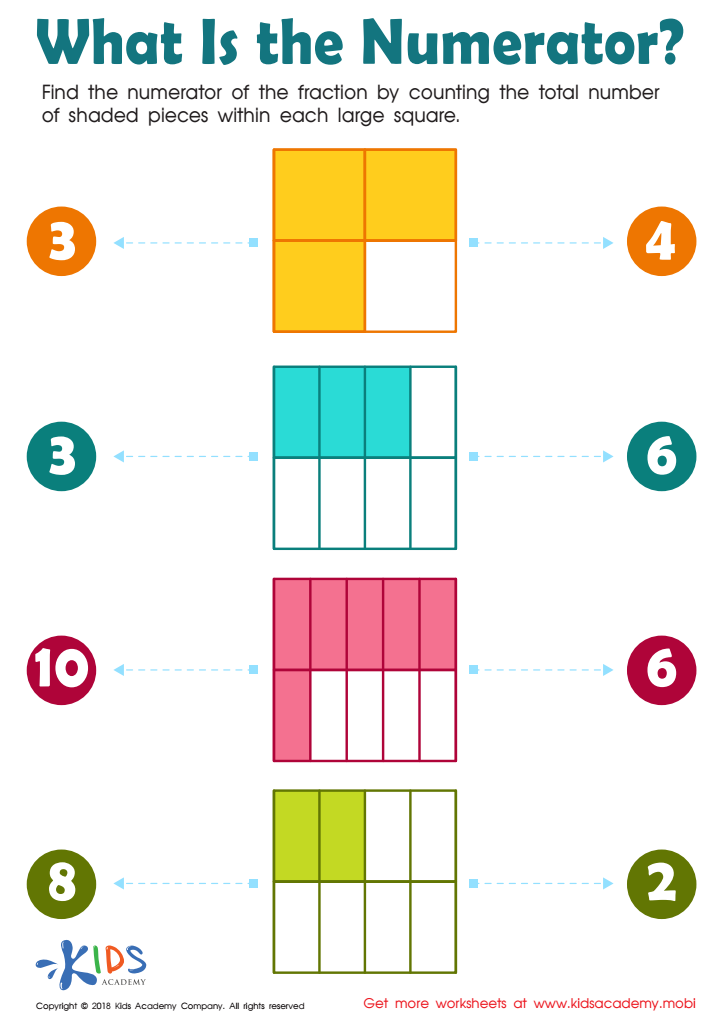
What Is the Numerator? Worksheet
What Is the Numerator? Worksheet
Help your kids learn fractions with this simple worksheet. Explain that the numerator is the number atop another number, then have them count the shaded pieces in each large square to find the numerator of the fraction. This activity is perfect for young kindergartners starting out with fractions.
What Is the Numerator? Worksheet
Worksheet
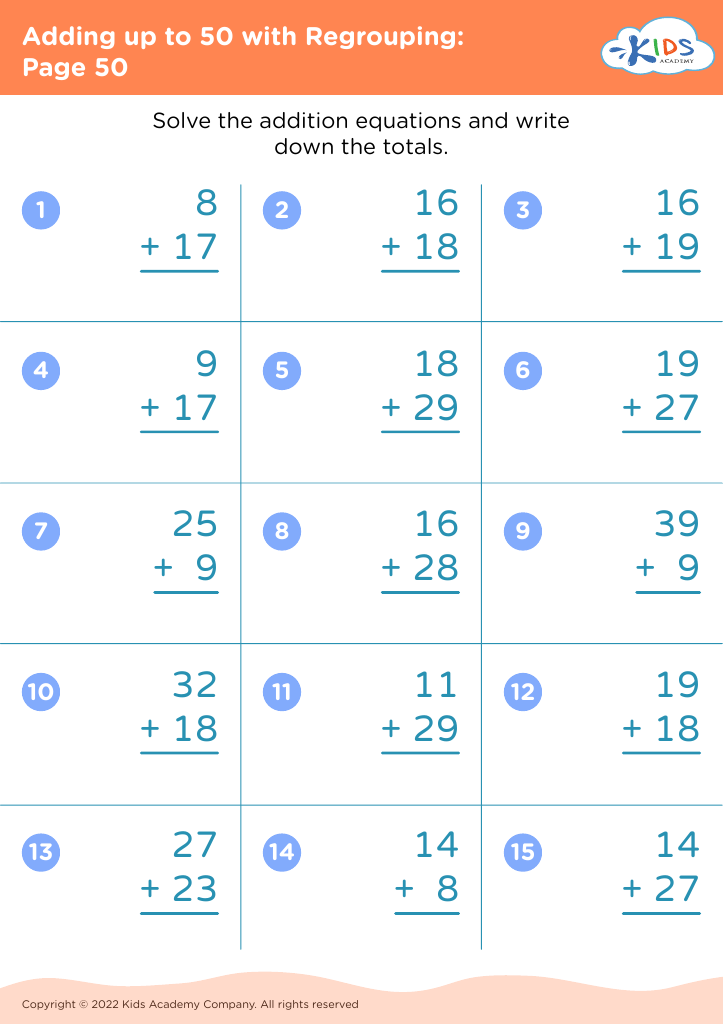
Adding up to 50 with Regrouping: Page 50
Worksheet
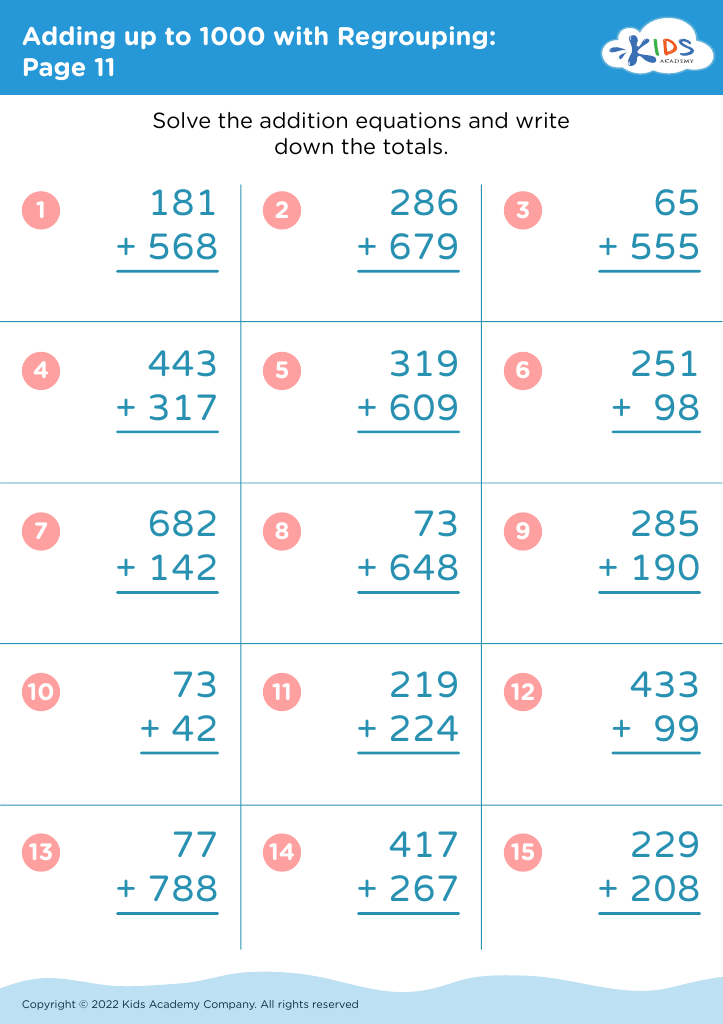
Adding up to 1000 with Regrouping: Page 11
Worksheet
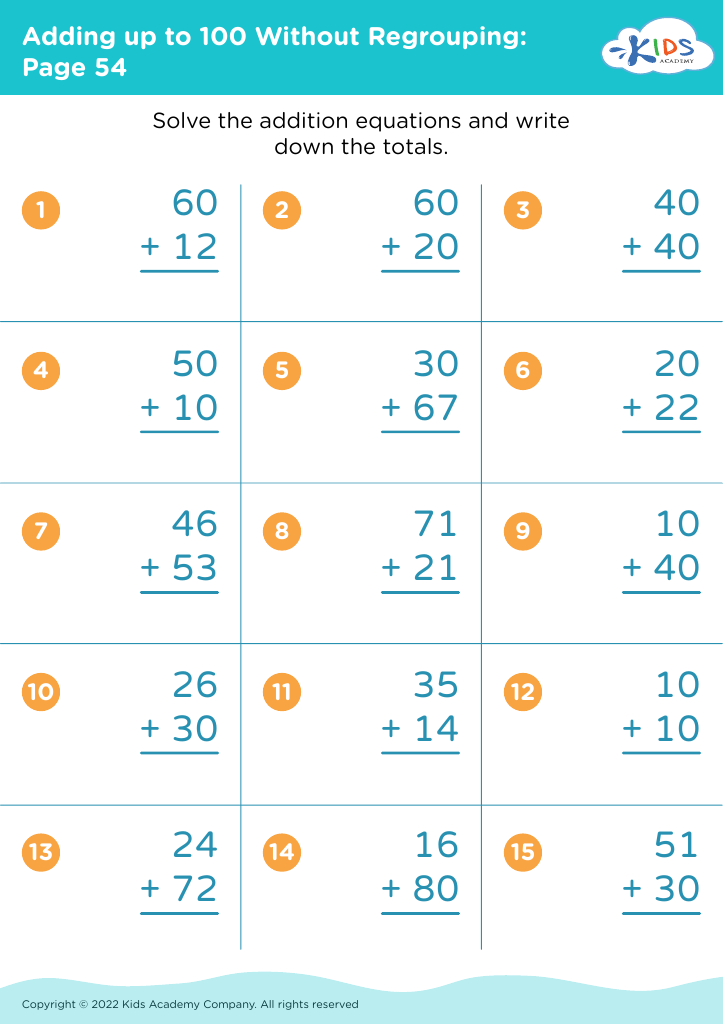
Adding up to 100 Without Regrouping: Page 54
Worksheet
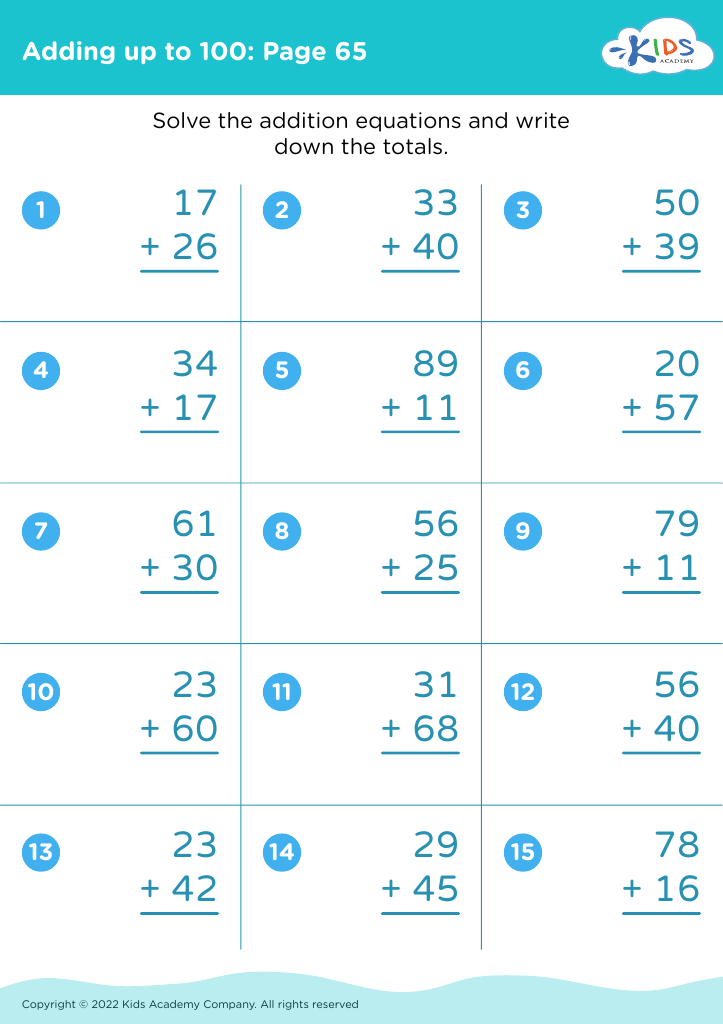
Adding up to 100: Page 65

Adding up to 100: Page 65

Adding up to 100: Page 65
Worksheet
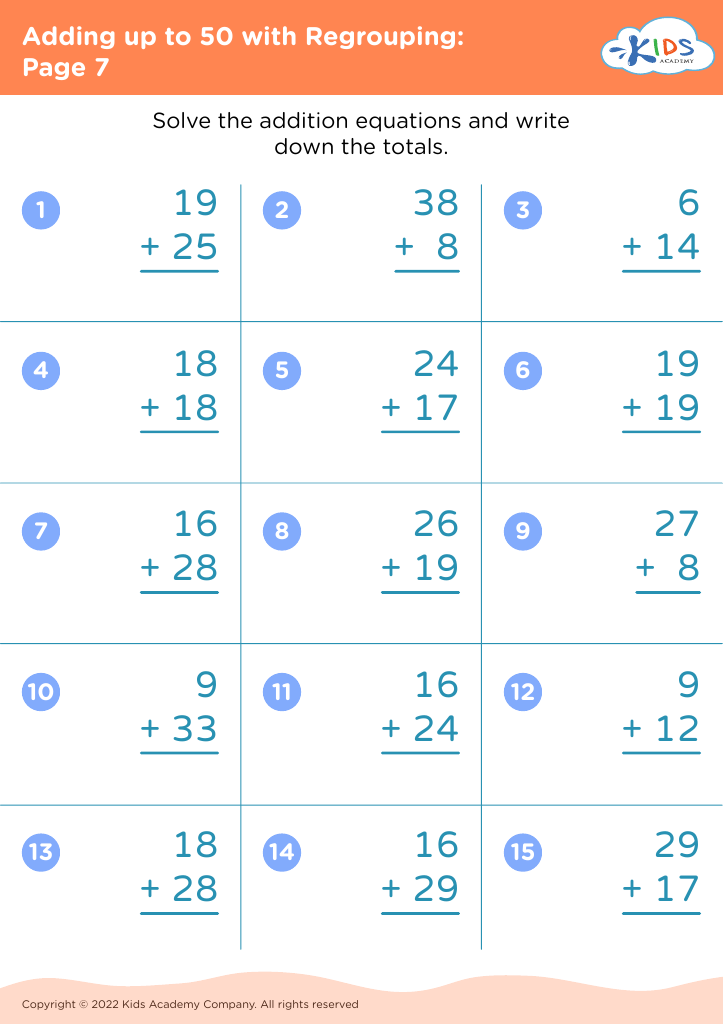
Adding up to 50 with Regrouping: Page 7
Worksheet
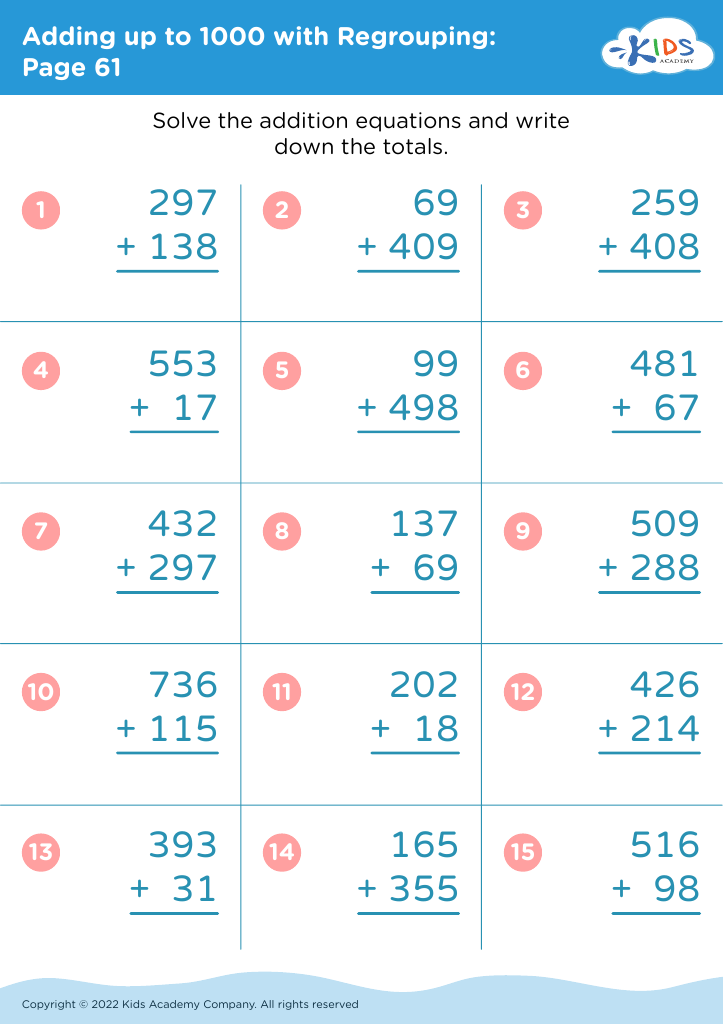
Adding up to 1000 with Regrouping: Page 61
Worksheet
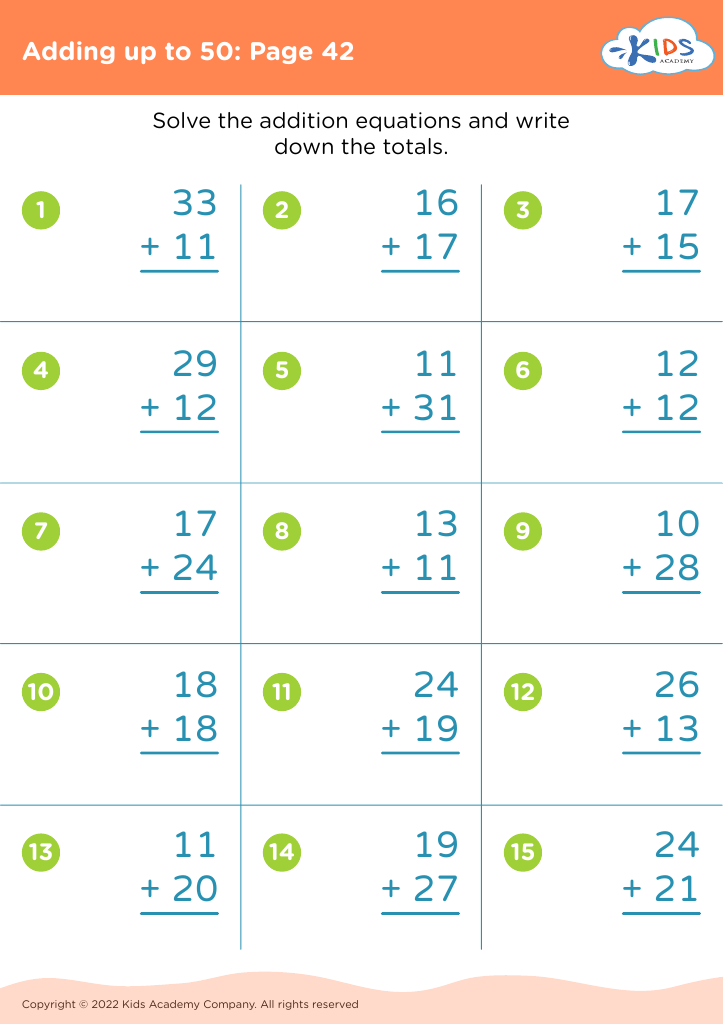
Adding up to 50: Page 42

Adding up to 50: Page 42

Adding up to 50: Page 42
Worksheet
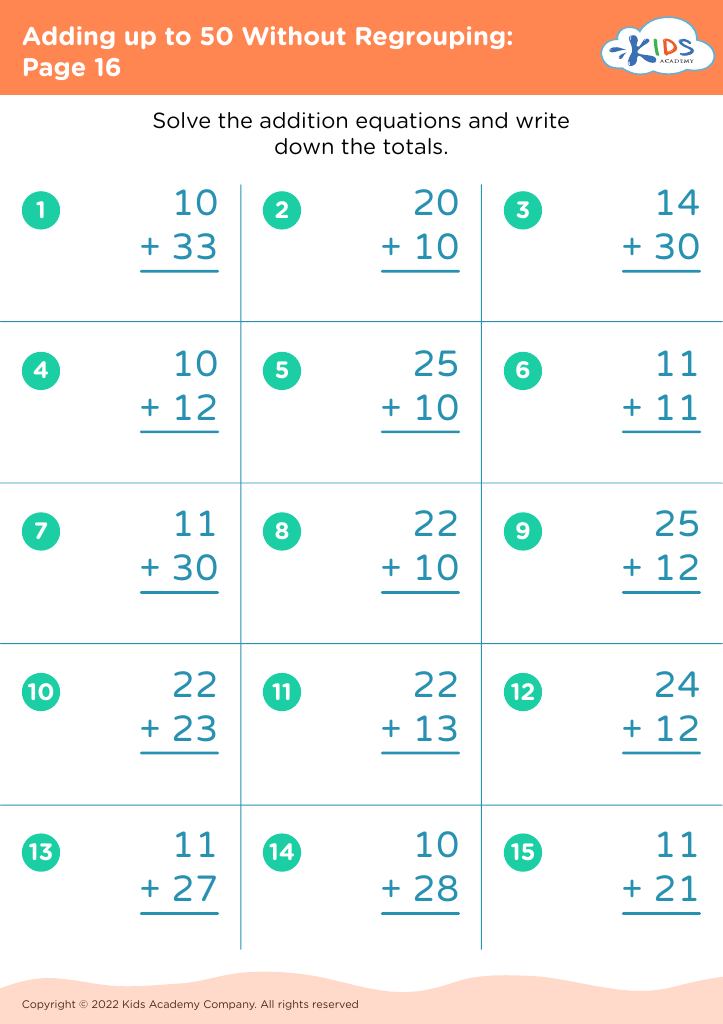
Adding up to 50 Without Regrouping: Page 16
Worksheet
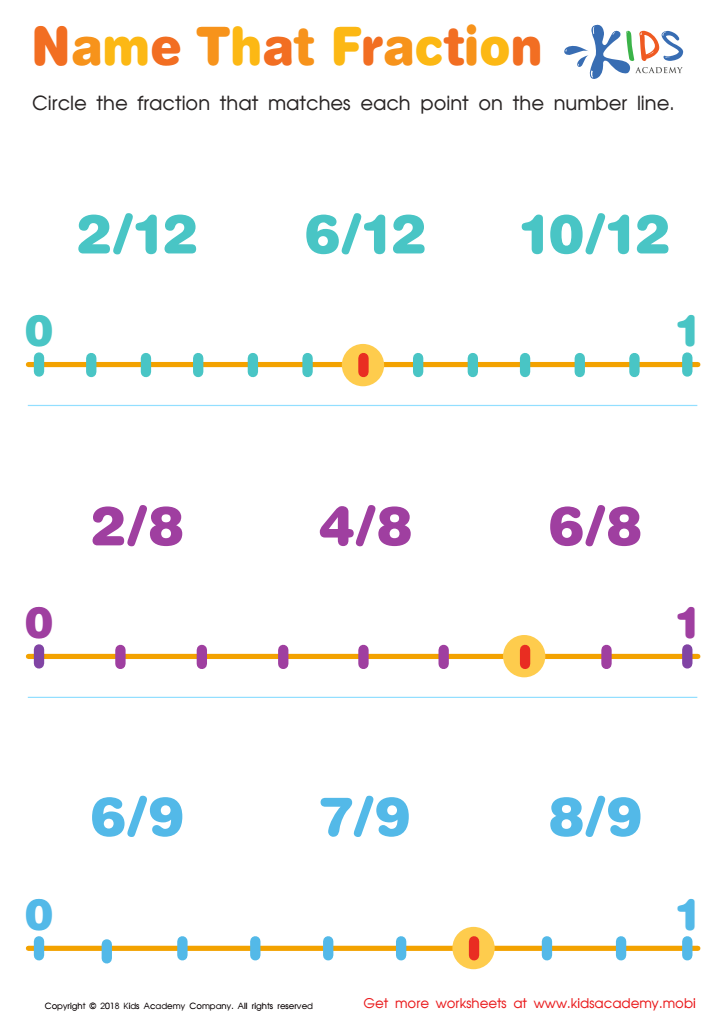
Name That Fraction Worksheet
Name That Fraction Worksheet

Kids must learn to identify and name fractions to solve equations. Included in this worksheet are three equations that need solving. Have your child match each point on the number line with the correct fraction and circle it. This exercise helps build their fraction skills.
Name That Fraction Worksheet
Worksheet
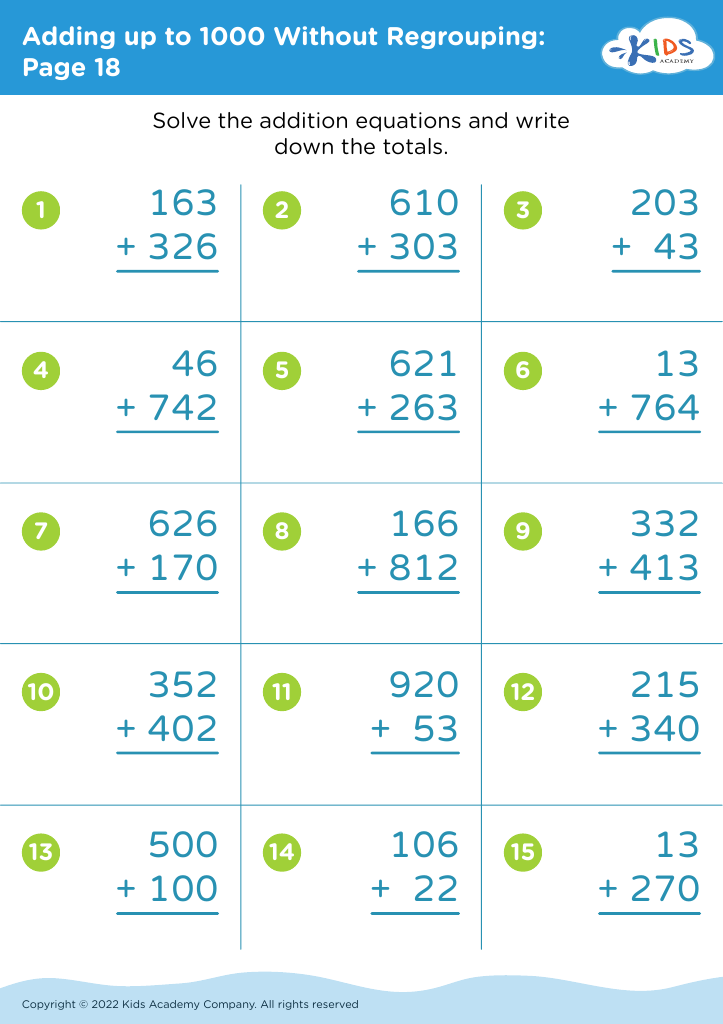
Adding up to 1000 Without Regrouping: Page 18
Worksheet
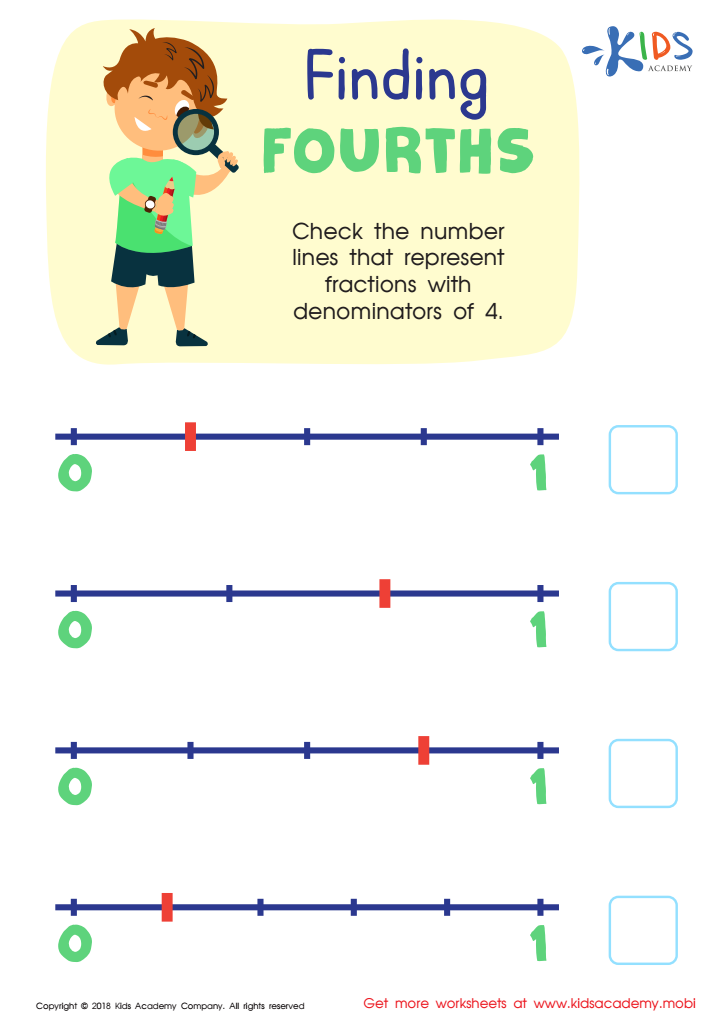
Finding Fourths Worksheet
Finding Fourths Worksheet
Help your kids sharpen math skills with extra homework, stimulating exercises, and fun worksheets. This printout features four equations with fractions and number lines. Your child's task is to check the number lines with denominators of 4. Enough to get them thinking and learning.
Finding Fourths Worksheet
Worksheet
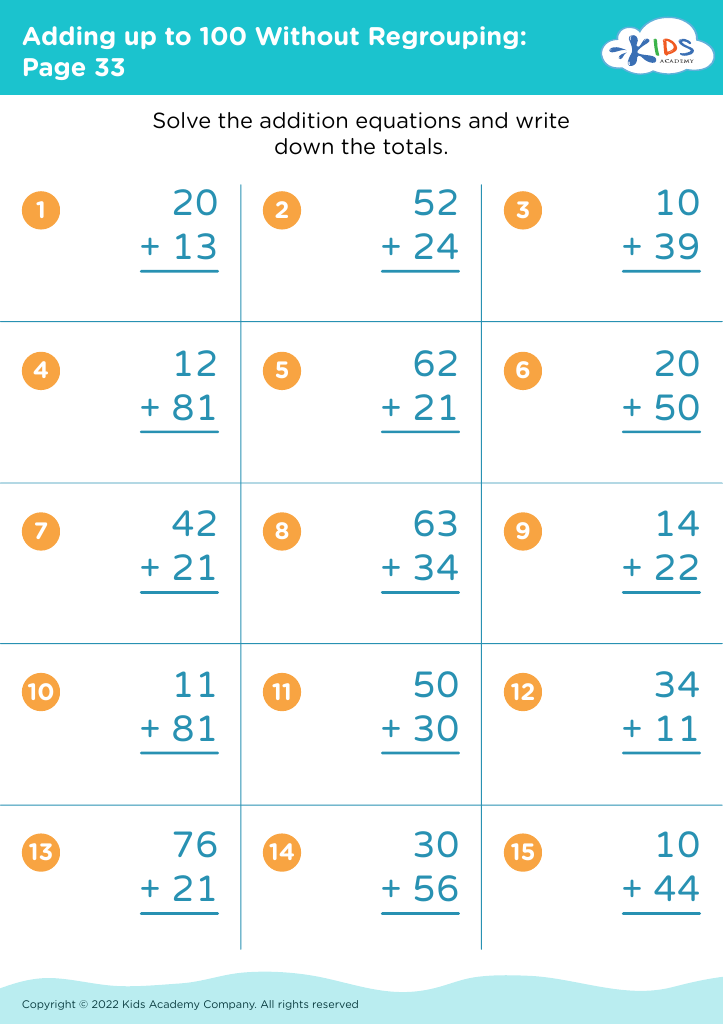
Adding up to 100 Without Regrouping: Page 33
Worksheet
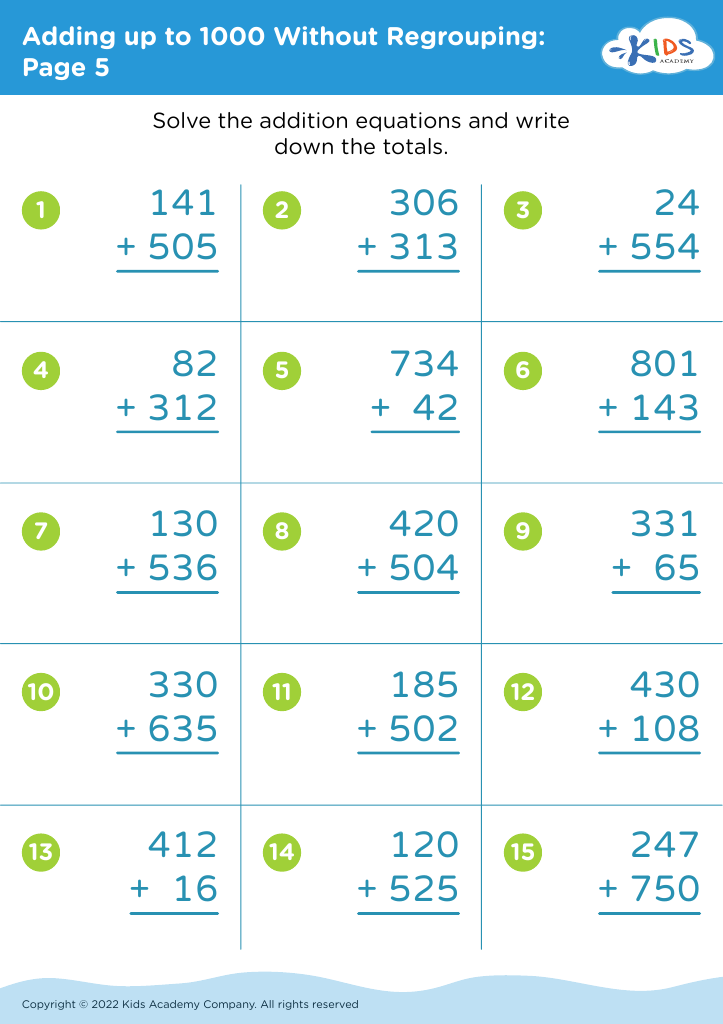
Adding up to 1000 Without Regrouping: Page 5
Worksheet
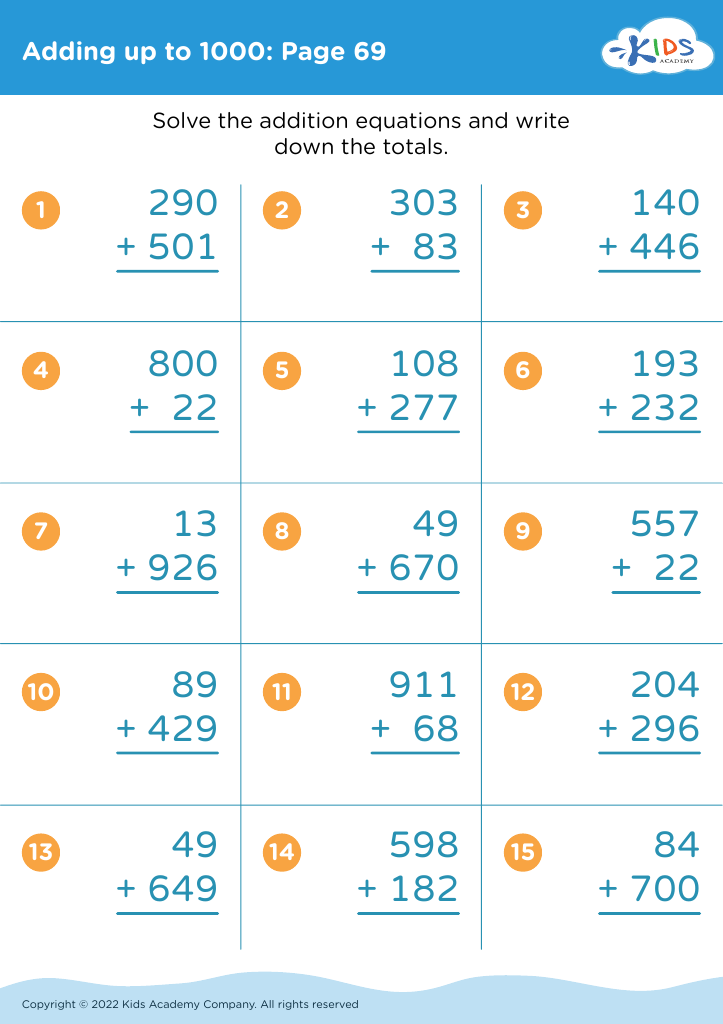
Adding up to 1000: Page 69

Adding up to 1000: Page 69

Adding up to 1000: Page 69
Worksheet
Equal Parts Practice Worksheet


Equal Parts Practice Worksheet

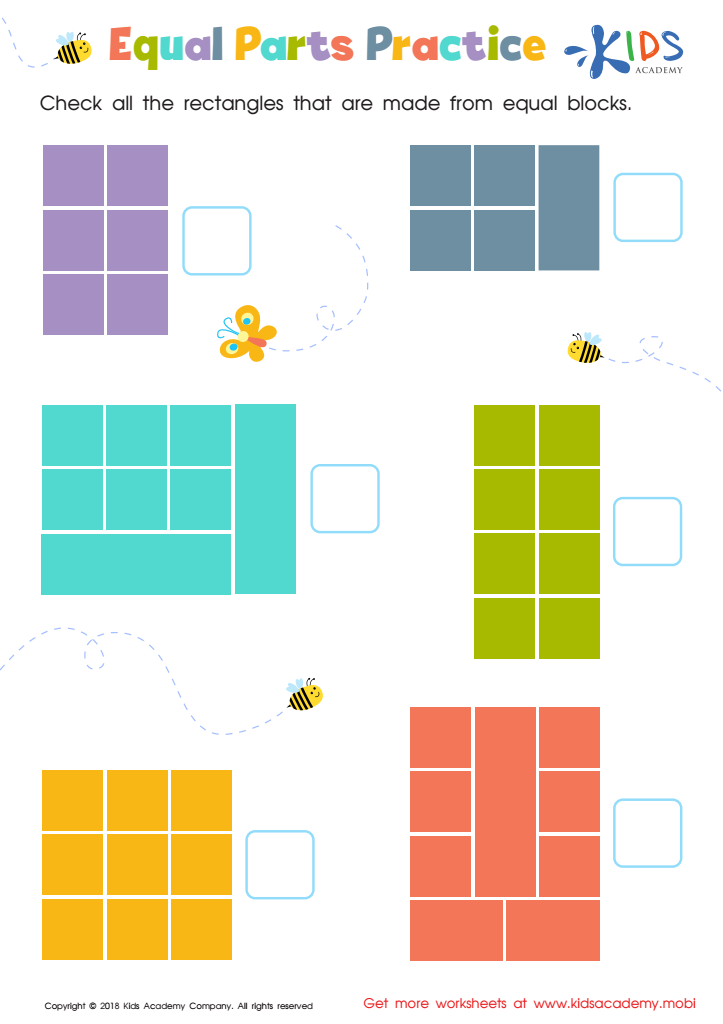
This worksheet checks your child's knowledge of halves and equal pieces. Have them go through the rectangles and check those made up of equal blocks. Your kids should be able to tell which parts are equal and which are not after the exercise.
Equal Parts Practice Worksheet
Worksheet


Understanding fractions at an early age, such as 8, builds foundational math skills that are critical for a child's academic development and daily life. At this age, children transition from concrete thinking to more abstract thought processes, making it an ideal time to introduce the concept of fractions.

Fractions are everywhere: in cooking (half a cup of flour), sharing (dividing a pizza), and even in time management (a quarter of an hour). By grasping fractions, children enhance their problem-solving skills and learn to approach everyday situations logically.

Educationally, understanding fractions is pivotal for progressing in more advanced math topics, such as ratios, proportions, and algebra. A solid foundation in fractions can lead to greater confidence and success in subsequent math learning, fostering a positive attitude toward the subject.

Moreover, fractions teach valuable life skills. They promote precision, critical thinking, and an appreciation for the concept of parts and wholes. Understanding fractions also lays the groundwork for future financial literacy, such as dividing money or understanding discounts.

In summary, helping 8-year-olds understand fractions prepares them not just for academic success, but for a variety of real-world applications. Engaging parents and teachers in this effort supports a well-rounded, mathematically proficient, and confident child.