Understanding pollination Worksheets for 8-Year-Olds
4 filtered results
-
From - To
Discover our "Understanding Pollination Worksheets for 8-Year-Olds," designed to enhance children's learning about the vital process of pollination. These engaging worksheets offer interactive activities and colorful visuals that explain how plants reproduce and the role of pollinators like bees and butterflies. Children will enjoy fun facts, fill-in-the-blank exercises, and illustrations that reinforce key concepts. Perfect for home use or classroom learning, these worksheets will help young learners cultivate a passion for nature and science. Unlock the wonders of the natural world while supporting critical thinking and comprehension skills with our comprehensive resources tailored for eight-year-olds!
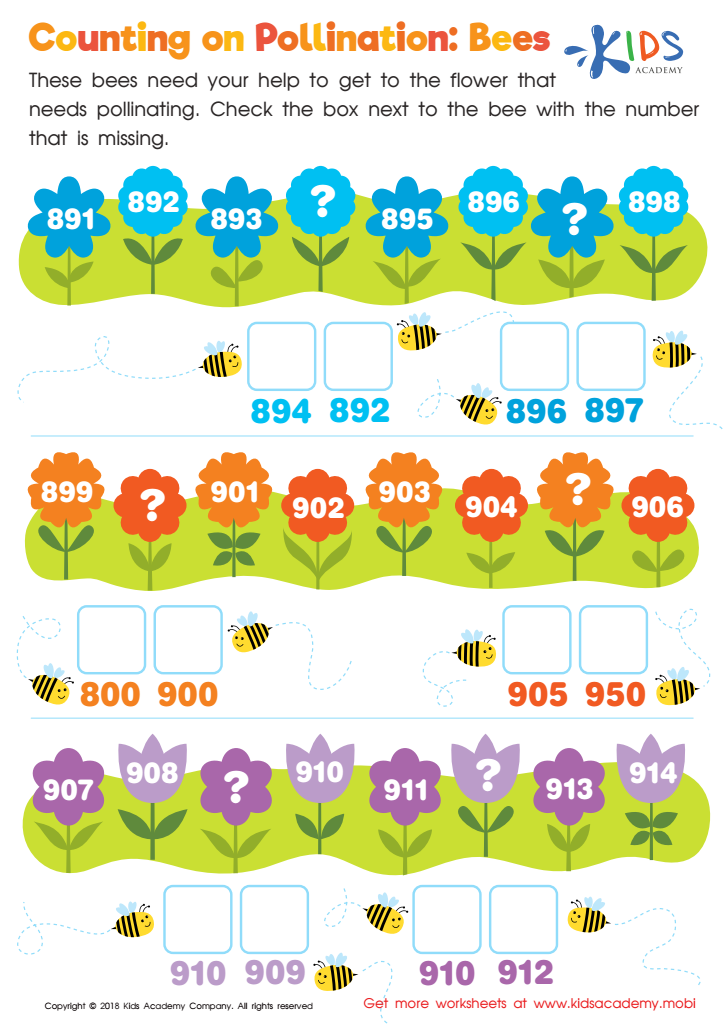
Counting on Pollination: Bees Worksheet
 Assign to My Students
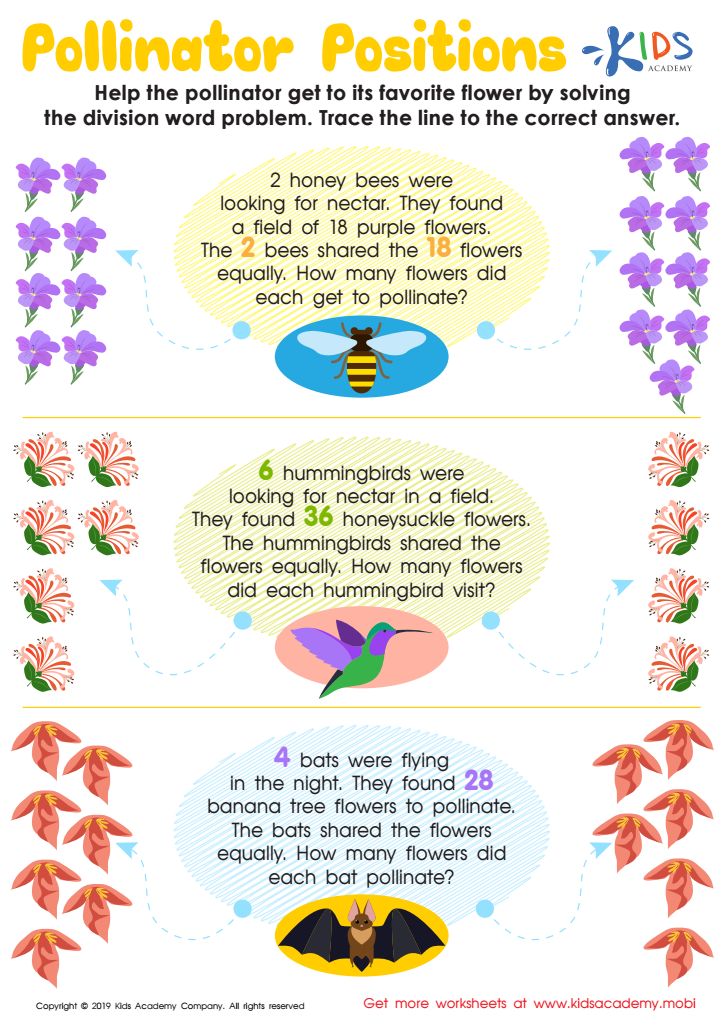
Pollinator Positions Worksheet
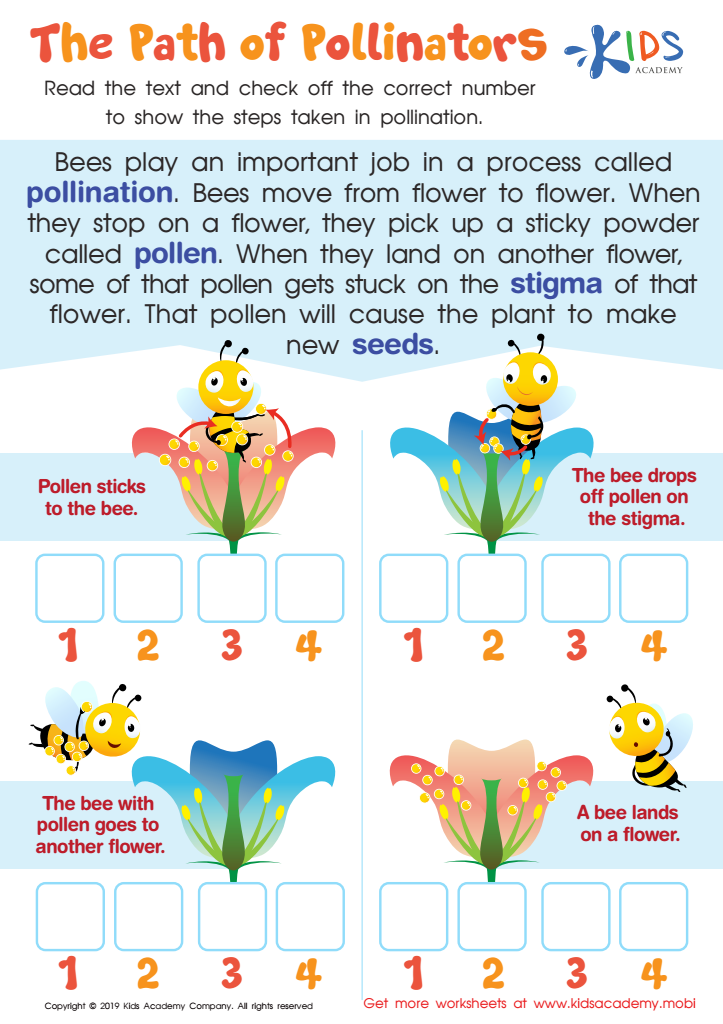
The Path of Pollinators Worksheet
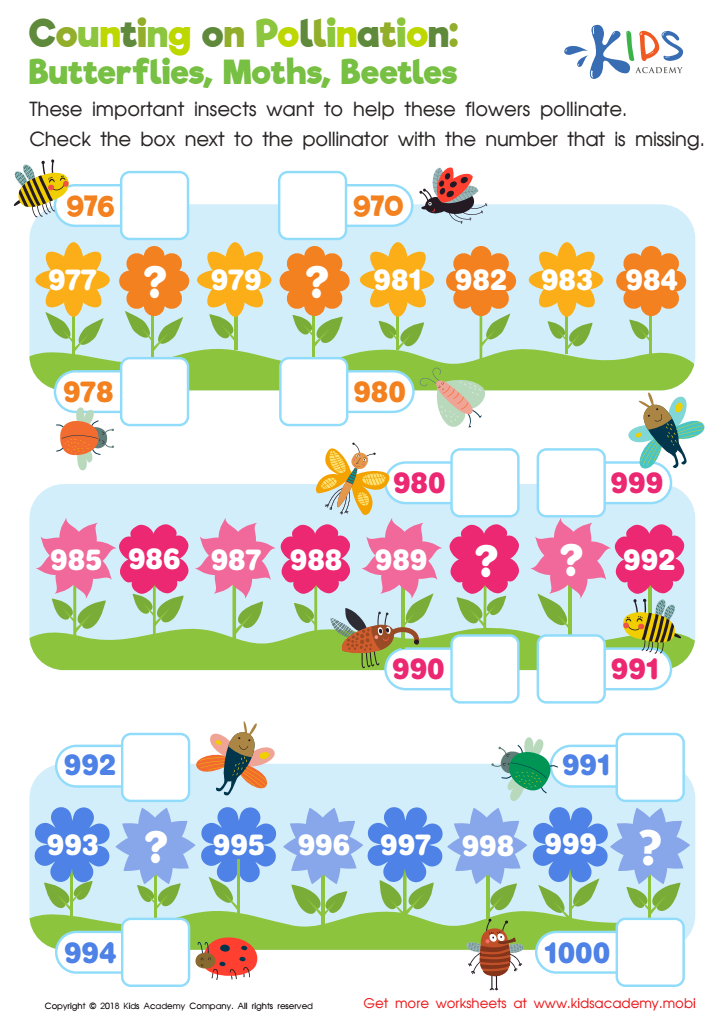
Counting on Pollination: Butterflies, Moths, Beetles Worksheet






Understanding pollination is essential for 8-year-olds because it connects them with the natural world and enhances their appreciation for science. At this age, children are naturally curious and eager to explore how things work. Learning about pollination introduces them to crucial concepts of biology and ecosystems, fostering a sense of wonder about nature's interdependence.
Pollination is vital for the reproduction of many plants, including those that produce food. By grasping how bees, butterflies, and other pollinators contribute to the growth of fruits and vegetables, children can understand the food chain and the importance of biodiversity. Moreover, awareness of pollination can encourage sustainable practices, such as planting bee-friendly gardens, promoting environmental stewardship, and helping them recognize the impact of human activities on ecosystems.
Teachers and parents can use hands-on activities, such as observing pollinators or planting seeds, to make learning engaging and meaningful. This not only strengthens their scientific thinking but also develops skills like observation, critical thinking, and collaboration. Ultimately, understanding pollination empowers children to become environmentally conscious individuals, instilling values that contribute to the well-being of our planet's ecosystems.








