Addition Practice Addition and Subtraction Word Problems Worksheets for 8-Year-Olds
10 filtered results
-
From - To
Boost your child's math skills with our Addition and Subtraction Word Problems Worksheets, specifically designed for 8-year-olds! These engaging, age-appropriate worksheets offer a range of real-life scenarios to help kids practice and master their addition skills while seamlessly integrating subtraction concepts. Each problem encourages critical thinking, problem-solving, and logical reasoning, making math fun and relatable. Perfect for classroom activities, homework, or extra practice at home, our worksheets provide instant feedback and a sense of achievement. With vibrant designs and clear instructions, your child will build confidence and a solid foundation in math. Start their math journey today with our interactive resources!
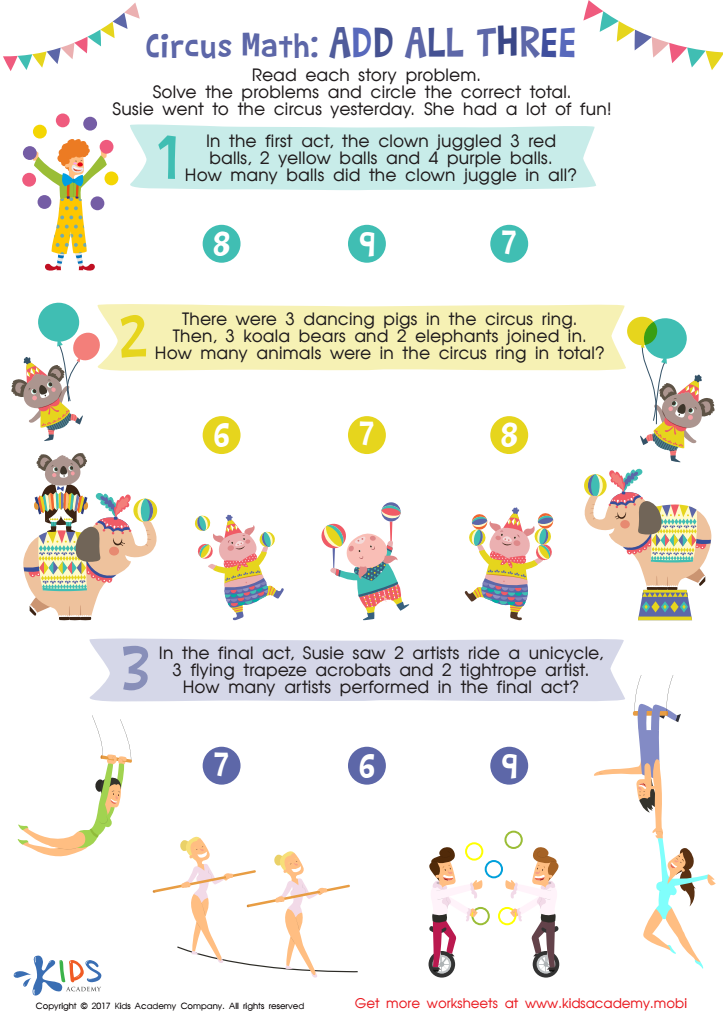
Circus Math Printable
 Assign to My Students
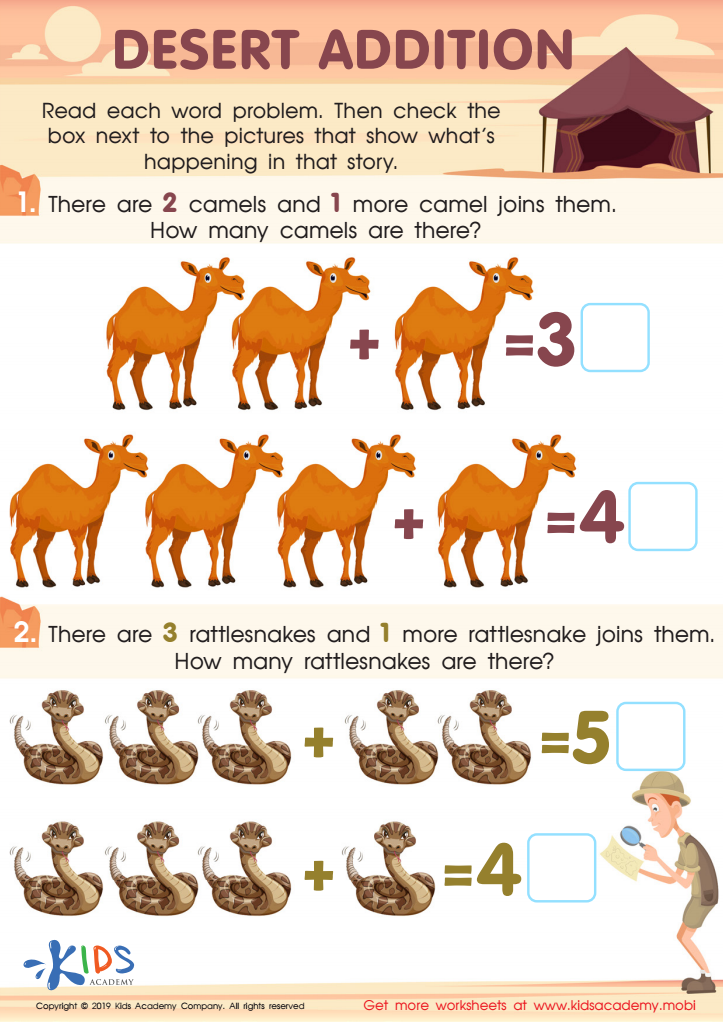
Desert Addition Worksheet
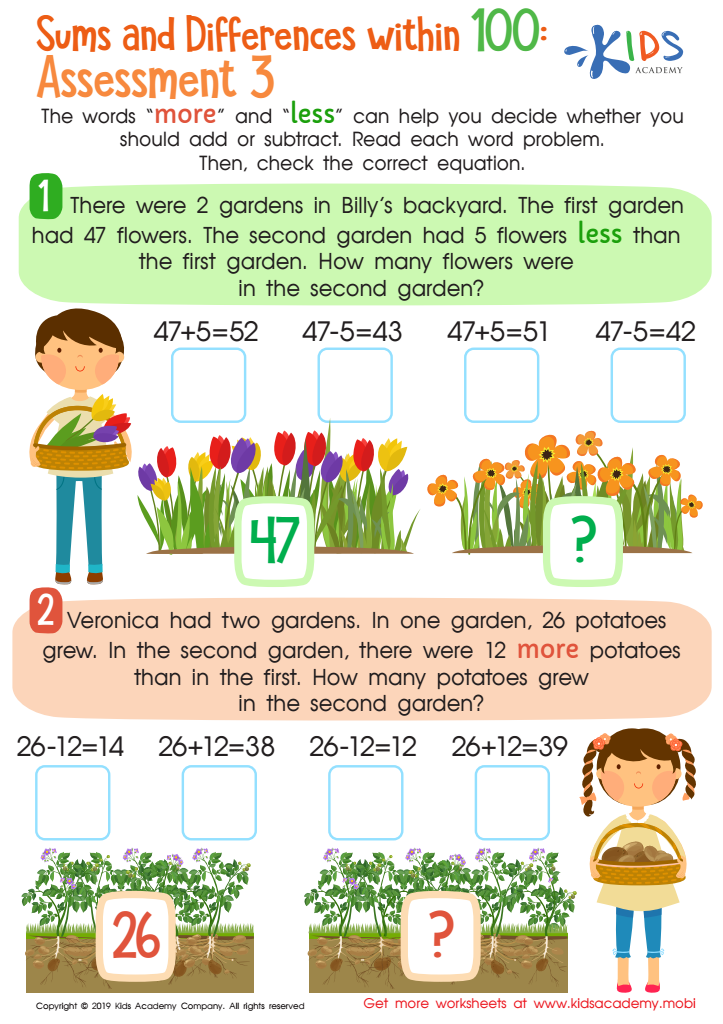
Sums and Differences Within 1 - Assessment 1 Worksheet
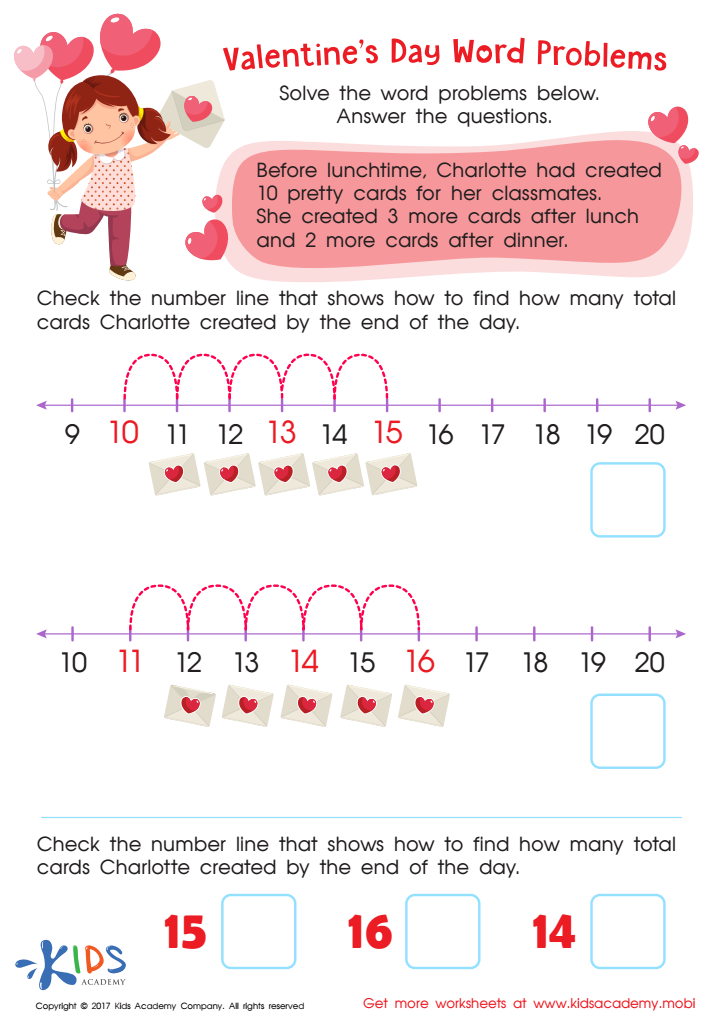
Valentines Day Word Problem Worksheet
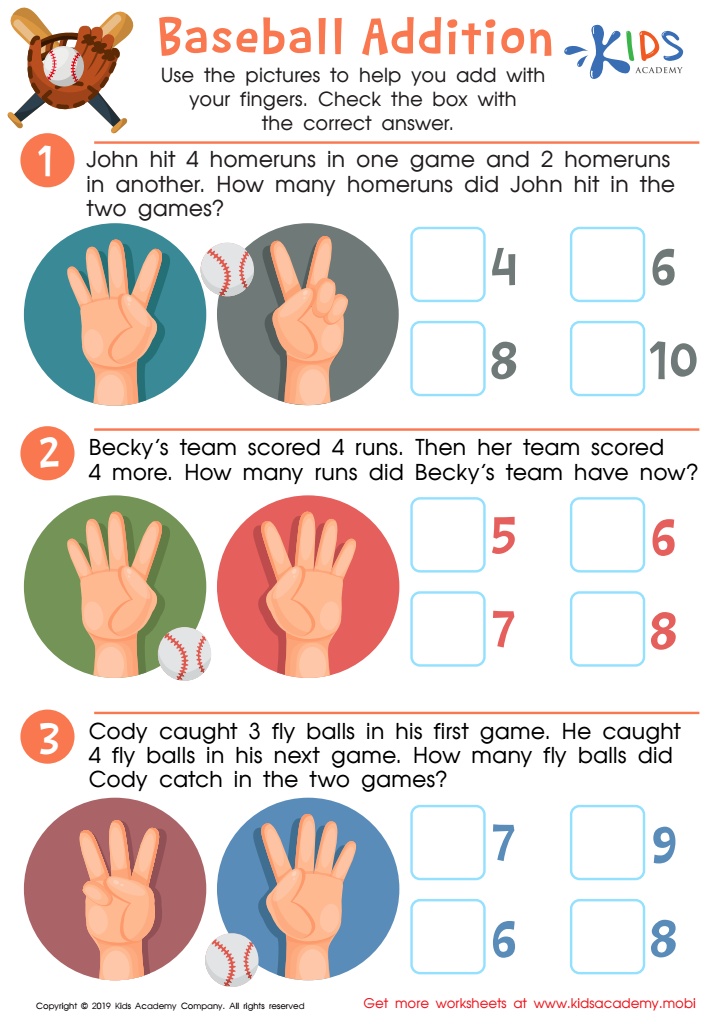
Baseball Addition Worksheet
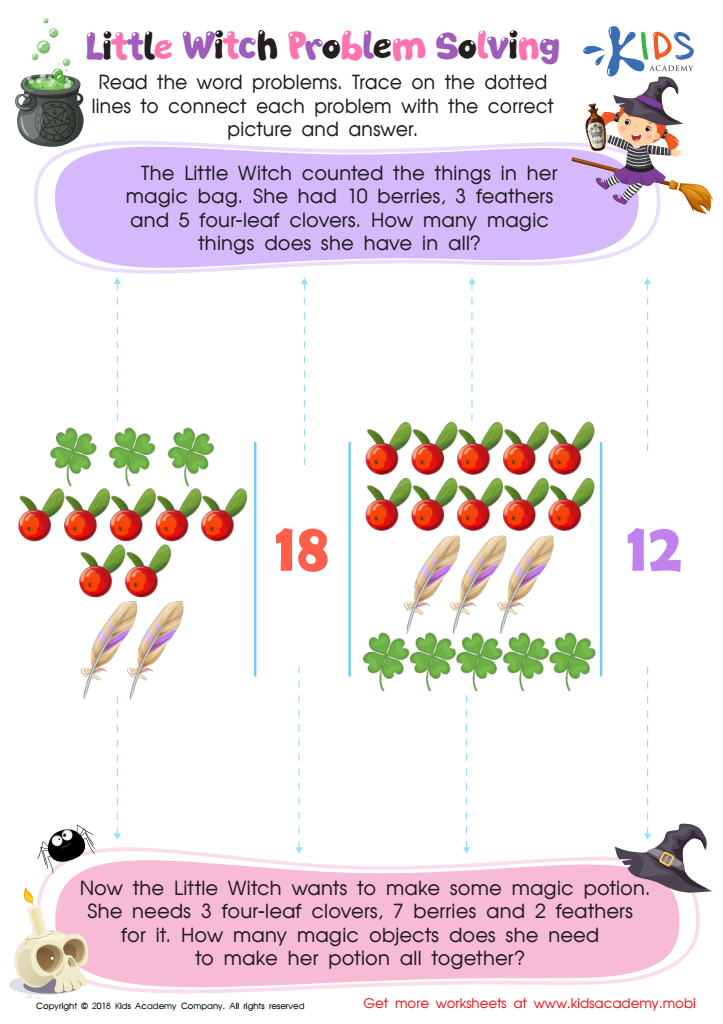
Little Witch Problem Solving Worksheet
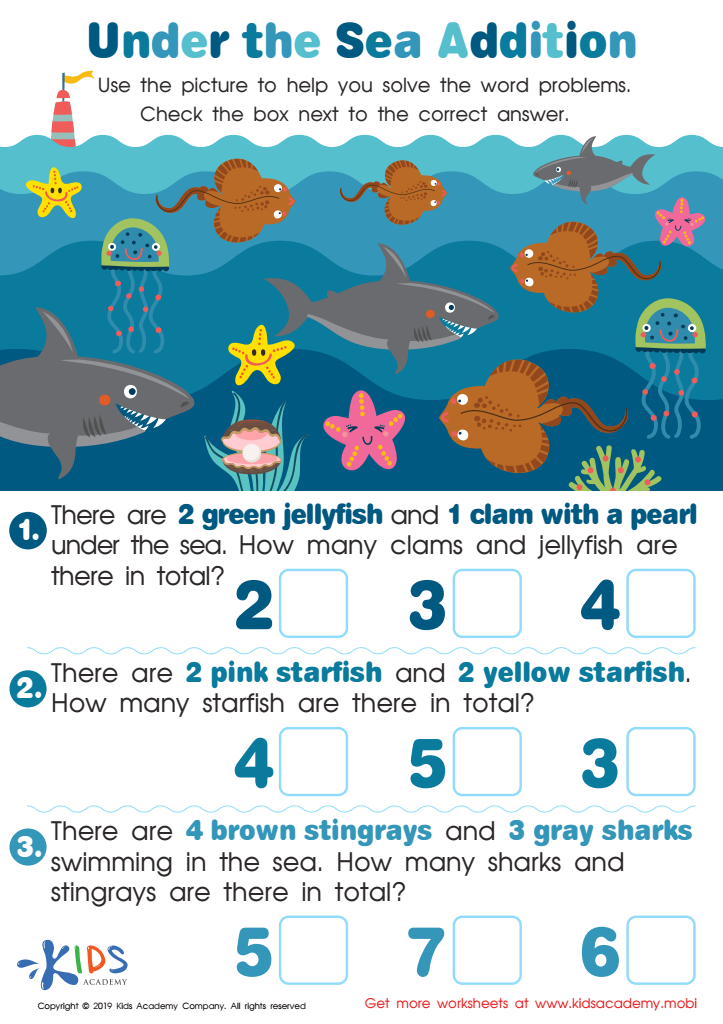
Under the Sea Addition Worksheet
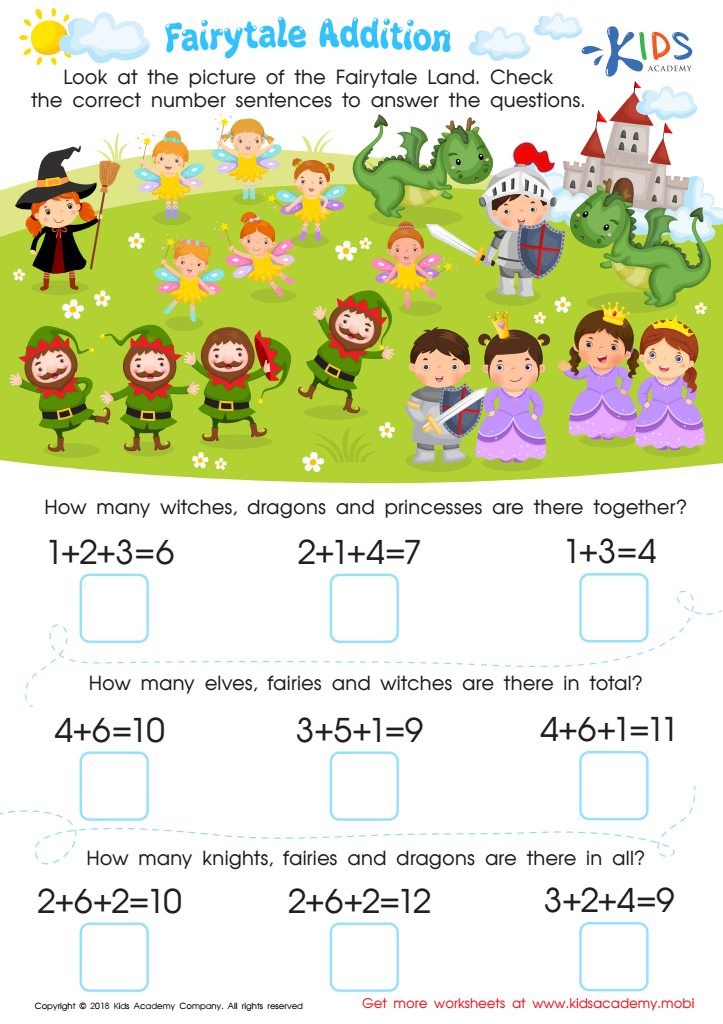
Fairytale Addition Worksheet
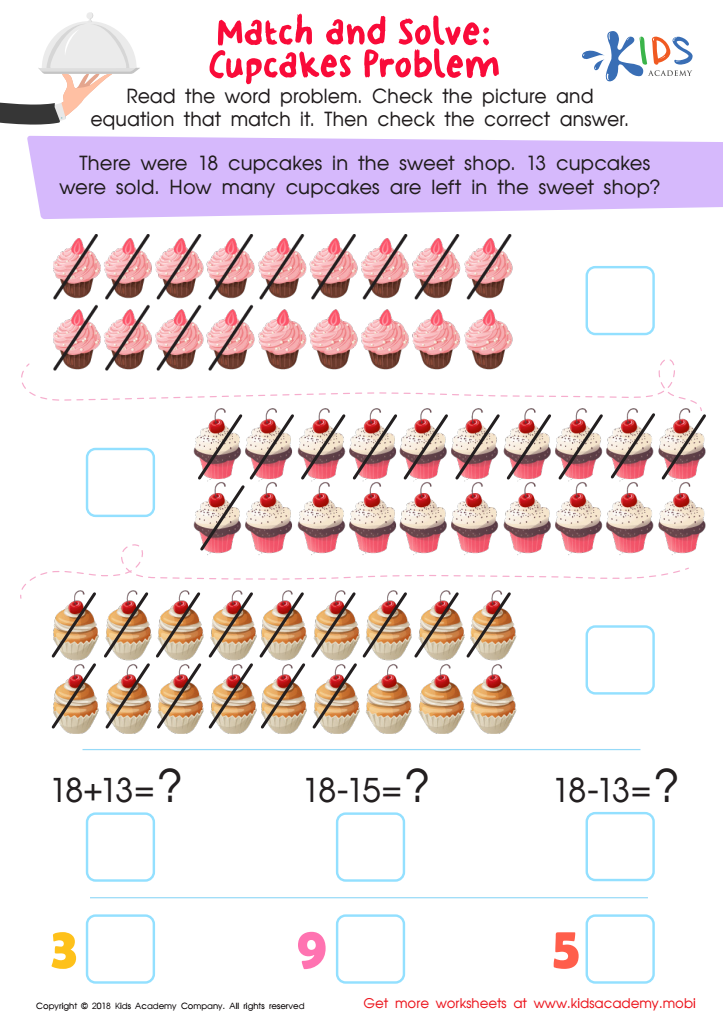
Match and Solve: Cupcakes Problem Worksheet
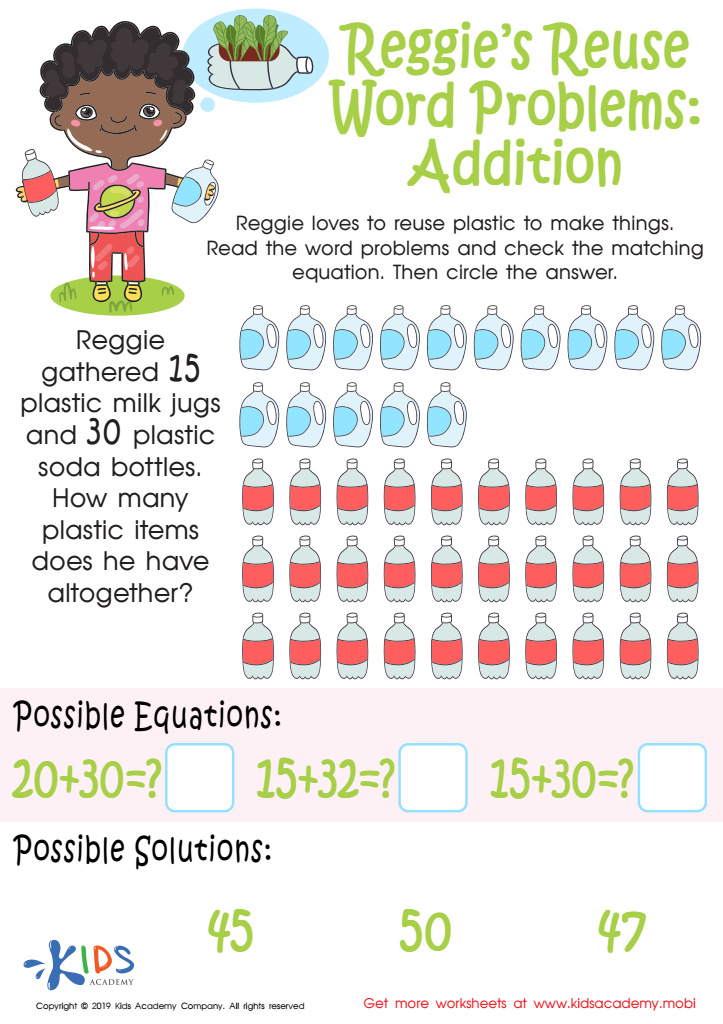
Reggie's Reuse Word Problems: Addition Worksheet








Parents and teachers should emphasize addition and subtraction word problems for 8-year-olds because these skills are foundational for mathematical understanding and real-world problem-solving. At this age, children are transitioning from concrete mathematical concepts to more abstract reasoning, and mastering word problems helps them develop critical thinking skills.
Word problems encourage children to analyze situations, identify relevant information, and apply appropriate strategies to find solutions. This practice not only strengthens their arithmetic abilities but also fosters logical reasoning and comprehension skills. Additionally, solving word problems aids in improving reading and comprehension skills, as children must carefully interpret the words to devise a solution.
Furthermore, these skills are crucial beyond the classroom; they prepare children for everyday situations such as budgeting, cooking, and planning. By engaging in word problems, students learn how math is applicable in daily life, which can enhance their interest in and enthusiasm for the subject.
Thus, supporting addition and subtraction word problem practice is an investment in a child’s academic success, equipping them with tools to navigate both academic challenges and real-life scenarios effectively. Parents and teachers play an essential role in fostering this growth, encouraging students to think critically and become confident, competent mathematicians.