Fraction comparison Geometry Worksheets for 8-Year-Olds
3 filtered results
-
From - To
Our "Fraction Comparison Geometry Worksheets for 8-Year-Olds" are designed to make learning fractions fun and engaging for young learners. These expertly crafted worksheets help children visually compare and understand different fractions through colorful geometric shapes and intuitive activities. By integrating core math concepts with visual aids, kids can easily grasp comparisons between fractions while strengthening their geometry skills. Ideal for classroom use or home practice, these worksheets provide a solid foundation in fractions and geometric understanding. Boost your child’s confidence in math with our effective and enjoyable resources today!
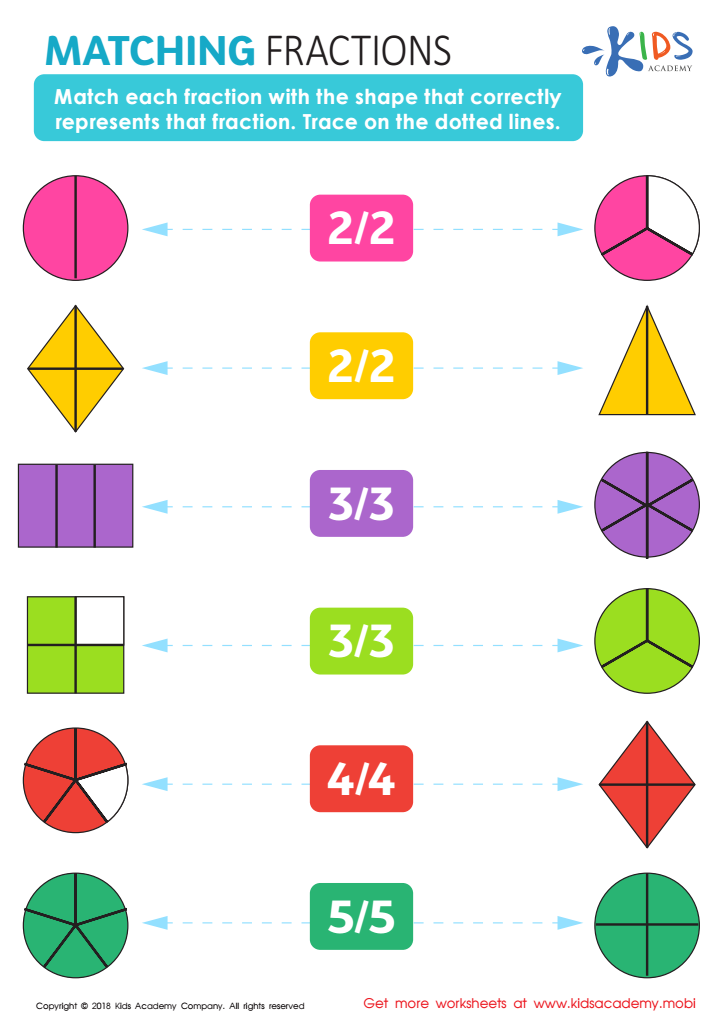
Matching Fractions Worksheet
 Assign to My Students











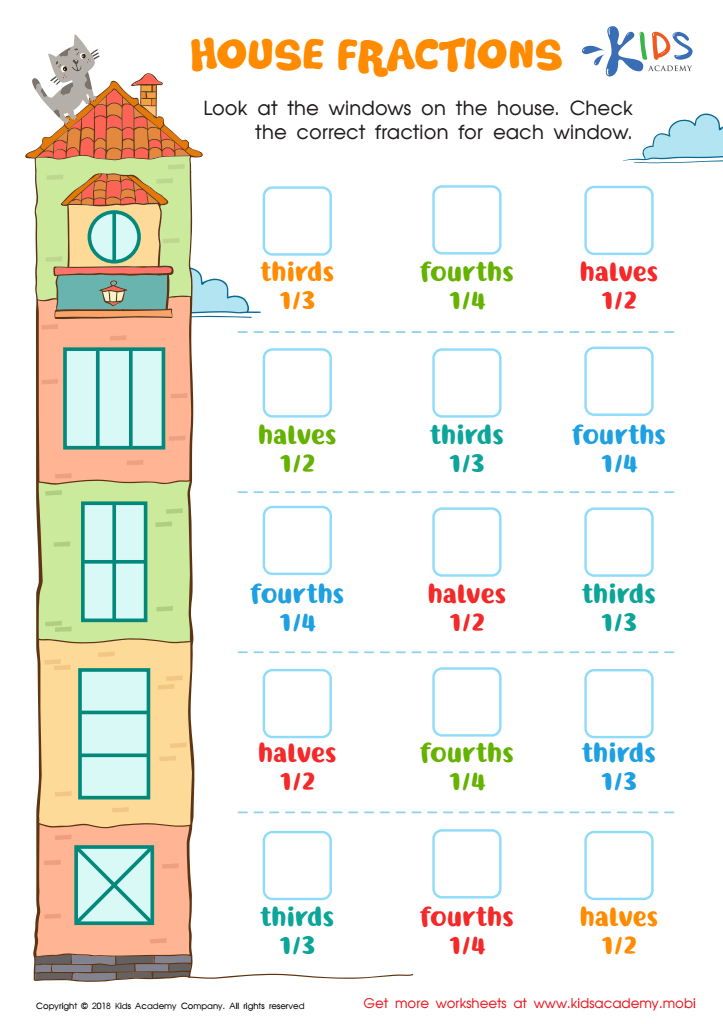
House Fractions Worksheet
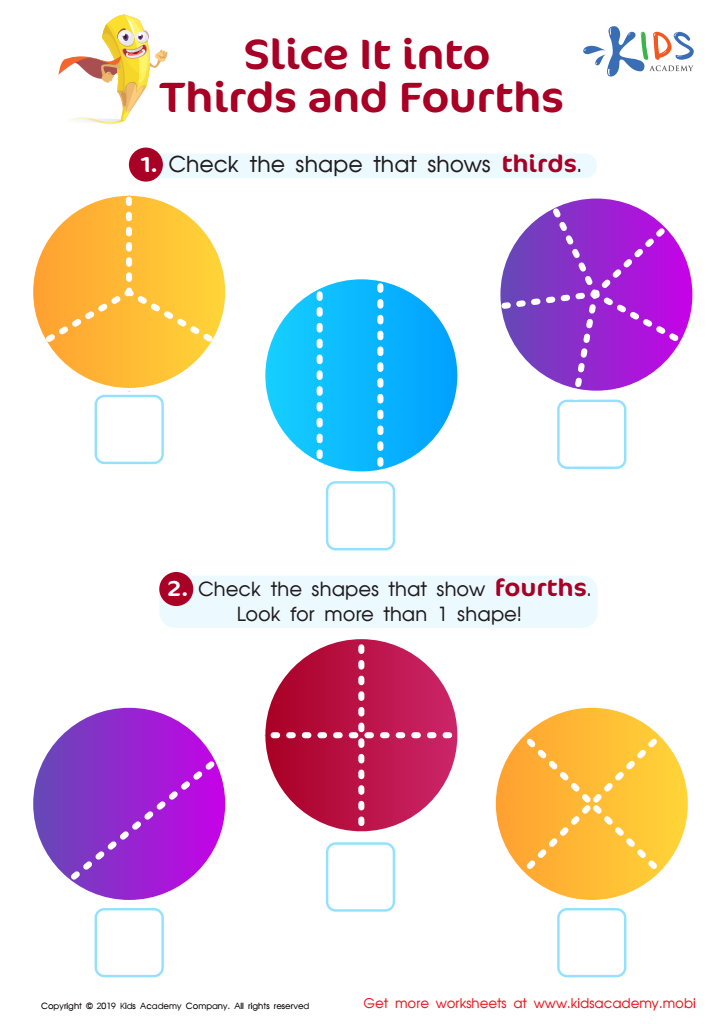
Slice in Thirds Fourths Worksheet








Parents and teachers should prioritize teaching fraction comparison and basic geometry to 8-year-olds because these skills are foundational to mathematical literacy and overall cognitive development. At this age, children are at a critical stage in their cognitive development, and learning these concepts enhances their problem-solving and analytical abilities.
Mastering fractions aids in their understanding of proportions, ratios, and even more complex areas like algebra in future studies. By learning through comparison, children gain an intuitive understanding of size, quantity, and numerical relationships. For instance, understanding that 1/2 is bigger than 1/4 helps them grasp real-world applications, such as dividing a pizza or sharing items equally among friends.
Geometry, on the other hand, introduces spatial reasoning and visual understanding of how shapes and spaces function. Knowledge of geometry assists children in recognizing patterns, spatial understanding, and symmetry, thus enhancing their ability to interpret and interact with the world around them. These skills are not only critical for higher math but are also applicable in everyday tasks.
Early engagement with these concepts builds a strong mathematical foundation, making advanced topics less intimidating and more comprehensible as children progress through school. Therefore, parents and teachers should champion these lessons to ensure their students have the critical thinking and problem-solving tools they need for future academic and life success.








