Comparing Fractions Numbers Worksheets for 8-Year-Olds
6 filtered results
-
From - To
Explore our engaging "Comparing Fractions Numbers Worksheets" designed specifically for 8-year-olds! These worksheets provide interactive activities that make learning about fractions fun and effective. Students will master comparing different fractions through visual aids, real-life examples, and step-by-step instructions. Our resources reinforce essential math skills, helping kids understand concepts like equivalent fractions and ordering fractions with ease. Perfect for home or classroom use, these worksheets cater to various learning styles and support young learners in building confidence in their math abilities. Get started today and watch your child thrive in their understanding of fractions with our comprehensive and entertaining materials!
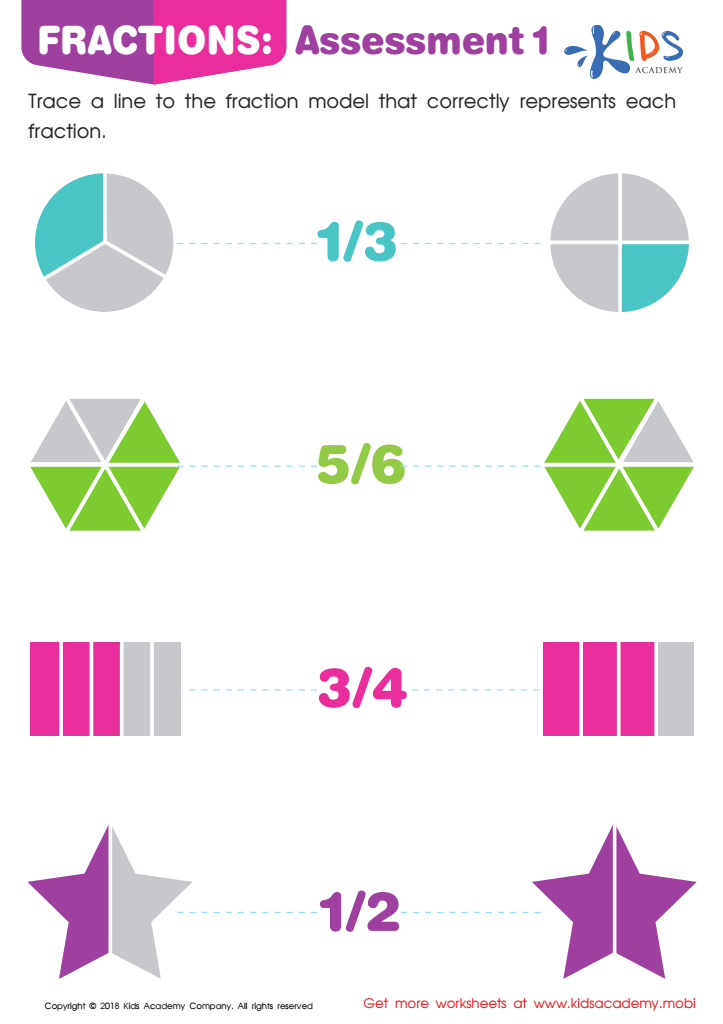
Fractions: Assessment 1 Worksheet
 Assign to My Students
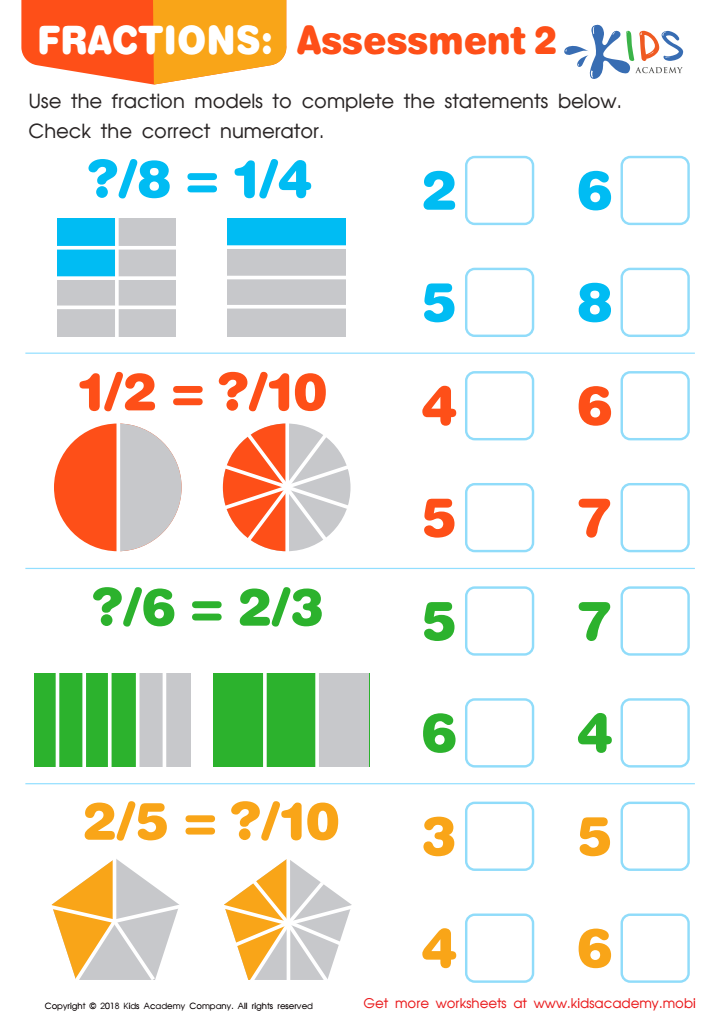
Fractions: Assessment 2 Worksheet
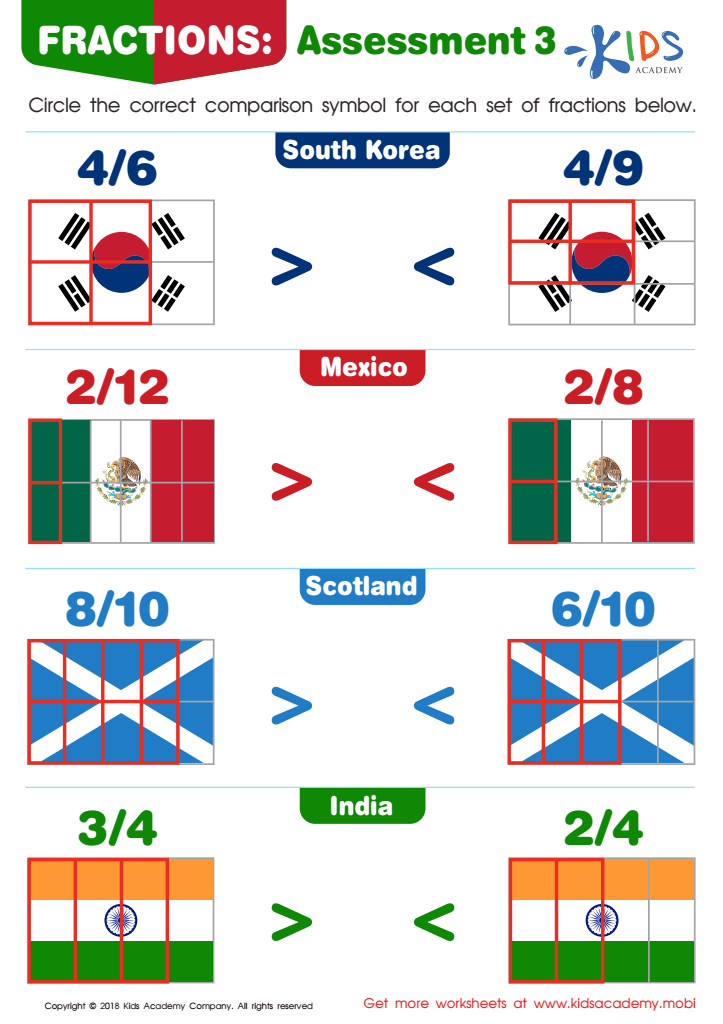
Fractions: Assessment 3 Worksheet
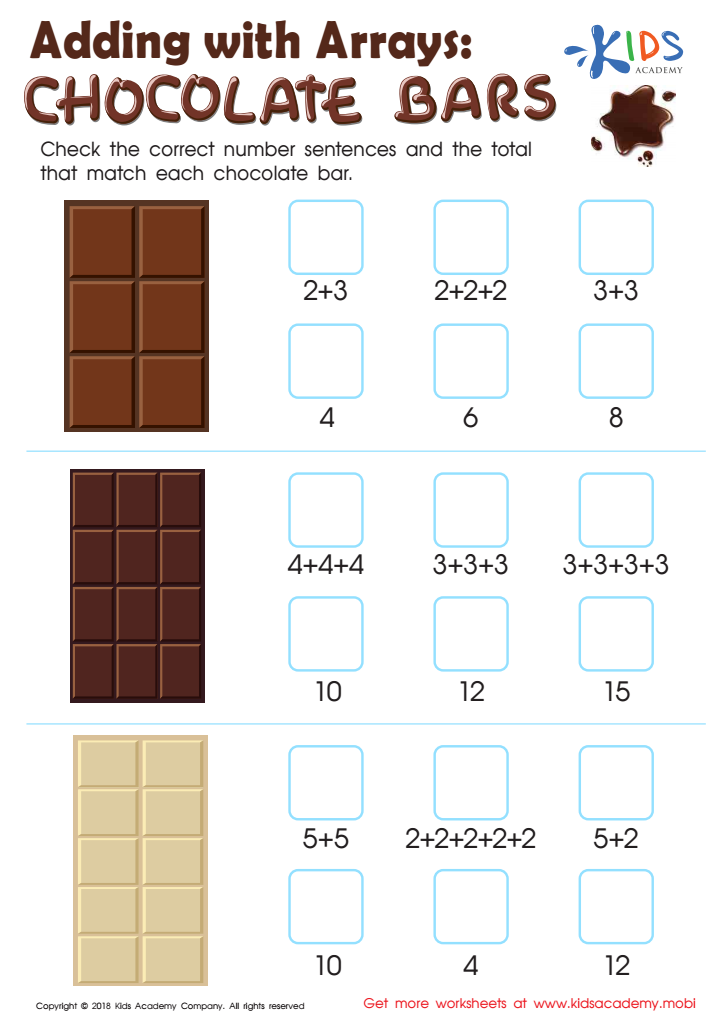
Adding with Arrays: Chocolate Bars Worksheet
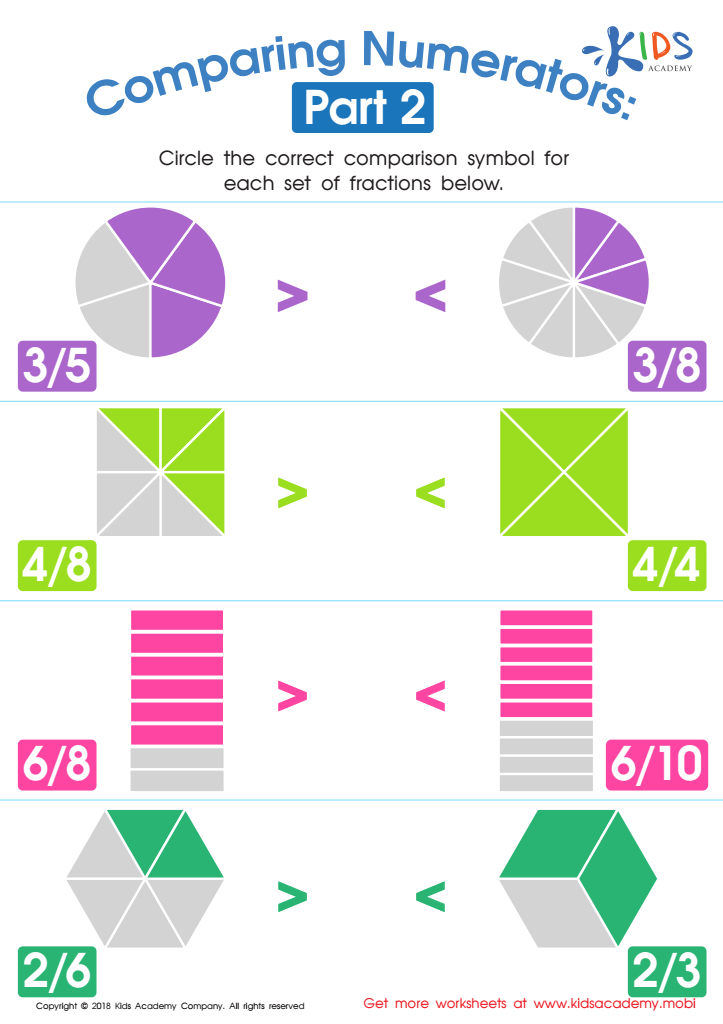
Comparing Numerators Part 2 Worksheet
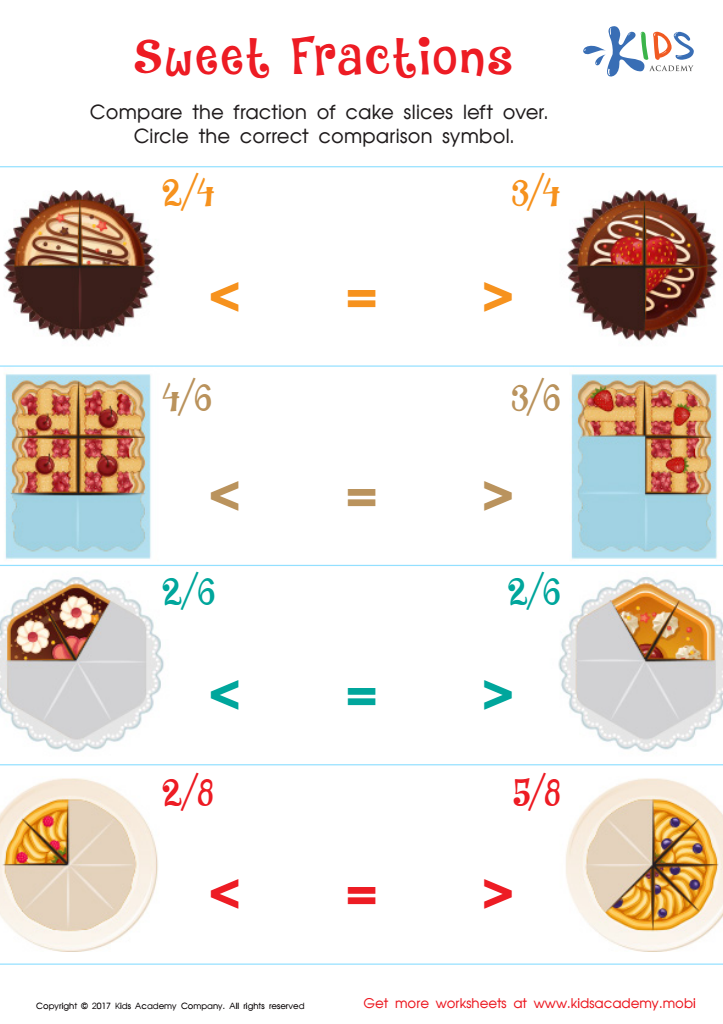
Compare Fractions Worksheet








Understanding how to compare fractions is crucial for 8-year-olds as it lays the groundwork for more advanced mathematical concepts in later grades. First, comparing fractions helps develop their number sense, reinforcing the idea that numbers can come in various forms and shapes. This skill is essential, as it supports children in making informed decisions—whether it’s sharing snacks or dividing tasks among peers.
Second, fractions are prevalent in everyday life, from cooking to measuring. When parents or teachers emphasize fraction comparisons, it helps children relate mathematics to real-world scenarios, making learning more engaging and practical.
Additionally, mastering this skill promotes critical thinking and reasoning. Kids learn to evaluate and articulate their thought processes, which is invaluable as they tackle challenges across subjects. The confidence they gain from comparing fractions can spark an interest in further mathematical concepts, setting them up for academic success.
By introducing and encouraging activities centered around fractions, educators and parents can foster a positive attitude toward math in children. It helps overcome any potential math anxiety as they explore fractions, promoting a growth mindset that emphasizes persistence and curiosity in learning.








