Comparing lengths Numbers Worksheets for 8-Year-Olds
4 filtered results
-
From - To
Explore our engaging "Comparing Lengths Numbers Worksheets" designed for 8-year-olds! These printable worksheets help young learners master the concept of comparing lengths through fun exercises. Your child will develop critical thinking skills as they measure various objects and discern which is longer or shorter. Ideal for both classroom and home learning, our resources promote hands-on learning and reinforce mathematical concepts in a challenging yet enjoyable way. With clear instructions and colorful visuals, these worksheets make learning about lengths easy and entertaining. Help your child gain confidence in math while having fun! Perfect for teachers and parents alike.
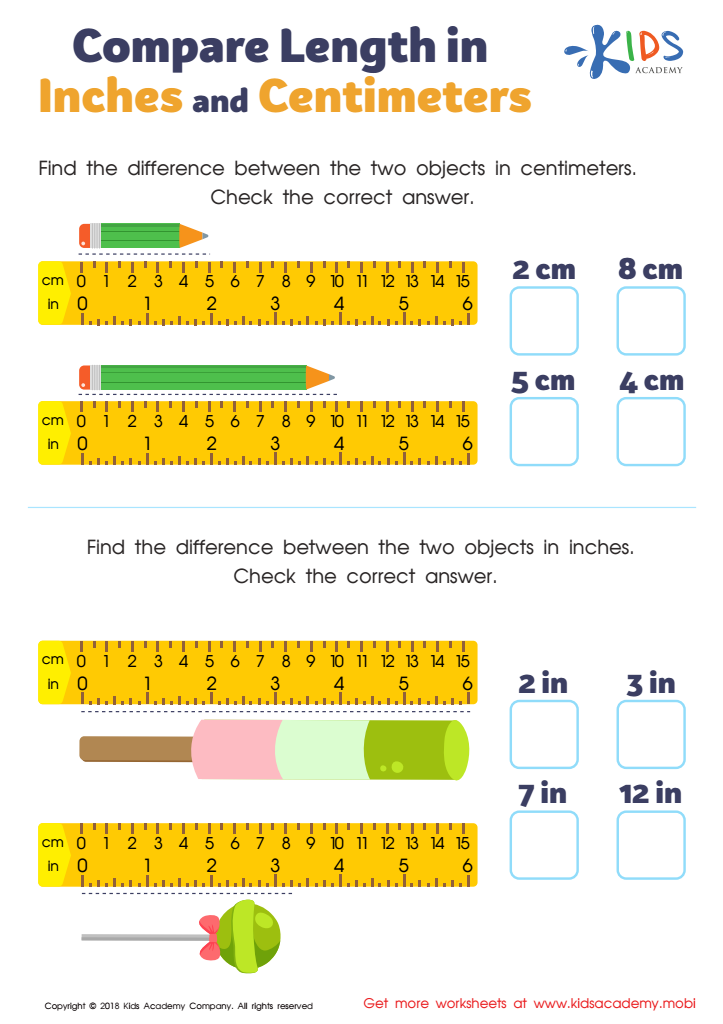
Compare Length in Inches and Centimeters Worksheet
 Assign to My Students
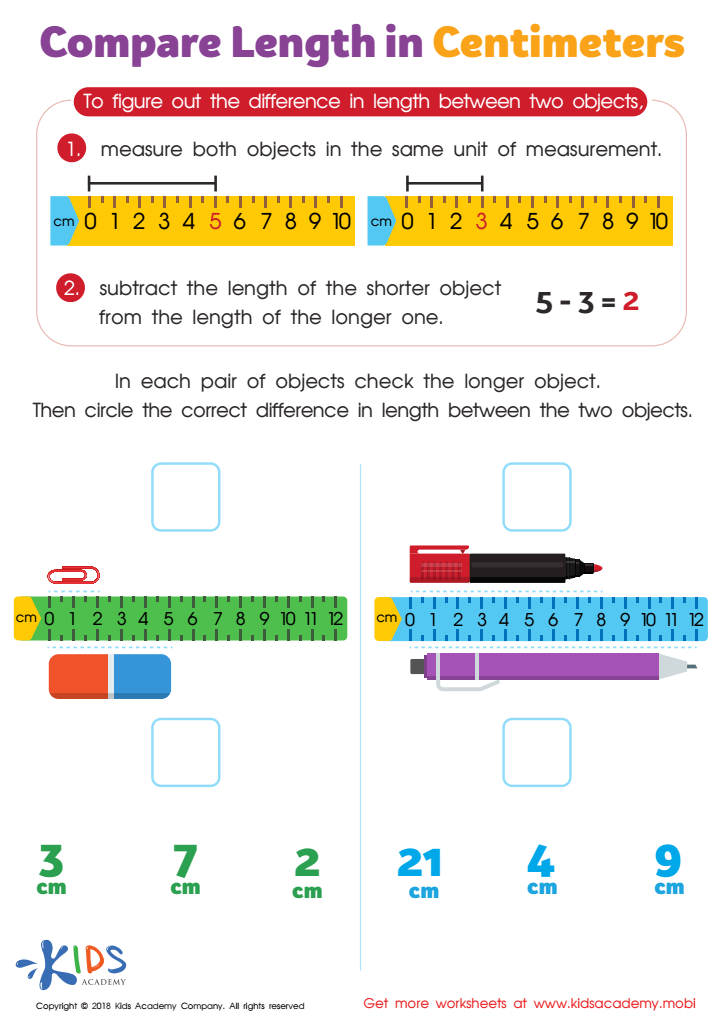
Compare Length in Centimeters Worksheet
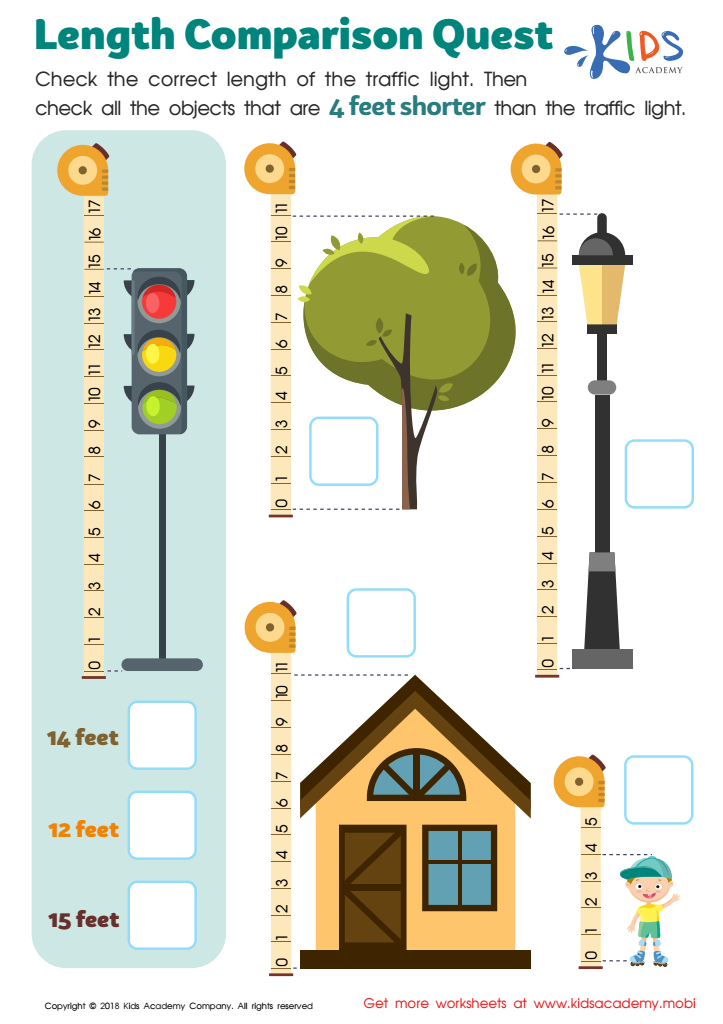
Length Comparison Quest Worksheet
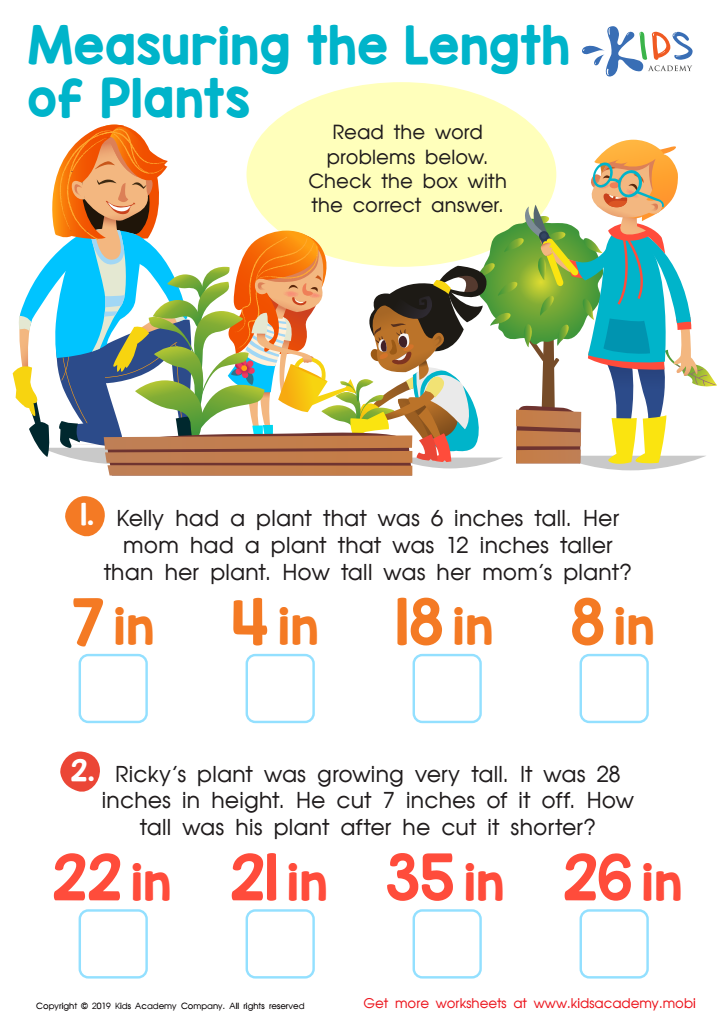
Measuring the Length of Plants Worksheet








Comparing lengths using numbers is an essential skill for 8-year-olds, and it's crucial for parents and teachers to recognize its importance. At this age, children are developing their numerical understanding and critical thinking skills, which lays the foundation for more complex math concepts later on. By comparing lengths, children learn to apply their knowledge of measurement, understand units (like inches, centimeters, or meters), and interpret numerical data effectively.
Moreover, engaging with comparisons supports language and communication skills, as kids describe their reasoning and findings. This activity fosters logical thinking – they visualize relationships between objects and realize how different items relate to each other in terms of size. It cultivates problem-solving skills as they navigate through real-life situations involving measurement, such as determining which item is longer, which is necessary for tasks like recipe adjustments, crafting, or even understanding space in their environment.
Additionally, learning to compare lengths enhances a child’s ability to make informed decisions and estimations, honing both cognitive and motor skills. It can stimulate interest in STEM (science, technology, engineering, and mathematics), fostering a love for learning that can carry through their educational journey. Overall, these skills are pivotal for academic success and everyday life awareness.








