
Enhancing critical thinking Numbers Worksheets for 8-Year-Olds
5 filtered results
Difficulty Level
Grade
Age
-
From - To
Subject
Activity
Standards
Enhancing Critical Thinking Numbers Worksheets for 8-Year-Olds are designed to foster important cognitive skills while making learning enjoyable. These thoughtfully crafted worksheets focus on helping young learners develop their critical thinking abilities through engaging math challenges and problem-solving activities. By tackling various number-based tasks, children will sharpen their analytical skills, boost their confidence, and build a solid mathematical foundation. Our worksheets cover a range of topics, ensuring that each child can learn at their own pace. With colorful visuals and interactive exercises, these resources provide an exciting way to explore numbers and enhance critical thinking for a brighter future in math.
Favorites
With answer key
Interactive
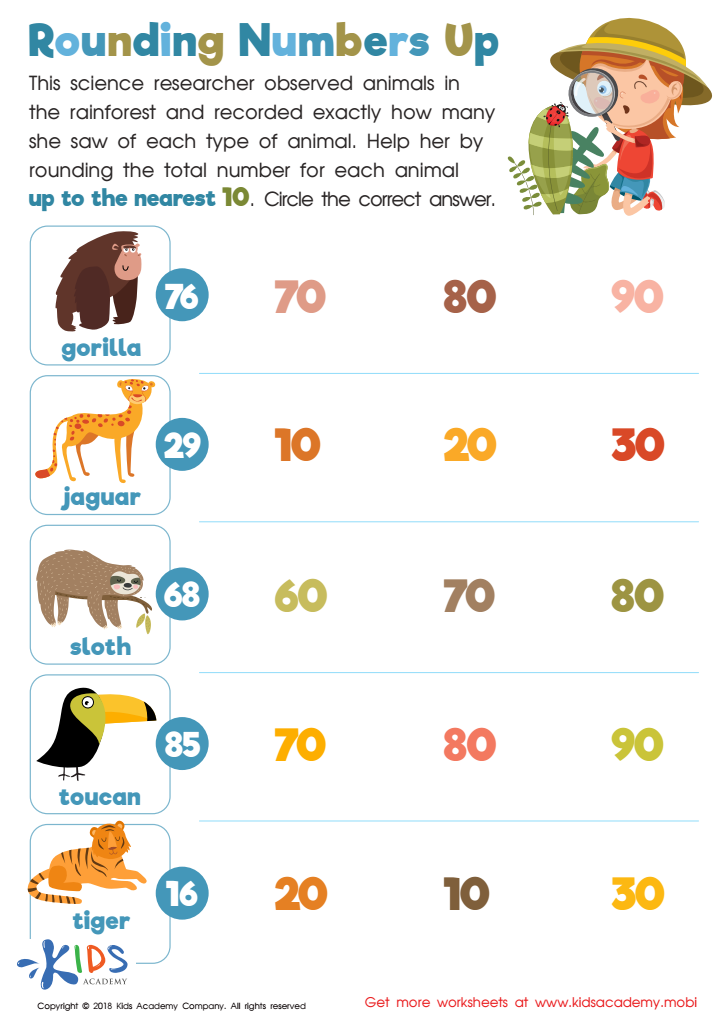
Rounding Numbers Up Worksheet
Does your child want to be a science researcher? If so, they share something in common with the person in this worksheet. She observed rainforest animals and counted them. Your child can help by rounding the totals to the nearest 10 and circling the correct answer for each type.
 Assign to My Students
Rounding Numbers Up Worksheet
Worksheet
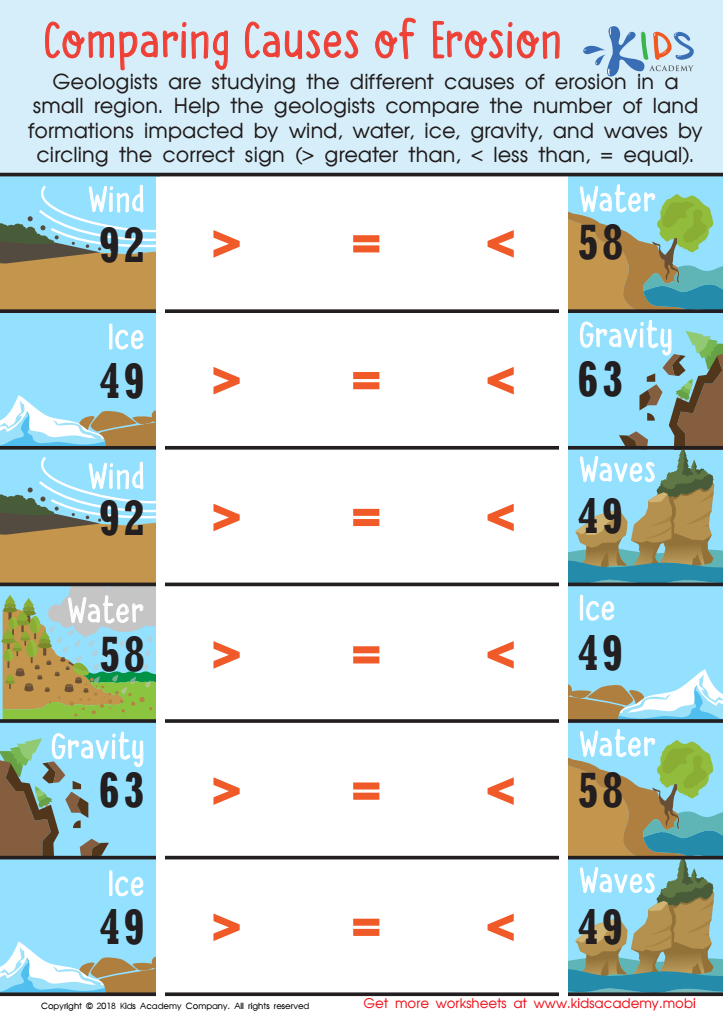
Comparing Causes of Erosion Worksheet
This free PDF worksheet combines science, number sense and comparing numbers to teach kids about the causes of erosion. They'll compare numbers related to ice, wind, water, gravity and waves and decide if each cause is greater, less than or equal to another. It's an interdisciplinary and meaningful way to learn that kids will enjoy.
Comparing Causes of Erosion Worksheet
Worksheet
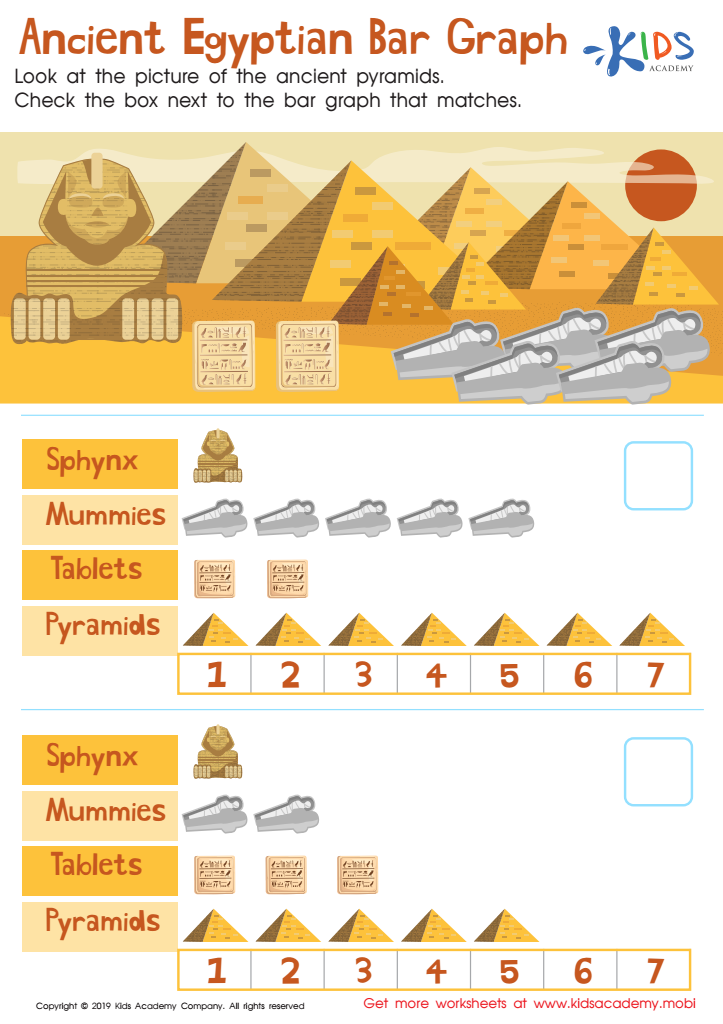
Egyptian Bar Graph Worksheet
Help your kids get a hang of bar graphs with this fun worksheet. Examine the picture of the ancient pyramids and help them match the bar graph to it. Check the box next to the correct bar graph and watch your little ones learn quickly!
Egyptian Bar Graph Worksheet
Worksheet
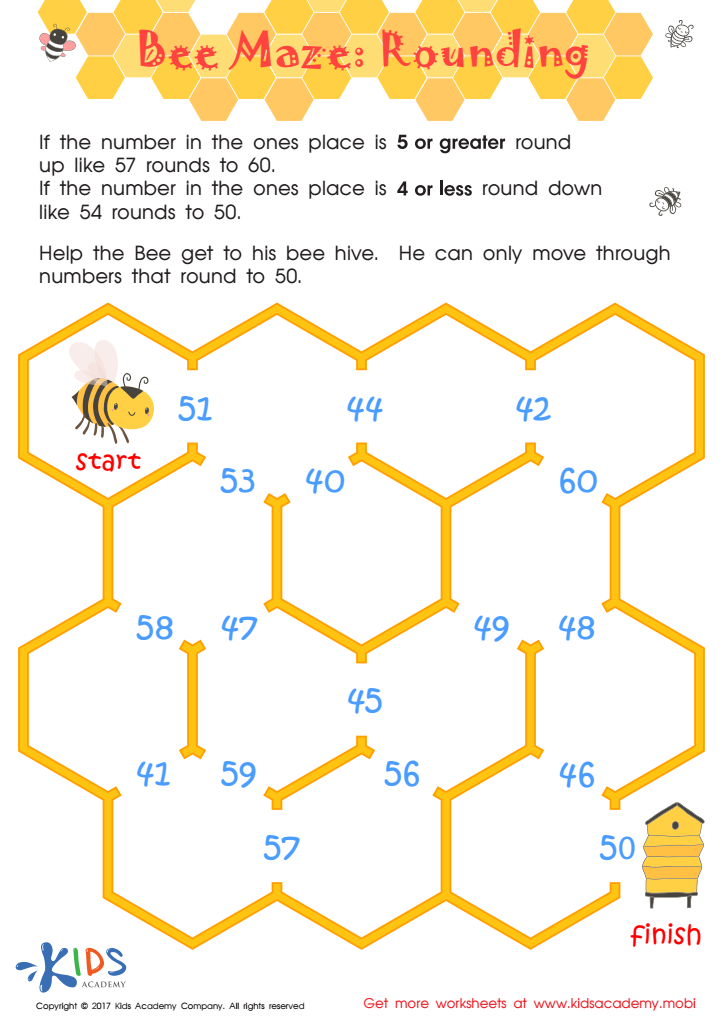
Bee Maze Worksheet
Help the bee find his way to the hive by rounding to the nearest 50!
Help the bee get to his hive with this fun, tricky rounding puzzle! This PDF worksheet challenges your child to round numbers up or down to 50. It reinforces the rules for rounding numbers and leads the bee through a maze. Get your child to help the bee reach the hive by rounding to 50!
Bee Maze Worksheet
Worksheet
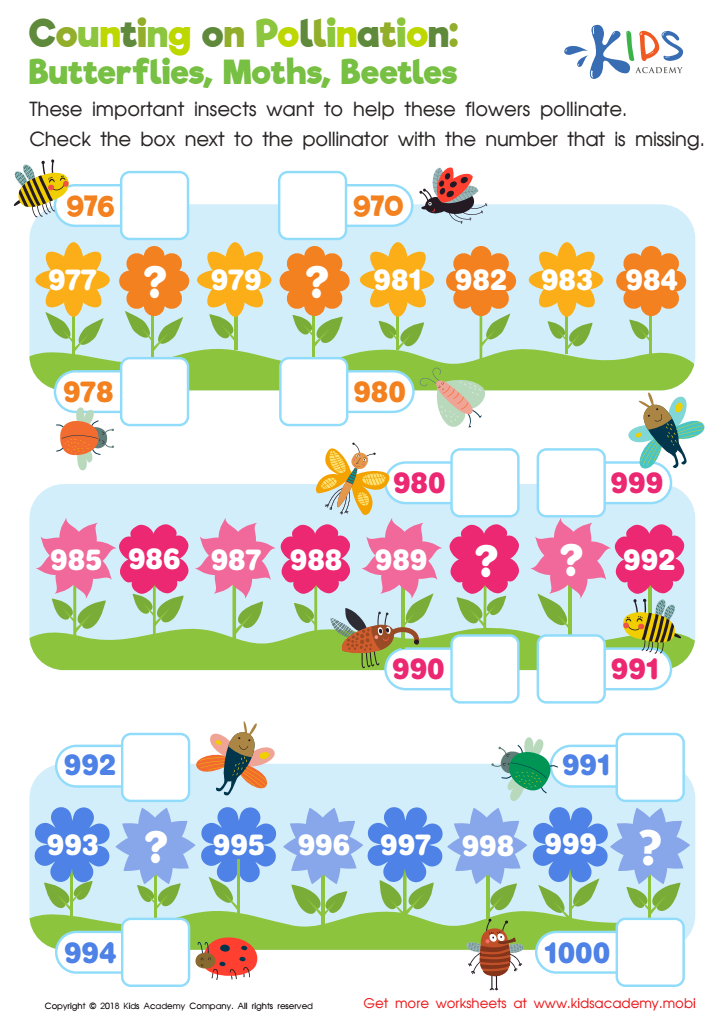
Counting on Pollination: Butterflies, Moths, Beetles Worksheet
A number line can help boost computation accuracy and efficiency. It can also be used with more advanced numbers. Help your child practice by having them identify missing numbers in sequences. This fun worksheet lets them help the pollinators in the process, as they strengthen their number sense.
Counting on Pollination: Butterflies, Moths, Beetles Worksheet
Worksheet
Join Kids Academy for Free
Who is primarily going to use this learning content?







Enhancing critical thinking in numbers for 8-year-olds is vital for several reasons. At this age, children are forming foundational math skills that will influence their academic journey and everyday problem-solving abilities. Developing critical thinking in numerical concepts encourages deeper comprehension, enabling students to not just memorize facts but understand their applications.
When parents and teachers prioritize critical thinking in mathematics, they empower children to approach problems methodically and creatively. This skill set helps children to evaluate information, make informed decisions, and tackle challenges confidently—qualities that are essential in both academic and real-world contexts.
Moreover, critical thinking in numbers reinforces persistence and resilience in overcoming obstacles. Children learn to analyze different strategies, compare outcomes, and draw conclusions, skills that extend beyond the math classroom. These abilities also enhance students' preparedness for future subjects that require logical reasoning, such as science and language arts.
Finally, fostering critical thinking helps create an engaging learning environment, making math enjoyable rather than merely a requirement. When children can think critically about numbers, they are more likely to retain knowledge, rely on their reasoning skills, and develop a lifelong love for learning. Thus, by investing in enhancing critical thinking, parents and teachers contribute to a well-rounded educational experience.








