Transform math learning for 8-year-olds with our Enhance Comprehension Math Worksheets! Designed to reinforce vital skills, these engaging worksheets focus on problem-solving, critical thinking, and comprehension. Children will explore a variety of fun and interactive exercises that not only challenge their mathematical abilities but also support their understanding of concepts through real-life applications. Our versatile worksheets cater to diverse learning styles, ensuring every child can thrive. Spark curiosity and boost confidence in math with engaging activities that promote a deep understanding of essential principles. Join us today to help your child master math the enjoyable way!
Check out this FREE Trial Lesson on Math for age 8!

D

Favorites
With answer key
Interactive
  • 8
  • Enhance comprehension
  • Math
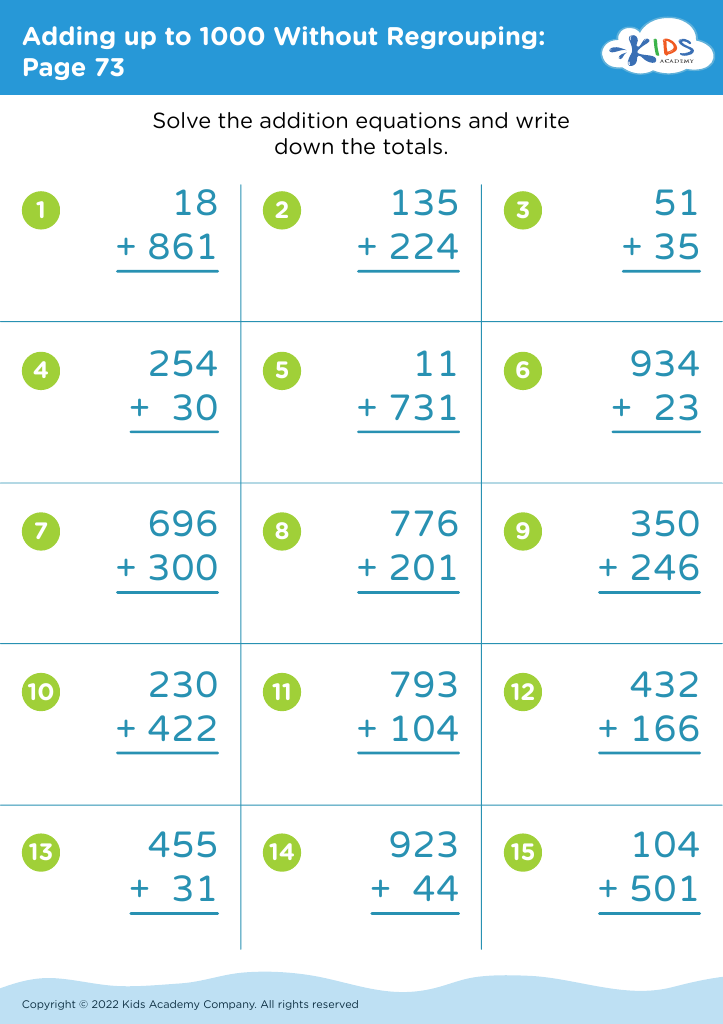
Adding up to 1000 Without Regrouping: Page 73
Worksheet
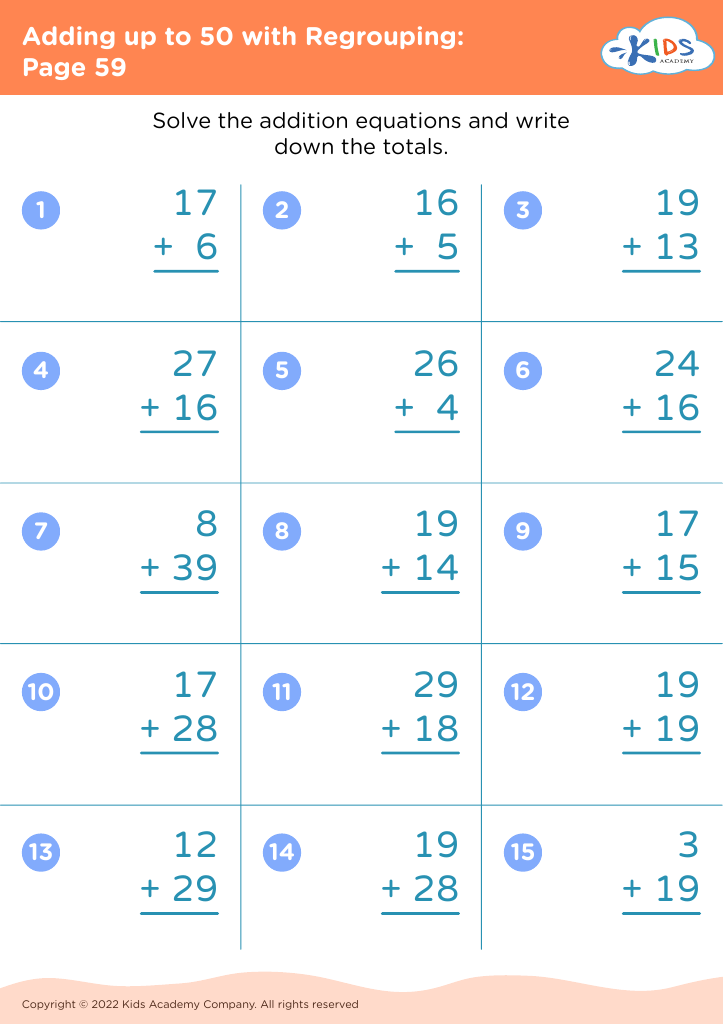
Adding up to 50 with Regrouping: Page 59
Worksheet
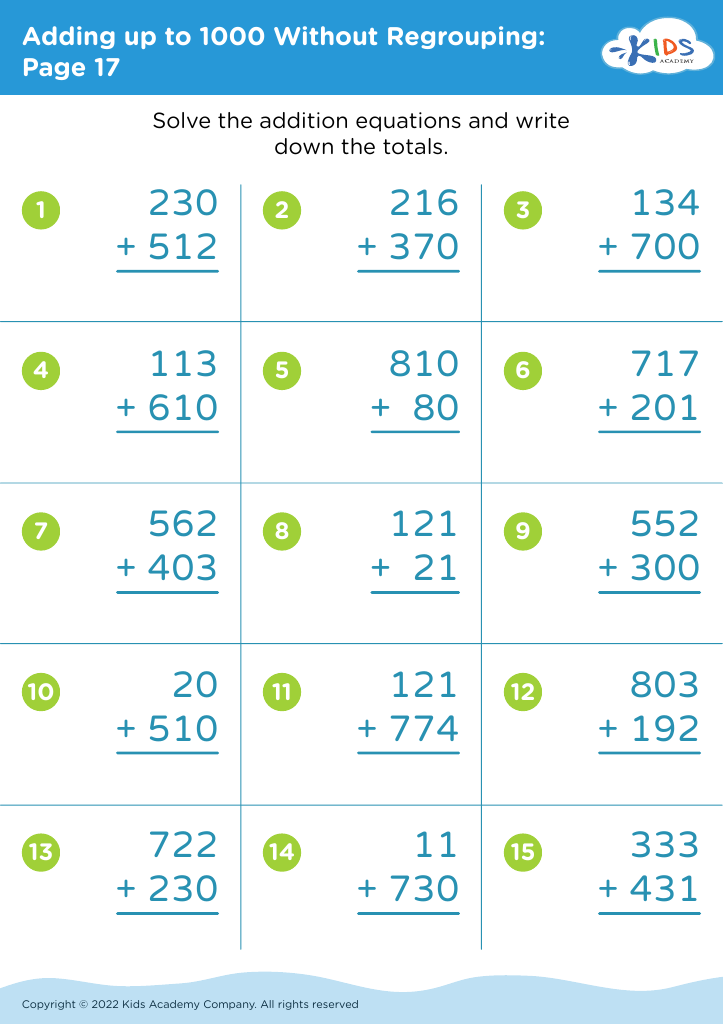
Adding up to 1000 Without Regrouping: Page 17
Worksheet
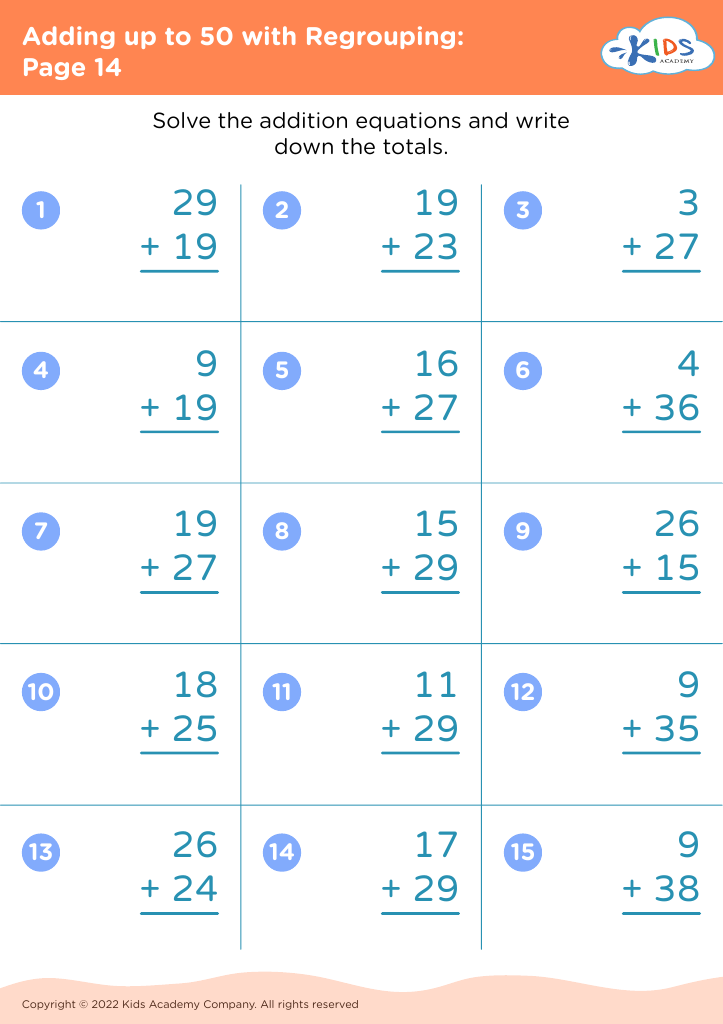
Adding up to 50 with Regrouping: Page 14
Worksheet
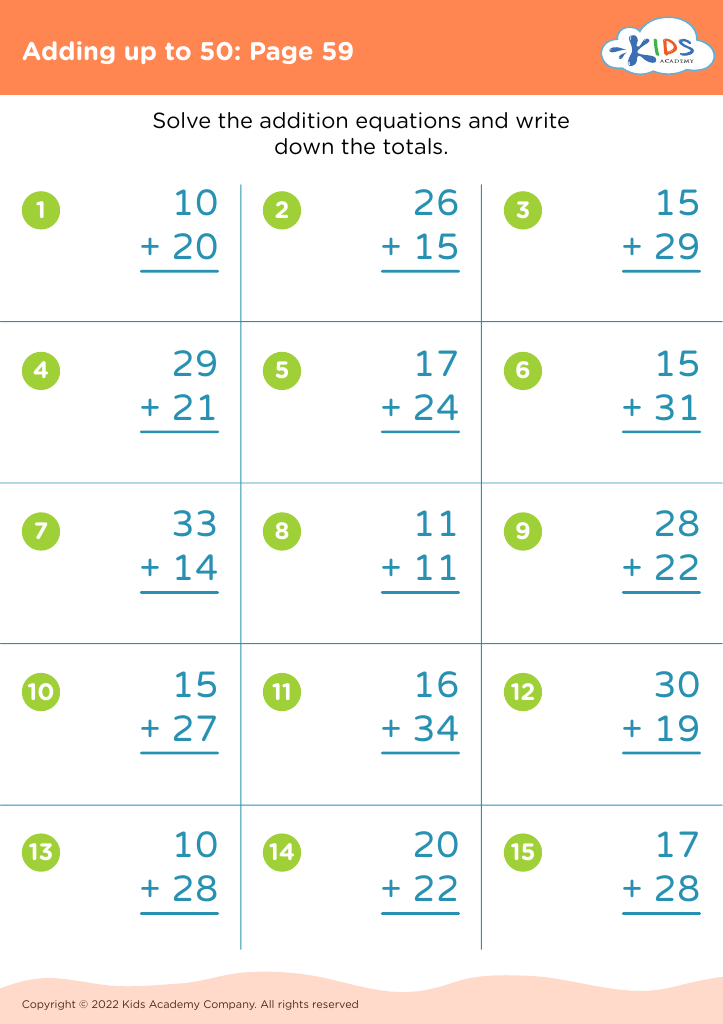
Adding up to 50: Page 59

Adding up to 50: Page 59

Adding up to 50: Page 59
Worksheet
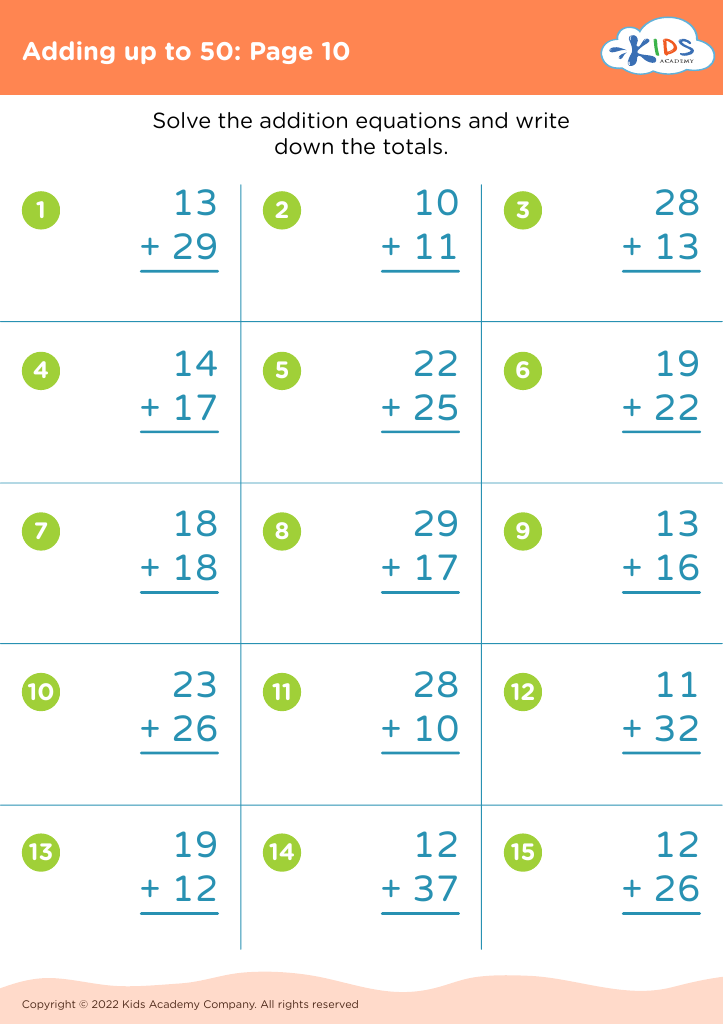
Adding up to 50: Page 10

Adding up to 50: Page 10

Adding up to 50: Page 10
Worksheet
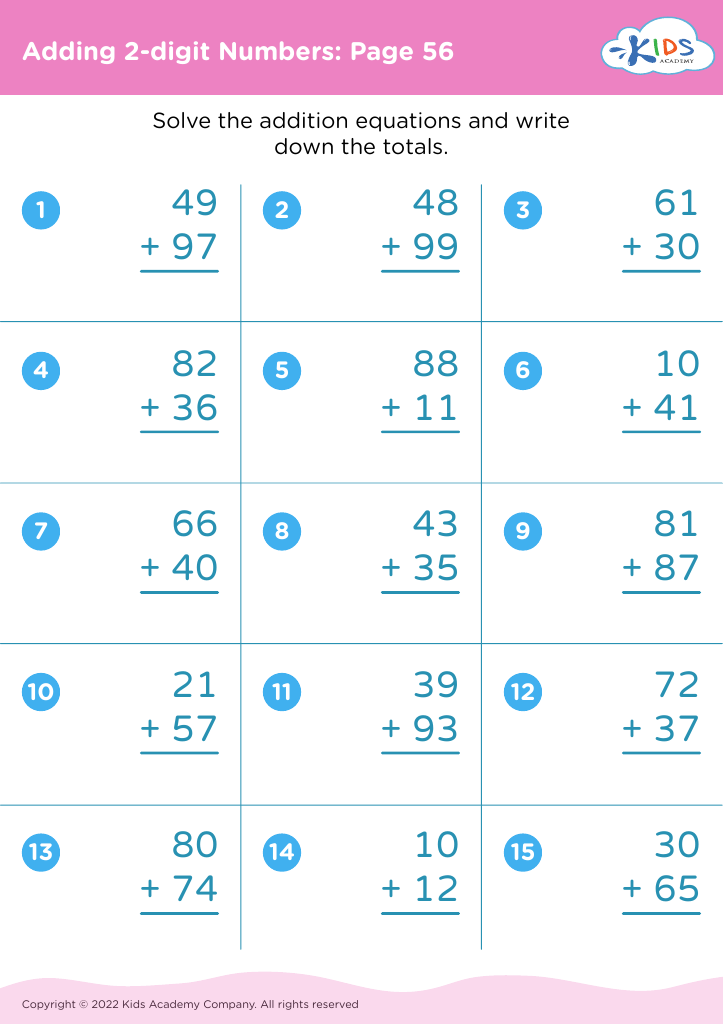
Adding 2-digit Numbers: Page 56

Adding 2-digit Numbers: Page 56

Adding 2-digit Numbers: Page 56
Worksheet
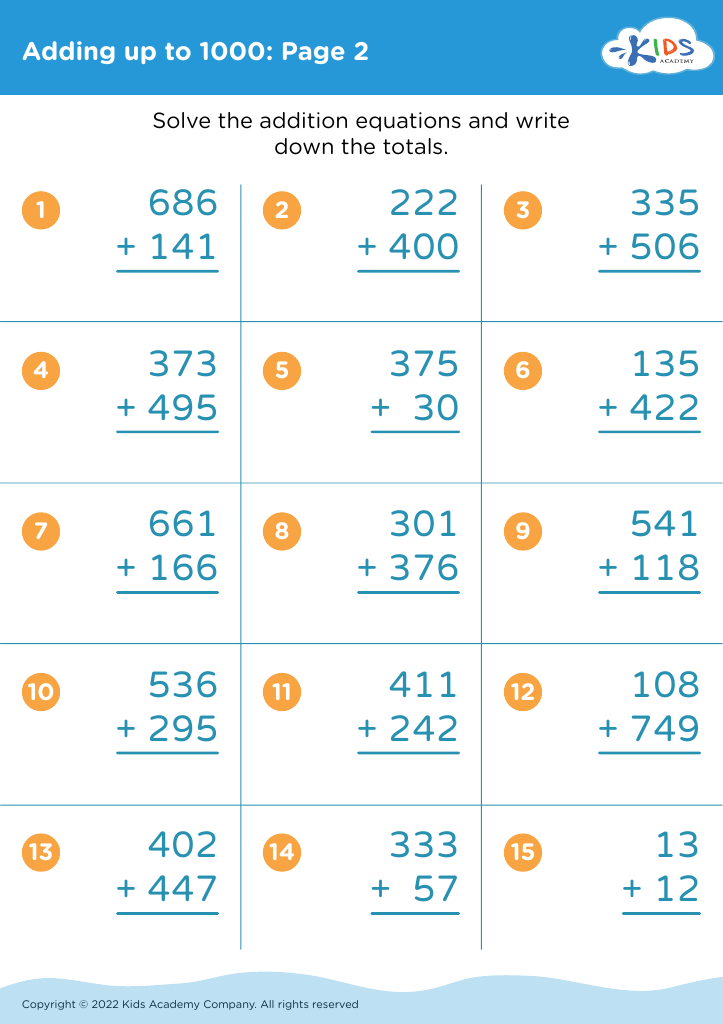
Adding up to 1000: Page 2

Adding up to 1000: Page 2

Adding up to 1000: Page 2
Worksheet
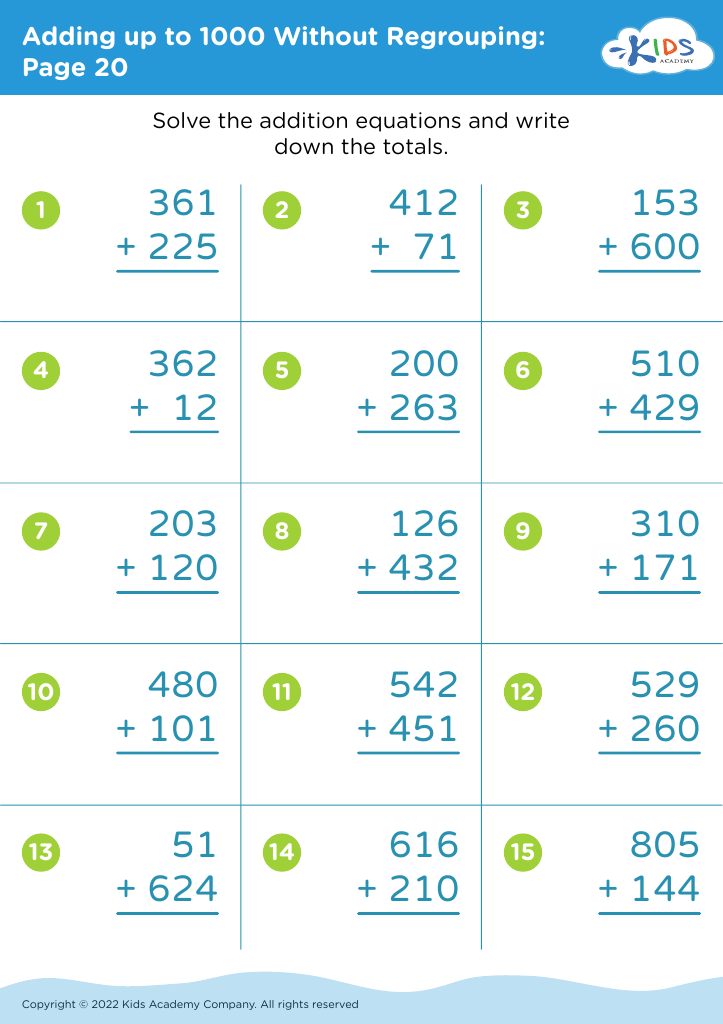
Adding up to 1000 Without Regrouping: Page 20
Worksheet
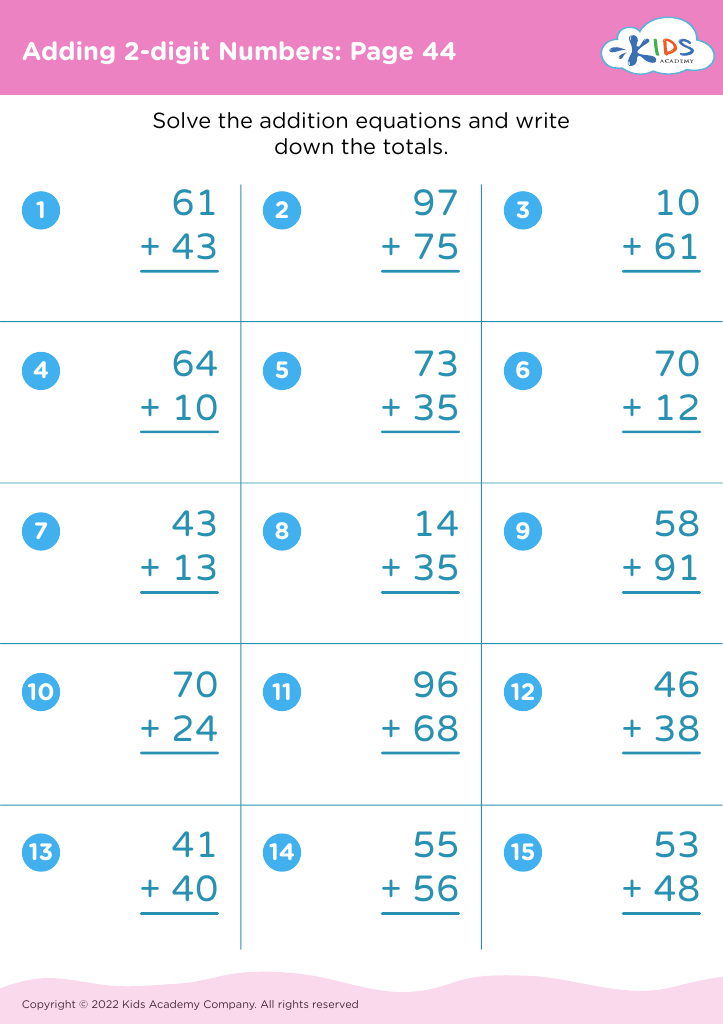
Adding 2-digit Numbers: Page 44

Adding 2-digit Numbers: Page 44

Adding 2-digit Numbers: Page 44
Worksheet
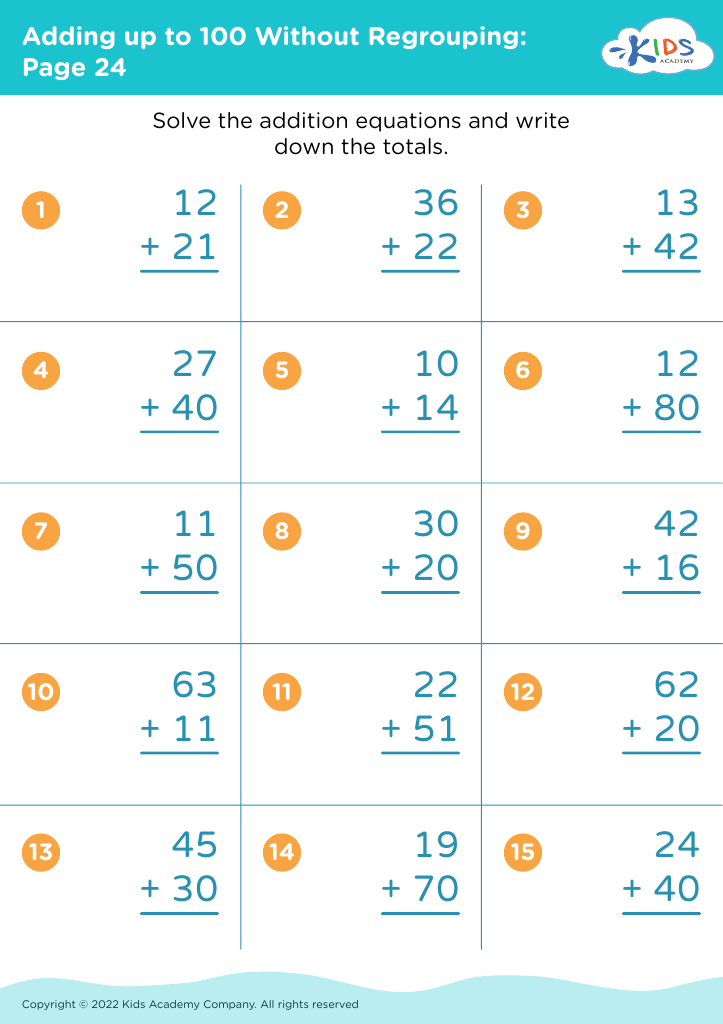
Adding up to 100 Without Regrouping: Page 24
Worksheet
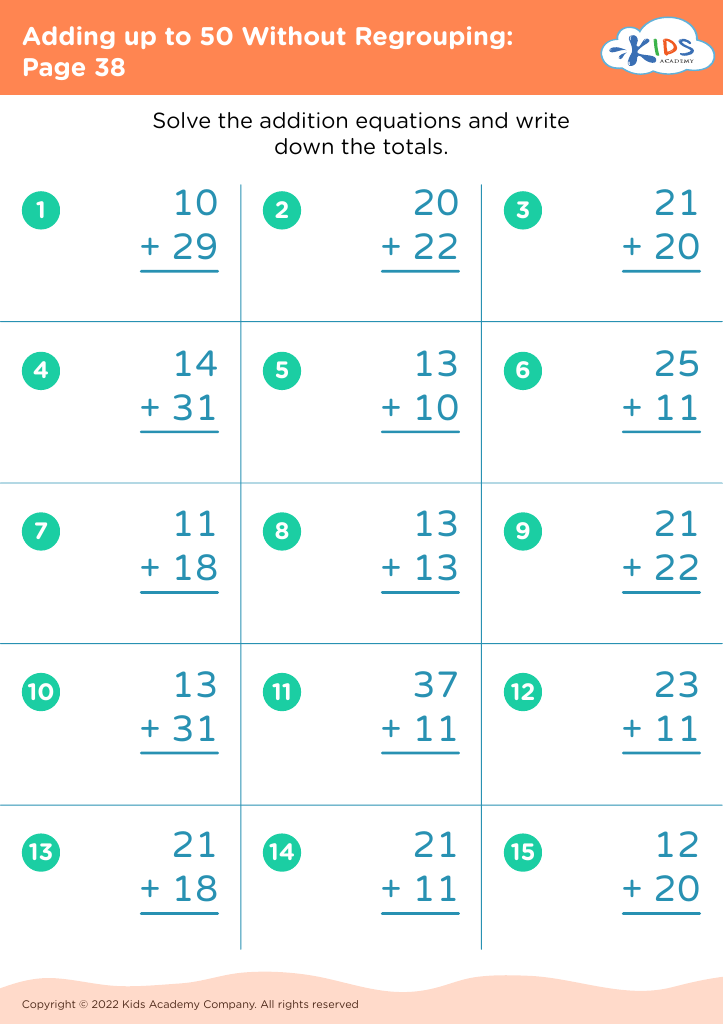
Adding up to 50 Without Regrouping: Page 38
Worksheet
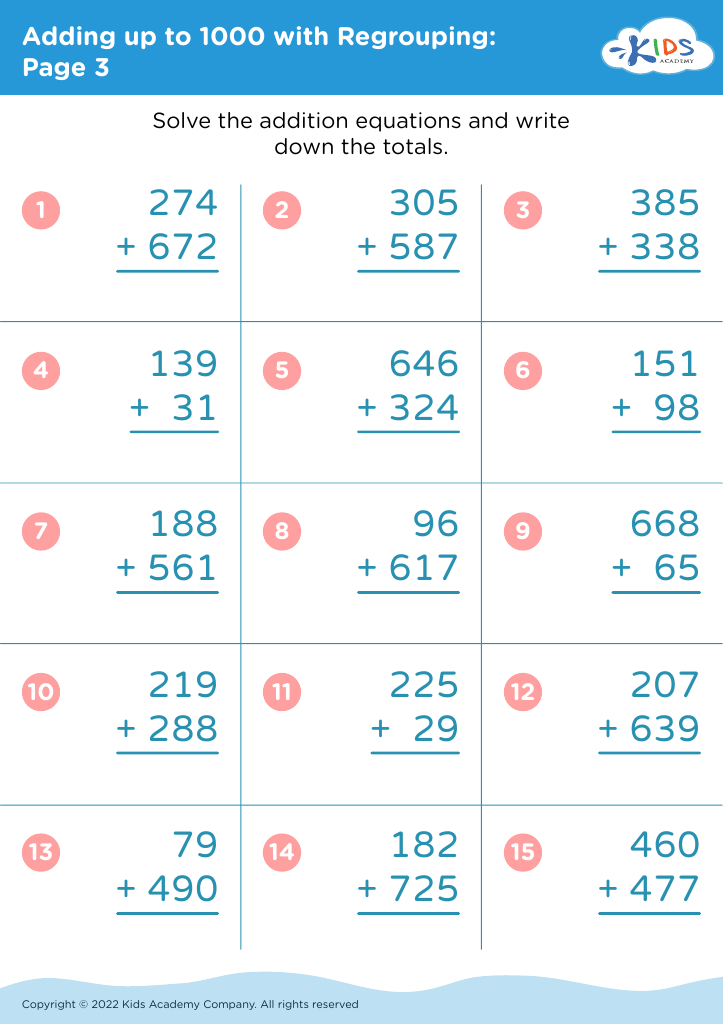
Adding up to 1000 with Regrouping: Page 3
Worksheet
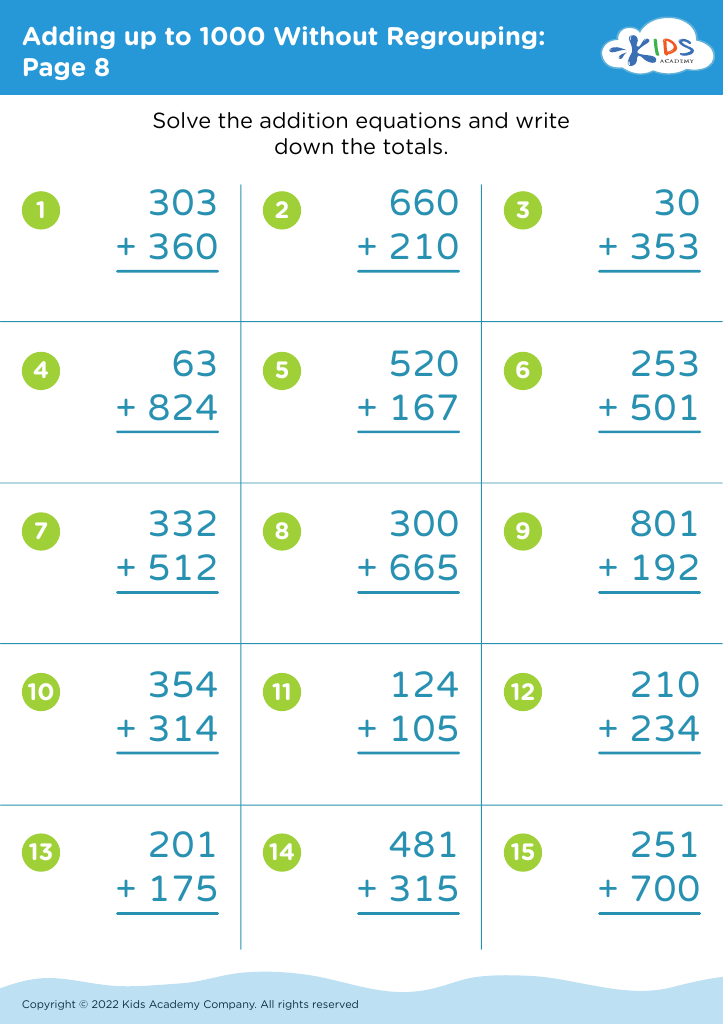
Adding up to 1000 Without Regrouping: Page 8
Worksheet
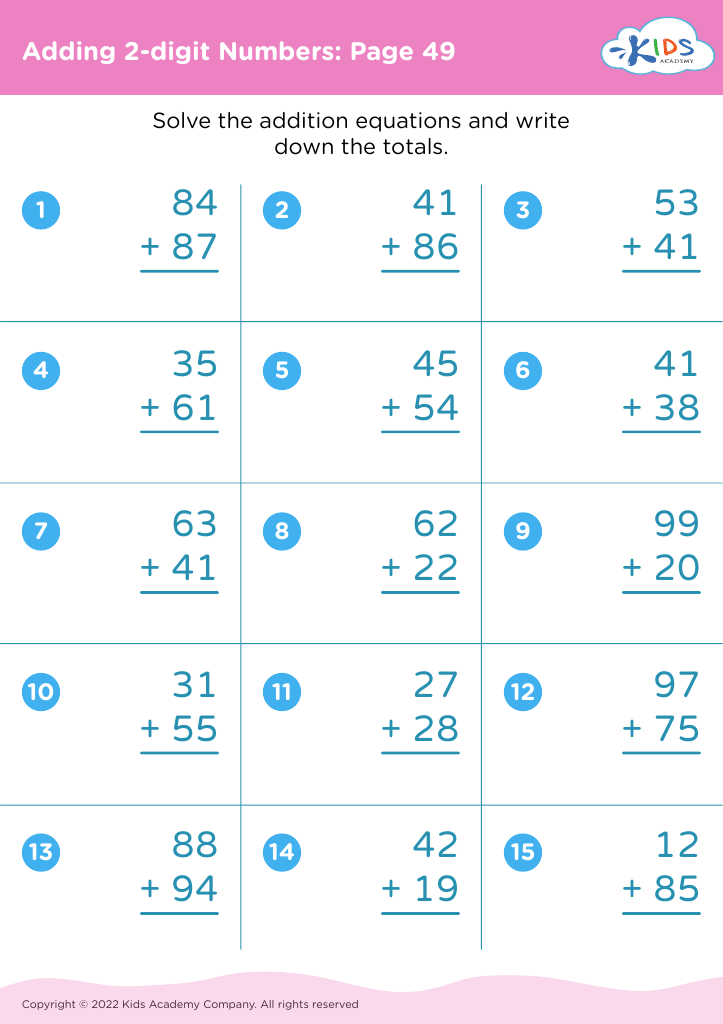
Adding 2-digit Numbers: Page 49

Adding 2-digit Numbers: Page 49

Adding 2-digit Numbers: Page 49
Worksheet
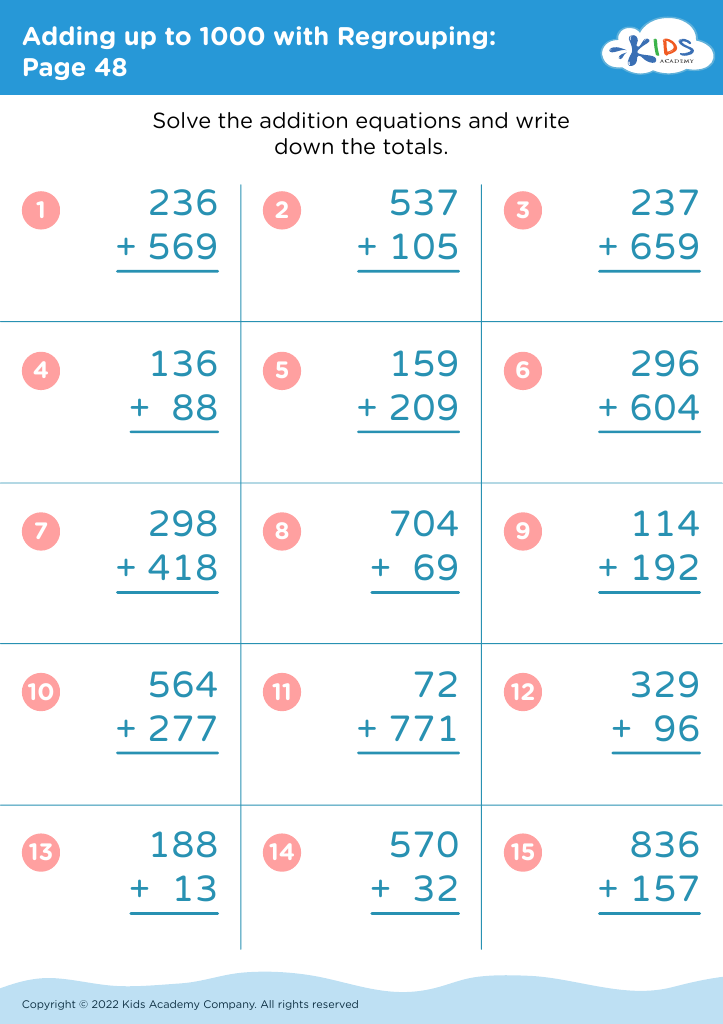
Adding up to 1000 with Regrouping: Page 48
Worksheet
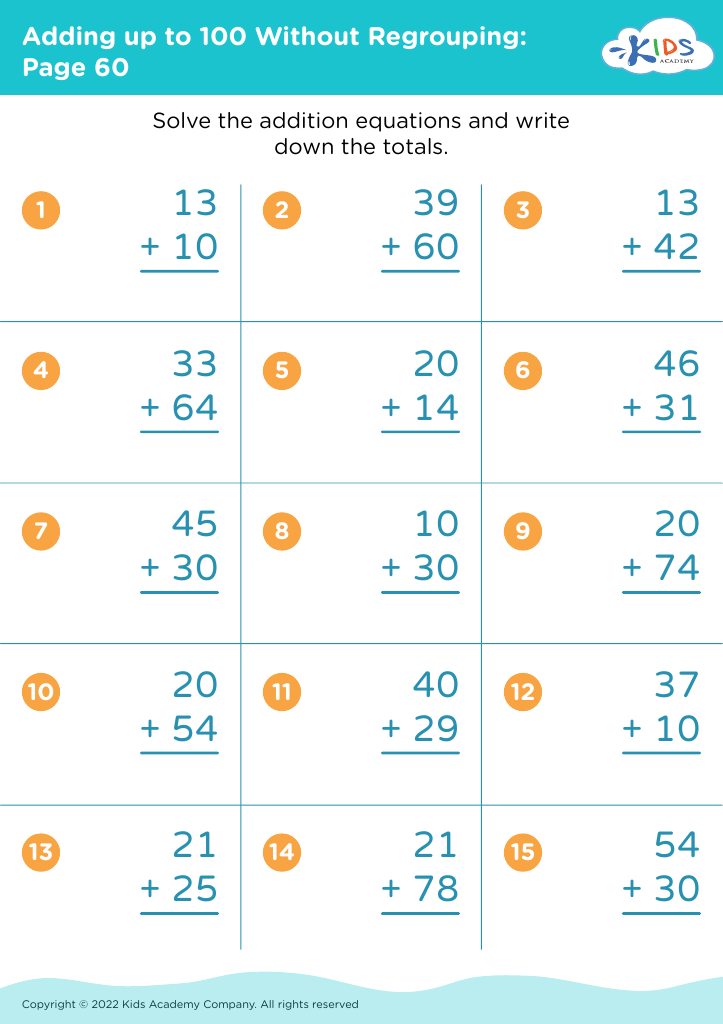
Adding up to 100 Without Regrouping: Page 60
Worksheet


Enhancing comprehension in math for 8-year-olds is crucial for several reasons. First and foremost, this age marks a pivotal moment in a child's academic journey, where foundational concepts become more complex. At eight, children transition from basic arithmetic to understanding more intricate principles, such as problem-solving and critical thinking. Strengthening their comprehension during this phase equips them with the necessary tools to tackle advanced topics in the future.

Moreover, math comprehension goes beyond numbers; it promotes analytical reasoning and logical thinking, skills essential for everyday decision-making and broader academic success. When parents and teachers emphasize math comprehension, they foster a mindset of persistence and resilience in children. This instills confidence, reduces anxiety around math, and encourages a positive attitude towards learning.

Additionally, a strong grasp of mathematical concepts at this age contributes to overall academic performance, as skills gained in math often relate to reading comprehension, as well. Finally, by nurturing a deep understanding of math, educators and parents also prepare children for a future where quantitative literacy is increasingly vital in our technology-driven world. Therefore, focusing on enhancing math comprehension in eight-year-olds sets the stage for lifelong learning and success.