Learn addition Math Worksheets for 8-Year-Olds
3 filtered results
-
From - To
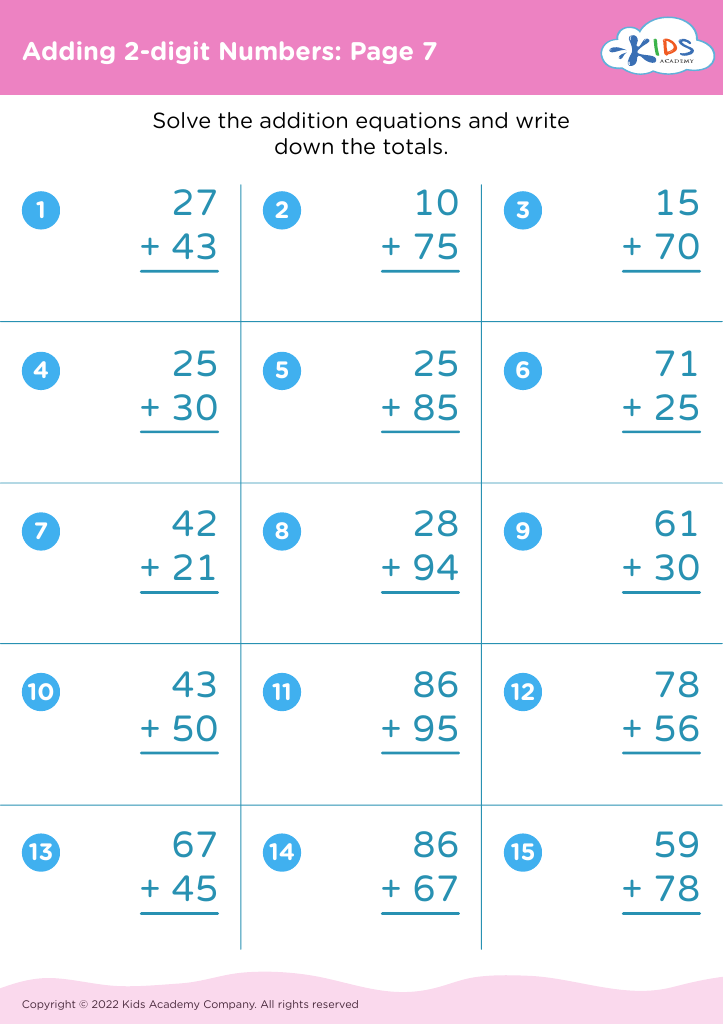
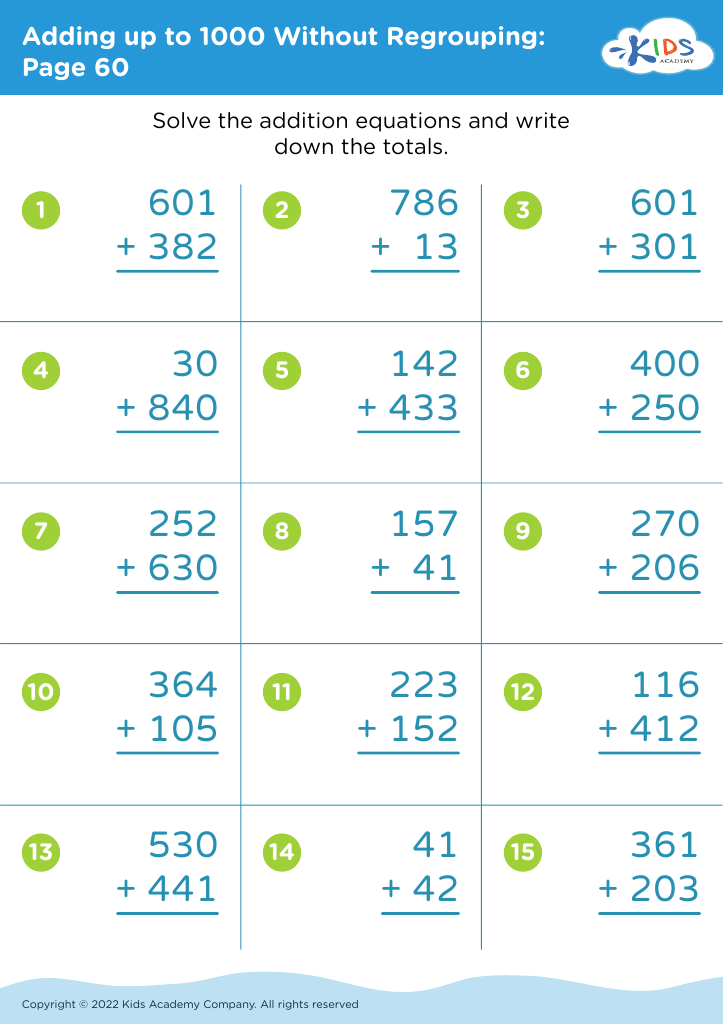
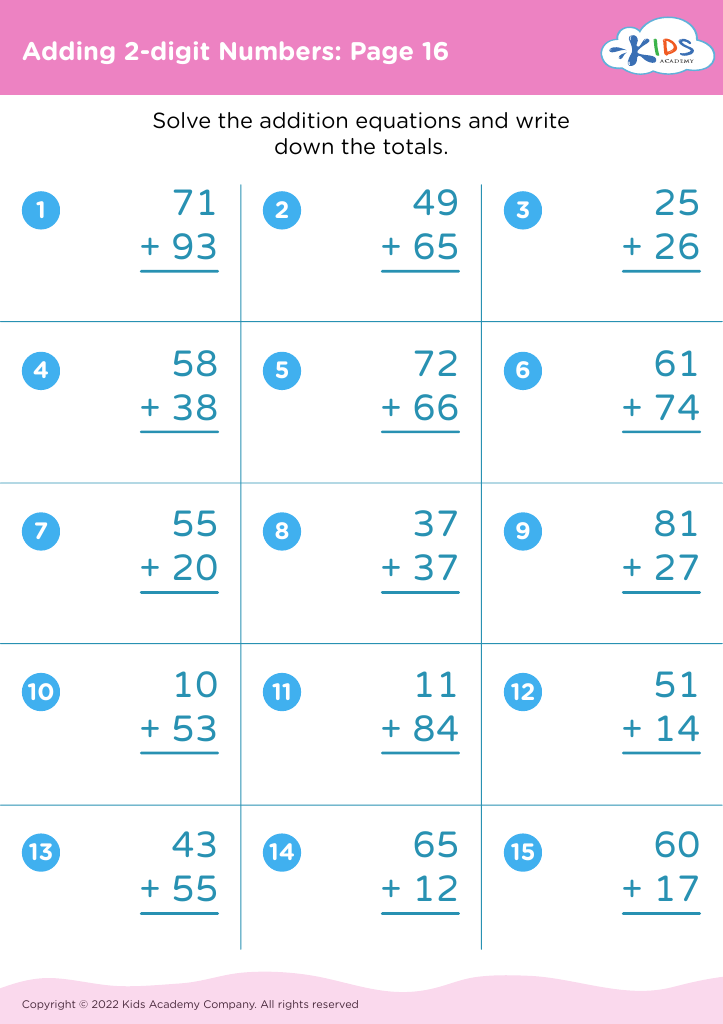
Unlock your child's math potential with our engaging addition worksheets designed specifically for 8-year-olds! These fun and interactive resources make learning addition enjoyable while reinforcing essential math skills. Our worksheets cover various addition strategies, including single and multi-digit problems, adapted for different learning styles. Parents and educators can use these printable activities to support classroom learning or enhance at-home practice. By incorporating colorful visuals and real-life scenarios, our worksheets captivate young minds, fostering a love for mathematics. Help your child build confidence and master addition through delightful exercises that provide both challenge and enjoyment. Start exploring today!







Learning addition is a foundational math skill crucial for an 8-year-old's cognitive development. At this age, children begin to encounter more complex math concepts, and a solid grasp of addition sets the stage for future success in mathematics, critical thinking, and problem-solving. Understanding addition fosters confidence in handling numbers, which is vital for their academic journey.
Moreover, mastering addition aids in developing organizational skills and mental math proficiency, allowing children to perform calculations quickly without the need for external aids. It encourages logical reasoning, as children learn to apply addition in various contexts, such as budgeting their allowances or understanding basic statistics in real life.
For parents and teachers, fostering strong addition skills in children not only prepares them for higher math learning but also enhances their overall learning experience in school. Engaging children in addition through fun activities and real-world scenarios helps them appreciate the relevance of math in everyday life. This engagement fosters a positive attitude towards learning, encouraging future curiosity and exploration in subjects beyond mathematics. Thus, prioritizing the teaching of addition can significantly impact children's academic and personal development.








