Understanding biodiversity Math Worksheets for 8-Year-Olds
3 filtered results
-
From - To
Welcome to our "Understanding Biodiversity Math Worksheets" designed specifically for 8-year-olds! These engaging worksheets combine essential math skills with the fascinating world of biodiversity. Your child will explore mathematical concepts while learning about different ecosystems, plants, animals, and their interrelated roles in our environment. Each worksheet presents fun activities that reinforce addition, subtraction, and problem-solving, making math both educational and entertaining. With vibrant visuals and interactive challenges, kids will develop a deeper appreciation for nature while enhancing their math proficiency. Empower your young learners to connect math with real-world concepts and inspire a future love for both science and mathematics!
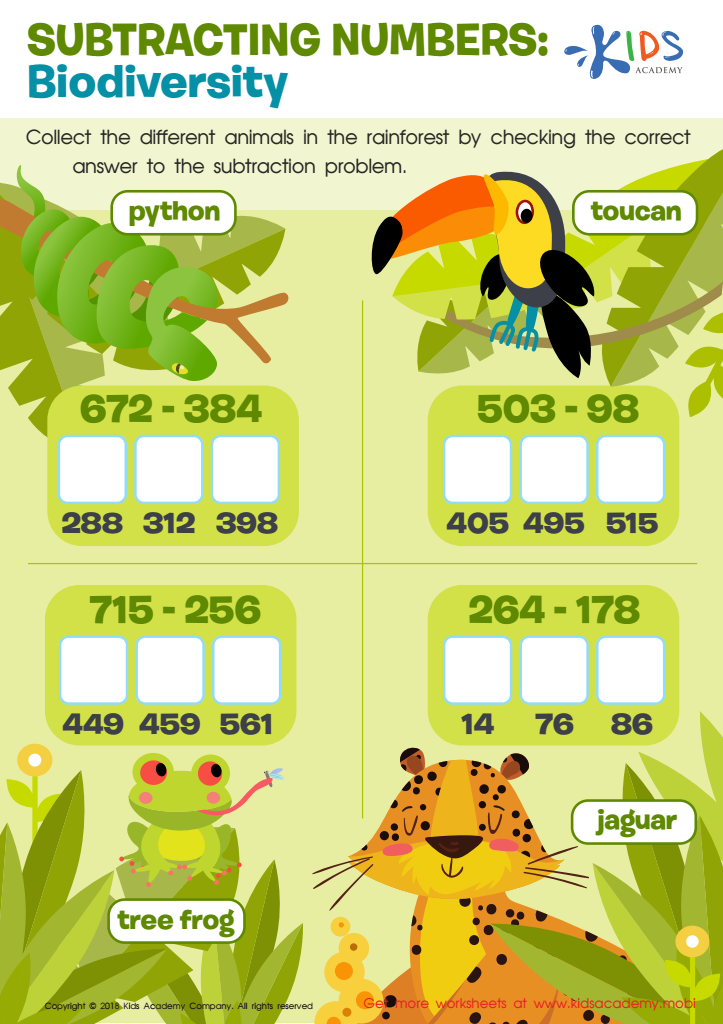
Subtracting Numbers: Biodiversity Worksheet
 Assign to My Students
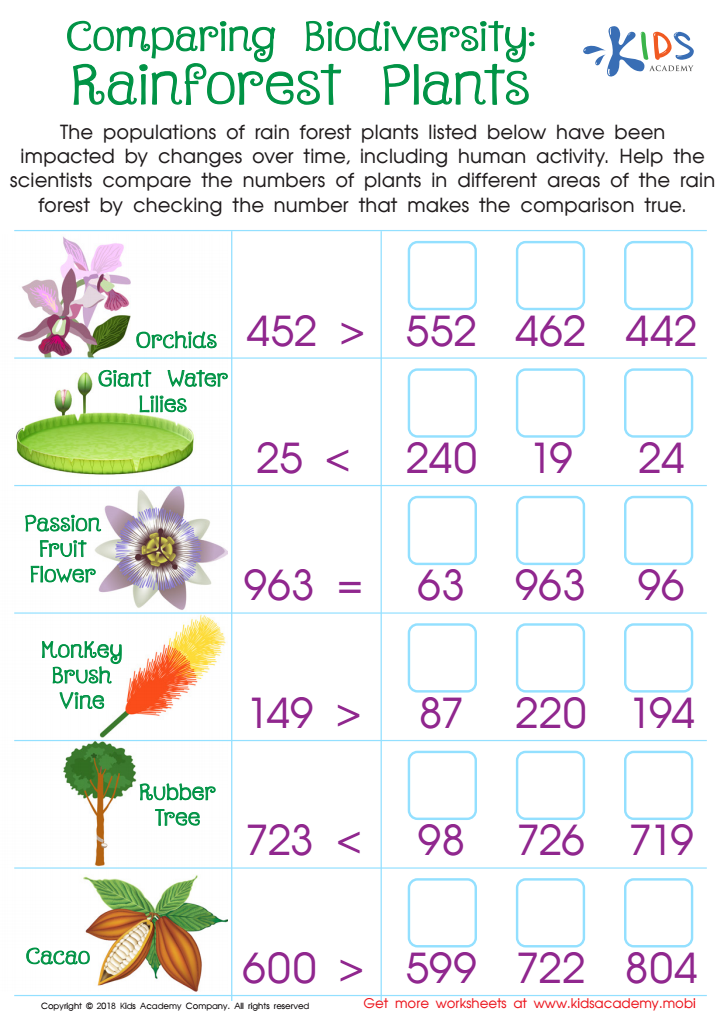
Comparing Biodiversity: Rainforest Plants Worksheet
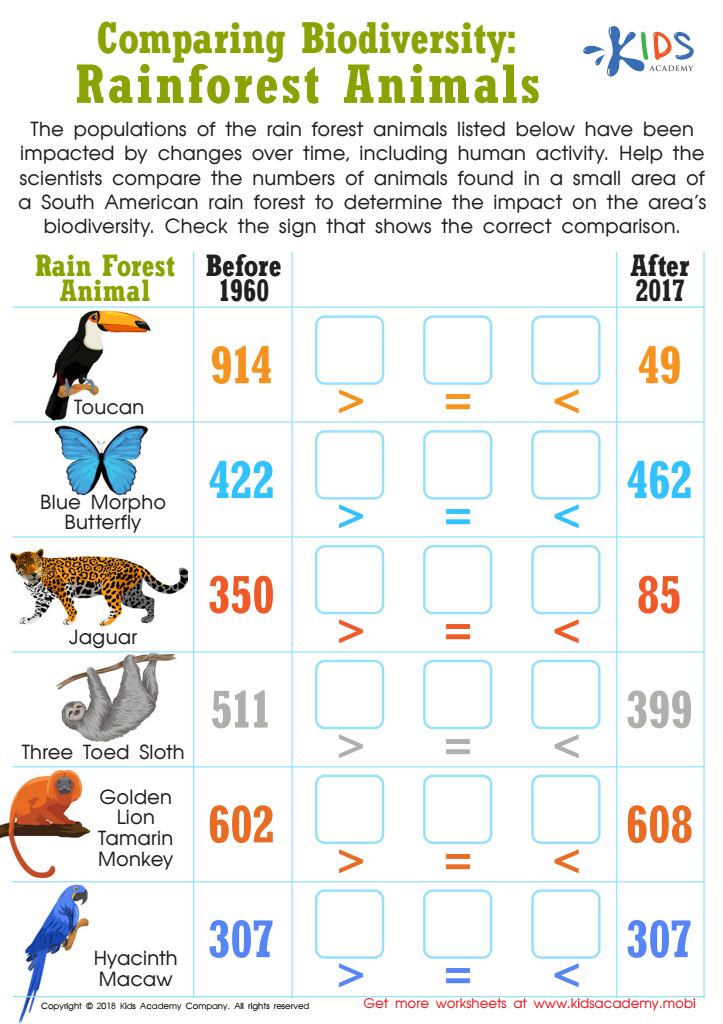
Comparing Biodiversity: Rainforest Animals Worksheet






.jpg)

Understanding biodiversity is crucial for 8-year-olds, as it lays the foundation for their environmental awareness and critical thinking skills. Teaching children about biodiversity— the variety of living organisms within ecosystems— helps them appreciate the interconnectedness of life. By grasping these concepts, children learn that every species, no matter how small, plays a significant role in maintaining ecological balance.
Parents and teachers should care because early exposure to such knowledge can foster a sense of responsibility and stewardship towards the environment. When kids understand the importance of biodiversity, they are more likely to develop positive attitudes towards conservation and sustainable practices. Lessons about biodiversity can be integrated into math through fun activities like counting species in different habitats, creating bar graphs of animal populations, or measuring plant growth, blending analytical skills with environmental education.
Additionally, focusing on biodiversity helps improve critical thinking, reasoning, and problem-solving skills since students engage in activities that require comparison, contrast, and evaluation. Ultimately, nurturing an understanding of biodiversity equips children with the values and skills necessary to make informed decisions as future caretakers of our planet. Engaging them in this exploration can ignite a lifelong passion for science, nature, and conservation.








