Sequencing skills improvement Science Worksheets for 8-Year-Olds
3 filtered results
-
From - To
Enhance your child's understanding of scientific concepts with our Sequencing Skills Improvement Science Worksheets designed for 8-year-olds. These engaging and interactive worksheets foster critical thinking and logical reasoning by guiding young learners through various sequencing activities related to scientific processes and events. Through a series of fun exercises, children will master the sequence of steps in experiments, the order of natural events, and the progression of life cycles. Perfect for classroom use or at-home practice, these worksheets cater to diverse learning styles and help develop essential skills that build a strong foundation in science. Start your child's learning adventure today!
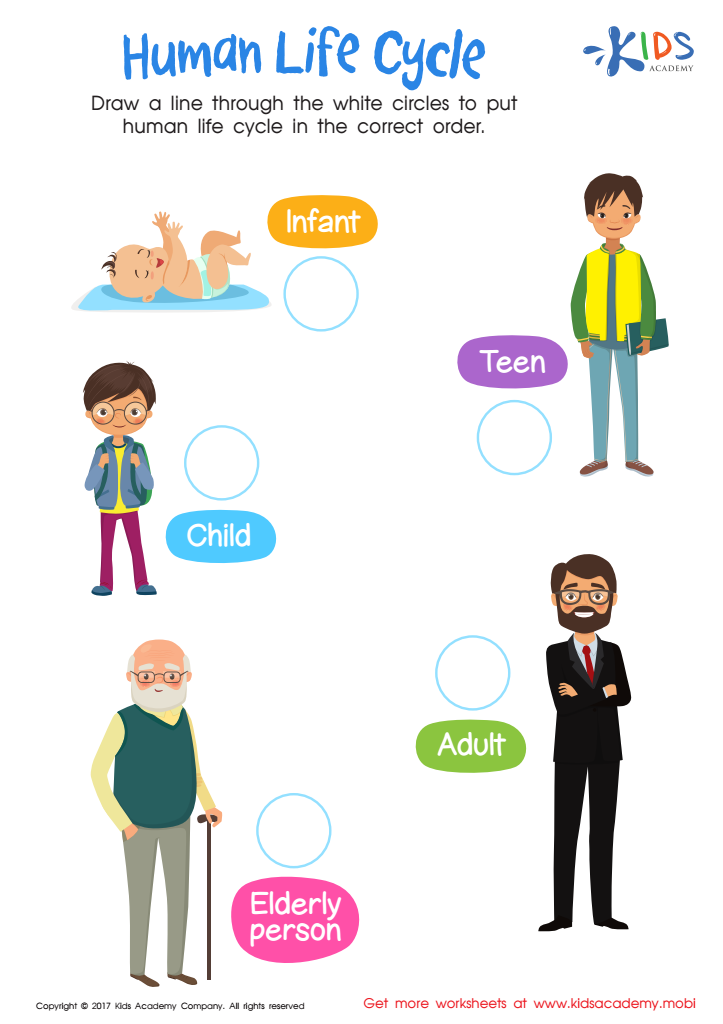
Human Life Cycle Worksheet
 Assign to My Students
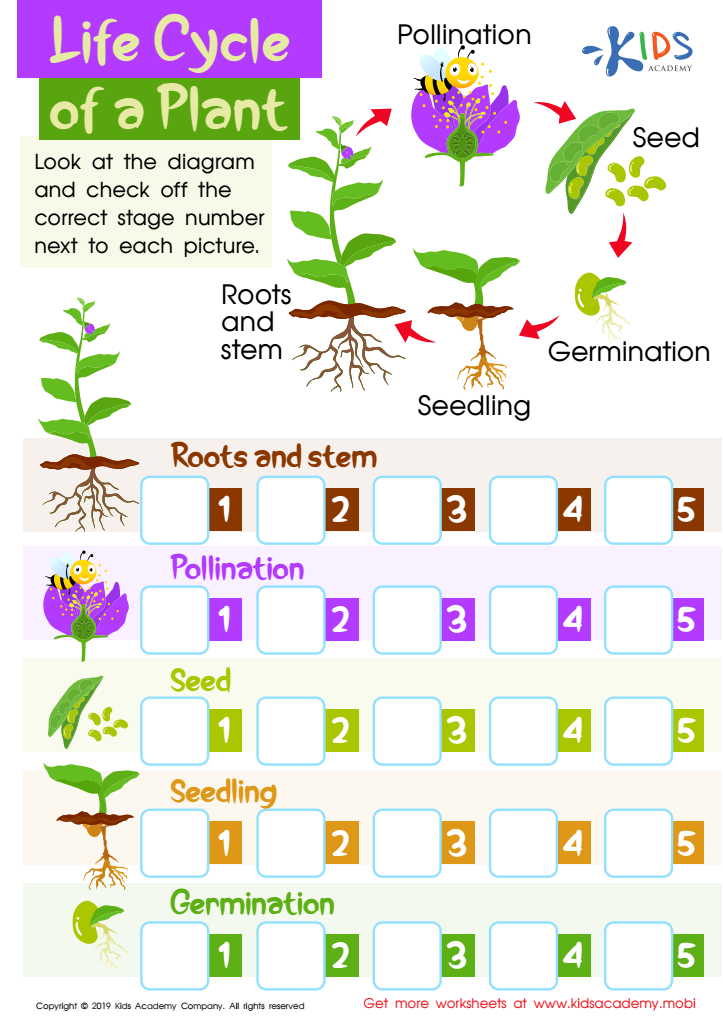
Life Cycle of a Plant Worksheet
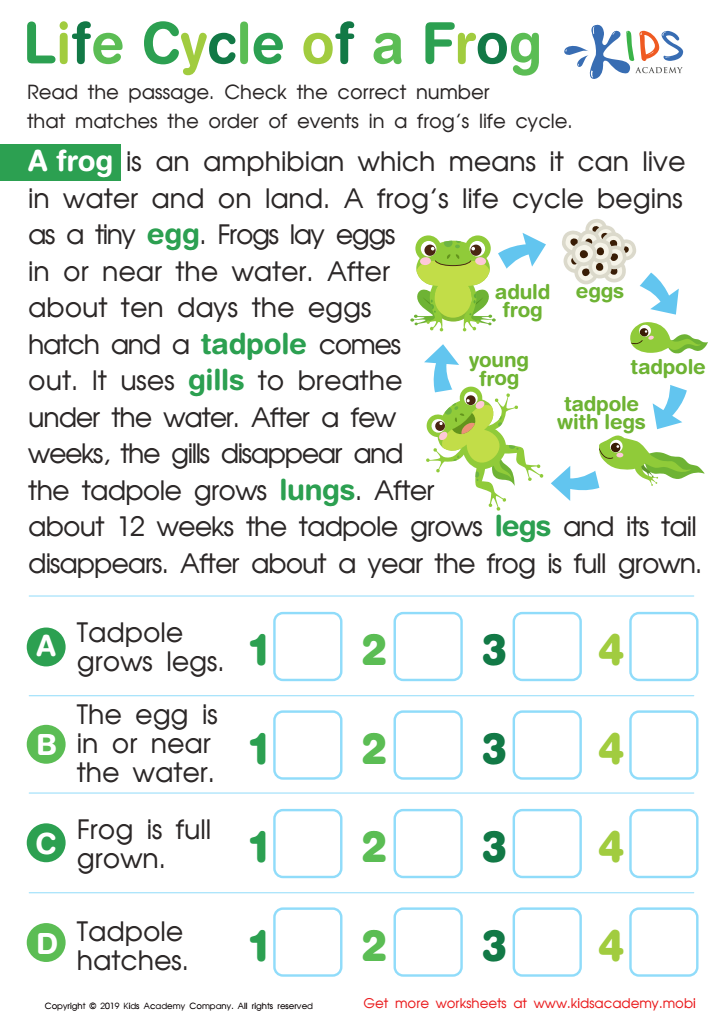
Life Cycle of a Frog Worksheet






Sequencing skills are crucial for 8-year-olds, especially in the context of science education. At this age, children are developing their ability to organize concepts, understand cause-and-effect relationships, and follow logical steps in problem-solving. Science often involves a series of experiments or processes that must be followed in a precise order, from forming hypotheses to conducting experiments and drawing conclusions.
Improving sequencing skills enhances critical thinking and comprehension abilities, enabling students to grasp scientific concepts more effectively. For parents and teachers, cultivating these skills lays a solid foundation for future learning. When children can sequence information accurately, they are better equipped to engage with complex scientific ideas, participate in discussions, and conduct experiments independently.
Moreover, strong sequencing abilities are linked to overall literacy development, as they support reading comprehension and storytelling skills. Thus, investing time and effort in improving sequencing not only benefits science education but also fosters broader cognitive and academic growth. Parents and teachers should recognize the value of promoting these skills in fun, engaging ways, such as through hands-on experiments, storytelling, and games—ensuring children become confident learners able to navigate their educational journeys successfully.







