Understanding life cycles Life Science Worksheets for 8-Year-Olds
3 filtered results
-
From - To
Introduce your 8-year-old to the fascinating world of life cycles with our comprehensive life science worksheets. Our educational materials are designed to make learning engaging and interactive, helping children understand the stages of growth and development in various organisms. Featuring colorful illustrations and clear explanations, these worksheets cover the life cycles of animals and plants, reinforcing important concepts through fun activities. By exploring these life science topics, children will build a solid foundation in biology, foster critical thinking skills, and develop a love for learning about the natural world. Ideal for classroom use or at-home enrichment!
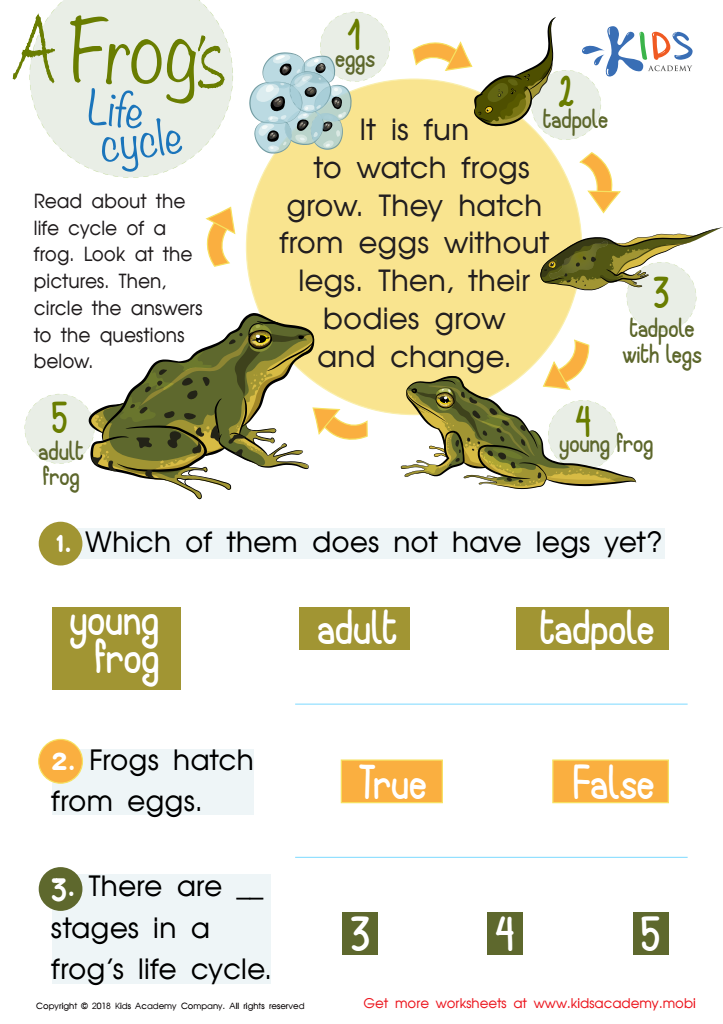
A Frog’s Life Cycle Worksheet
 Assign to My Students
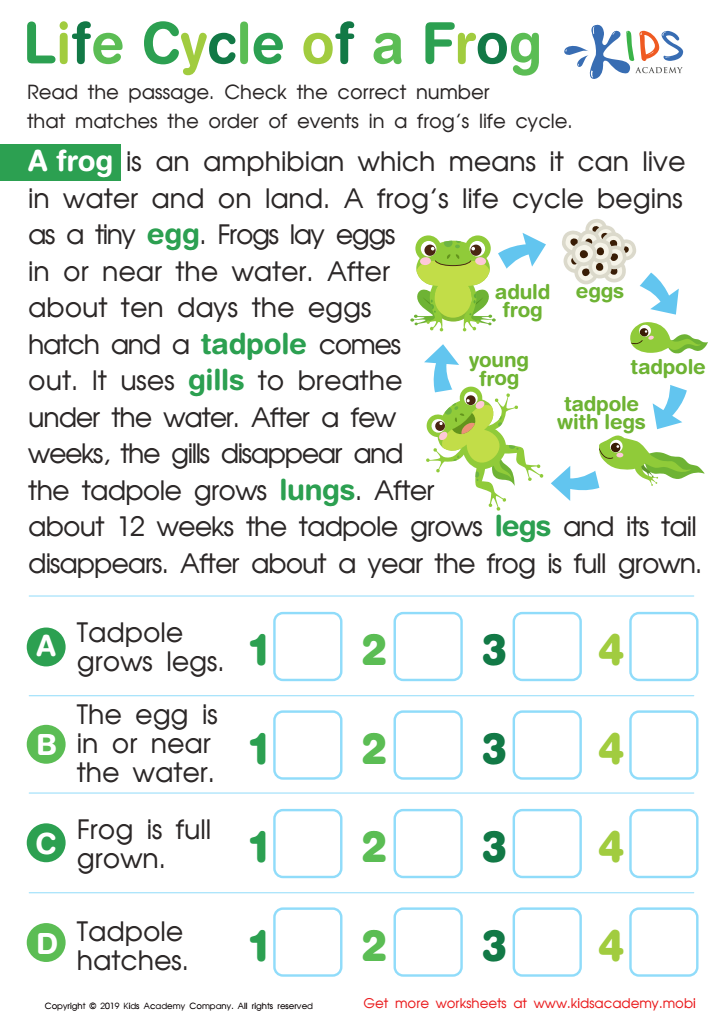
Life Cycle of a Frog Worksheet
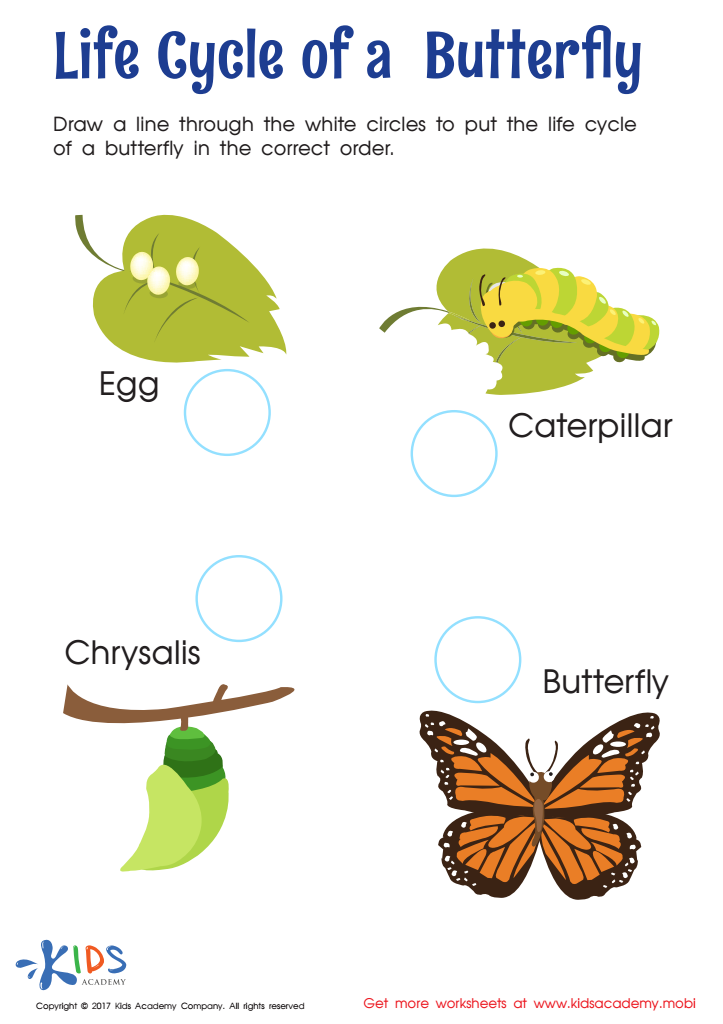
Life Cycle of Butterfly Worksheet




.jpg)


Understanding life cycles is fundamental for 8-year-olds as it fosters a sense of curiosity and appreciation for the natural world, laying a cornerstone for future scientific learning. When parents and teachers engage children with this aspect of life science, they are nurturing critical thinking and observational skills. Young minds learn to recognize patterns and make predictions, skills that are essential not just in science but across all disciplines.
Knowledge of life cycles allows children to understand the stages of development in plants, animals, and even humans, instilling a sense of connection and empathy with living organisms. For instance, by observing the transformation of a caterpillar to a butterfly, kids gain insight into concepts of growth and change, providing them with a broader perspective on their own development.
Additionally, understanding life cycles contributes to a child's environmental awareness. Recognizing how species interact and depend on each other encourages responsible behaviors towards nature. By comprehending the impacts of human actions on wildlife and ecosystems, children can become informed stewards of the environment.
Lastly, engaging with life cycles can spark a lifelong love for STEM fields. From nurturing future biologists and environmentalists to simply cultivating an informed citizen, the benefits of early exposure to life sciences are extensive and enduring. Parents and teachers play crucial roles in this educational journey, making it a meaningful endeavor for both the students’ present and future.








