Geography knowledge Our Planet and Environment Worksheets for 8-Year-Olds
3 filtered results
-
From - To
Explore our engaging Geography Knowledge Worksheets designed specifically for 8-year-olds, focusing on "Our Planet and Environment." These interactive resources encourage young learners to develop vital skills in understanding Earth's landscapes, ecosystems, and the importance of environmental awareness. Through fun activities and colorful illustrations, children will discover various geographical concepts, such as maps, climates, and habitats. Ideal for classroom learning or homeschooling, our worksheets promote critical thinking and spark curiosity about the world around them. Foster a love for geography and the environment in your child with these thoughtfully crafted worksheets that make learning enjoyable and impactful.
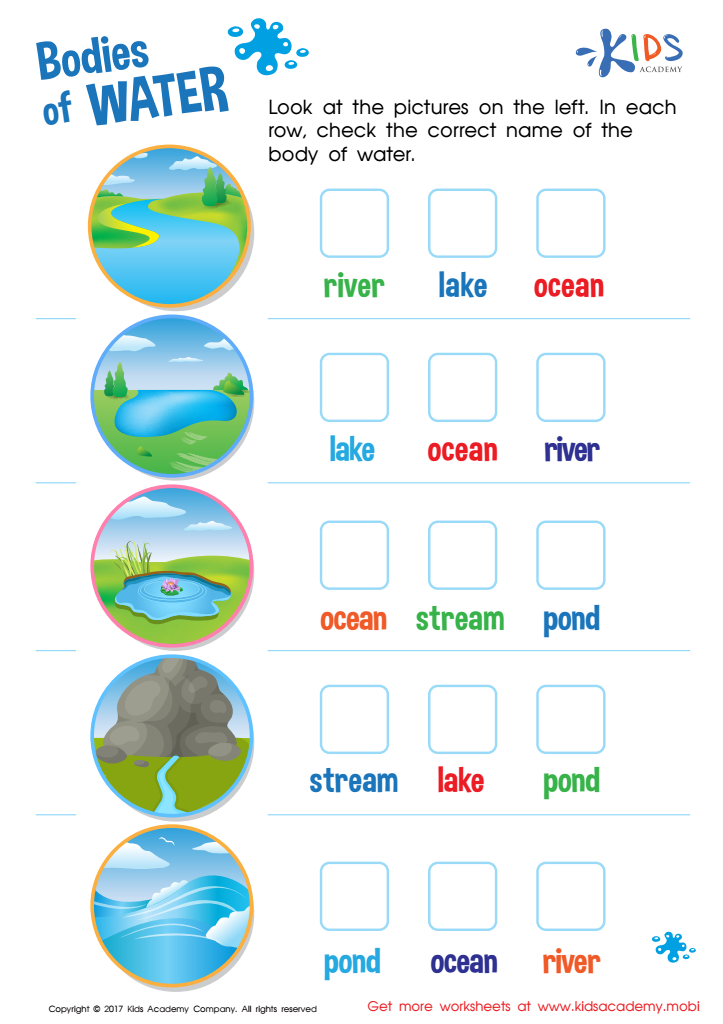
Bodies of Water Worksheet
 Assign to My Students
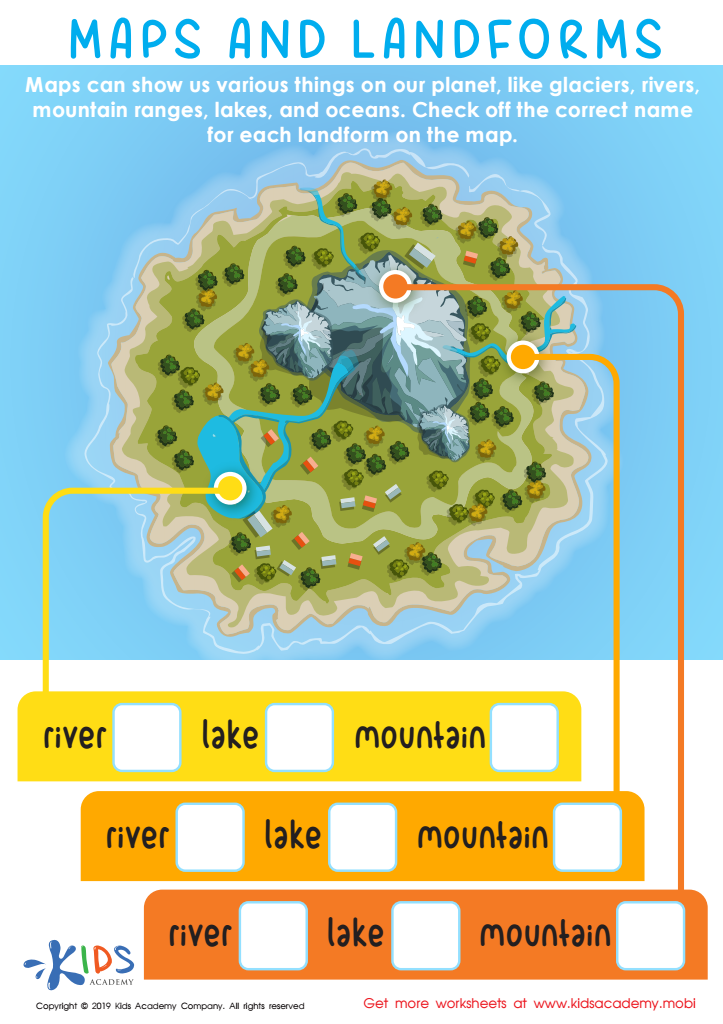
Maps and Landforms Worksheet
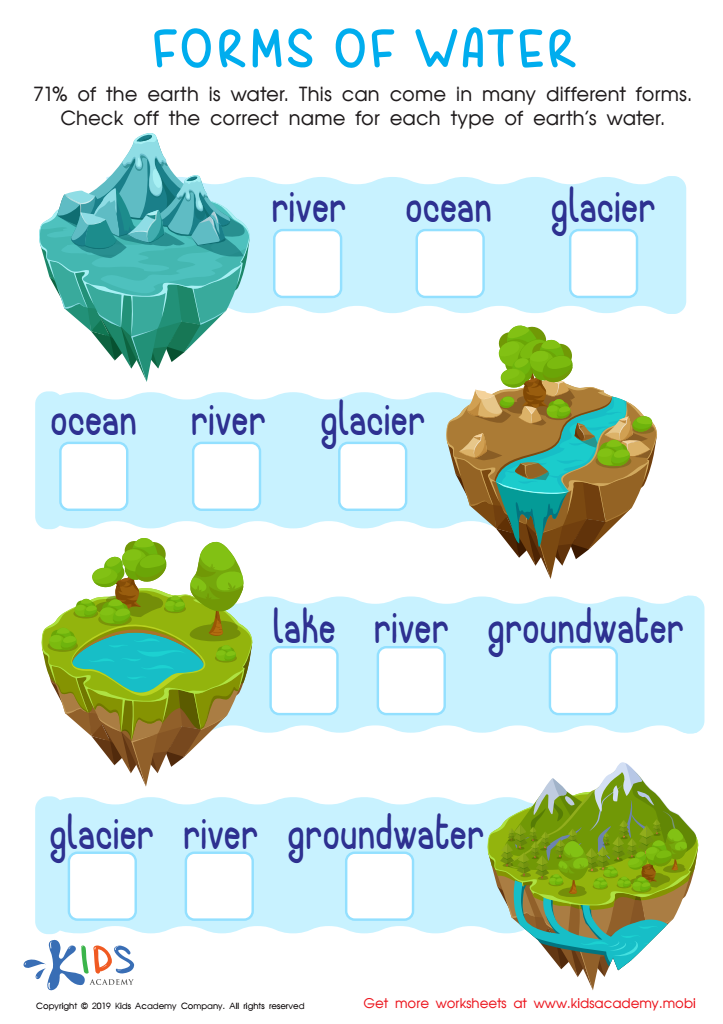
Forms of Water Worksheet



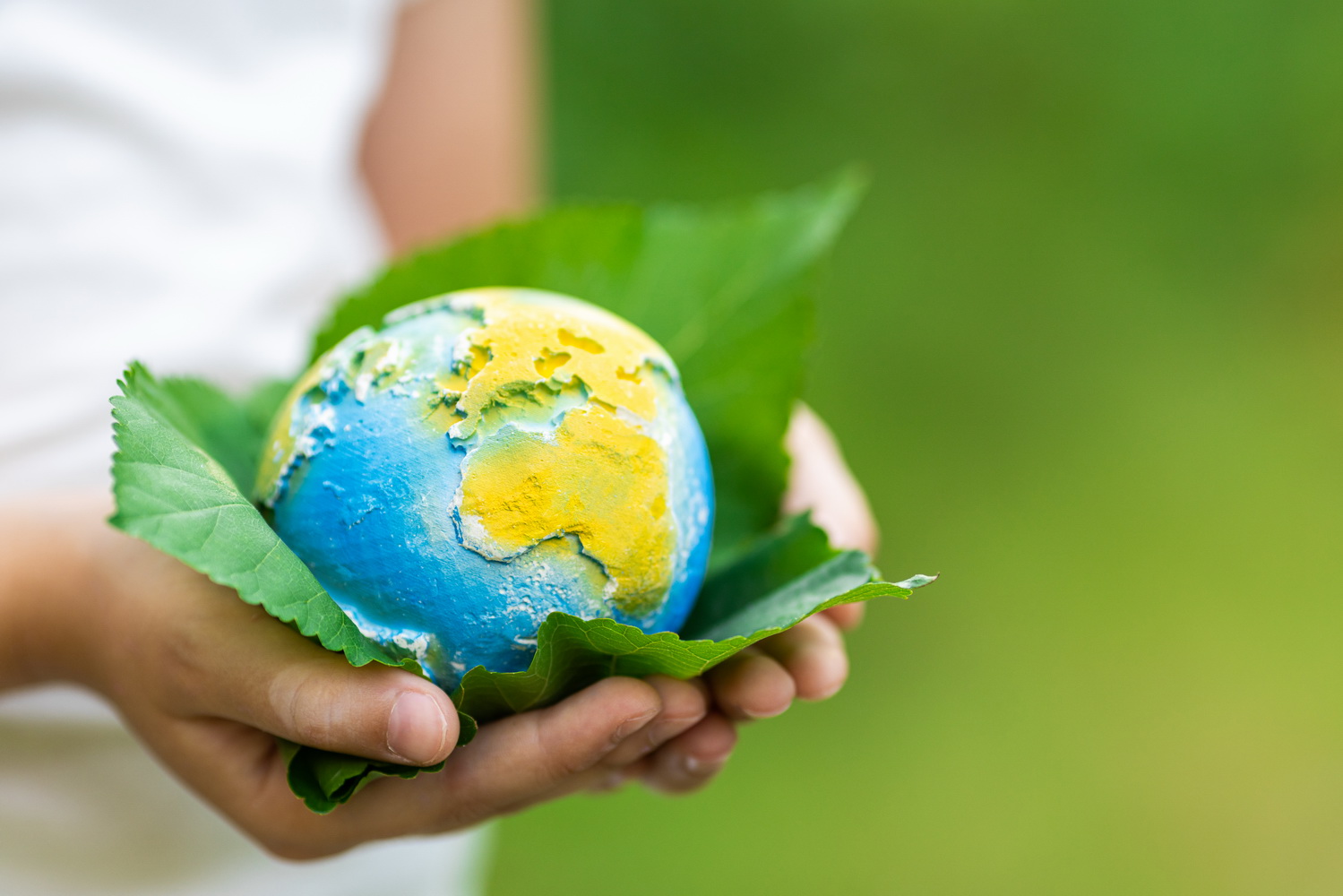

Understanding geography and the environment is crucial for 8-year-olds, as it lays the foundation for their awareness of the world around them. First, geographical knowledge helps children understand their place within the global context, making them aware of diverse cultures, ecosystems, and physical landscapes. This awareness fosters empathy and appreciation for others, promoting respect for different ways of life.
Second, learning about our planet and environment empowers children to recognize the importance of sustainability and conservation. By grasping concepts such as climate change, pollution, and natural resources, they can develop a sense of responsibility towards protecting our Earth. This knowledge equips them to make informed choices that positively impact their surroundings.
Additionally, geography education encourages critical thinking and problem-solving skills. Children learn to analyze maps, understand spatial relationships, and observe patterns, which are essential skills they will use throughout their lives.
For parents and teachers, fostering a love for geography nurtures curious, informed, and active citizens who are more likely to engage with global challenges in thoughtful ways. By instilling these values early, we equip children to be responsible stewards of the environment and advocates for solutions to pressing issues affecting our planet.







