Understanding food chains Plants and Animals Worksheets for 8-Year-Olds
3 filtered results
-
From - To
Our "Understanding Food Chains: Plants and Animals Worksheets for 8-Year-Olds" provide engaging, educational opportunities for young learners. These scientifically-designed worksheets make the intricate relationships within ecosystems accessible and fun. Students explore how energy flows from plants (producers) to animals (consumers) so they develop crucial comprehension skills through hands-on activities and vibrant illustrations. Perfect for classroom and at-home learning, our resources support investigation and critical thinking, ensuring children grasp fundamental ecological concepts. Interactive, age-appropriate lessons help establish foundational knowledge, making complex scientific ideas enjoyable and relatable. Dive into the world of food chains and help your child discover the wonders of nature!
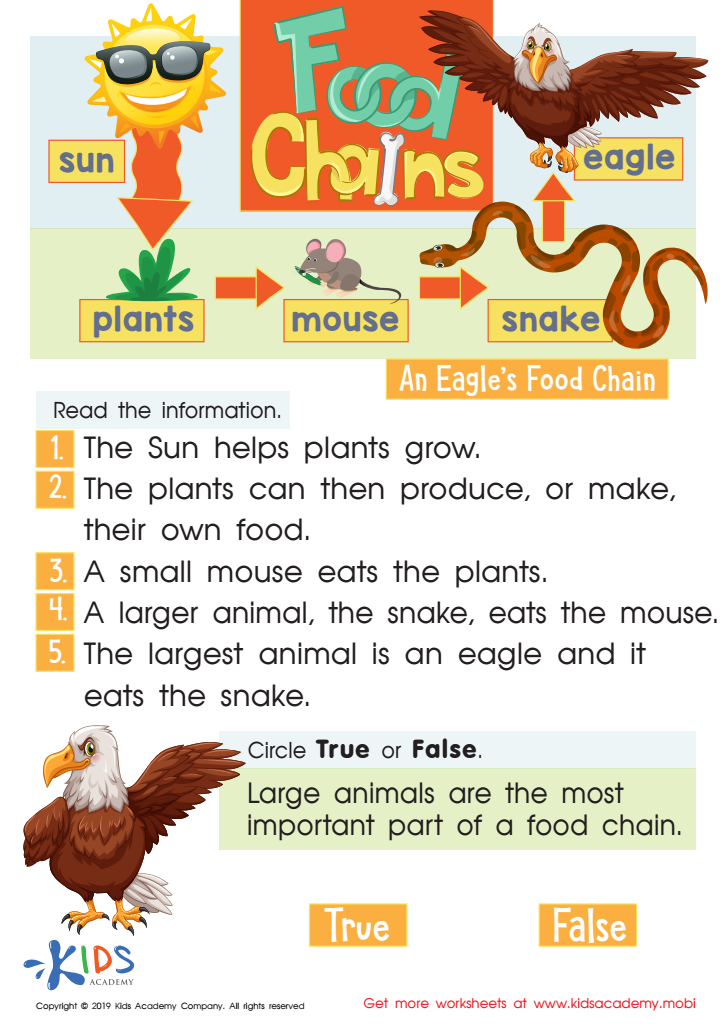
Food Chains Worksheet
 Assign to My Students











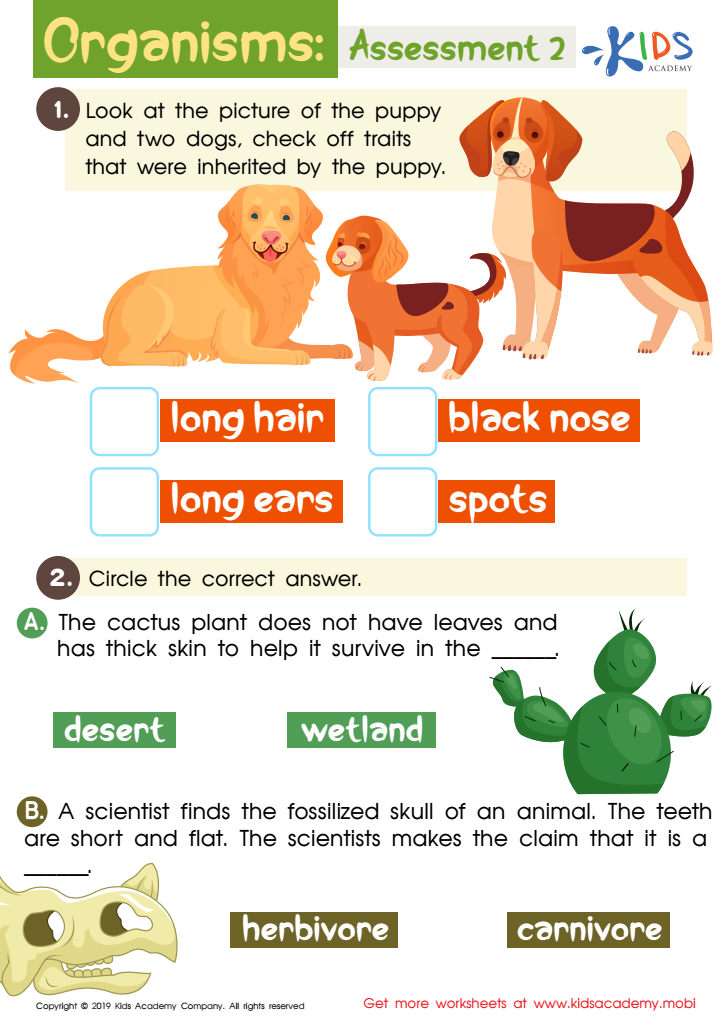
Organisms: Assessment 2 Worksheet
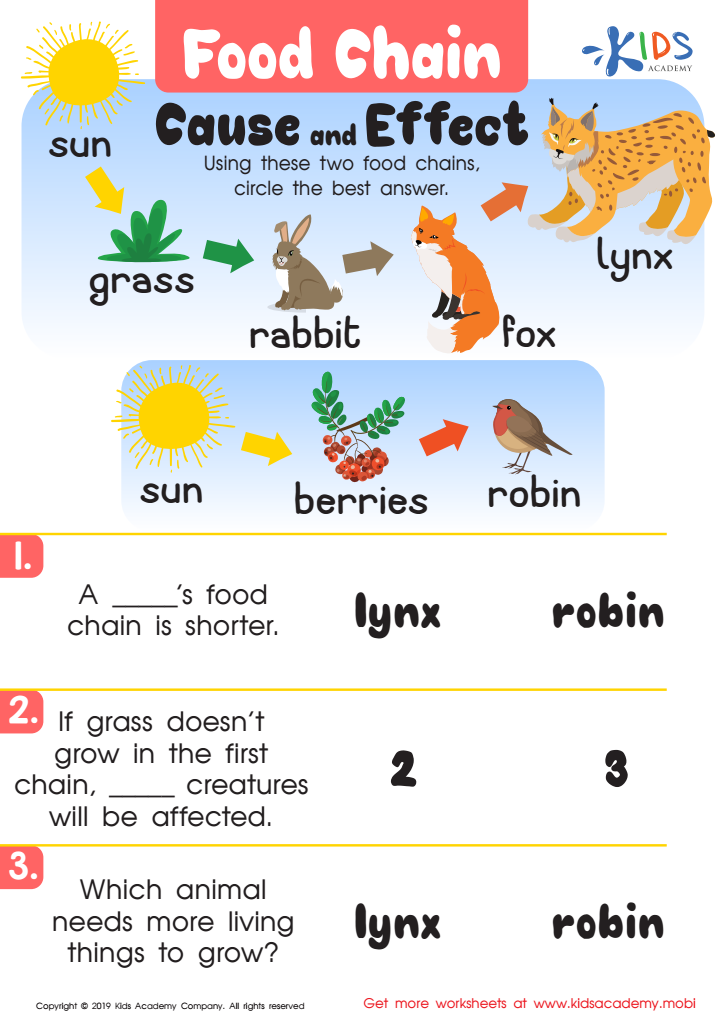
Food Chain Cause Worksheet







Understanding food chains involving plants and animals is crucial for 8-year-olds for several reasons. Firstly, it fosters an appreciation of nature and its delicate balance. When children comprehend how plants and animals depend on each other for survival—like how plants provide food for herbivores, and herbivores, in turn, provide food for carnivores—they develop respect for all living things.
Secondly, learning about food chains introduces essential scientific concepts such as ecosystems, energy flow, and biodiversity in a simple, relatable manner. Knowing that the sun's energy, absorbed by plants, ultimately powers all life forms helps young minds grasp more complex science topics in later grades.
Thirdly, this knowledge cultivates critical thinking skills. Children learn to observe, ask questions, and make connections, which enhances their problem-solving abilities. Understanding how different plants and animals interact encourages them to think about consequences, such as what might happen if a particular species becomes extinct.
Finally, educating children about food chains helps them make informed choices. They become aware of the impact of environmental issues like habitat destruction and pollution. Instilling this awareness early can foster responsible behaviors and a proactive attitude towards protecting our planet.
In summary, understanding food chains helps children appreciate and care for nature, paves the way for future learning, sharpens their thinking skills, and encourages environmental stewardship.








