Understanding pollination Plants and Animals Worksheets for 8-Year-Olds
3 filtered results
-
From - To
Explore the fascinating world of pollination with our "Understanding Pollination Plants and Animals Worksheets" designed specifically for 8-year-olds! These engaging worksheets introduce young learners to the vital process of pollination, showcasing the roles plants and animals play in our ecosystem. Through fun activities, colorful illustrations, and easy-to-follow explanations, children will discover how bees, butterflies, and other pollinators contribute to the growth of plants. Our resources promote critical thinking and creativity, making science fun and accessible. Perfect for classroom use or home learning, these worksheets empower kids to appreciate nature while honing their understanding of biology and environmental science.
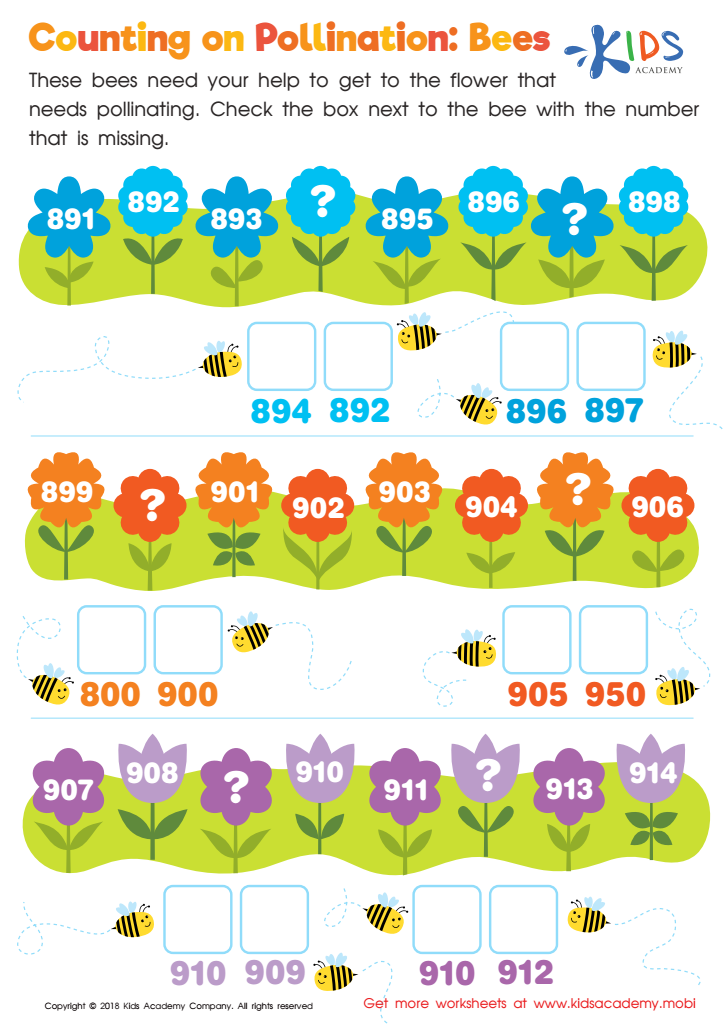
Counting on Pollination: Bees Worksheet
 Assign to My Students
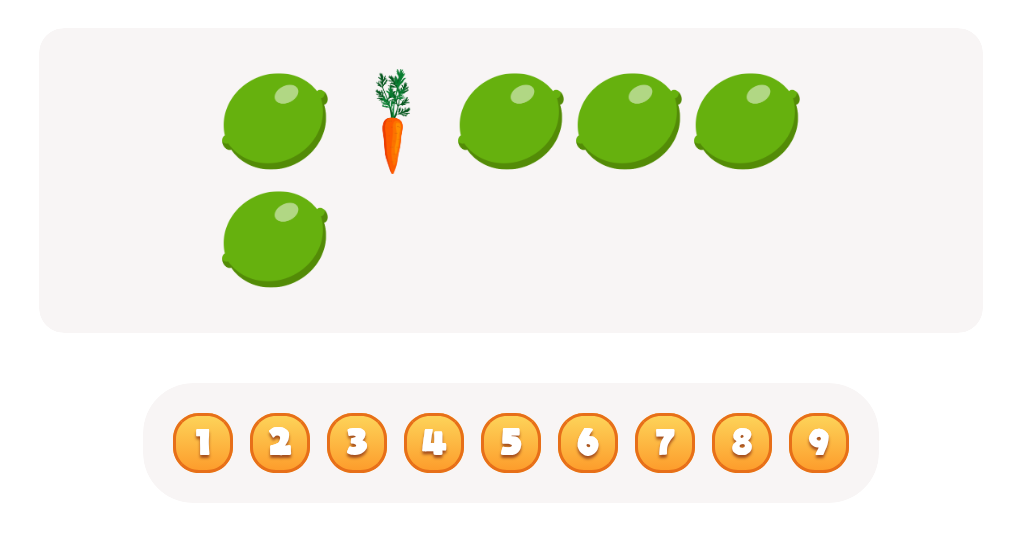

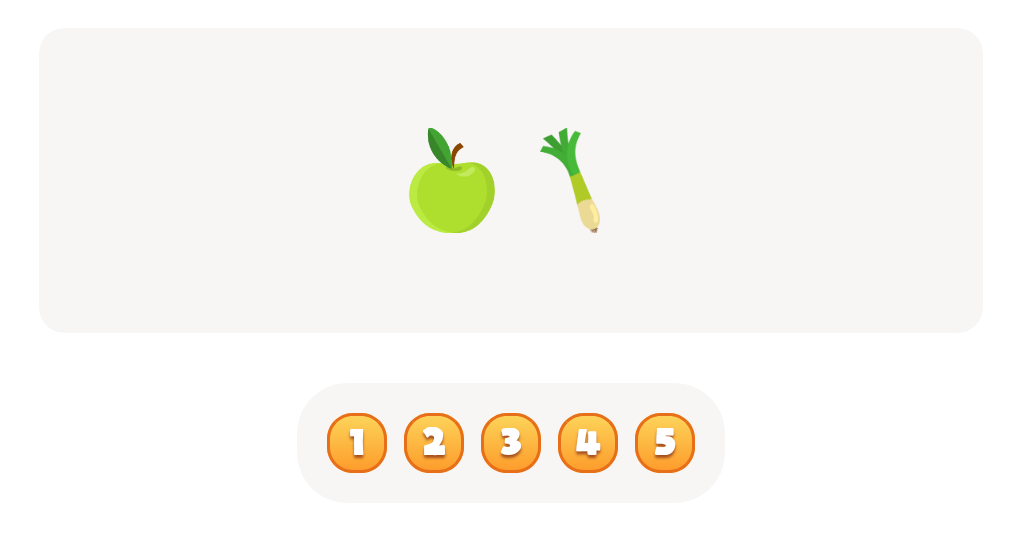
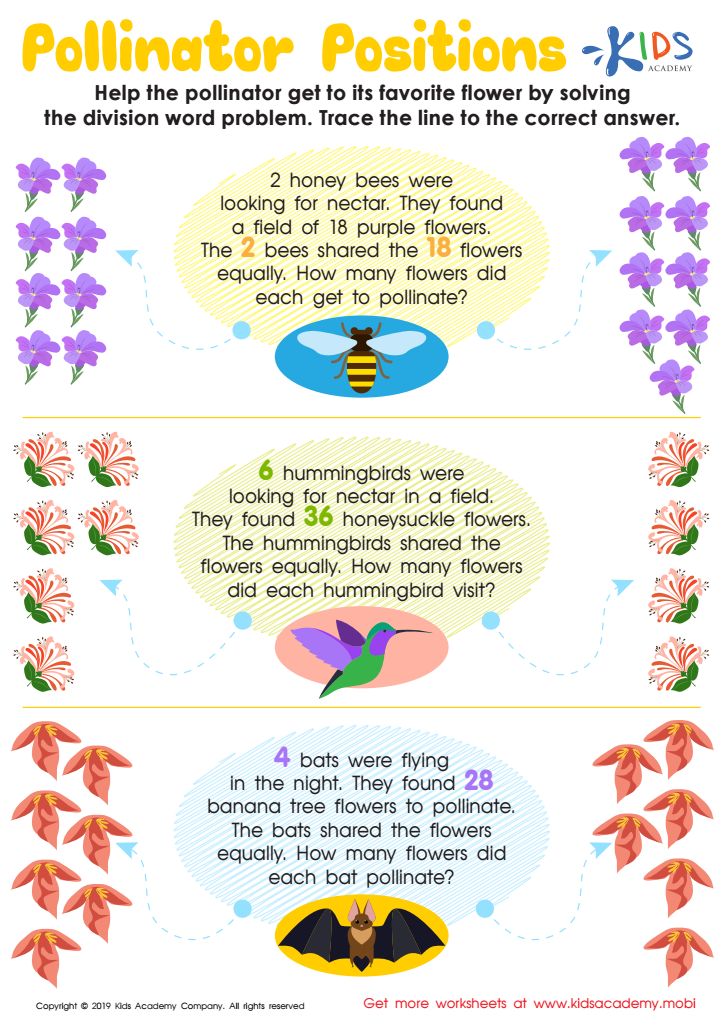
Pollinator Positions Worksheet
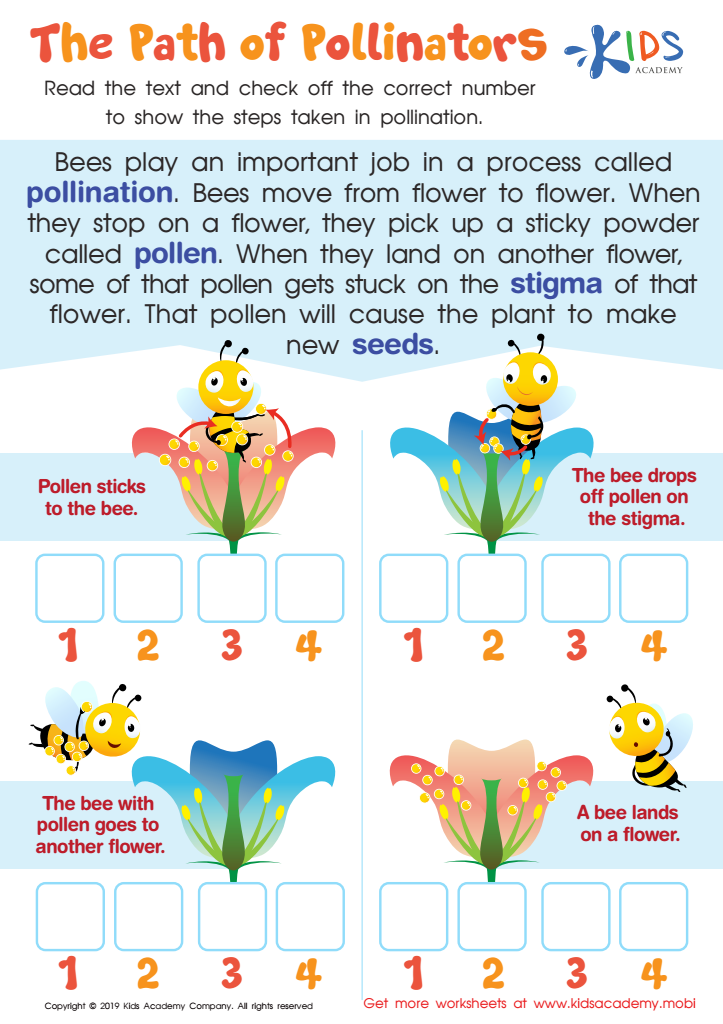
The Path of Pollinators Worksheet






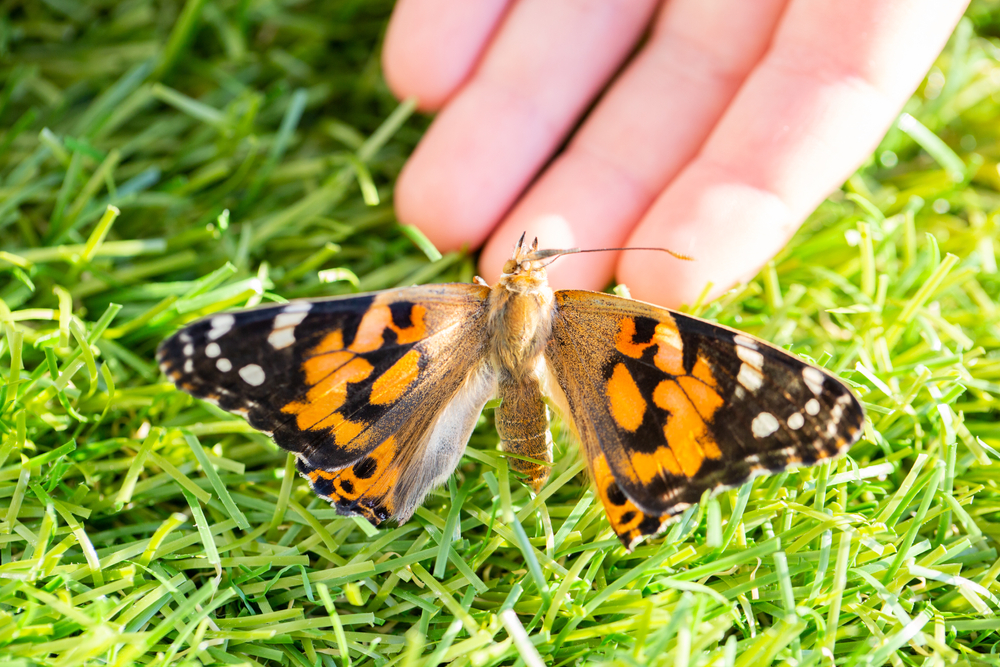

Understanding pollination is crucial for both parents and teachers to instill in 8-year-olds because it connects children to the natural world and fosters environmental awareness. Pollination is a vital process that enables plants to reproduce, leading to the growth of fruits, vegetables, and nuts that are essential for human food supply and ecosystem health. By learning about pollinators like bees, butterflies, and even birds, children also grasp the concept of biodiversity and the interdependence between species.
Teaching kids about pollination encourages curiosity about nature, leading to hands-on experiences such as gardening or visiting local ecosystems. This not only enhances their scientific knowledge but also promotes responsibility towards the environment. Additionally, understanding pollination helps children appreciate the complexities of food production, prompting discussions about healthy eating and sustainability.
Moreover, with growing concerns around pollinator decline due to habitat loss and climate change, educating children early empowers them to be mindful stewards of the environment. This foundational knowledge can inspire future generations to advocate for protective measures and sustainable practices. Ultimately, imparting this understanding nurtures not only academically inclined learners but also environmentally conscious citizens.