Understanding timelines Social Studies Worksheets for 8-Year-Olds
5 filtered results
-
From - To
Explore our "Understanding Timelines" social studies worksheets, designed specifically for 8-year-olds! At Kids Academy, we make learning history engaging and accessible with our comprehensive printable resources. These worksheets help young learners grasp the concept of timelines, from personal histories to significant global events. Perfect for classroom use or at-home practice, our activities improve chronological thinking, sequencing, and critical analysis skills. Dive into our user-friendly materials today to make studying history fun and interactive. Nurture your child's curiosity and build a solid foundation in social studies with Kids Academy's expertly crafted worksheets!
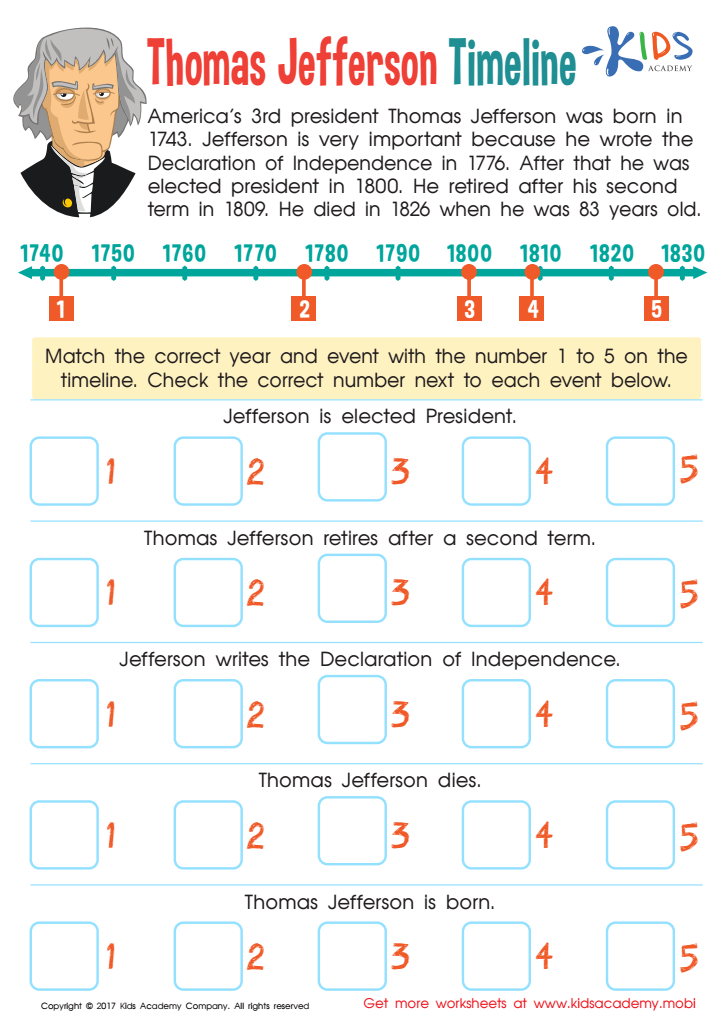
Thomas Jefferson Timeline Worksheet
 Assign to My Students
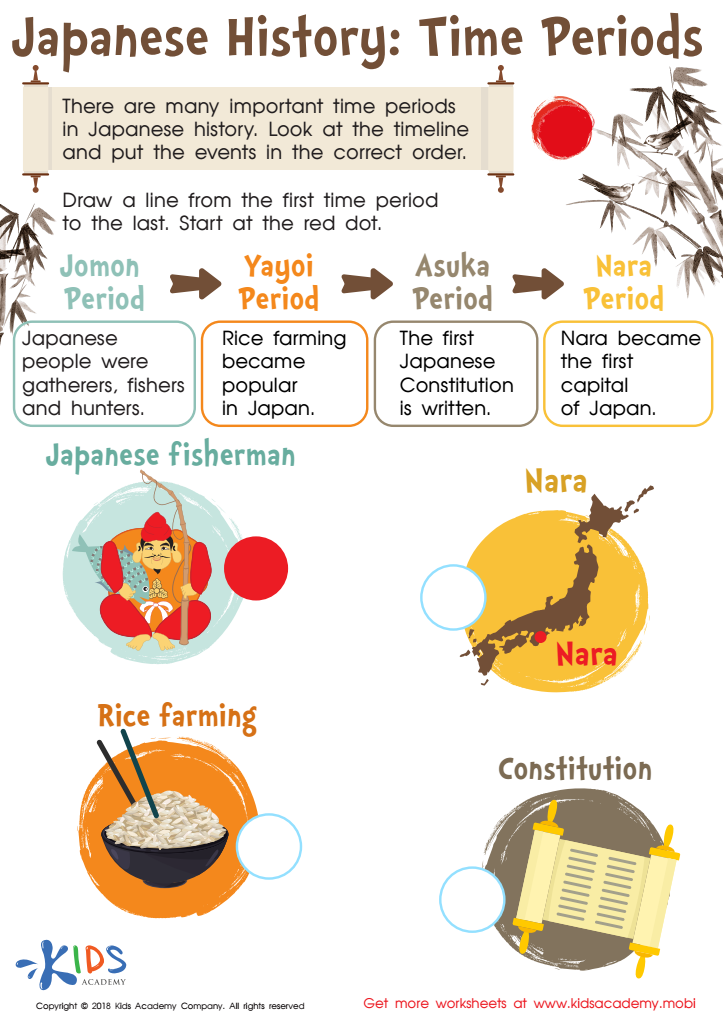
Japanese History: Time Periods Worksheet
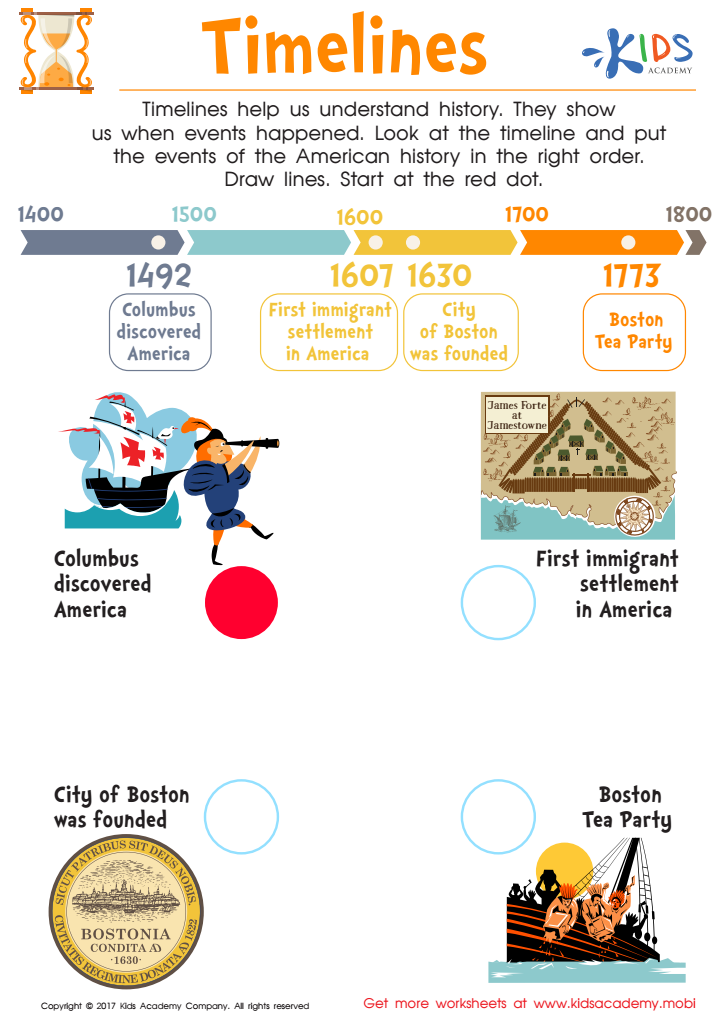
American History Timeline Worksheet
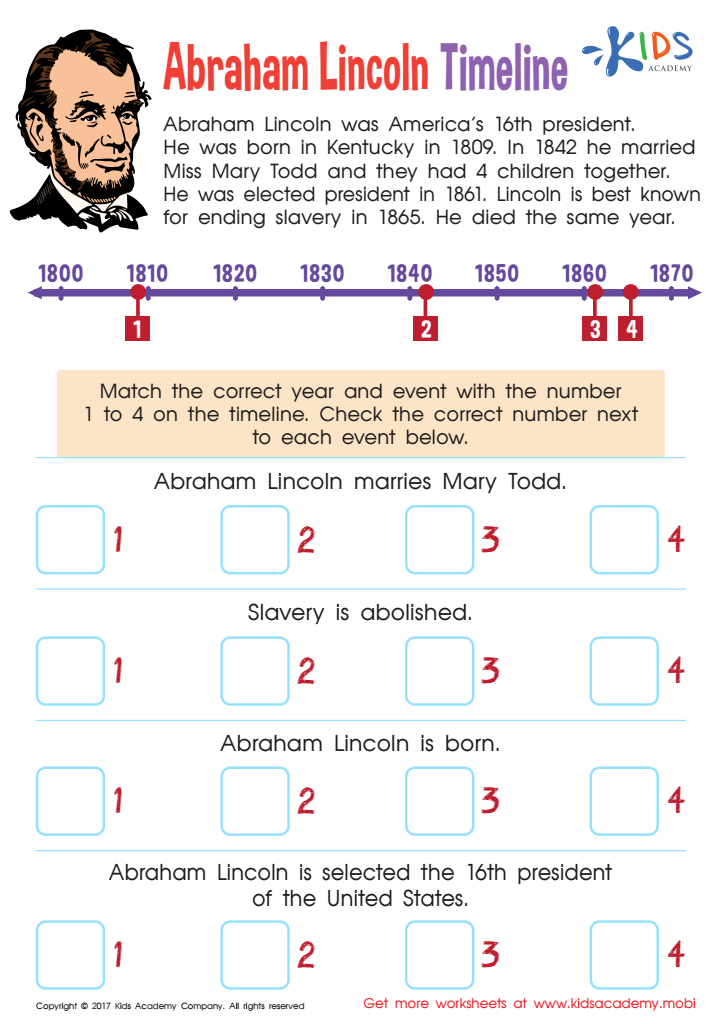
Abraham Lincoln Timeline Worksheet
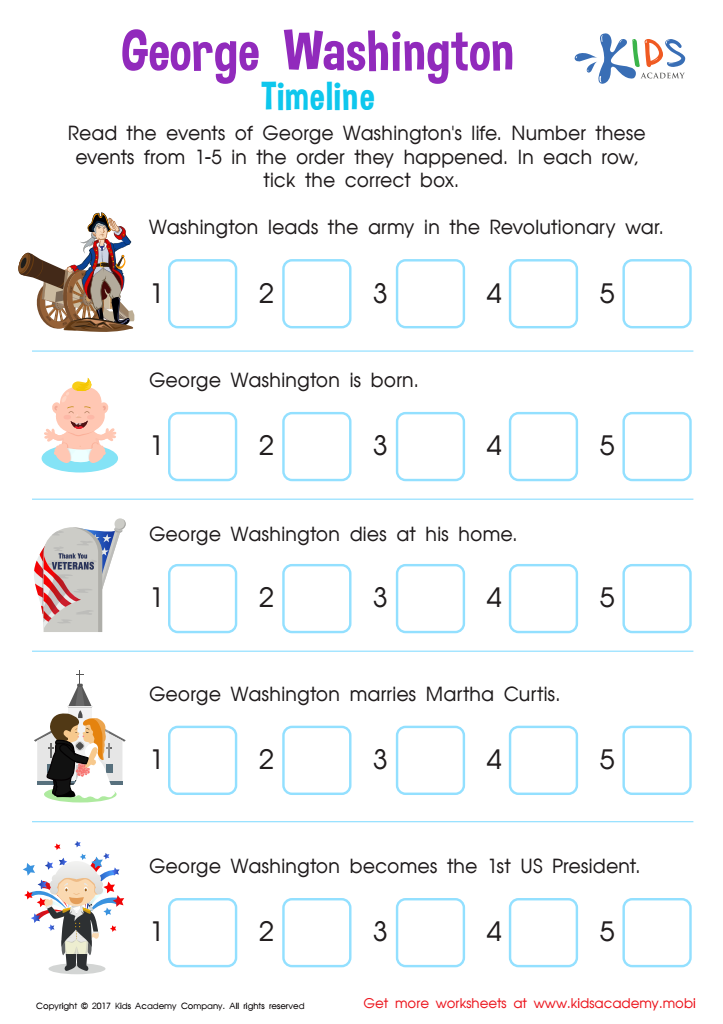
George Washington Timeline Worksheet






Understanding timelines in social studies for 8-year-olds is crucial for several foundational reasons. First, it helps young learners grasp the concept of chronological order, which is essential for understanding how events unfold over time. This skill is not only vital in history but also in reading comprehension and daily life scenarios.
Second, timelines foster critical thinking. When children can see and compare different events side by side, they start to understand cause and effect, historical context, and the progression of human development. These critical thinking skills are applicable beyond social studies, aiding in subjects like science and math, where cause and consequence play significant roles.
Parents and teachers should also be interested because timelines bolster organizational skills. Creating and following timelines requires planning and arranging information logically, skills that help in all areas of learning and can boost overall academic performance. Further, timelines make learning interactive and engaging for young minds, transforming potentially complex historical data into visual, manageable sequences that can be understood more easily.
Lastly, understanding timelines instills a sense of past, present, and future. This sense of time helps children create a personal connection to history, encouraging curiosity about their own family narratives, community histories, and world events, fostering lifelong learning and informed citizenship.