Critical Thinking Plants and Animals Worksheets for 9-Year-Olds
4 filtered results
-
From - To
Elevate your 9-year-old's learning with our engaging Critical Thinking Plants and Animals Worksheets! Designed to stimulate young minds, these worksheets encourage children to explore the intricacies of plant and animal life while developing their analytical skills. Each worksheet features age-appropriate activities that challenge students to think critically, make connections, and draw conclusions about ecosystems, habitats, and the interdependencies of flora and fauna. Perfect for homeschooling or classroom use, our resources promote curiosity and deepen understanding of the natural world. Foster a love for science in your child while enhancing their cognitive skills today! Explore our collection and uncover the wonders of nature!
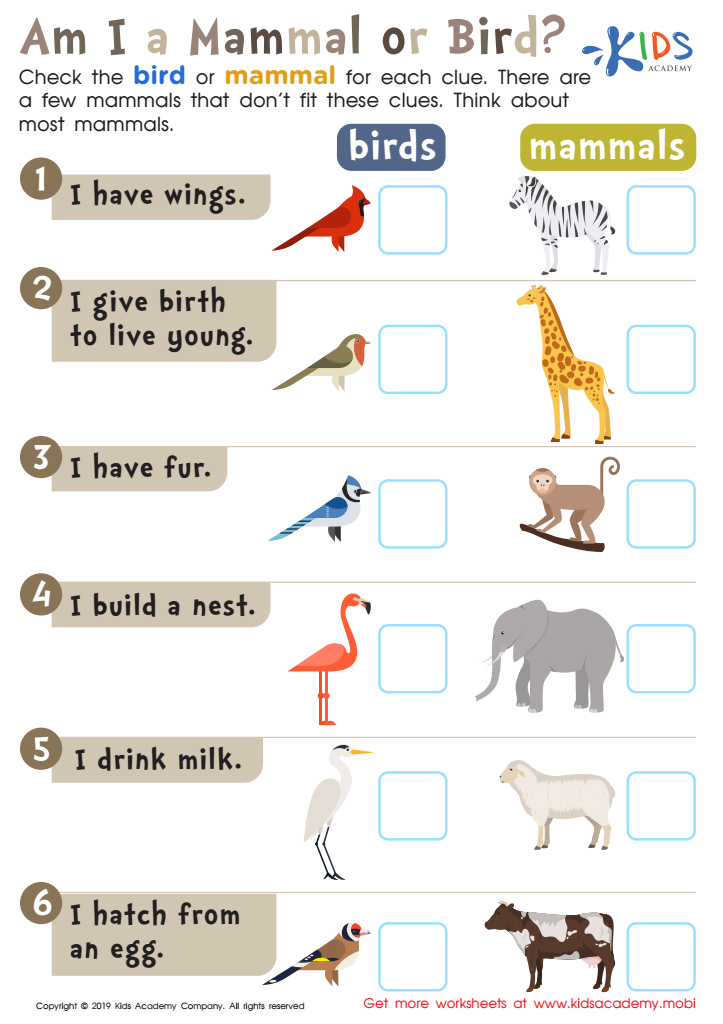
Am I a Mammal or Bird? Worksheet
 Assign to My Students











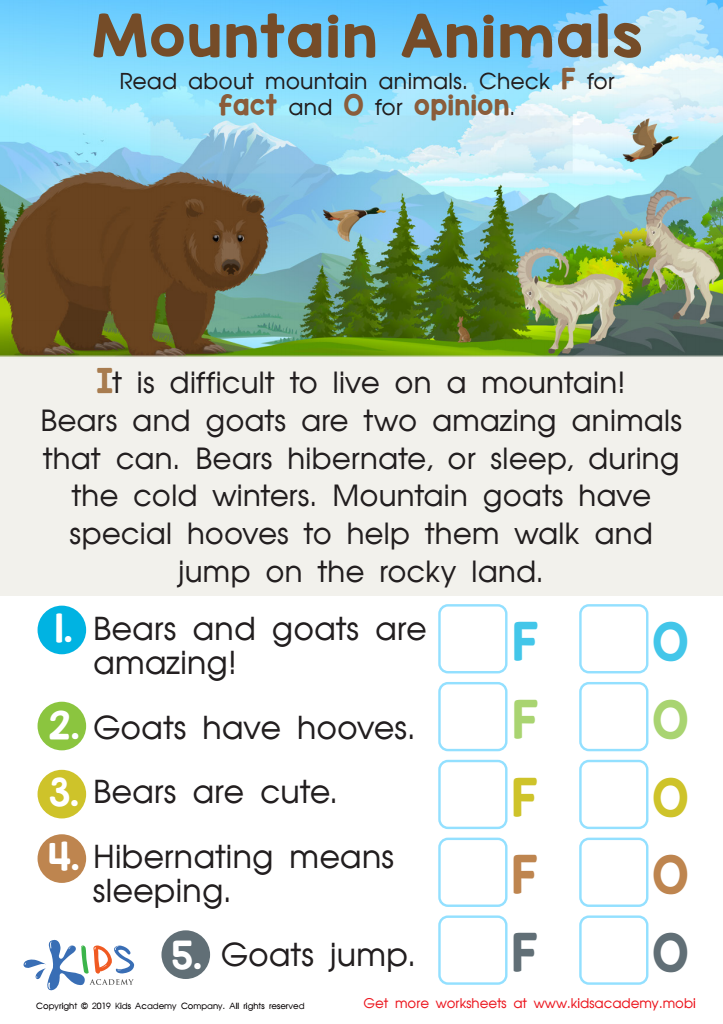
Mountain Animals Worksheet
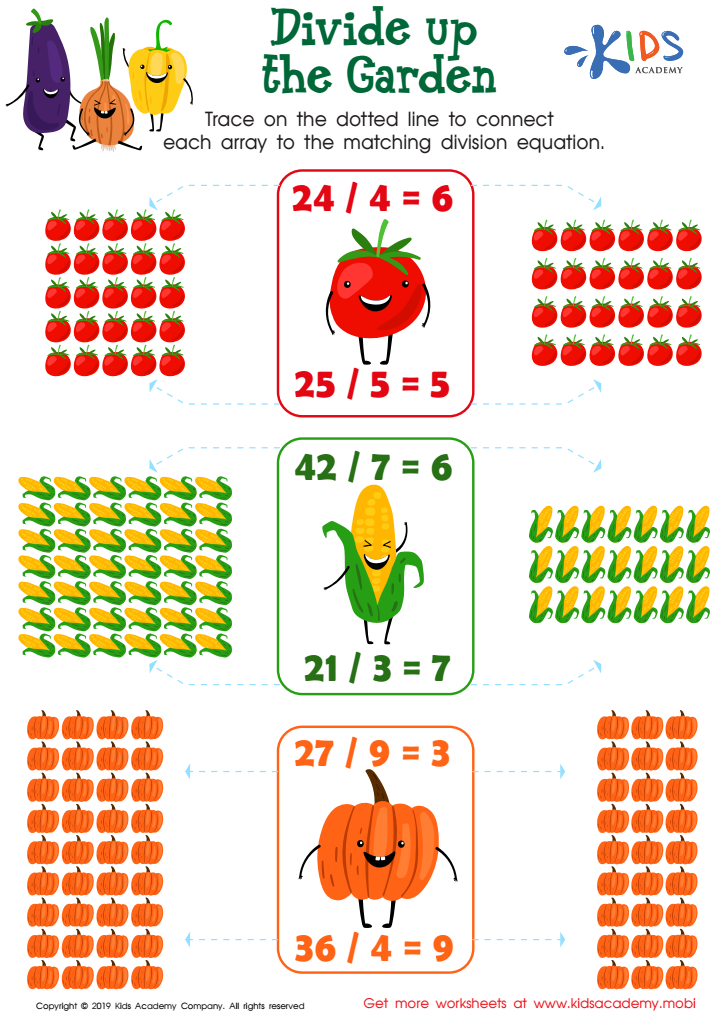
Divide up the Garden Worksheet
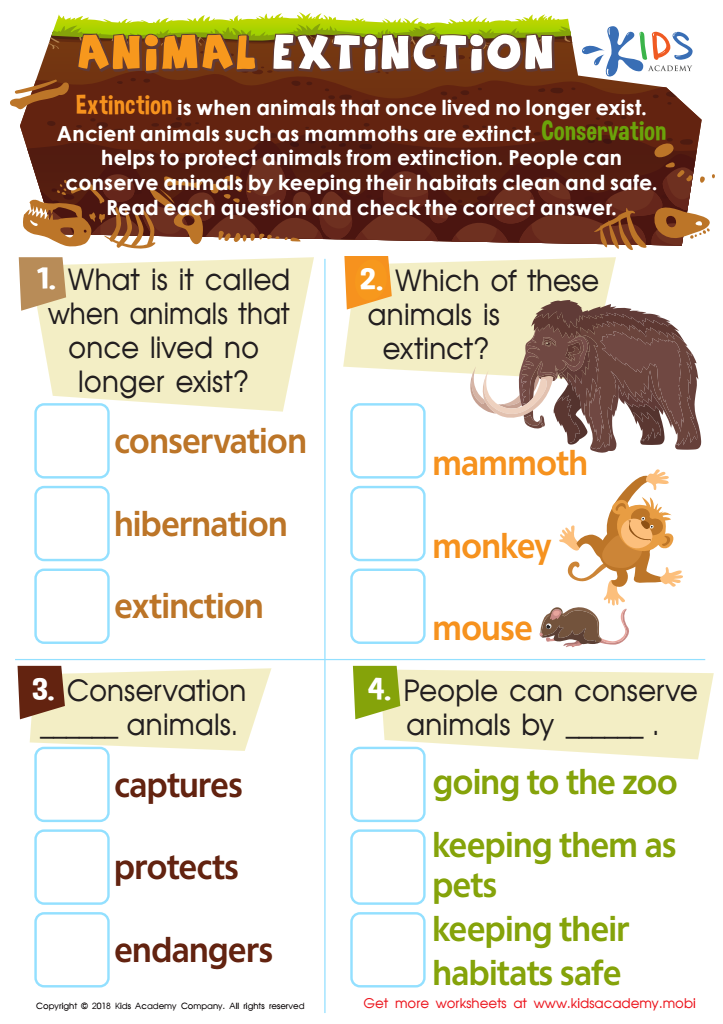
Animal Extinction Worksheet








Parents and teachers should prioritize Critical Thinking Plants and Animals for 9-year-olds because fostering critical thinking skills at this age lays the foundation for lifelong learning and problem-solving abilities. Engaging with the natural world through critical thinking encourages students to ask questions, make connections, and develop a deeper understanding of ecosystems and biodiversity.
Understanding plants and animals is not just about memorizing facts; it involves examining relationships, recognizing patterns, and appreciating the complexities of life. This approach helps children develop skills such as observation, analysis, and reasoning. For example, examining the role of pollinators in plant reproduction can ignite curiosity about environmental sustainability and interdependence.
Furthermore, as children increasingly encounter global challenges like climate change and habitat destruction, critical thinking about living organisms empowers them to think critically about solutions. By cultivating these skills, parents and teachers prepare children to be responsible stewards of the environment and informed citizens.
In essence, integrating critical thinking into the study of plants and animals nurtures analytical skills, promotes environmental awareness, and develops a sense of curiosity and empathy. Supporting these learning experiences can significantly enhance children’s educational journey and their understanding of the world around them.








