
Reading Comprehension Worksheets Activities With Answers for Ages 3-6
12 filtered results
Difficulty Level
Grade
Age
-
From - To
Subject
Activity
Standards
Discover engaging reading comprehension worksheets designed for children ages 3-6 at Kids Academy! Our collection offers a variety of activities that help young learners enhance their reading skills and understanding. Each worksheet is crafted to captivate young minds with colorful illustrations and themed content. Alongside valuable practice, we provide comprehensive answer keys, ensuring parents and educators can easily track progress and performance. These worksheets are perfect for toddler learning at home or in classroom settings, promoting critical thinking and early literacy skills. Dive into our user-friendly resources for a fun and educational reading adventure that nourishes a love for books!
Favorites
With answer key
Interactive
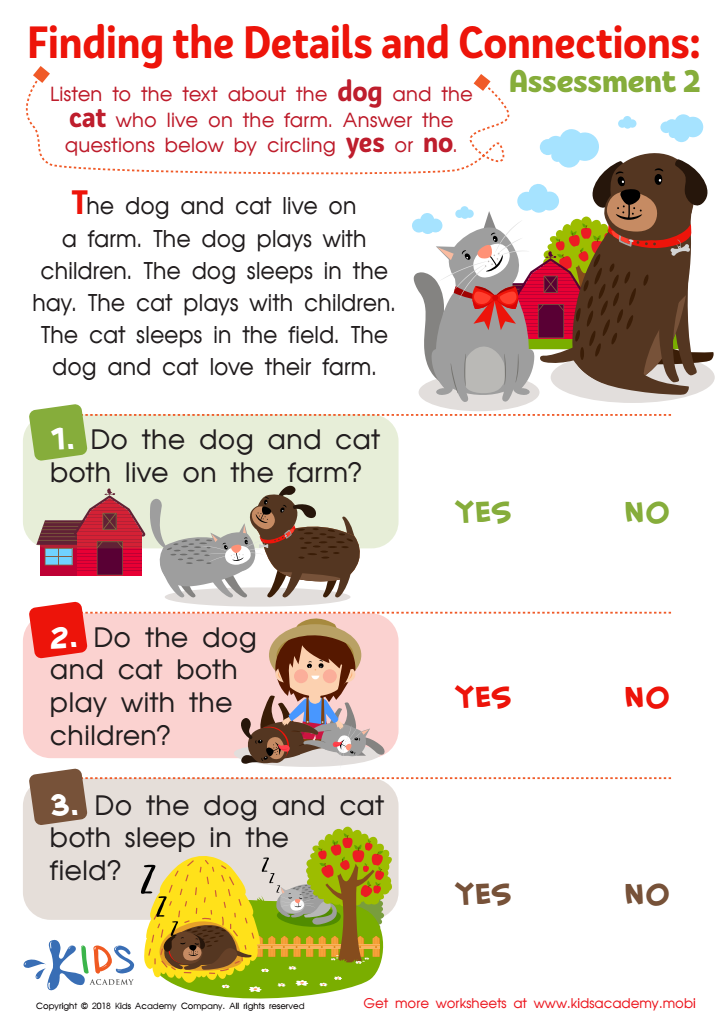
Finding the Details and Connections: Assessment 2 Worksheet
Does your child love animals? If you have pets, they'll relate to the text in this worksheet. Read it aloud to them and help them answer the simple questions by circling yes or no. The story is about a dog and cat living on a farm. Let your child read it aloud to you if they can.
 Assign to My Students
Finding the Details and Connections: Assessment 2 Worksheet
Worksheet
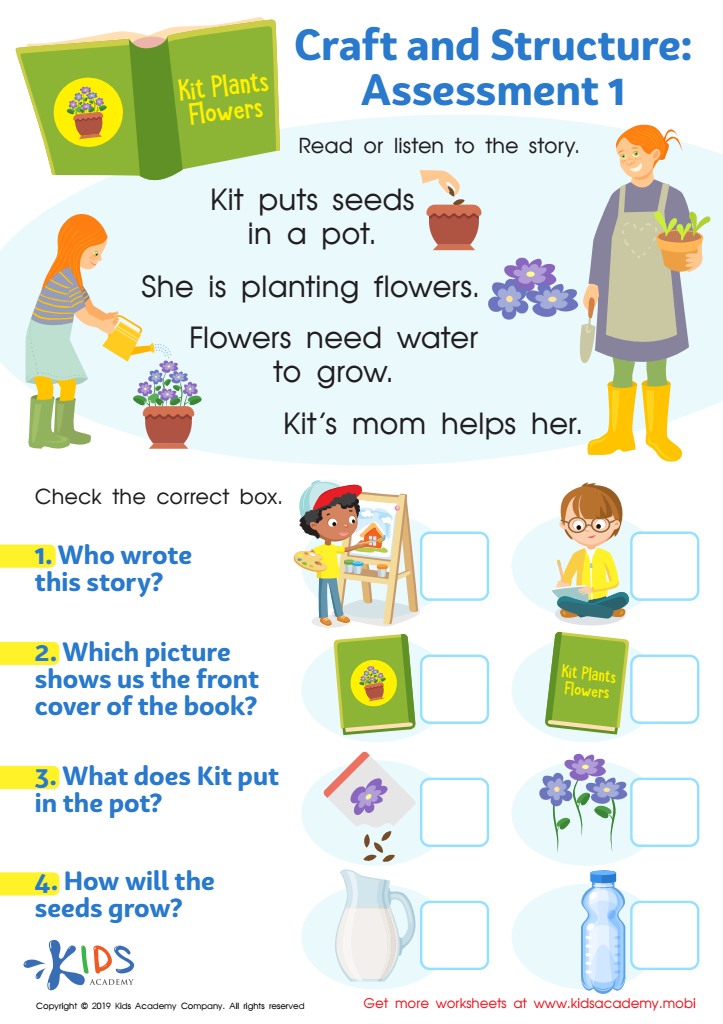
Craft and Structure: Assessment 1 Worksheet
A good reader needs more than word recognition: children must be able to identify story elements like author and main points. Test your child's craft and structure knowledge with this free PDF worksheet. They will read or listen to a story, then check off the correct answers according to what they heard or read.
Craft and Structure: Assessment 1 Worksheet
Worksheet
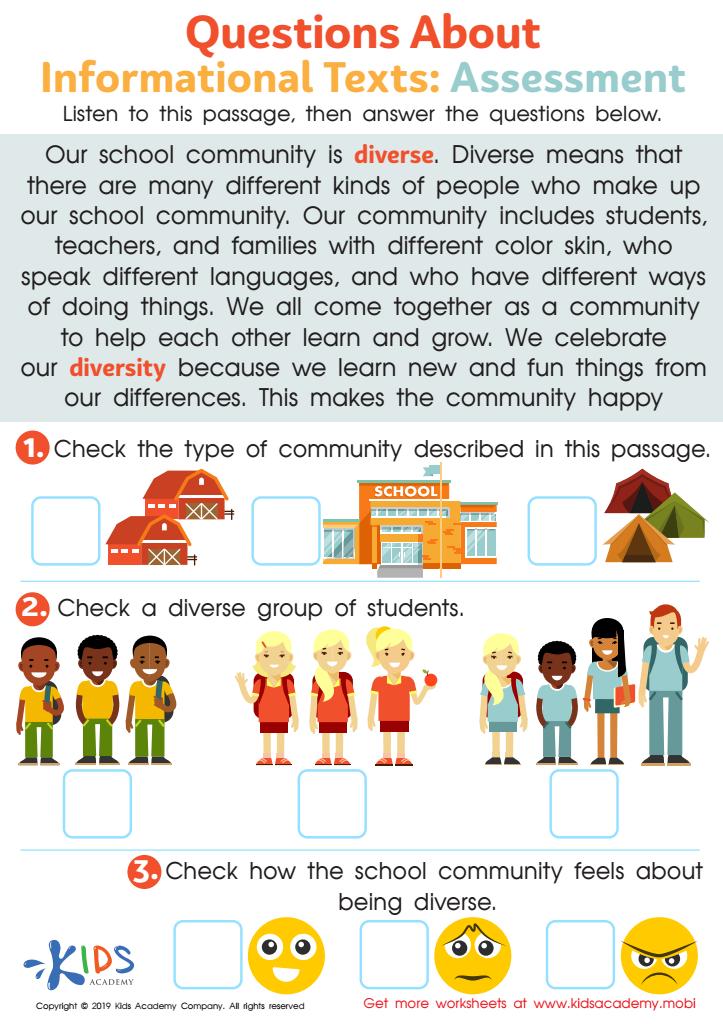
Questions About Informational Texts: Assessment 1 Worksheet
Ask your students: What comes to mind when we talk about a community? What different habits do people practice? What do fellow students do that seems strange? Read this passage aloud to your kindergartners and make sure they understand it. Then, answer the questions at the bottom of the page. (80 words)
Questions About Informational Texts: Assessment 1 Worksheet
Worksheet
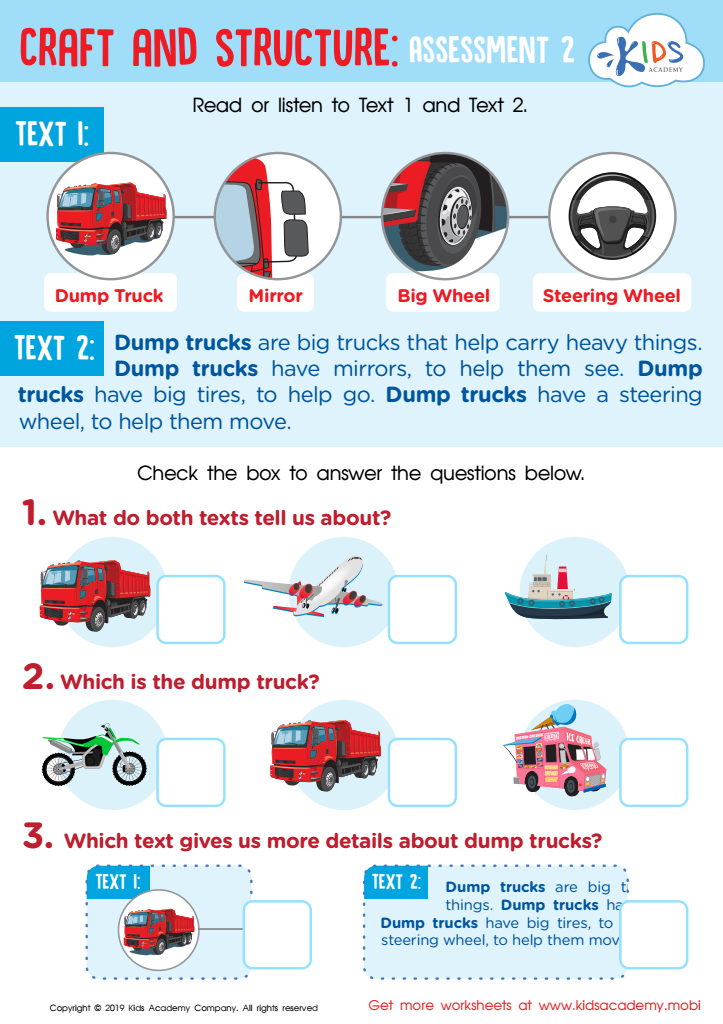
Craft and Structure: Assessment 2 Worksheet
Good readers need to analyze text features and use picture clues to understand. This assessment worksheet gives your child info in different formats and they can show understanding using answer options to check the correct answers. (80 words)
Craft and Structure: Assessment 2 Worksheet
Worksheet
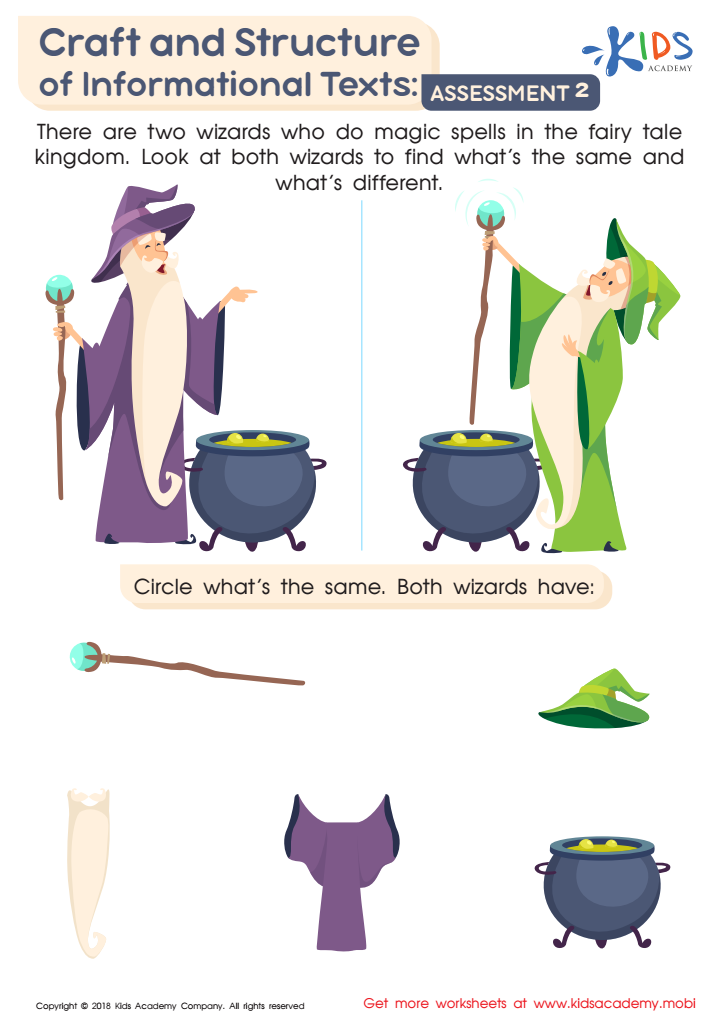
Craft and Structure of Informational Texts: Assessment 2 Worksheet
This assessment has kids looking at two similar fairy tale wizards, focusing on their visuals to find the similarities and differences. Then, they'll circle the things they both have. It's a great way to help children hone their detail-oriented comprehension skills, which is essential when using informational texts.
Craft and Structure of Informational Texts: Assessment 2 Worksheet
Worksheet
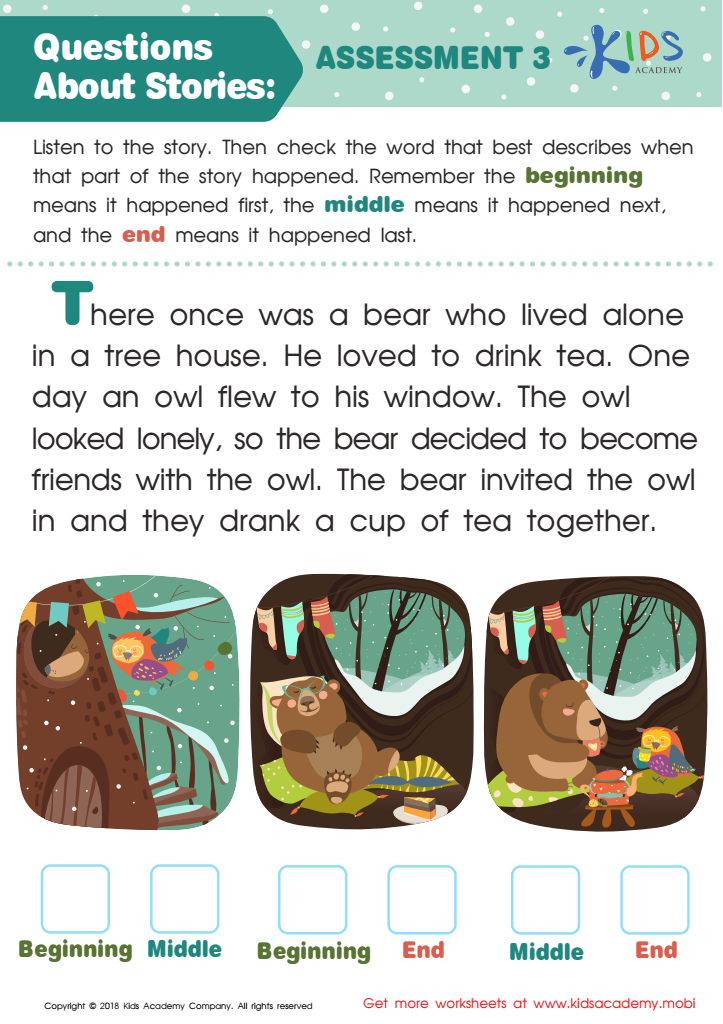
Questions About Stories: Assessment 3 Worksheet
Help kids understand stories by having them listen to a story and check boxes for the beginning, middle, and end. This worksheet makes it fun for even the youngest learners to recall story elements and sequence of events. Let them listen to the story from start to finish, then look at the pictures to check which part of the story they depict.
Questions About Stories: Assessment 3 Worksheet
Worksheet
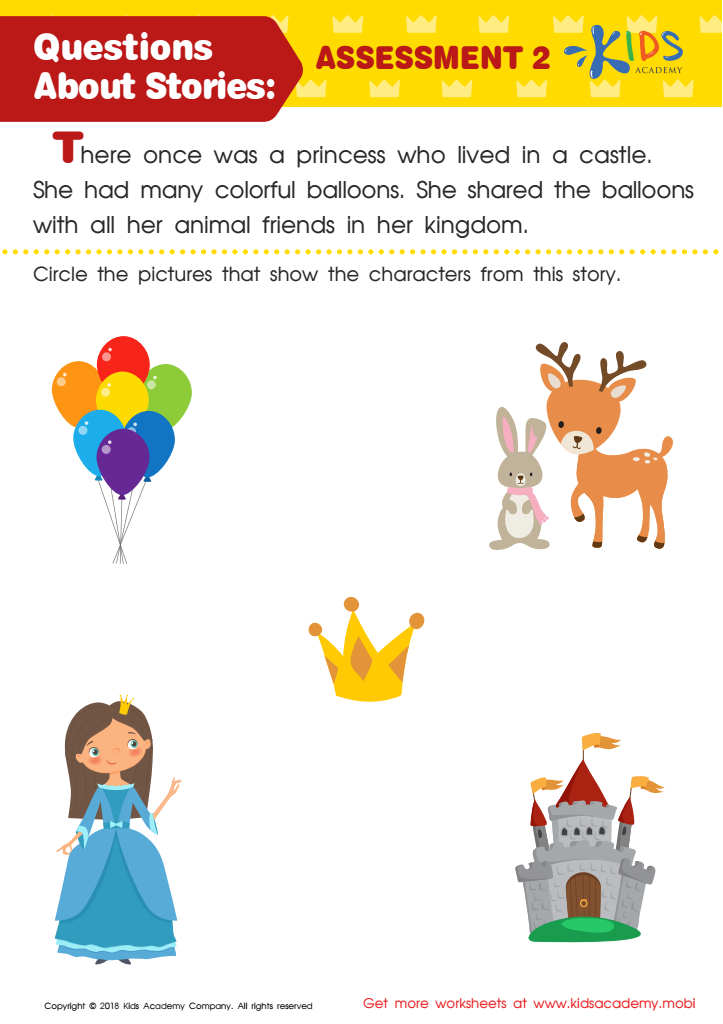
Questions About Stories: Assessment 2 Worksheet
Talk to your child about what a princess is and what activities they associate with that word. Then, read the story to them and help them identify characters in the pictures. Look out for details and ask them questions to ensure they understand.
Questions About Stories: Assessment 2 Worksheet
Worksheet
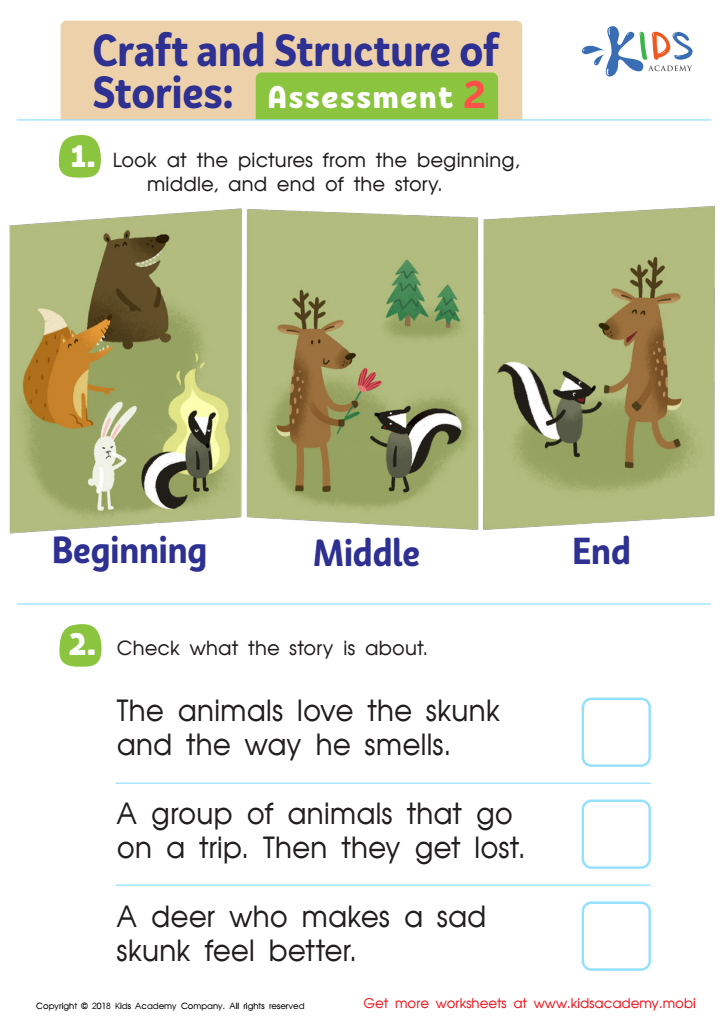
Craft and Structure of Stories: Assessment 2 Worksheet
Help your child assess their story sequencing and reading comprehension skills using this cute worksheet! It encourages them to look at the three pictures on the page, each representing a scene from the beginning, middle and end. Ask them what the story is about, then let them check the box next to the correct answer. This is a great way to ensure they understand the main events of a story.
Craft and Structure of Stories: Assessment 2 Worksheet
Worksheet
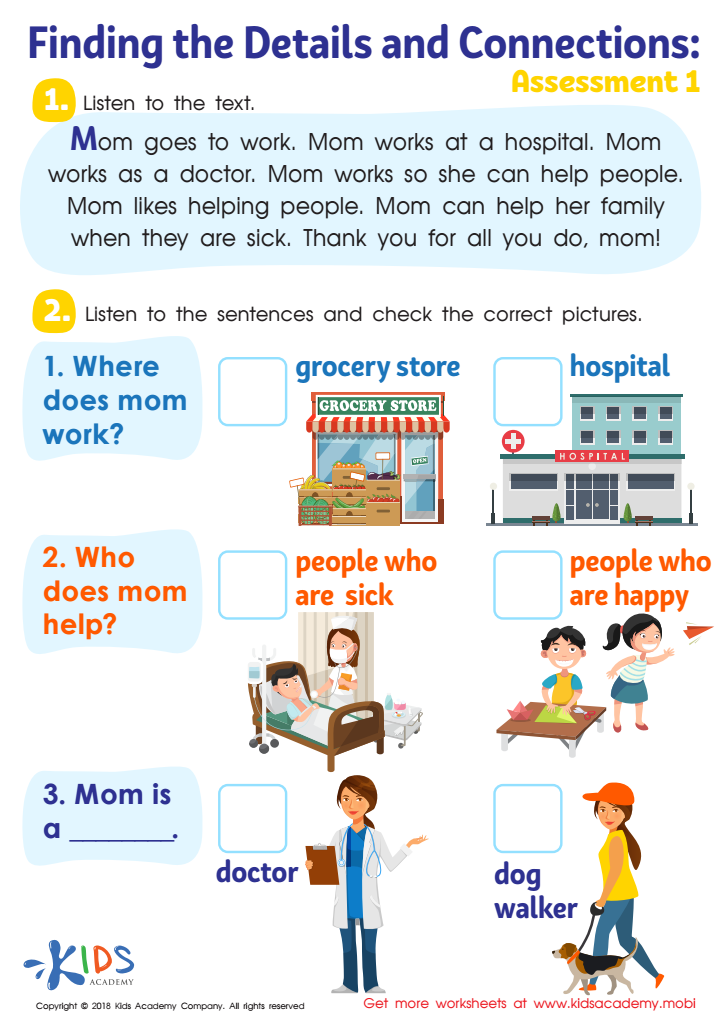
Finding the Details and Connections: Assessment 1 Worksheet
Ask your students what their parents do for a job. Do they know what profession their mom is in and where she works? Professionals have places they go to do their job. In this task, Mom goes to a hospital and is a doctor. Read the text and help them check the right pictures.
Finding the Details and Connections: Assessment 1 Worksheet
Worksheet
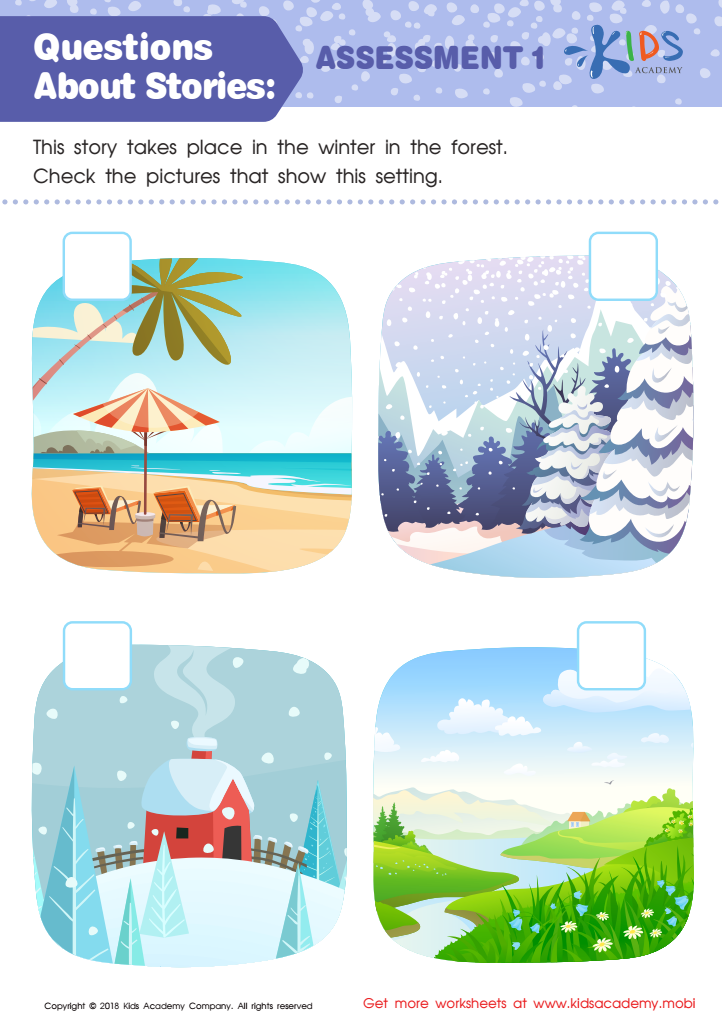
Questions About Stories: Assessment 1 Worksheet
Winter brings snow, cold, short days, and darkness. Schools can even close due to heavy snow. Ask your child what their favourite winter activities are and what color they associate with 'winter'. This worksheet takes place in a winter forest. Look at the 4 pictures with your child, and help them identify which one shows the correct setting.
Questions About Stories: Assessment 1 Worksheet
Worksheet
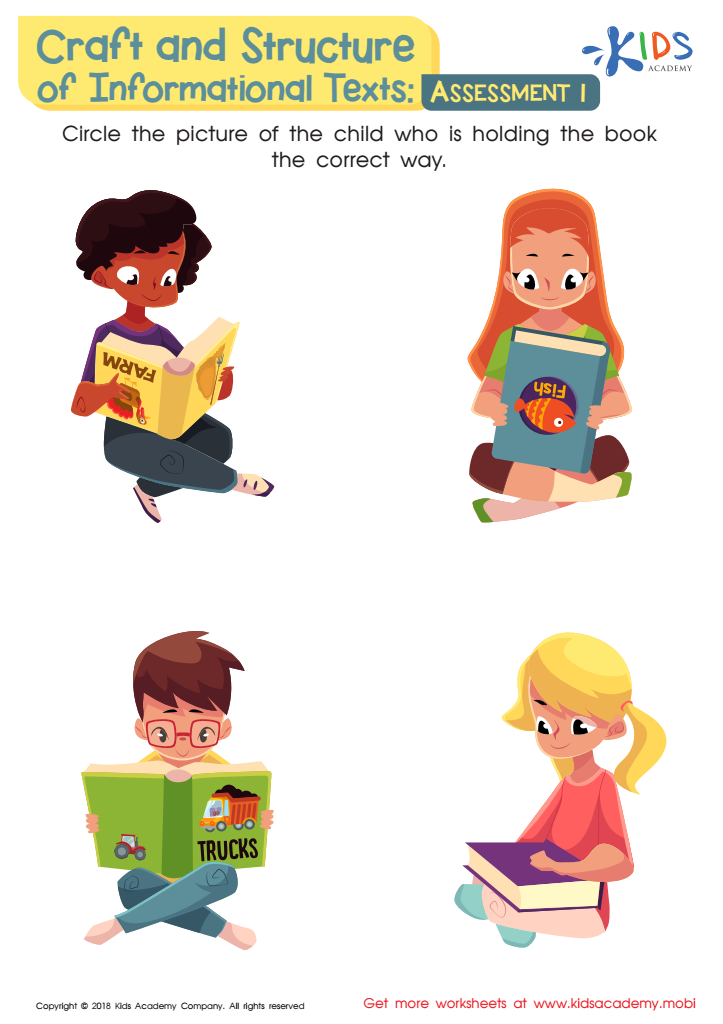
Craft and Structure of Informational Texts: Assessment 1 Worksheet
Young children need to know how to hold books correctly when they start reading. This assessment worksheet helps them show they know what to do. They'll look at the pictures and circle the child who is holding the book correctly. It's a great way to tell they are well on their way to becoming lifetime readers!
Craft and Structure of Informational Texts: Assessment 1 Worksheet
Worksheet
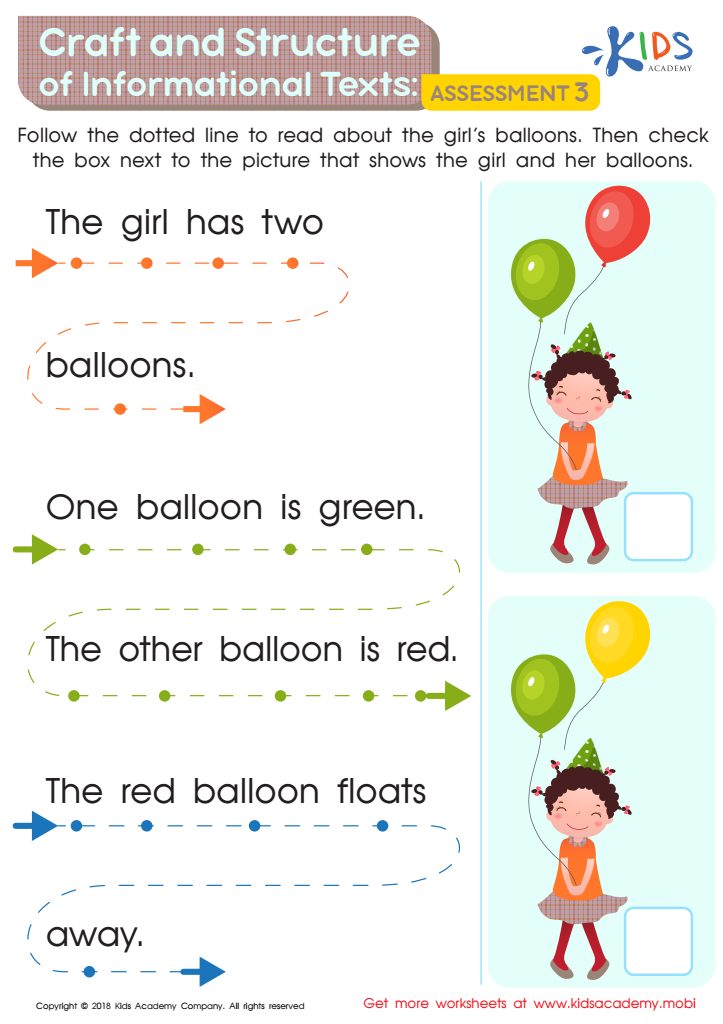
Craft and Structure of Informational Texts: Assessment 3 Worksheet
Test your beginning reader's understanding of left-to-right directionality and use of details from informational texts with this fun worksheet. Follow the traceable paths to find the right picture for each sentence. This will help your child gain confidence and be successful as a reader.
Craft and Structure of Informational Texts: Assessment 3 Worksheet
Worksheet
Join Kids Academy for Free
Who is primarily going to use this learning content?






Reading comprehension activities for ages 3-6 are crucial for early childhood development, and both parents and teachers should prioritize them for several reasons. First, these activities help build foundational literacy skills. Engaging children in reading comprehension exercises enhances their ability to understand and interpret stories, which is vital for their overall learning journey. At this age, children begin to recognize letters, sounds, and basic words, and comprehension activities help them connect these skills to actual meanings, fostering a deeper engagement with text.
Second, such activities contribute to language development, expanding vocabulary and improving communication skills. By discussing stories and answering questions, children learn to articulate their thoughts and ideas, nurturing critical thinking and problem-solving abilities.
Lastly, reading comprehension activities encourage a love for reading and learning. When children interact with stories in enjoyable and interactive ways, it instills a positive attitude toward literacy that can last a lifetime. By focusing on engaging activities with answers, adults can provide children with the necessary support and guidance to navigate the world of reading confidently. Overall, investing time in these early comprehension skills sets the stage for academic success and lifelong learning.








