Tracing Letters Worksheets Activities With Answers for Ages 3-8 - Page 3
57 filtered results
-
From - To
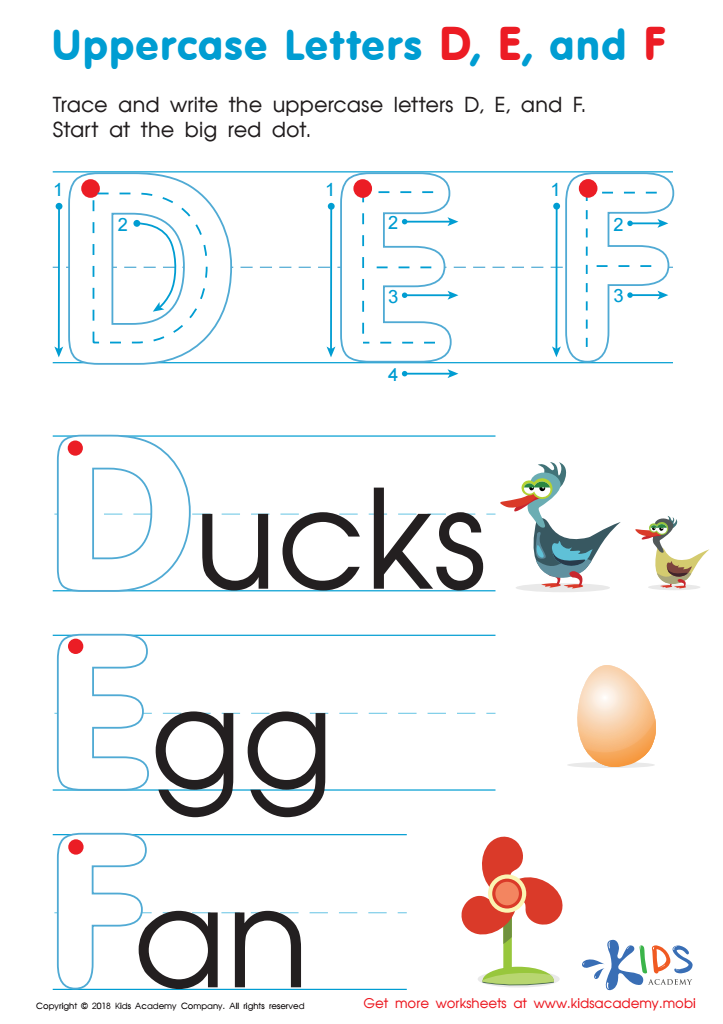
Uppercase Letters D, E, and F Worksheet
 Assign to My Students
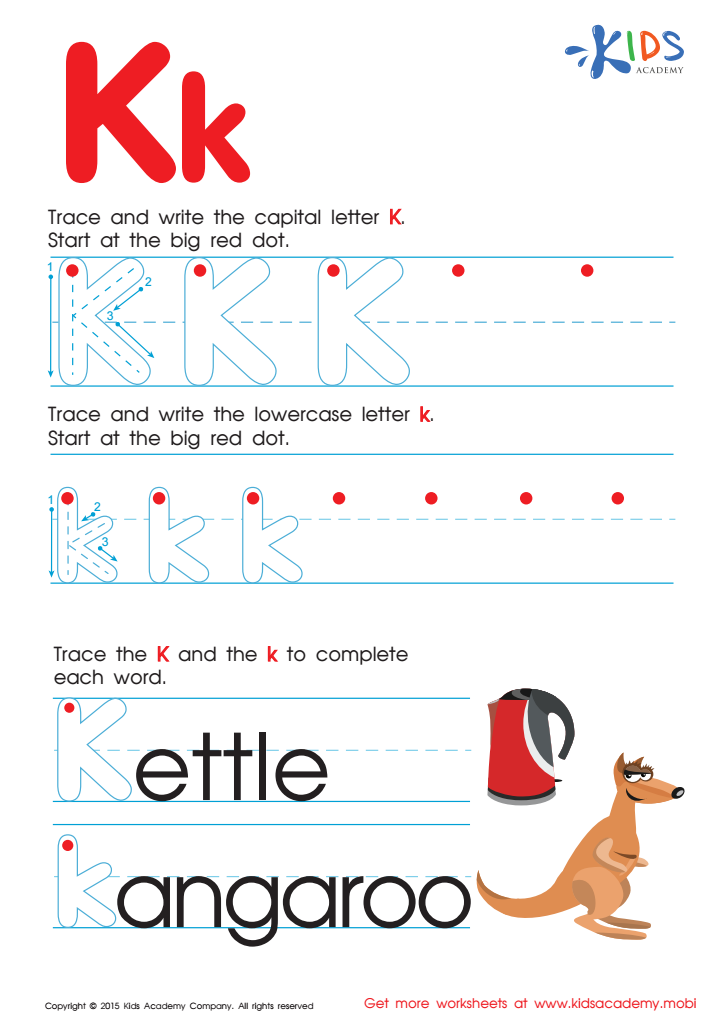
Letter K Tracing Page
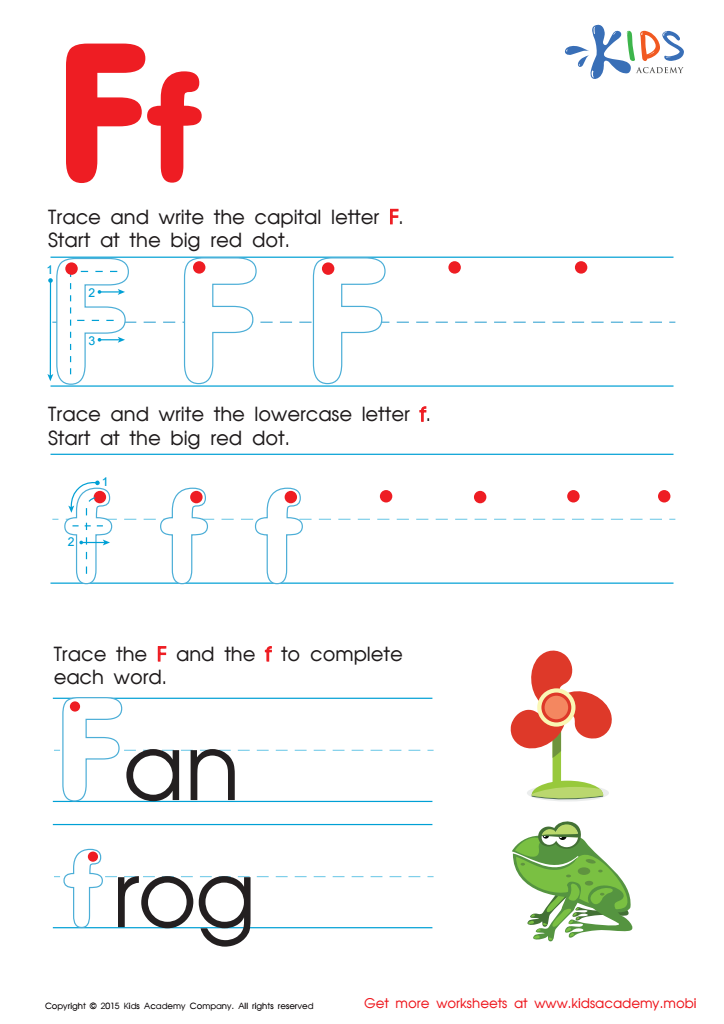
Letter F Tracing Page

Uppercase Letters Y Z Worksheet
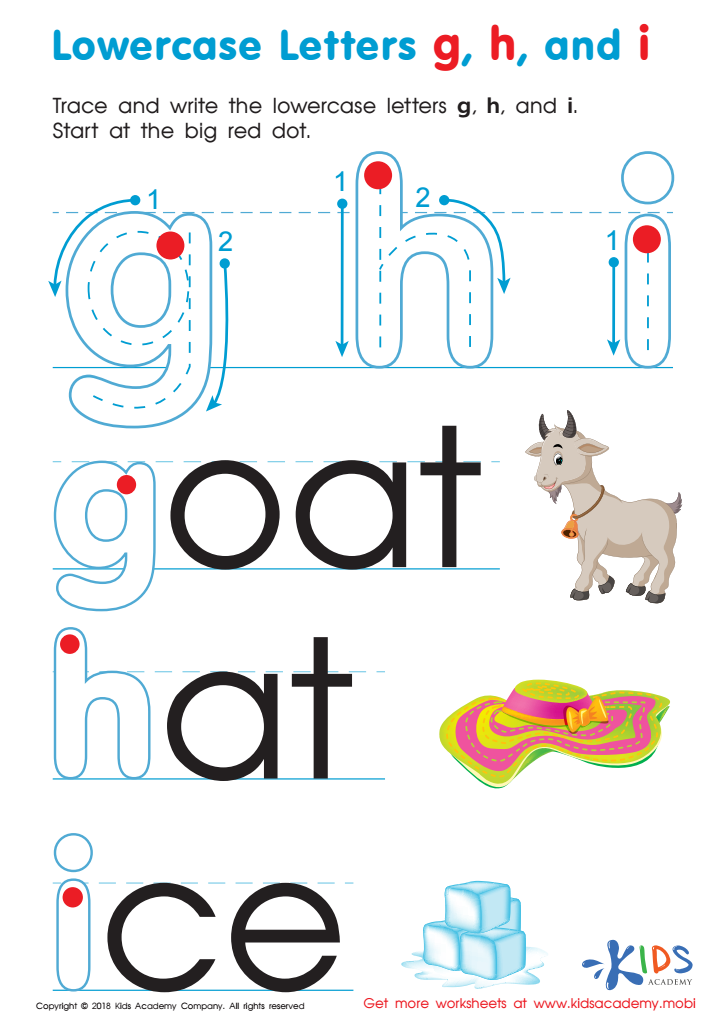
Lowercase Letters g h i Worksheet
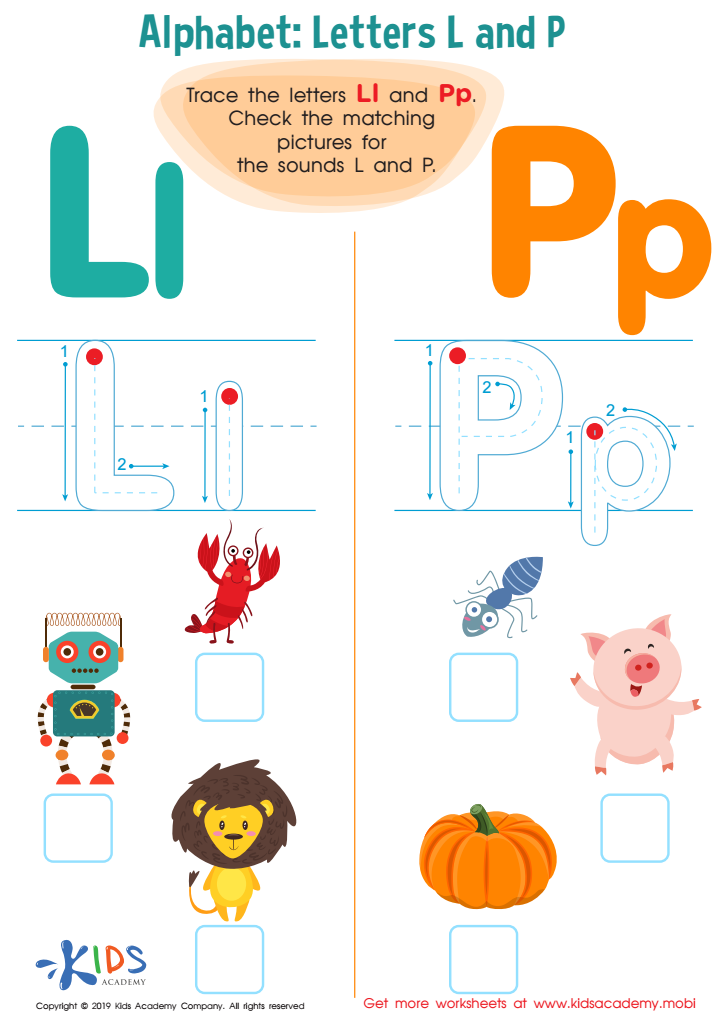
Letter L and P Tracing Worksheet
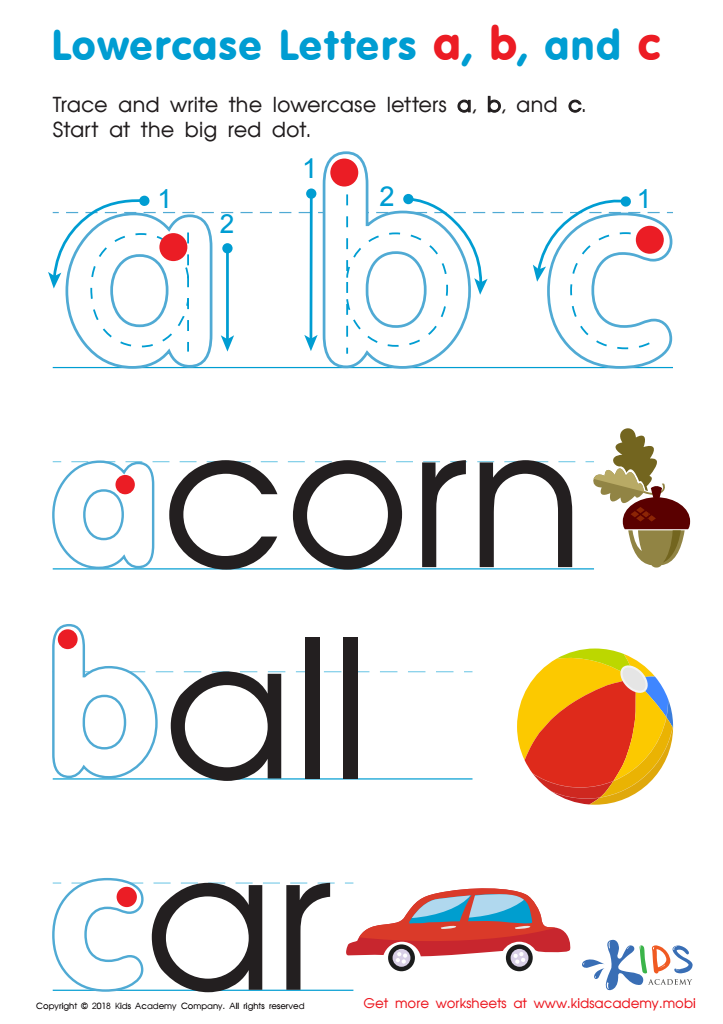
Lowercase Letters a b c Worksheet
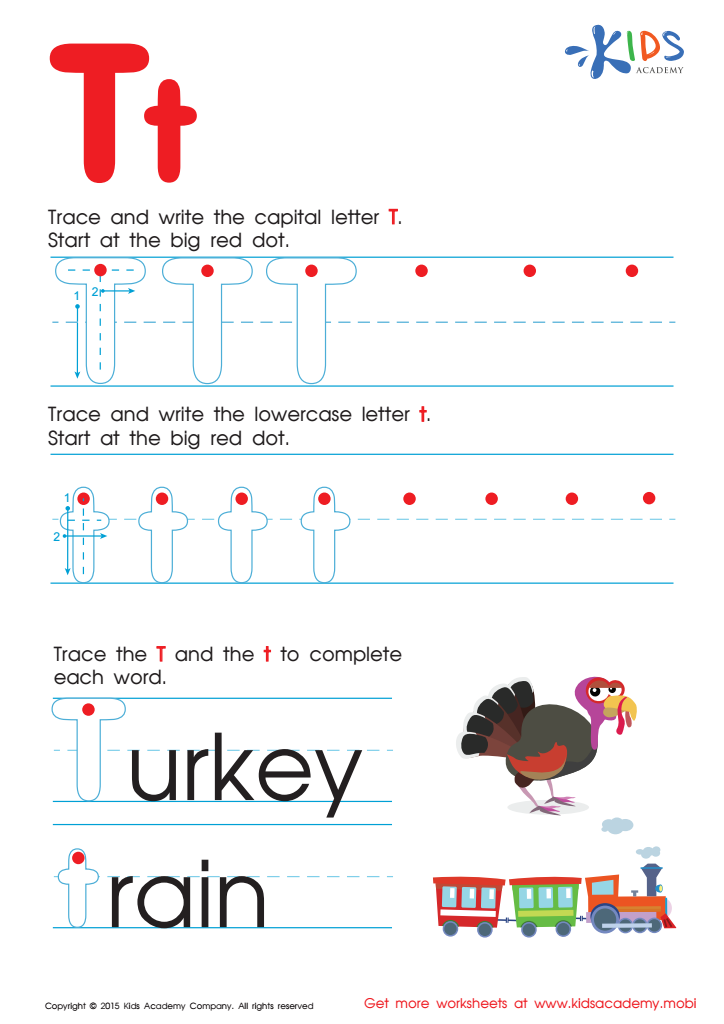
Letter T Tracing Page
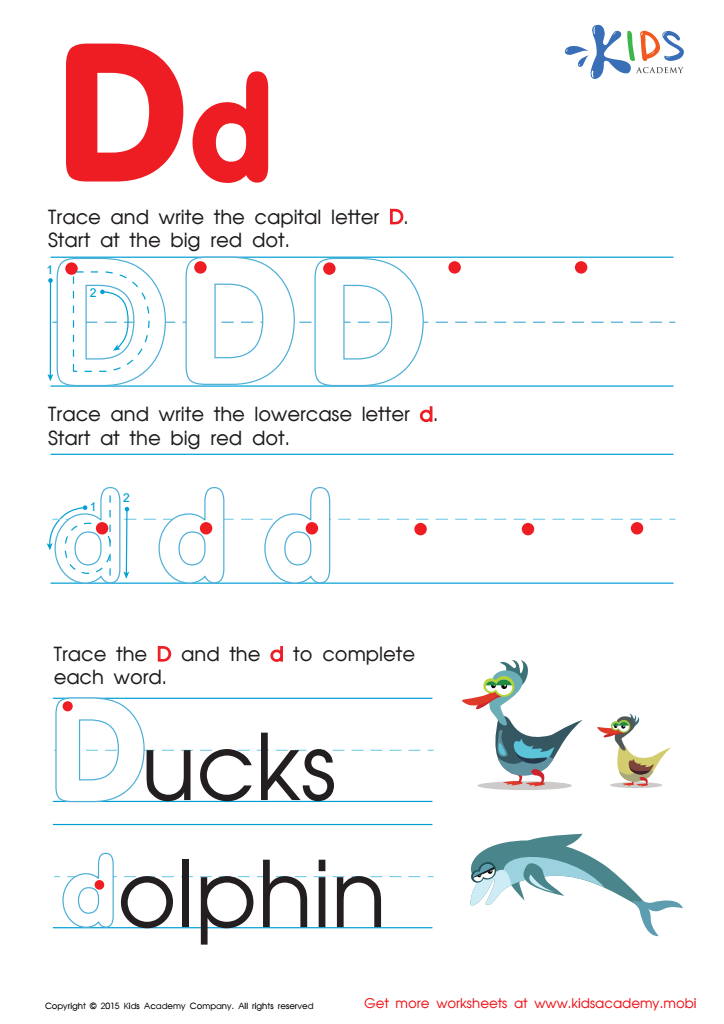
Letter D Tracing Page








Tracing letters activities for children aged 3-8 are crucial for fostering foundational literacy skills and developing fine motor skills. At this age, children are in a critical stage of learning where they build the basics of reading and writing. Engaging in tracing activities enhances their understanding of letter formation, improving hand-eye coordination and muscle memory. This repetitive practice aids in reinforcing letter recognition, aiding phonetic understanding as they link letters with sounds.
Parents and teachers alike play a vital role in encouraging these activities, as they can significantly boost a child's confidence and enthusiasm for learning. When children master early writing skills, they demonstrate improved academic readiness and a greater ability to express thoughts and ideas through writing.
Moreover, structured tracing practice offers immediate feedback. When answers are provided, children learn self-correction, which enhances their critical thinking skills. Supporting tracing activities can also foster a love for literacy by making learning enjoyable through games and hands-on experiences.
In conclusion, tracing letters is not merely an exercise in writing—it's an essential building block for cognitive development, confidence, and overall educational success in young learners, making it a priority for both parents and educators.








