Physical Science Worksheets Activities With Answers for Ages 5-9
6 filtered results
-
From - To
Discover a fun and educational way to engage your young learners aged 5-9 with our "Physical Science Worksheets Activities!" Designed to foster a love for science, these worksheets cover essential concepts in a captivating manner. Each activity is paired with clear answer keys to support both educators and parents in guiding students through their scientific exploration. From understanding simple machines to exploring the states of matter, our interactive exercises stimulate curiosity and enhance comprehension. Perfect for classroom or homeschool settings, these worksheets offer various challenges to suit different learning styles, making science accessible and enjoyable for every child. Start exploring today!
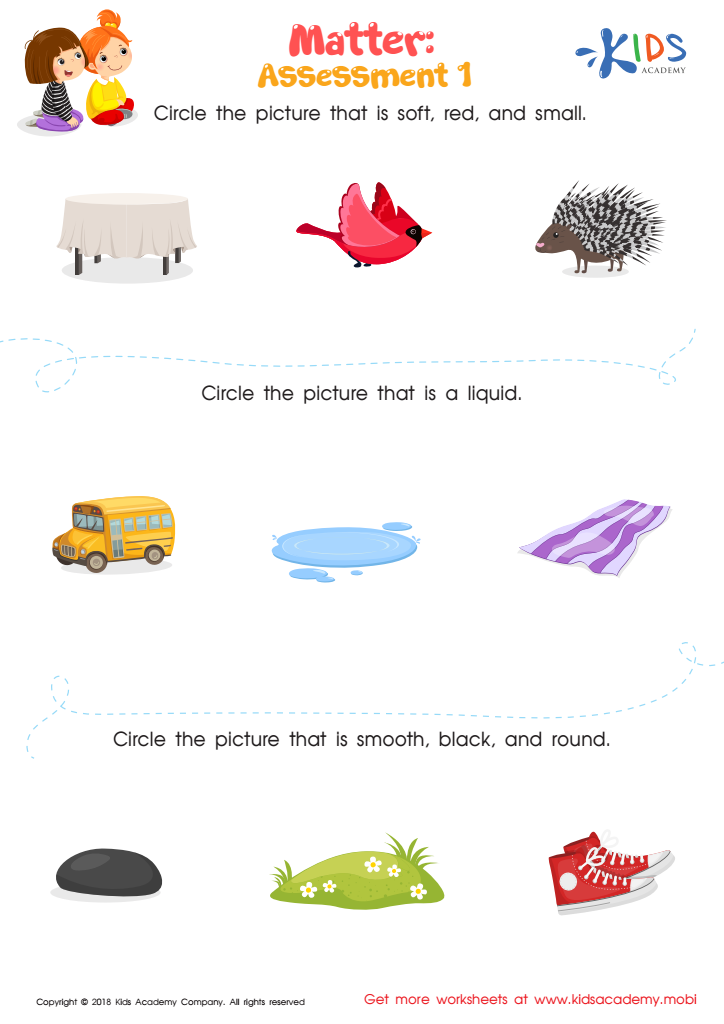
Matter: Assessment 1 Worksheet
 Assign to My Students
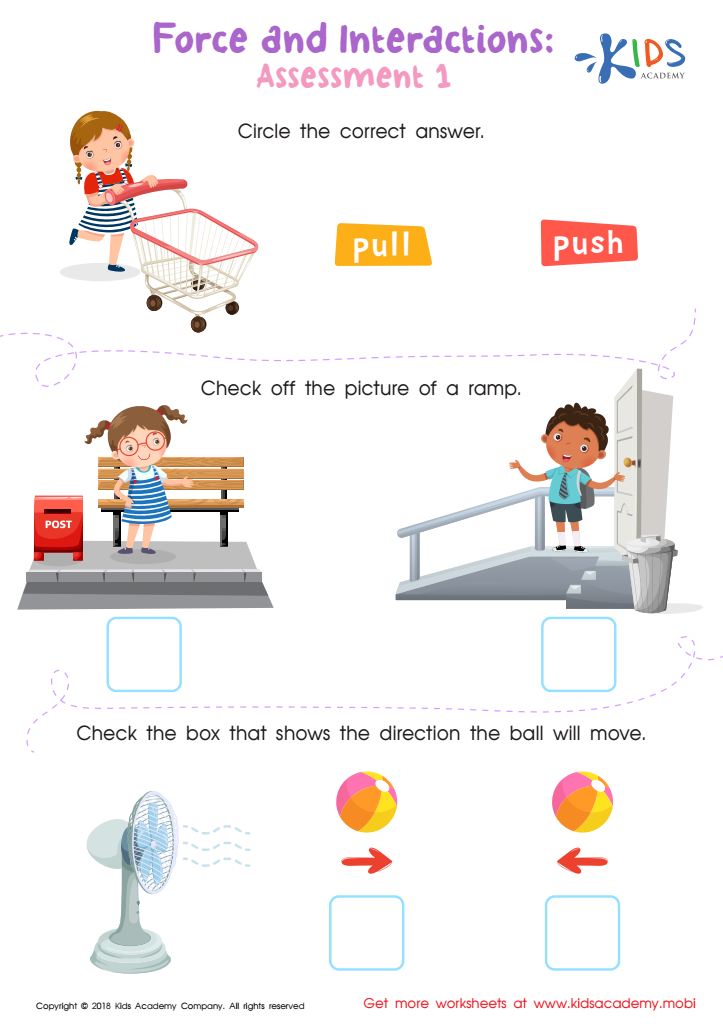
Force and Interactions: Assessment 1 Worksheet
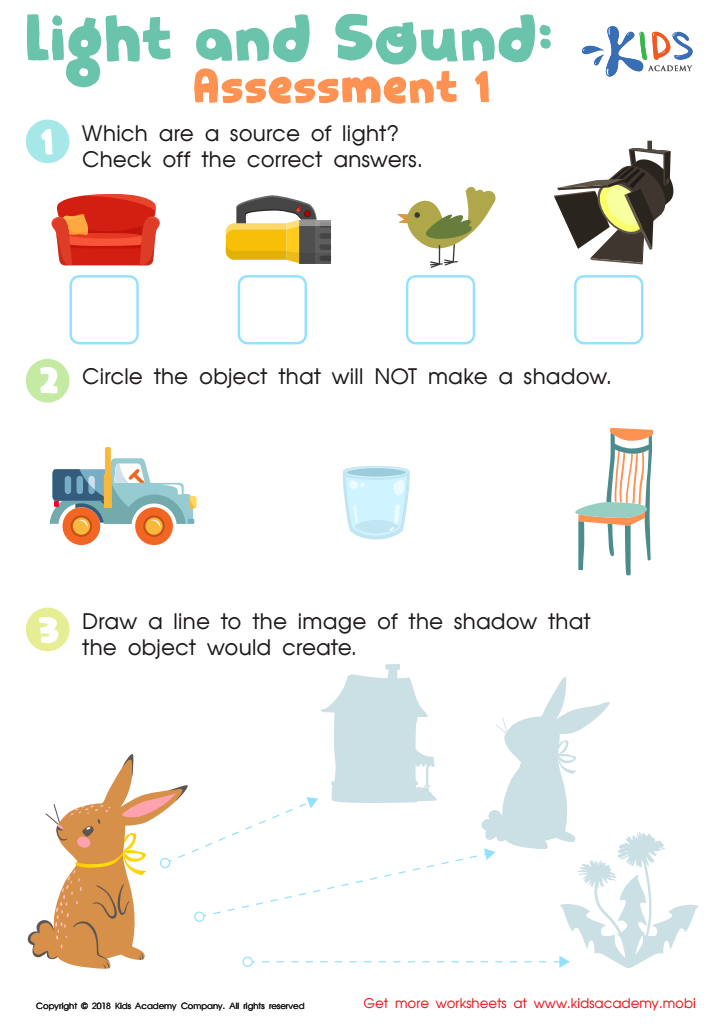
Light and Sound: Assessment 1 Worksheet
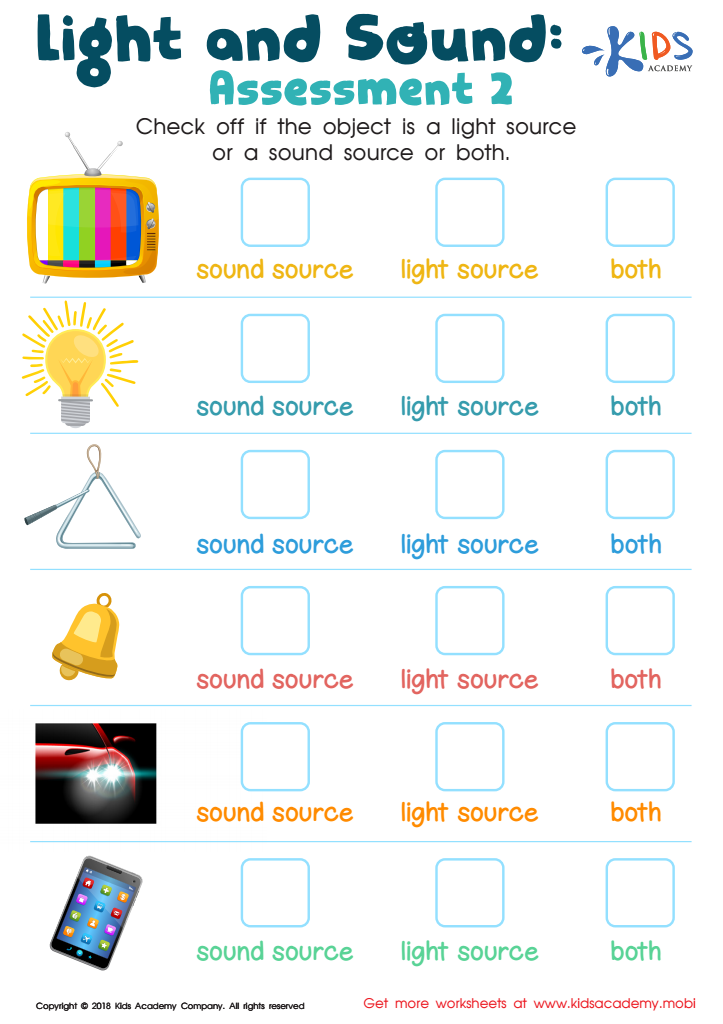
Light and Sound: Assessment 2 Worksheet
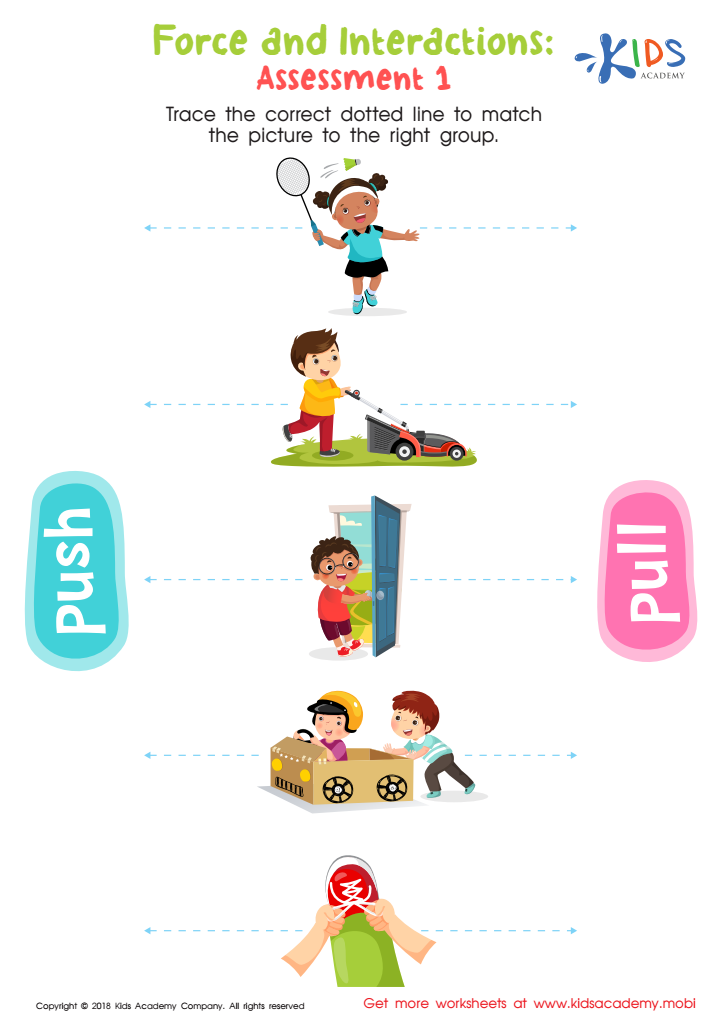
Force and Interactions: Assessment 2 Worksheet
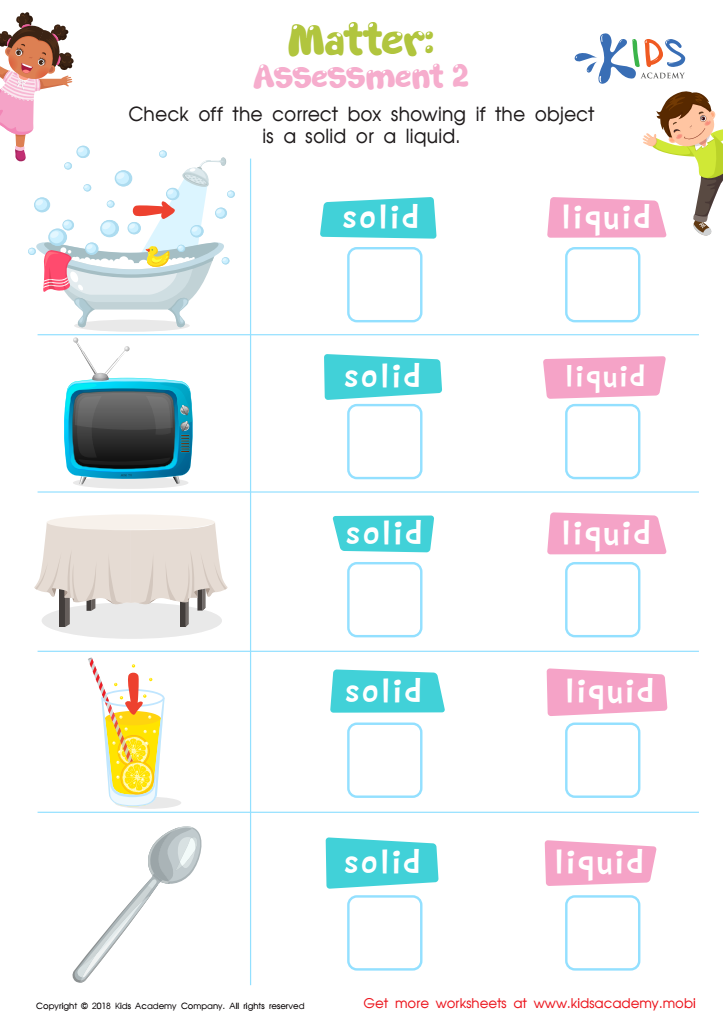
Matter: Assessment 2 Worksheet








Parents and teachers should care about physical science activities for ages 5-9 because these foundational experiences cultivate curiosity and develop critical thinking skills in young learners. Engaging in hands-on physical science activities nurtures a child's innate curiosity about the world around them, providing opportunities to explore concepts such as matter, energy, force, and motion through practical experiences.
These activities can help children make connections between their everyday experiences and scientific principles, fostering a deeper understanding of how things work. Additionally, they encourage problem-solving, observation, prediction, and experimentation—key components of the scientific method.
Moreover, physical science activities support the development of fine motor skills and shape social skills through collaborative play. Kids learn how to communicate ideas, share materials, and work together toward common goals. Having answers available for these activities also builds a supportive environment for parents and teachers, allowing them to guide discussions and clarify concepts.
Ultimately, integrating physical science activities into early education supports a well-rounded curriculum that ignites fascination, promotes inquiry, and lays the groundwork for future learning, ensuring children remain enthusiastic and engaged as they progress in their educational journey.








