Normal Tracing Worksheets Activities With Answers for Ages 3-8 - Page 5
98 filtered results
-
From - To
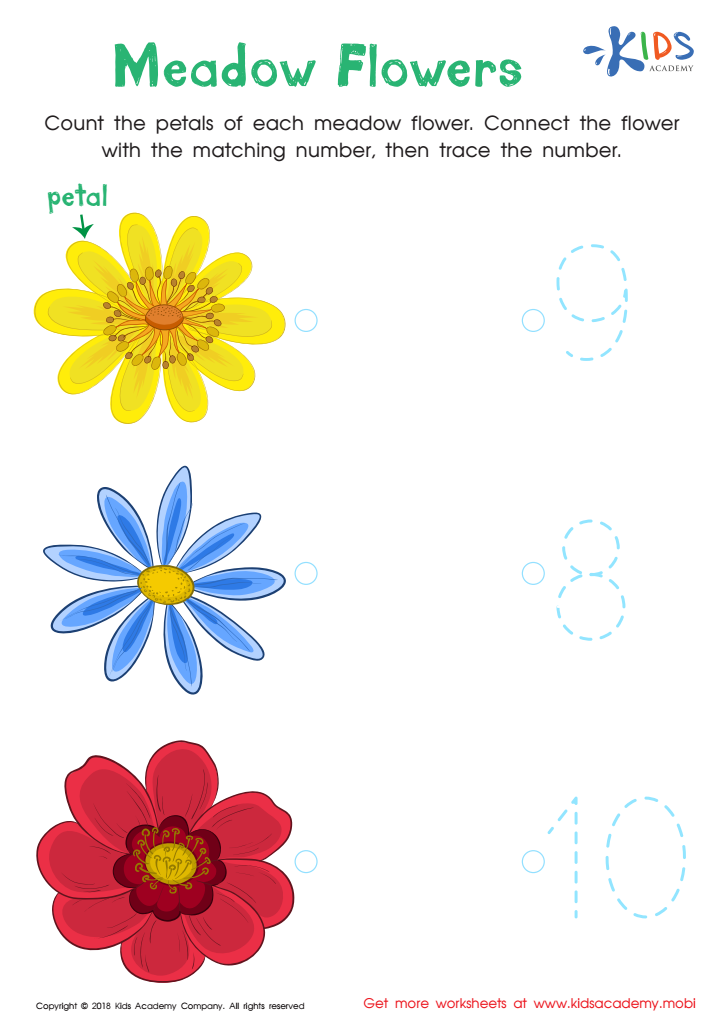
Kindergarten Number Tracing: Medow Flowers Worksheet
 Assign to My Students
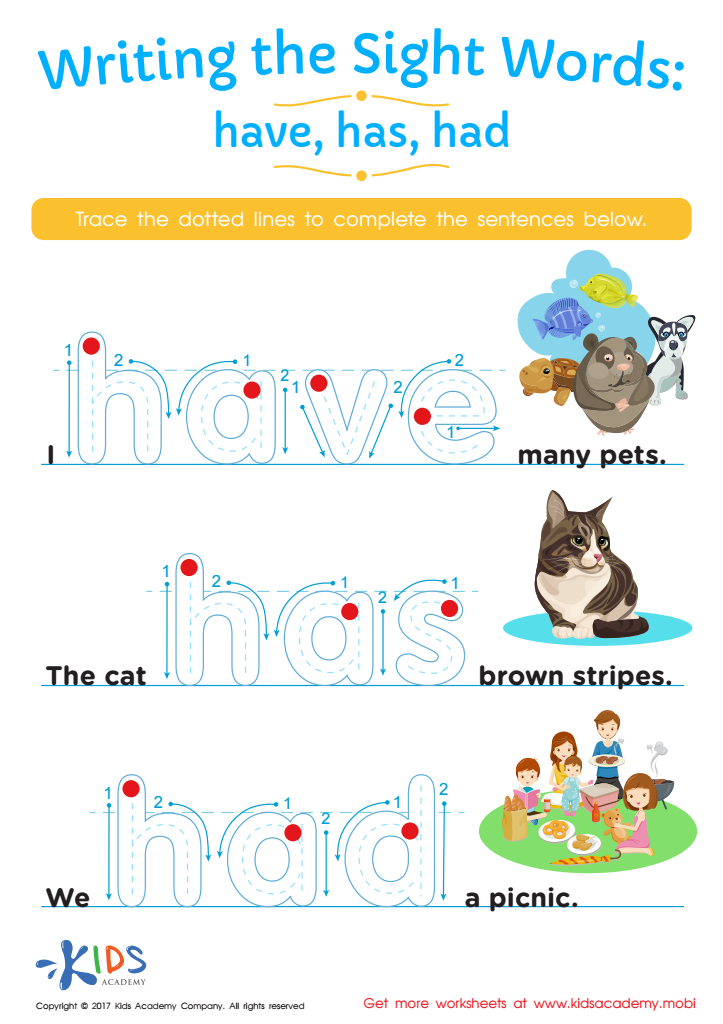
Have, Has, Had Worksheet Sight Words Worksheet








Normal tracing activities are fundamental for the development of young children, particularly between ages 3-8. These exercises enable children to hone fine motor skills, which are crucial for tasks like writing, drawing, and other daily activities. By tracing shapes, letters, and numbers, children learn to control their hand movements and develop muscle memory, cultivating essential coordination.
Engaging in tracing activities fosters cognitive development as well. As children follow lines and shapes, they enhance their visual perception and focus. This process helps in recognition and memory skills, laying a strong foundation for academic learning, such as reading and writing.
Tracing activities also nurture creativity and self-expression. When children can trace shapes and then fill them in, they explore their artistic abilities and learn basic concepts of design. When parents and teachers participate in these activities, they create opportunities for bonding and effective communication, allowing children to express thoughts and feelings.
Moreover, practiced tracing can lead to greater confidence in their writing abilities, making them more willing to participate in classroom activities and discussions. Overall, normal tracing activities play a vital role in enhancing a child's physical, cognitive, and emotional development, which is why it's crucial for parents and teachers to integrate them into learning.








