Normal Tracing Words Worksheets Activities With Answers for Ages 7-9 - Page 2
27 filtered results
-
From - To
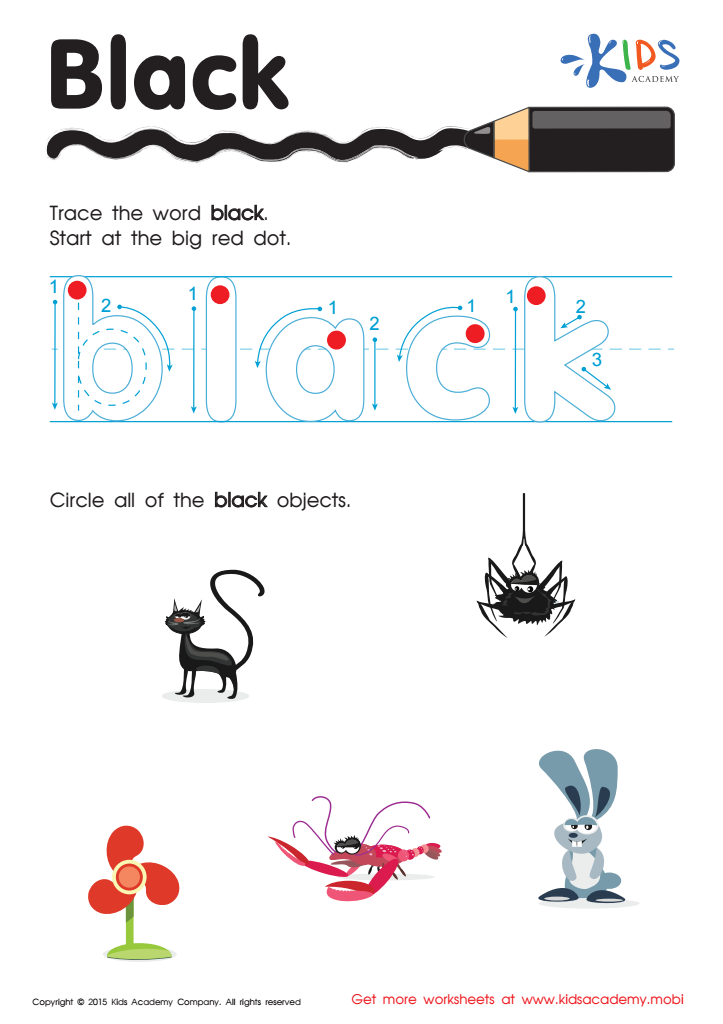
Black Tracing Color Words Printable
 Assign to My Students
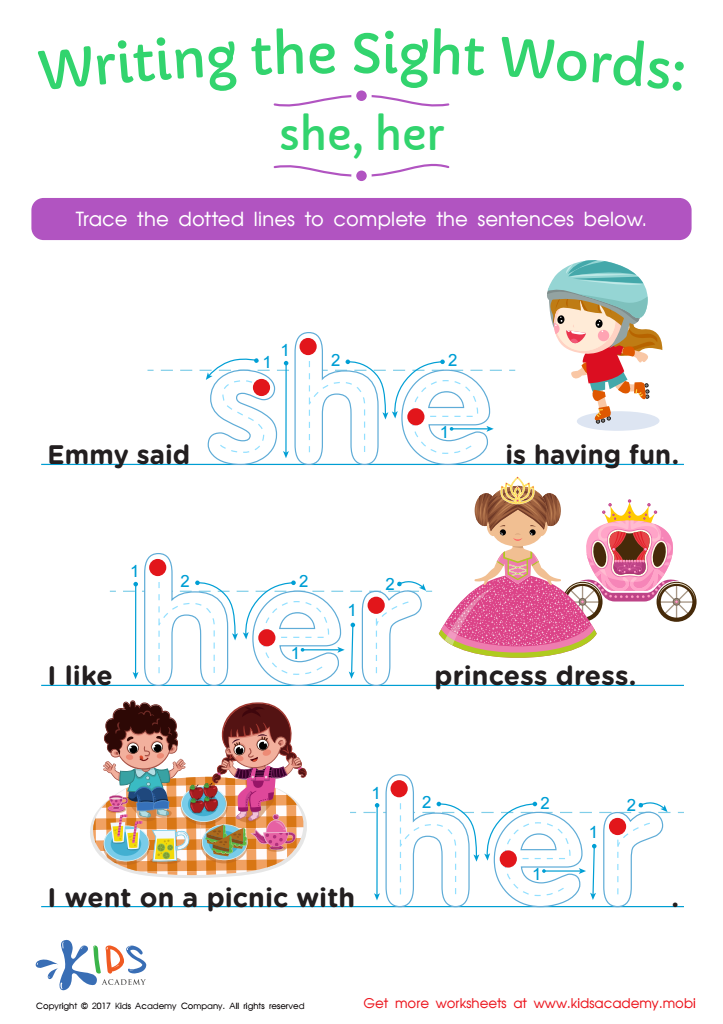
She, Her Printable Sight Words Worksheet
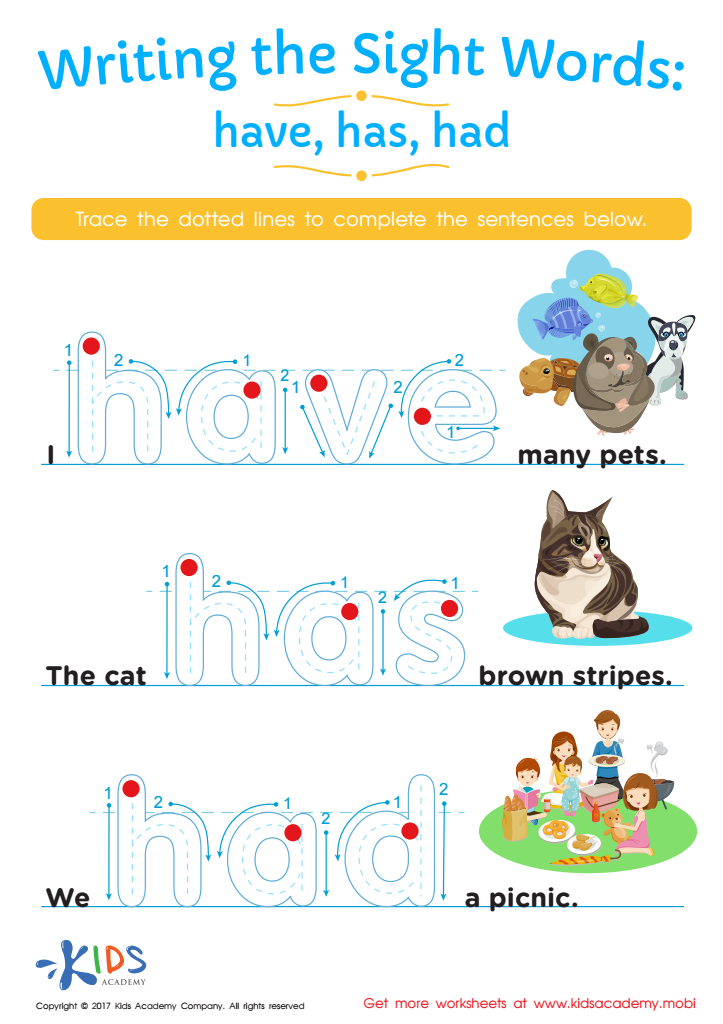
Have, Has, Had Worksheet Sight Words Worksheet








Normal Tracing Words Activities for children aged 7-9 are essential for several reasons. Firstly, these activities help reinforce literacy skills at a crucial stage of development. By tracing words, children enhance their handwriting, improving fine motor skills that are vital for writing tasks in the future. This practice promotes letter recognition and word familiarity, aiding in vocabulary expansion and reading fluency.
Furthermore, tracing activities engage students in hands-on learning, making the experience more interactive and enjoyable. They encourage focus and concentration while providing a sense of achievement as children see their progress manifested on paper. Incorporating these activities into a child's routine also supports cognitive development, enabling better understanding of word structure and phonetics.
Parents and teachers should care about these activities as they lay the foundation for fundamental literacy skills. By integrating tracing words into learning plans, educators can address various learning styles, ensuring that visual and kinesthetic learners engage effectively. Moreover, these activities can easily be adapted with varied difficulty levels to suit the child's needs, making them versatile and inclusive. Ultimately, fostering strong literacy skills through tracing helps prepare children for academic success and a lifetime of reading enjoyment.








