Normal Phonics Worksheets Activities With Answers for Ages 8-9
3 filtered results
-
From - To
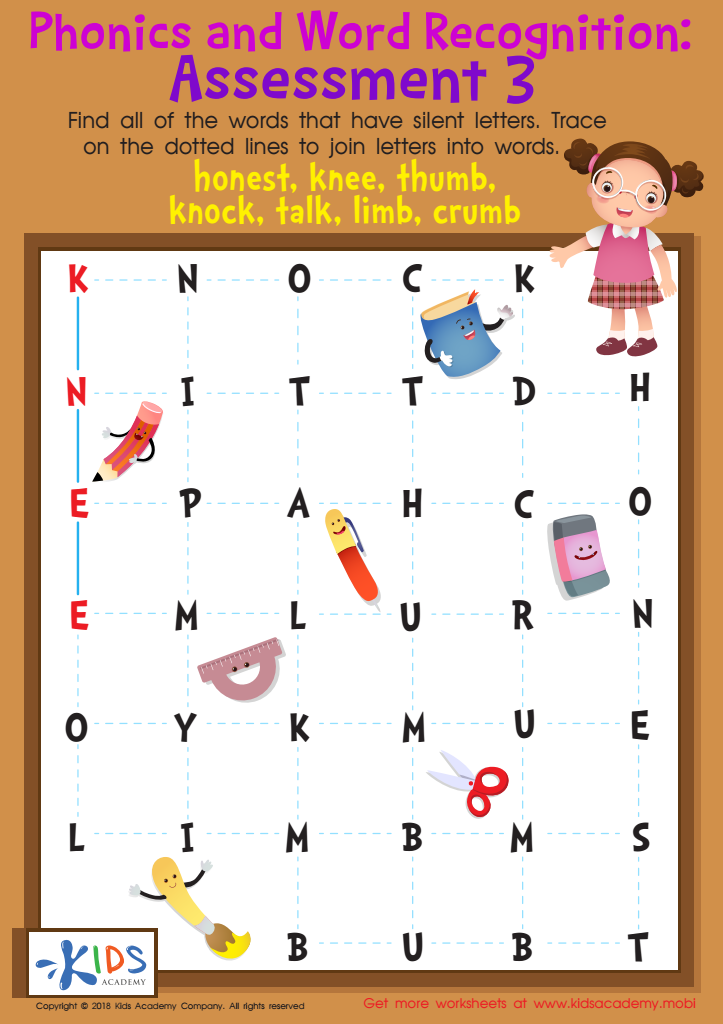
Phonics and Word Recognition: Assessment 3 Worksheet
 Assign to My Students
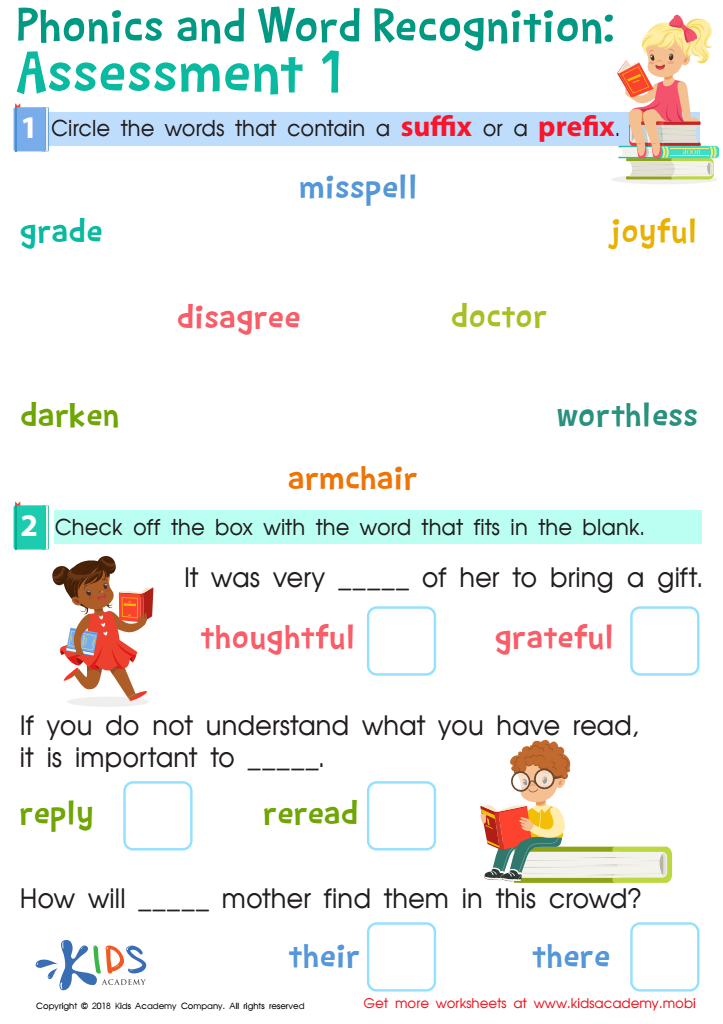
Phonics and Word Recognition: Assessment 1 Worksheet
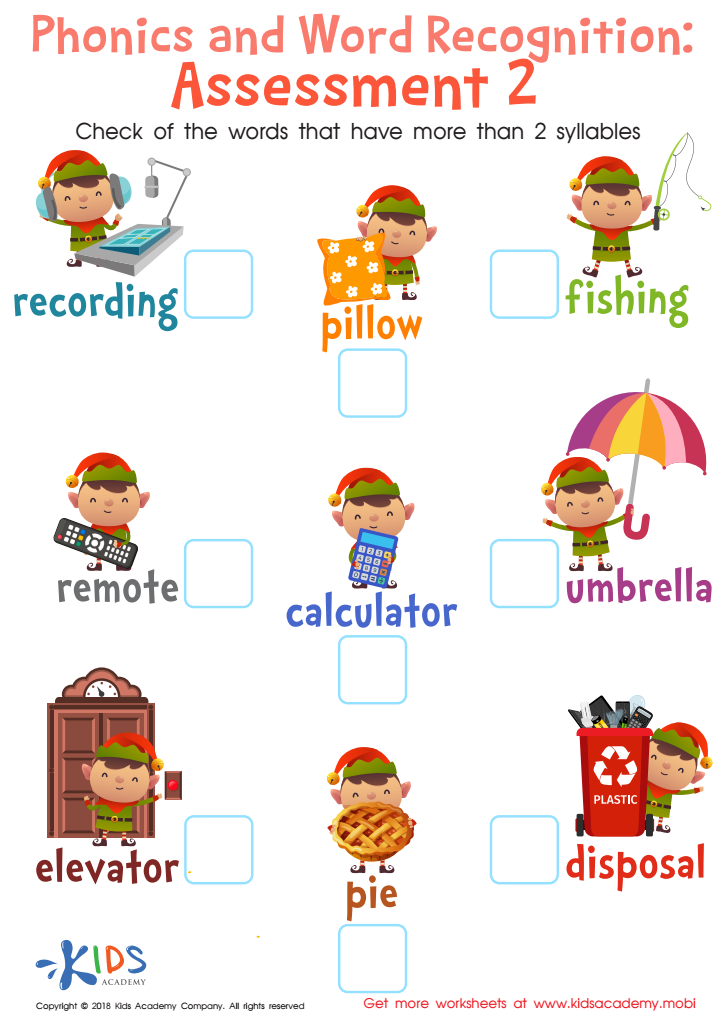
Phonics and Word Recognition: Assessment 2 Worksheet




.jpg)



Normal Phonics Worksheets Activities with Answers play a pivotal role in enhancing young learners' reading and spelling capabilities. These structured exercises are meticulously designed to break down the complexity of the English language, making it accessible and engaging for students. The inclusion of answers adds an invaluable layer of feedback, enabling both students and educators to monitor progress and identify areas needing further attention.
One of the primary benefits of using Normal Phonics Worksheets Activities with Answers is the foundation they lay in phonemic awareness. This critical skill involves understanding that words are made up of individual sounds, which can be manipulated to decode (read) and encode (spell) words. Through repetitive and targeted practice, students become adept at recognizing and producing sounds, a fundamental step towards fluent reading and clear articulation.
Moreover, these worksheets offer a structured approach to exploring complex phonetic concepts such as blends, digraphs, and diphthongs. By presenting these elements in a systematic and engaging manner, learners can gradually build their knowledge base, moving from simple to more complex phonetic patterns. This scaffolded approach ensures that students are not overwhelmed but instead experience a sense of achievement as they progress.
The inclusion of answers further enhances the utility of Normal Phonics Worksheets Activities. Immediate feedback is crucial for learning, allowing students to correct mistakes and internalize the correct phonetic principles. Additionally, this feature supports educators and parents in efficiently guiding students through the learning process, ensuring that misconceptions are addressed promptly and effectively.
In conclusion, Normal Phonics Worksheets Activities with Answers are invaluable tools in the literacy development process. They not only provide a solid foundation in phonemic awareness but also support learners in navigating the intricacies of the English language. Through structured practice and immediate feedback, students develop the skills necessary for reading fluency and spelling accuracy, setting the stage for lifelong literacy.








