Filters

9 filtered results

Clear all filters
Favorites
With answer key
Interactive

9 filtered results

Difficulty Level

Grade


Discover our engaging "Good Citizenship Worksheets for Ages 3-4" designed to introduce young learners to the fundamental concepts of being a responsible and caring member of their community. These worksheets encourage kids to recognize the importance of sharing, helping others, and understanding basic rules. Through fun activities such as coloring, tracing, and simple discussions, children will cultivate essential social skills while enjoying their learning journey. With vibrant illustrations and age-appropriate content, our worksheets make it easy for parents and educators to instill good citizenship values in their little ones. Start shaping your child’s understanding of community and kindness today!

Check out this FREE Trial Lesson on Good Citizenship for age 3-4!

Good Citizen vs. Bad Citizen

Favorites
With answer key
Interactive
  • 3-4
  • With answer key
  • Good Citizenship
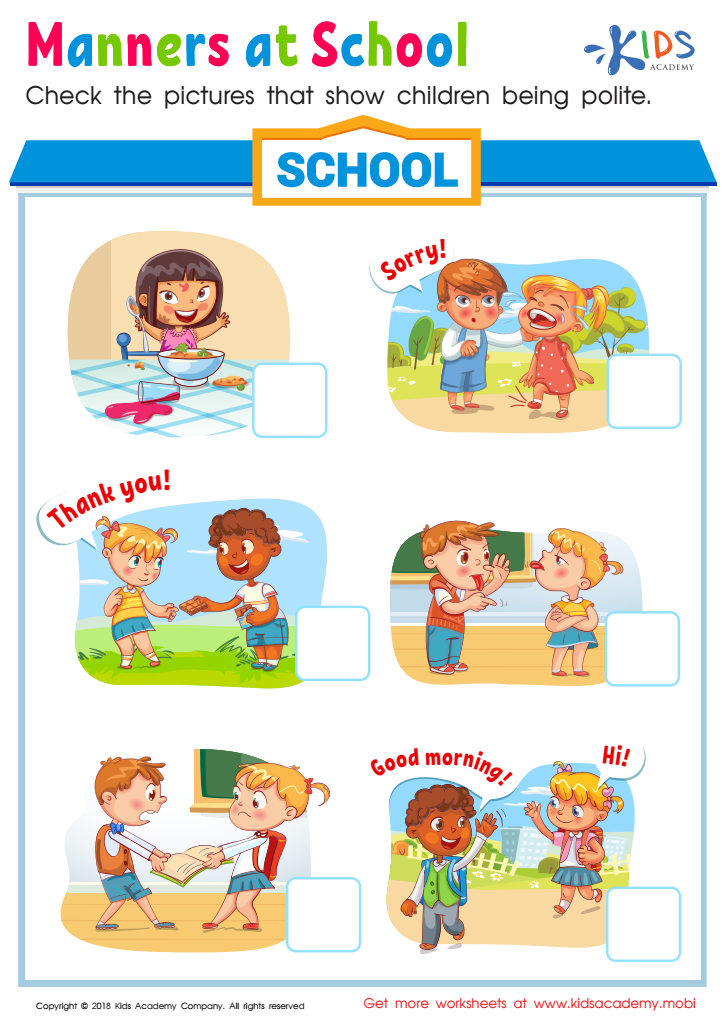
Manners at School Worksheet

Manners at School Worksheet

Go through the worksheet with your child and ask which children are being rude or polite. Check the boxes for the polite children. Explain how to be well-behaved in school by following the examples of polite children. Help your child better their behaviour in school and the community.
Manners at School Worksheet
Worksheet
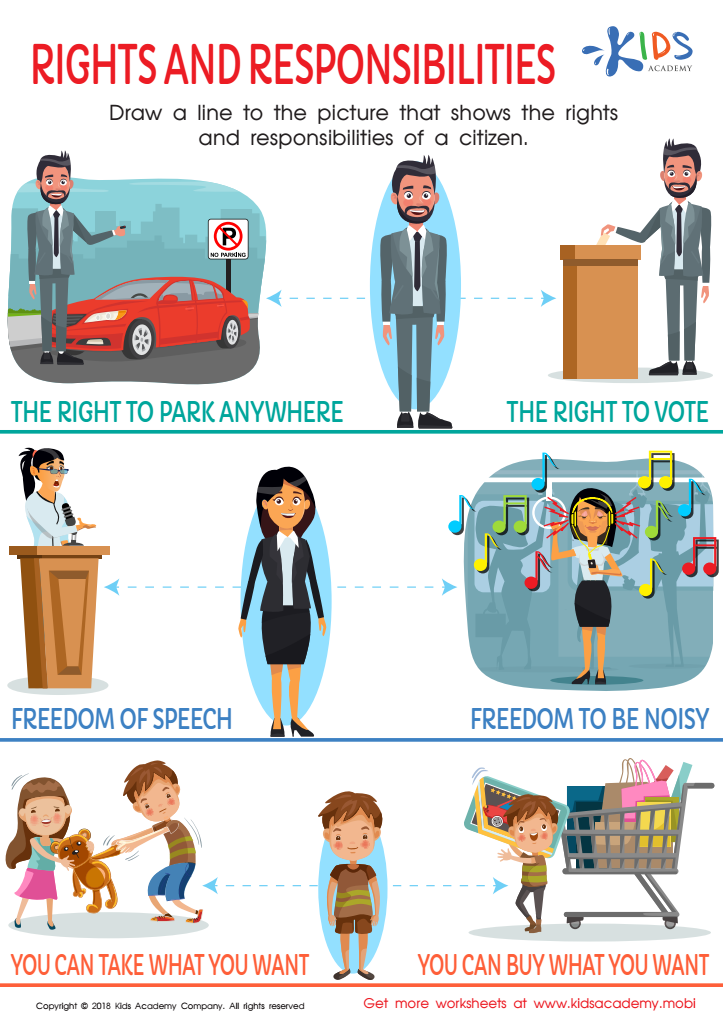
Rights and Responsibilities Worksheet

Rights and Responsibilities Worksheet

Encourage your kids to discuss their rights as citizens. Help them recognize fundamental human rights they're entitled to. Review the worksheet: ask them to read aloud and draw a line to the right picture. Invite them back to the discussion to explain their choices. Each step will help them understand and exercise their rights.
Rights and Responsibilities Worksheet
Worksheet
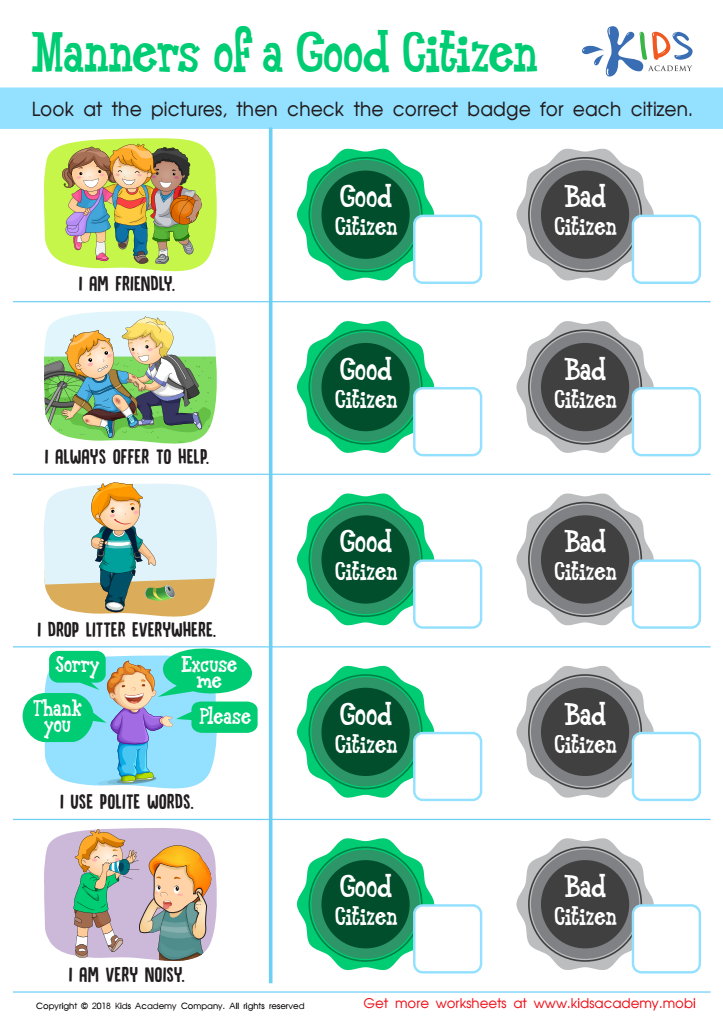
Manners of a Good Citizen Worksheet

Manners of a Good Citizen Worksheet

Help your child understand the difference between a good and bad citizen. Look at the worksheet pictures and ask your child what the children are doing. Are they being good or bad citizens? Check the correct badge for each one. After this, your child should have a better idea of how to act as a good citizen.
Manners of a Good Citizen Worksheet
Worksheet
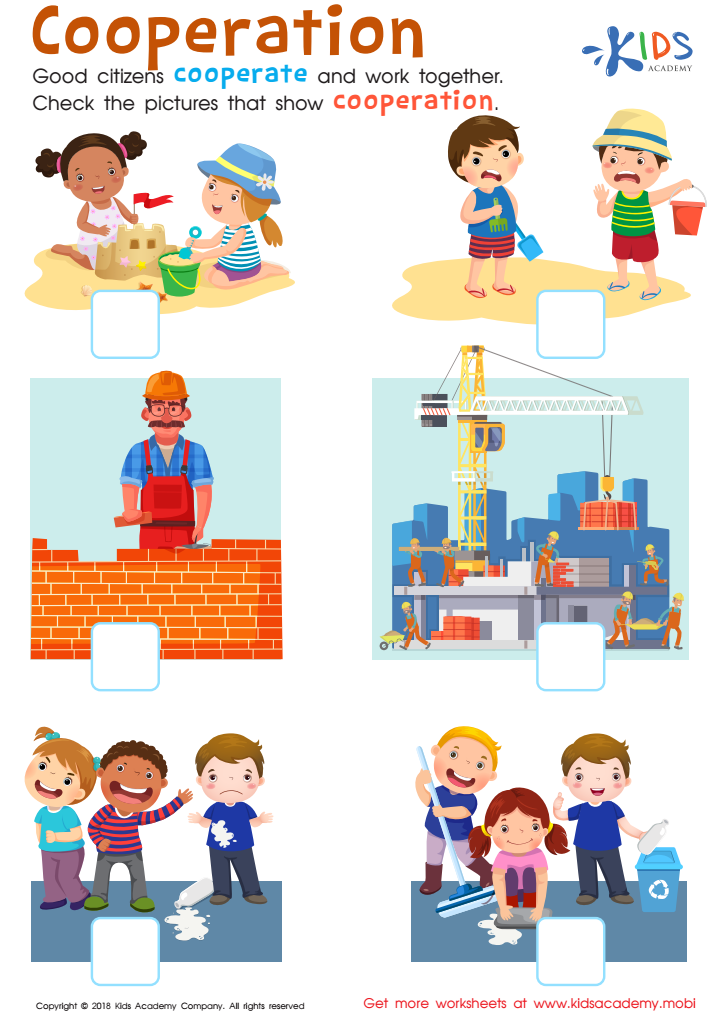
Cooperation Worksheet

Cooperation Worksheet

Cooperation is an essential component of successful teamwork - in school, in offices, with citizens. Ask your students to check the pictures in the worksheet showing citizens working together. This is what makes a good citizen: cooperation.
Cooperation Worksheet
Worksheet
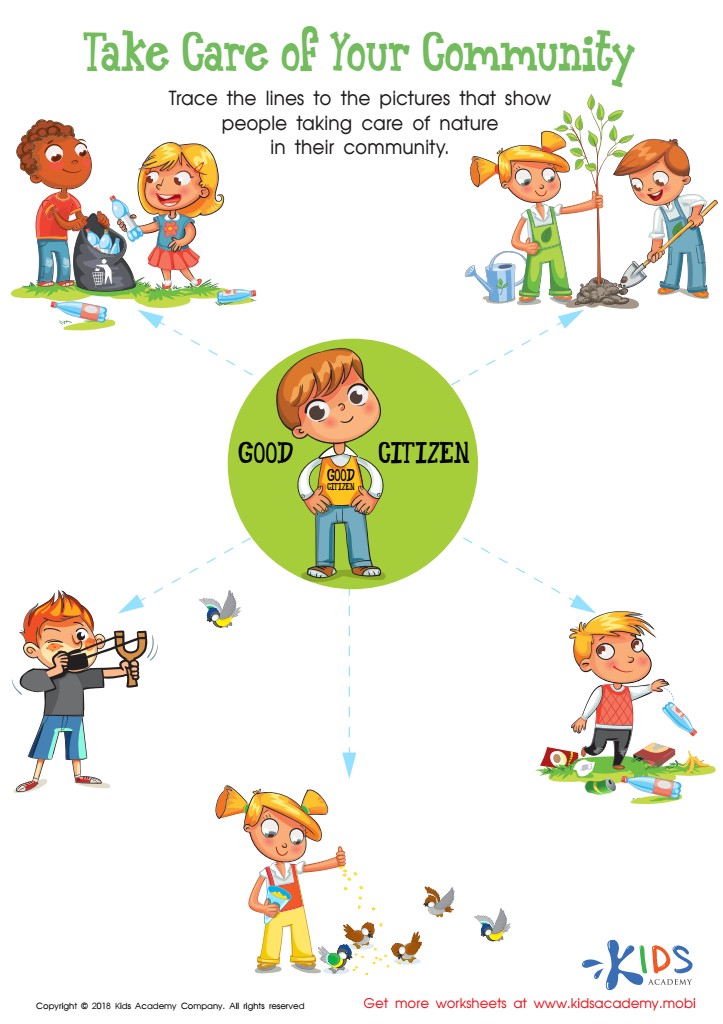
Take Care of your Community Worksheet

Take Care of your Community Worksheet

Talk to your child about taking better care of the community. Look at the worksheet together - it has pictures of people taking care of their community and the environment. Show them how to trace the lines to the pictures of good citizens.
Take Care of your Community Worksheet
Worksheet
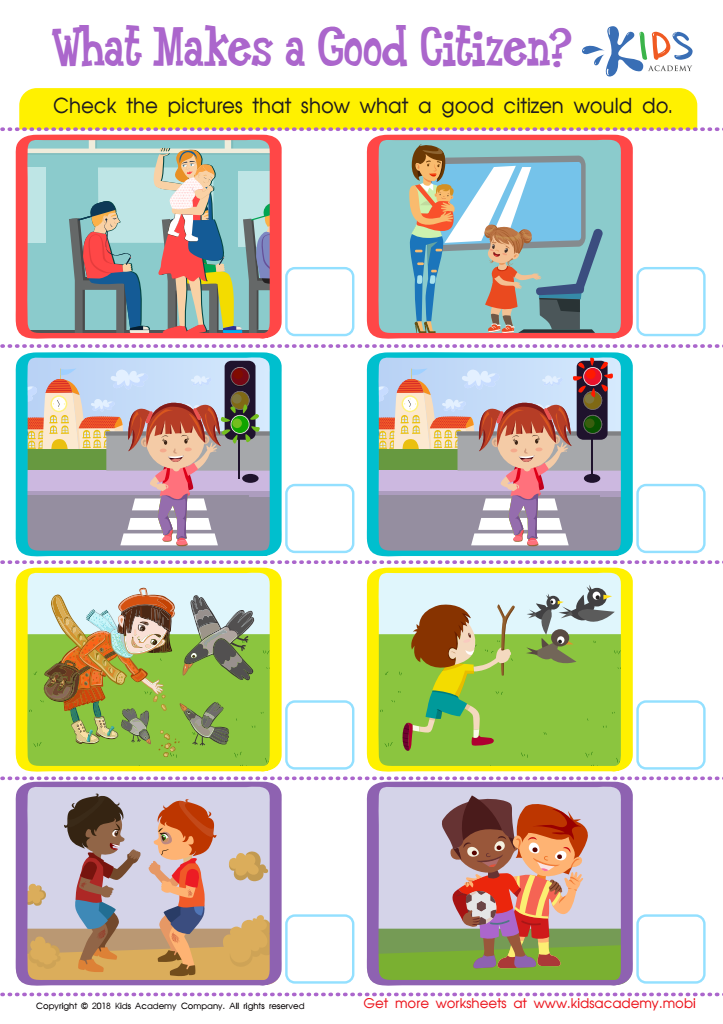
What Makes a Good Citizen? Worksheet

What Makes a Good Citizen? Worksheet

Ask your children to list some habits of a good citizen. Go through the worksheet and ask them if any of the pictures show good habits. Check the boxes of the actions that a good citizen would do to help your students understand what makes a good and bad citizen.
What Makes a Good Citizen? Worksheet
Worksheet
Good Citizens Award! Worksheet

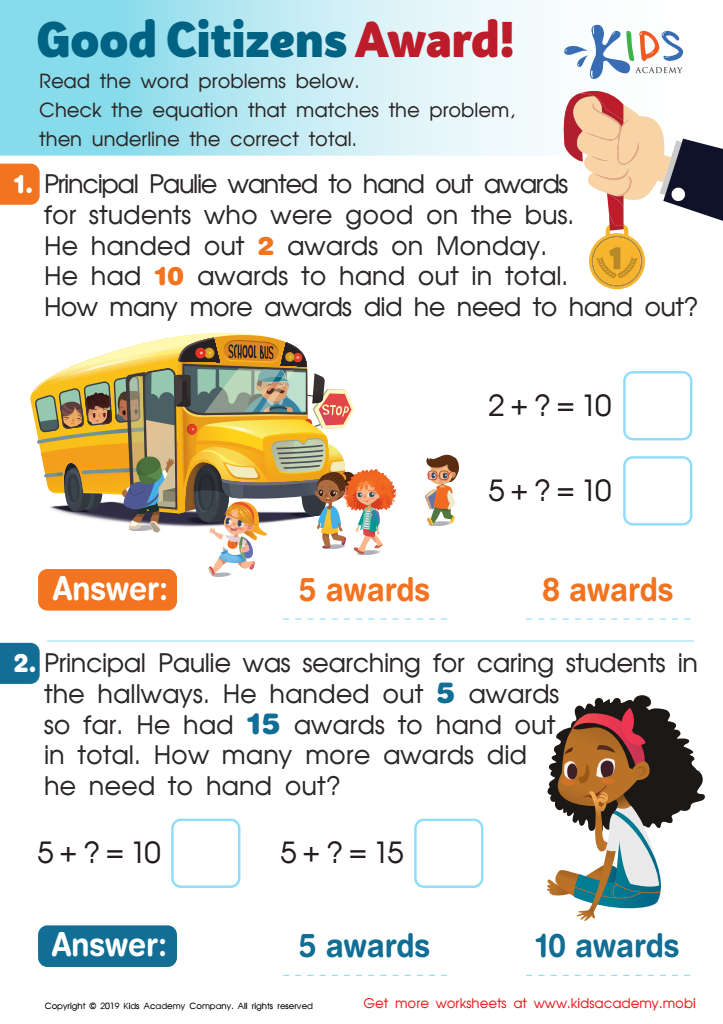
Good Citizens Award! Worksheet

A citizen is a person who resides in a certain area and is granted legal rights and privileges. Becoming a citizen can be achieved in various ways, most commonly through birth or marriage. Good citizens honor their nation's laws and act responsibly. Ask your students to share examples of good citizenship. Have them read the word problem and choose the equation that yields the right answer, then underline it.
Good Citizens Award! Worksheet
Worksheet
A Good School Citizen Worksheet

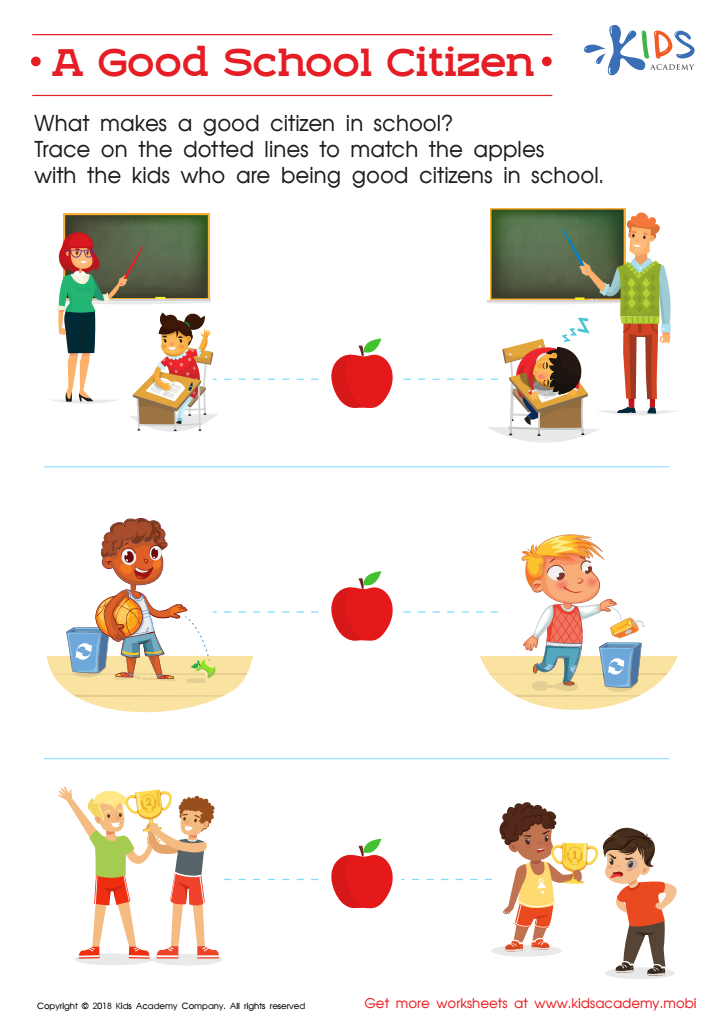
A Good School Citizen Worksheet

Ask your child to list qualities of a good citizen. Show them the pictures of good citizens in school and explain how they can display those behaviors. Help your kid trace the lines on the worksheet to match the pictures. Encouraging good citizenship in school helps children become upstanding members of their community.
A Good School Citizen Worksheet
Worksheet
Kindness Maze Worksheet

Kindness Maze Worksheet

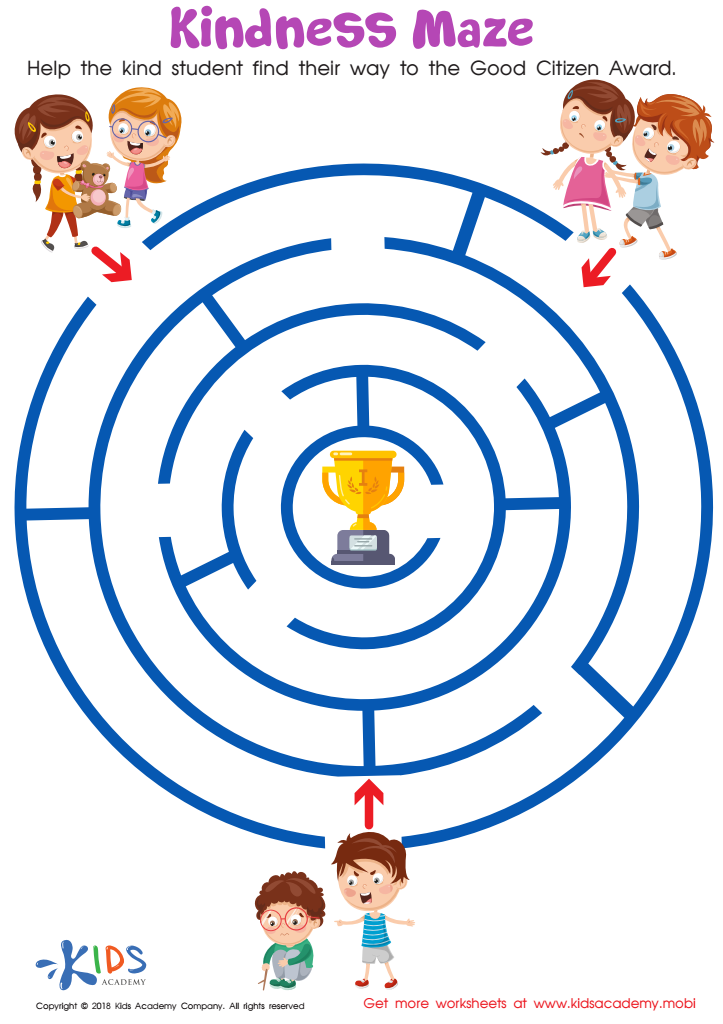
Rewards come in many forms for kind deeds. When your children do good, you can choose to reward them with a gift or compliment. The students in this worksheet have been awarded the Good Citizen Award for kindness. Let your kids help the students find their way to the award - at the center of the maze. Guide them through to get their prize.
Kindness Maze Worksheet
Worksheet


Good citizenship from ages 3 to 4 lays the foundation for social skills and community values that children will carry throughout their lives. At this early age, kids are beginning to understand the concept of belonging, sharing, and cooperation. By instilling the principles of good citizenship, parents and teachers can help children learn the importance of respect, responsibility, and empathy.

Encouraging good citizenship fosters positive interactions with peers. Children learn to take turns, share resources, and communicate effectively, which helps build self-esteem and security. When parents and teachers model good citizenship behaviors, such as kindness and consideration for others, they set a powerful example for children to follow.

Moreover, teaching good citizenship can enhance a child's understanding of community and belonging. Activities like community clean-ups or family volunteering help them appreciate the impact they can have at a young age. This encourages a sense of accountability and pride in their actions.

Ultimately, nurturing good citizenship in young children paves the way for them to become conscientious, engaged adults who contribute positively to society. It's essential for parents and teachers to prioritize this aspect of early education for both the individual and the greater community’s well-being.