Filters

175 filtered results

Clear all filters
Favorites
With answer key
Interactive

175 filtered results

Difficulty Level

Grade


Subject

    Check out this FREE Trial Lesson on Phonics for age 3-6!

    Vowel Sound Relationship: E

    Favorites
    With answer key
    Interactive
    • 3-6
    • With answer key
    • Phonics
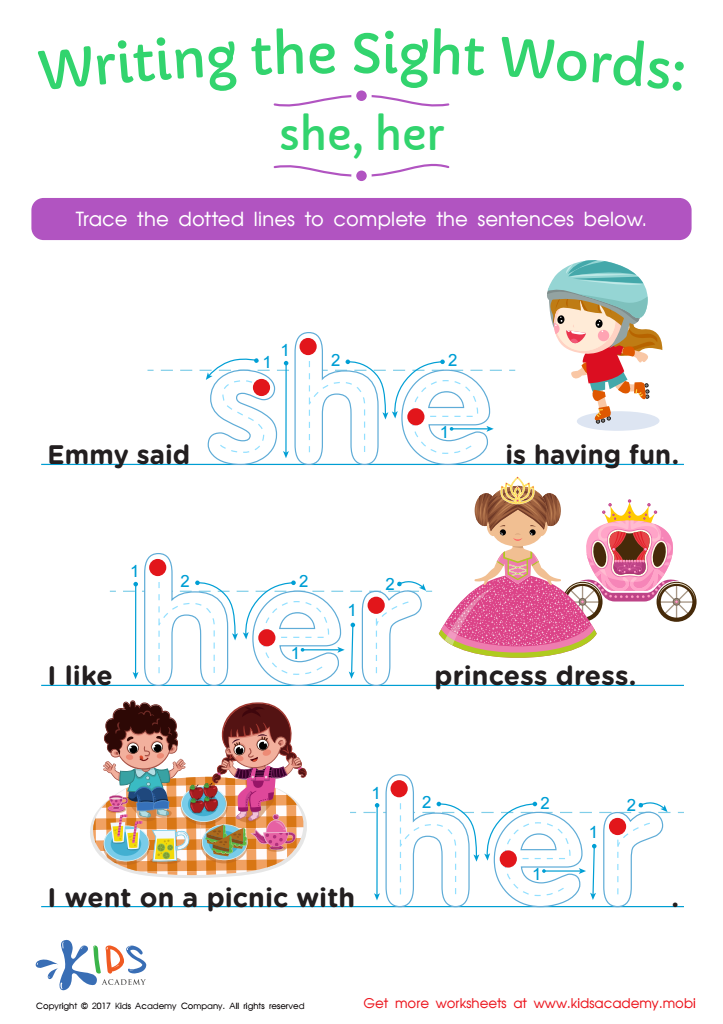
    Sight Word Tracing Worksheet: She, Her
    Sight Word Tracing Worksheet: She, Her

    She, Her Printable Sight Words Worksheet
    Help your child build literacy with daily sight word tracing! Have them read and trace the words 'she' and 'her' for a fun, focused practice. It's a great way to develop reading and writing skills.
    She, Her Printable Sight Words Worksheet
    Worksheet
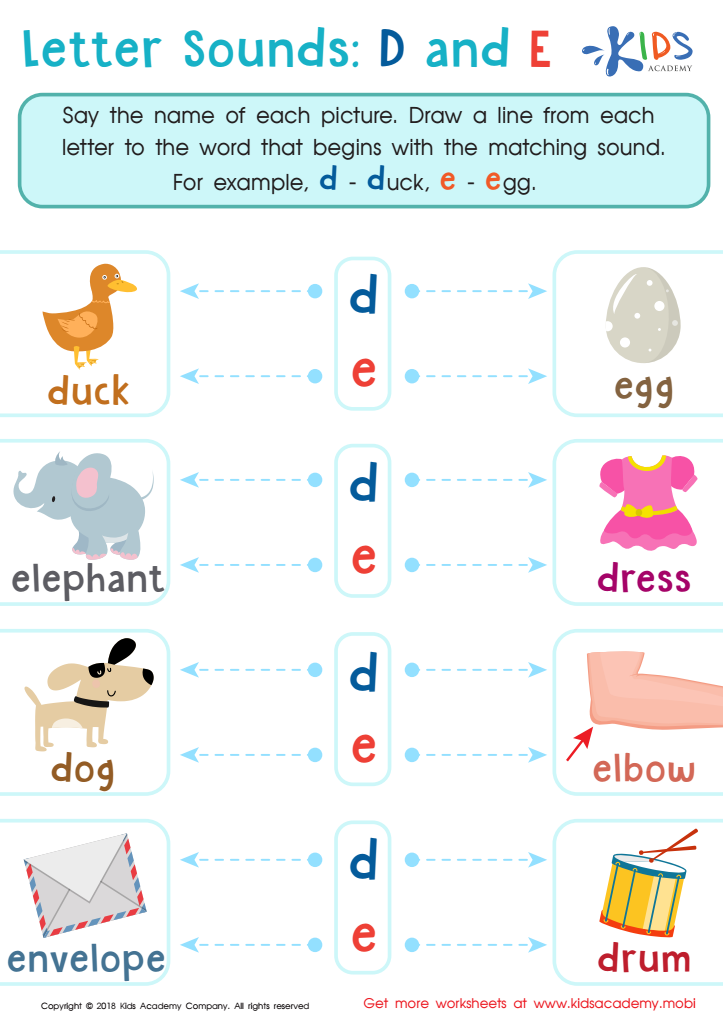
    Letter D and E Sounds Worksheet
    Letter D and E Sounds Worksheet

    Letter D and E Sounds Worksheet

    Kids can use picture clues and visual discrimination to name cheerful pics and isolate the beginning sound. This free PDF worksheet will help them develop phonological awareness, differentiate between "D" and "E", and hone fine-motor skills. It'll also boost their confidence as they become readers.
    Letter D and E Sounds Worksheet
    Worksheet
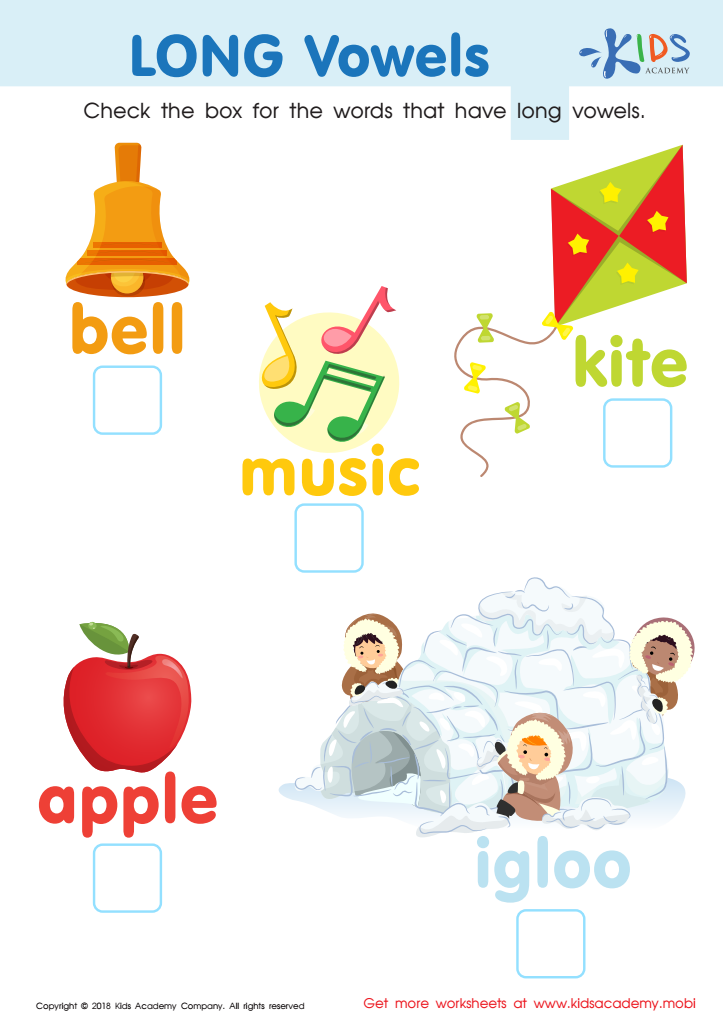
    long vowels Worksheet
    long vowels Worksheet

    long vowels Worksheet

    Have your early learner identify long vowels with this quick review. Ask them to name each picture aloud and listen out for the long vowel sounds to separate them from the shorter ones. Circle the ones that are long! Watch out for words with two vowels - they can be tricky!
    long vowels Worksheet
    Worksheet
    Which Is the Rime? Worksheet
    Which Is the Rime? Worksheet

    Which Is the Rime? Worksheet

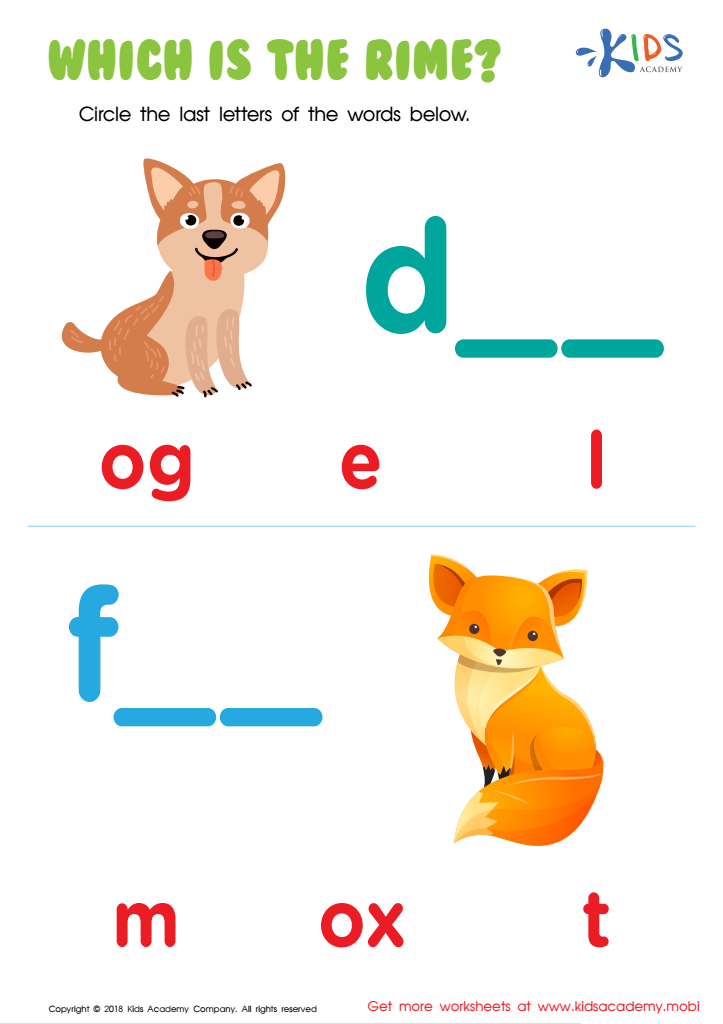
    Beginning readers benefit from rimes that aid letter familiarity, recognition, and spelling. With this fun PDF worksheet, kids can identify and spell the correct word for each image by circling the last letter. This activity develops fine motor skills as well.
    Which Is the Rime? Worksheet
    Worksheet
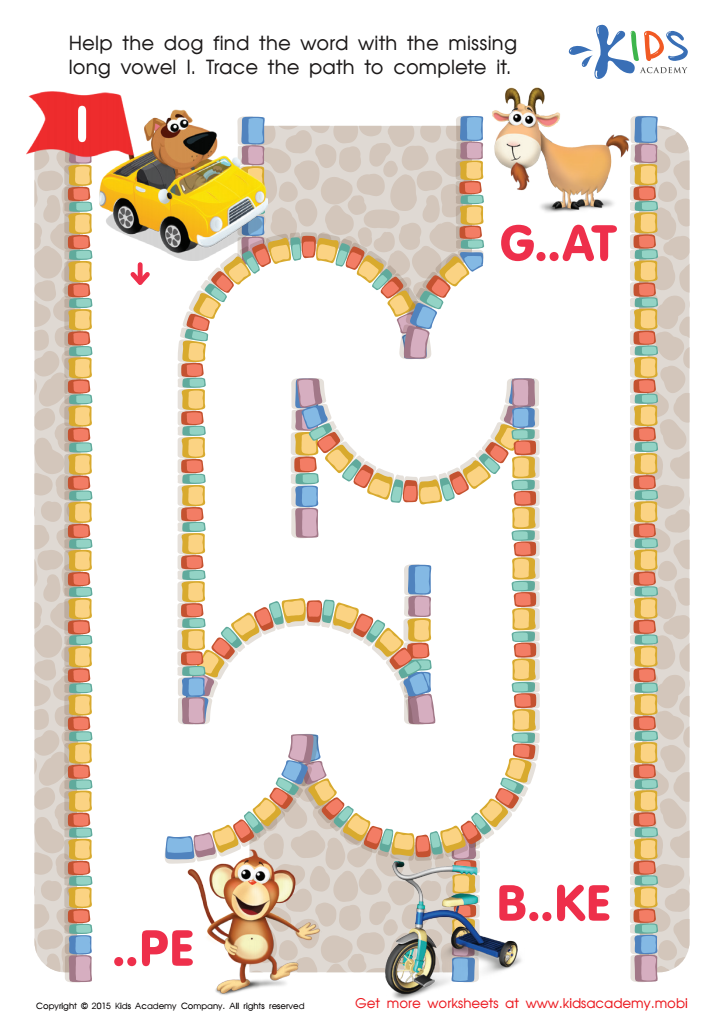
    Phonics for Kids | Long Vowel Sound I | PDF Worksheet 1
    Phonics for Kids | Long Vowel Sound I | PDF Worksheet 1

    Long Vowel Sound I Worksheet

    Learning long vowels is essential to becoming a good reader. Ask your child to distinguish between the long and short I vowel sounds. Remind them that the long I says its name, while the short I doesn't. With this fun printable phonics worksheet, your kid can practice writing and spelling while helping a dog find his way through a maze. Check out our phonics worksheets for more learning activities.
    Long Vowel Sound I Worksheet
    Worksheet
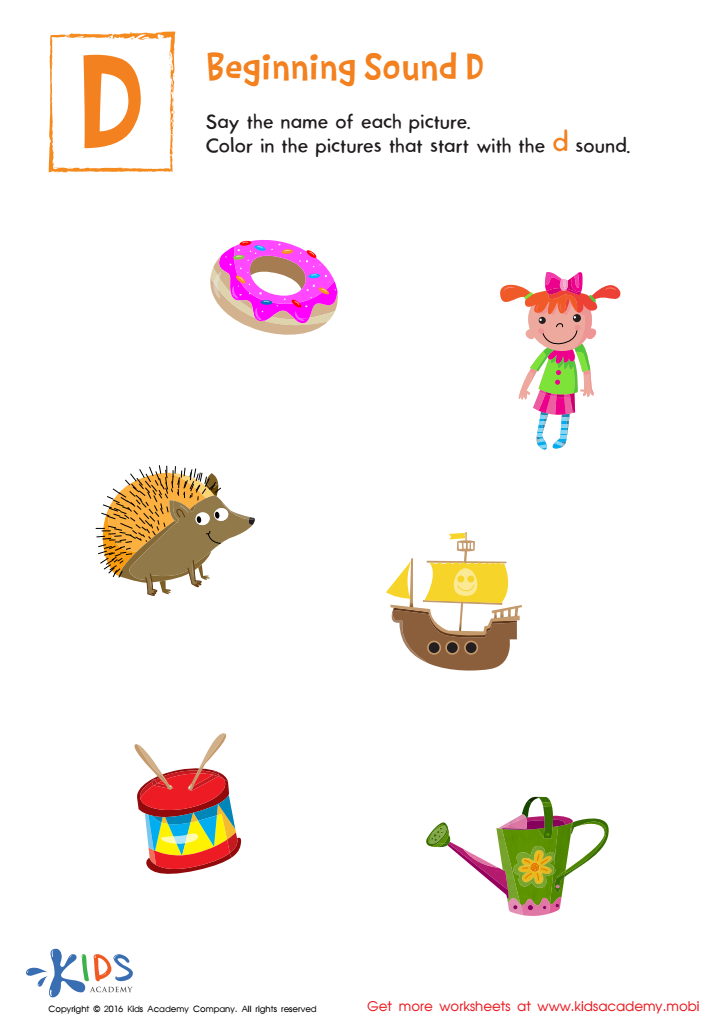
    Beginning sound d worksheet
    Beginning sound d worksheet

    Beginning Sound D Worksheet

    Reinforce phonics with this vibrant beginning sound d worksheet! Pictures help kids identify words beginning with 'd' and develop early reading skills. Sounding out each word increases literacy!
    Beginning Sound D Worksheet
    Worksheet
    Words with sound k Reading Worksheet
    Words with sound k Reading Worksheet

    Words with sound k Reading Worksheet

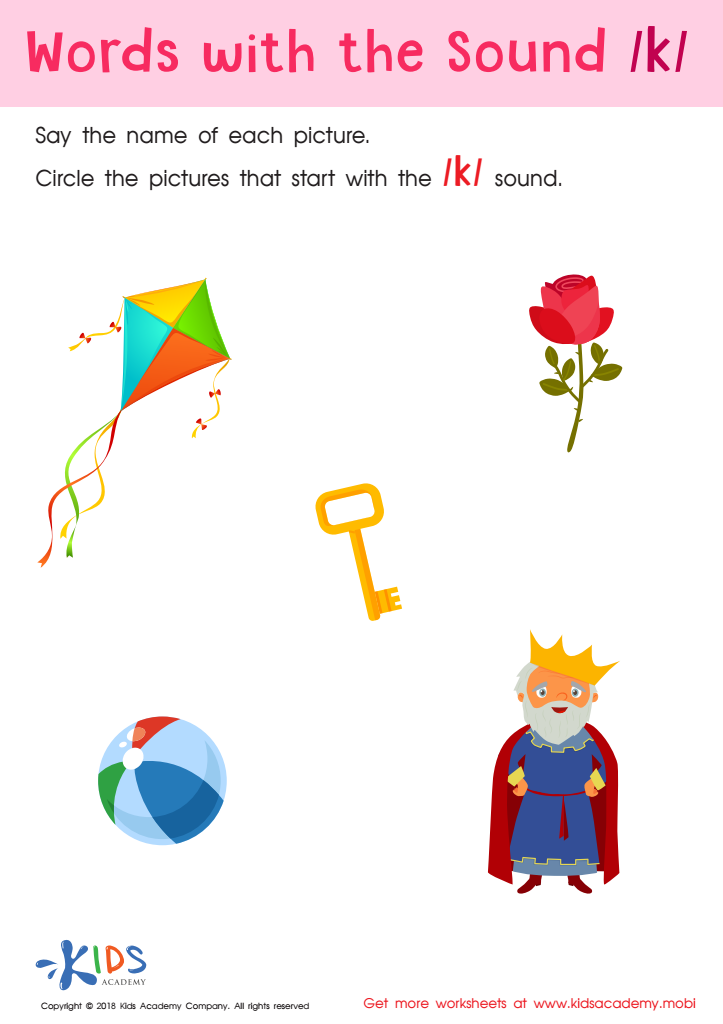
    Help your preschooler master the hard "k" sound with this fun worksheet from Kids Academy! Ask your child to say each picture aloud and circle only the pictures that start with "k". This early reading exercise will boost phonics skills and is sure to be loved by your little learner!
    Words with sound k Reading Worksheet
    Worksheet


    ... 7 8

    Phonics for ages 3-6 is crucial in laying a strong foundation for successful reading development. Phonics involves teaching children the relationships between letters and sounds, helping them decode words for reading and writing. Engaging with phonics at an early age builds a child's ability to recognize patterns in language, fostering not only reading fluency but also comprehension and a lifelong love for reading.

    For parents, investing time in phonics means equipping their children with essential skills that lead to academic success. Early reading confidence propels children forward in other subjects and can have a positive impact on their overall school experience. By understanding phonics, children can independently approach new words with strategies to tackle them, thus reducing frustration and increasing enjoyment in reading.

    For teachers, focusing on phonics ensures that they are providing a structured approach to literacy. This can close the achievement gap, as children from varied backgrounds gain the necessary skills to keep pace with their peers. Proficiency in phonics also offers diagnostic insights: teachers can identify and support struggling readers early, adapting their instructional methods to meet individual needs.

    In essence, phonics serves as the gateway to literacy and sets the stage for all future learning. Ensuring that young children master phonics gives them the tools to explore, discover, and understand the world through reading.