Silent Vowels Worksheets for Ages 3-6
3 filtered results
-
From - To
Enhance your child's literacy skills with our engaging Silent Vowels Worksheets, designed specifically for ages 3-6. These worksheets introduce young learners to the concept of silent vowels, helping them identify letters that remain unpronounced in various words. Fun and interactive activities will keep your preschooler motivated, while reinforcing phonics through captivating illustrations and examples. Each worksheet encourages practice in recognizing silent letters, boosting spelling and reading confidence. Perfect for parents and teachers alike, our comprehensive resources provide a delightful way for children to explore language. Start your child's journey to literacy today with our Silent Vowels Worksheets!
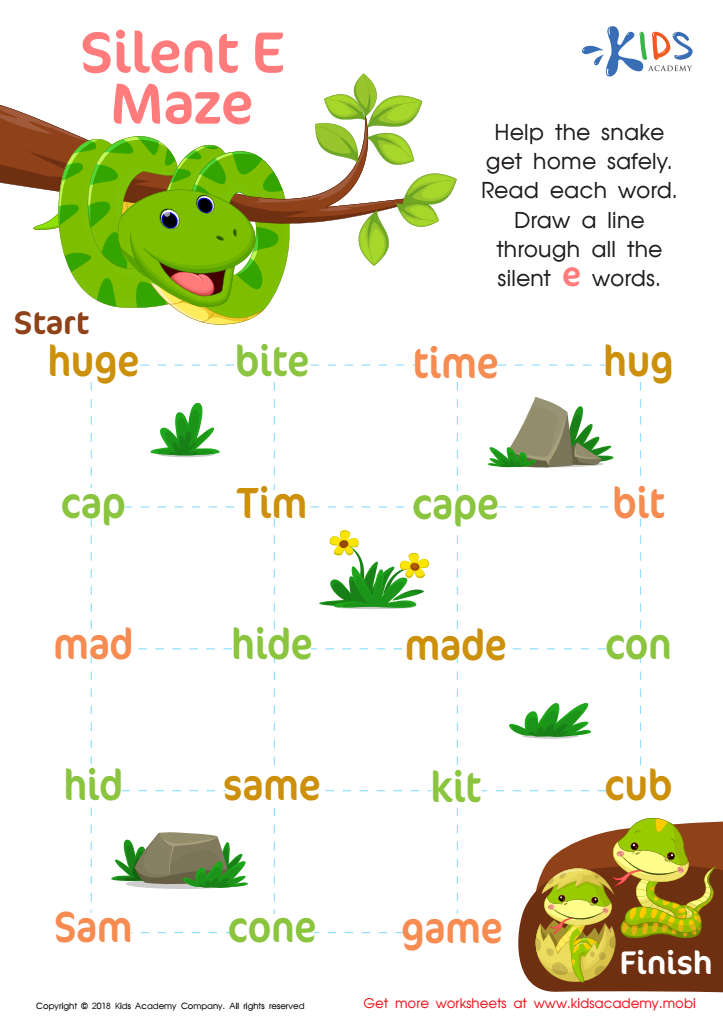
Silent E Maze Worksheet
 Assign to My Students
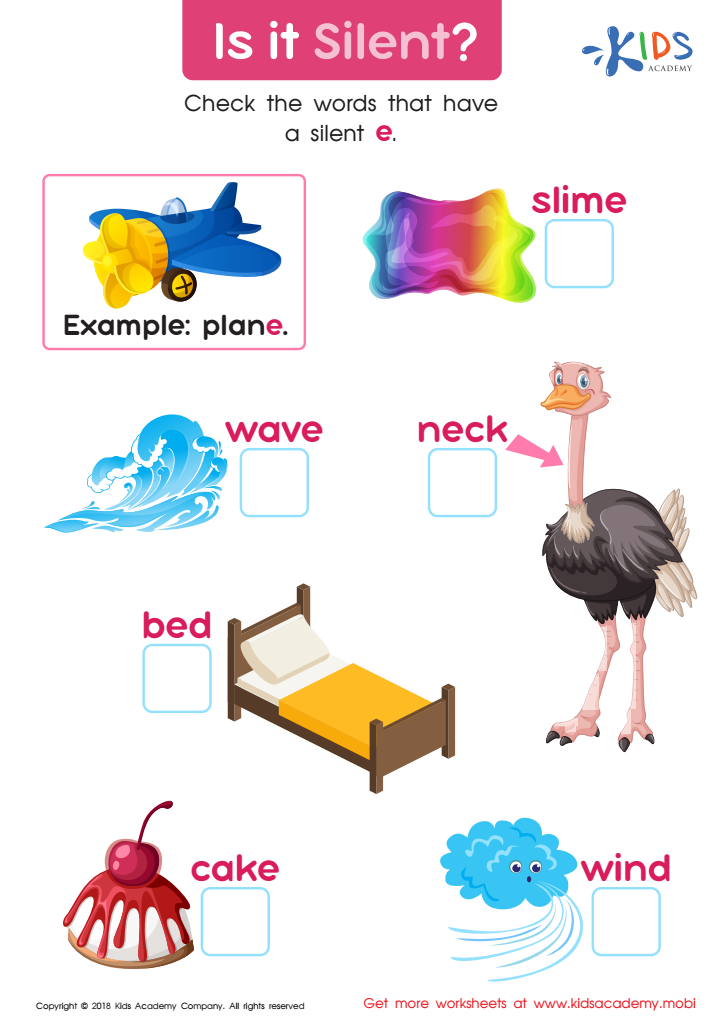
Is It Silent? Worksheet
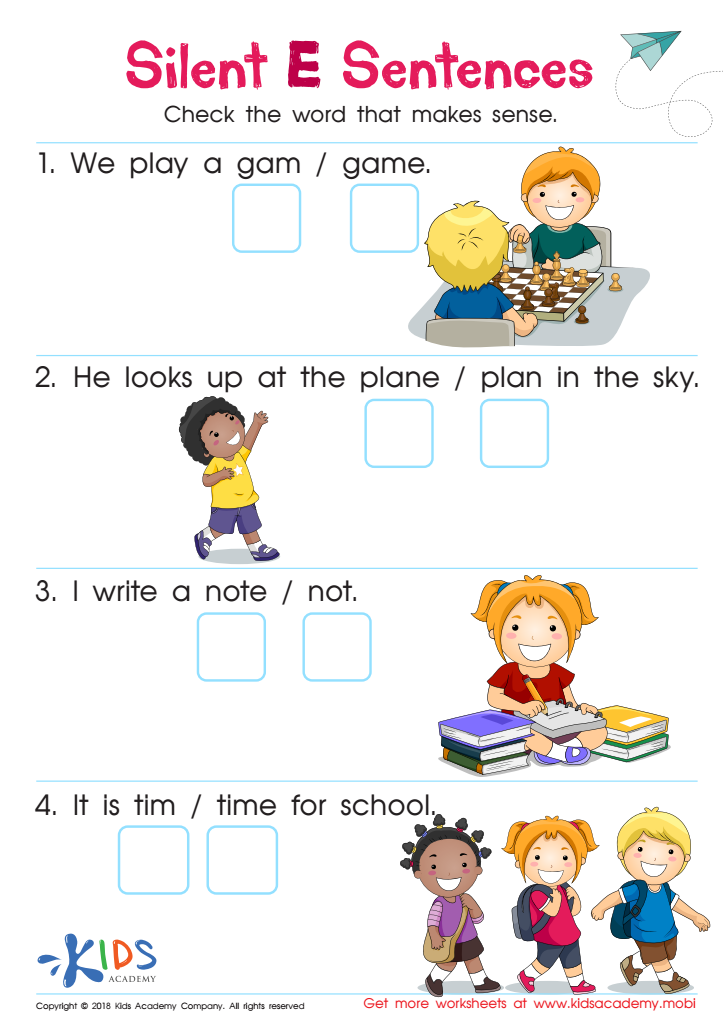
Silent E Sentences Worksheet


Silent vowels play an essential role in early literacy development for children aged 3-6. Understanding silent vowels helps young learners grasp the complexities of the English language, enhancing their reading and spelling skills. When children encounter words with silent vowels, such as "cake" or "like," they learn that not every letter is pronounced. This knowledge not only aids in their phonemic awareness but also deepens their understanding of how words are formed.
Moreover, recognizing silent vowels encourages children to become more confident readers. As they encounter various words in books or during phonics activities, understanding the concept of silent vowels allows them to decode unfamiliar words with greater ease. This reduces frustration and increases their enthusiasm for reading.
Additionally, fostering awareness of silent vowels offers opportunities for interactive learning. Parents and teachers can engage children in fun activities like rhyming games and word sorting, making the learning process enjoyable. By focusing on silent vowels, parents and teachers actively support children’s language development, laying a robust foundation for their future literacy success. Ultimately, raising awareness about silent vowels equips children with critical skills that promote lifelong reading enjoyment and comprehension.