Vowels and Consonants Worksheets for Ages 3-6
17 filtered results
-
From - To
Discover our engaging Vowels and Consonants Worksheets designed for children ages 3-6! These fun, educational resources enhance early literacy by helping kids recognize the distinct sounds of vowels and consonants. Featuring colorful illustrations and interactive activities, our worksheets promote enjoyable learning and phonics mastery. Ideal for home or classroom use, each worksheet builds foundational language skills through structured yet playful exercises. Nurture your child's reading and writing abilities while sparking their interest in letters and sounds. Visit Kids Academy to access our comprehensive collection tailored to support your child's early educational journey.
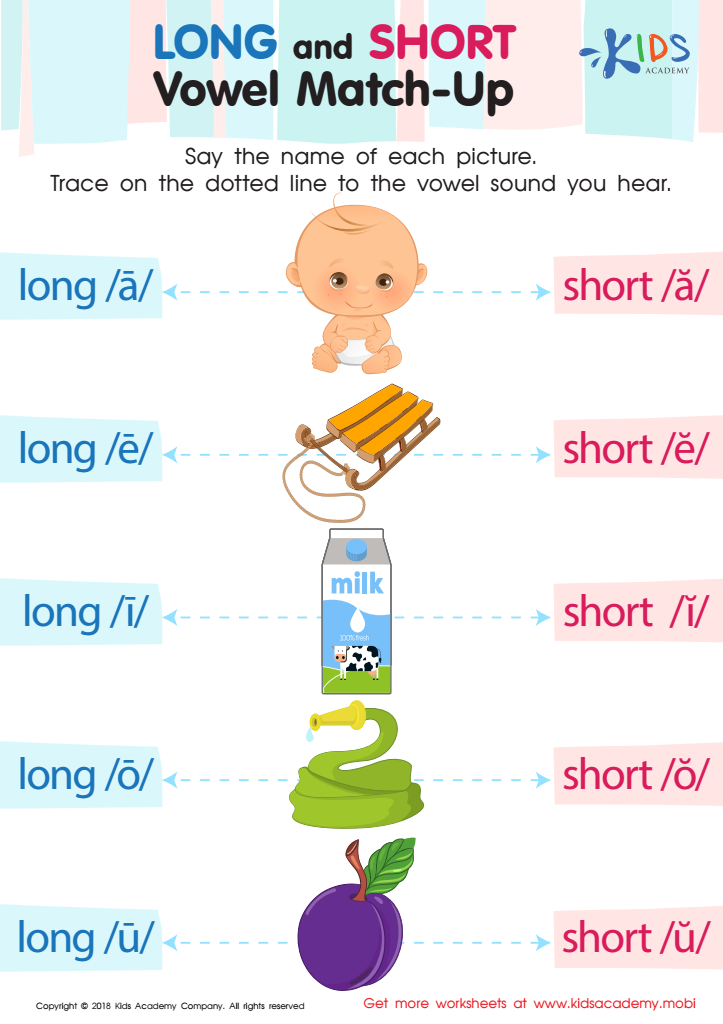
Long and Short Vowel Match up Reading Worksheet
 Assign to My Students
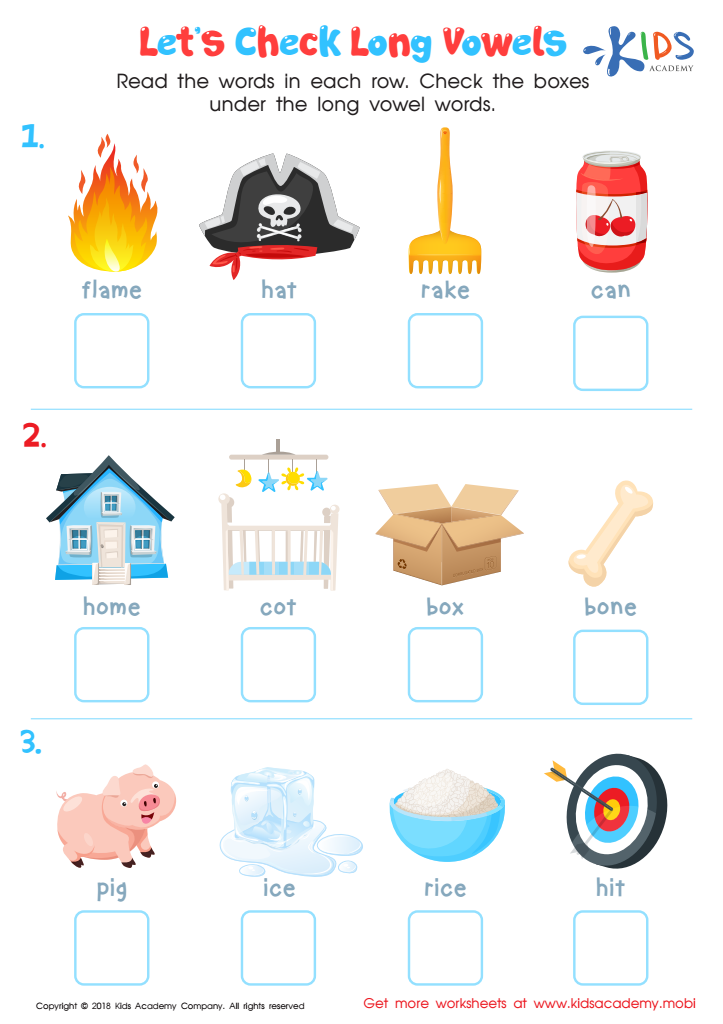
Let's Check Long Vowels: Assessment Worksheet
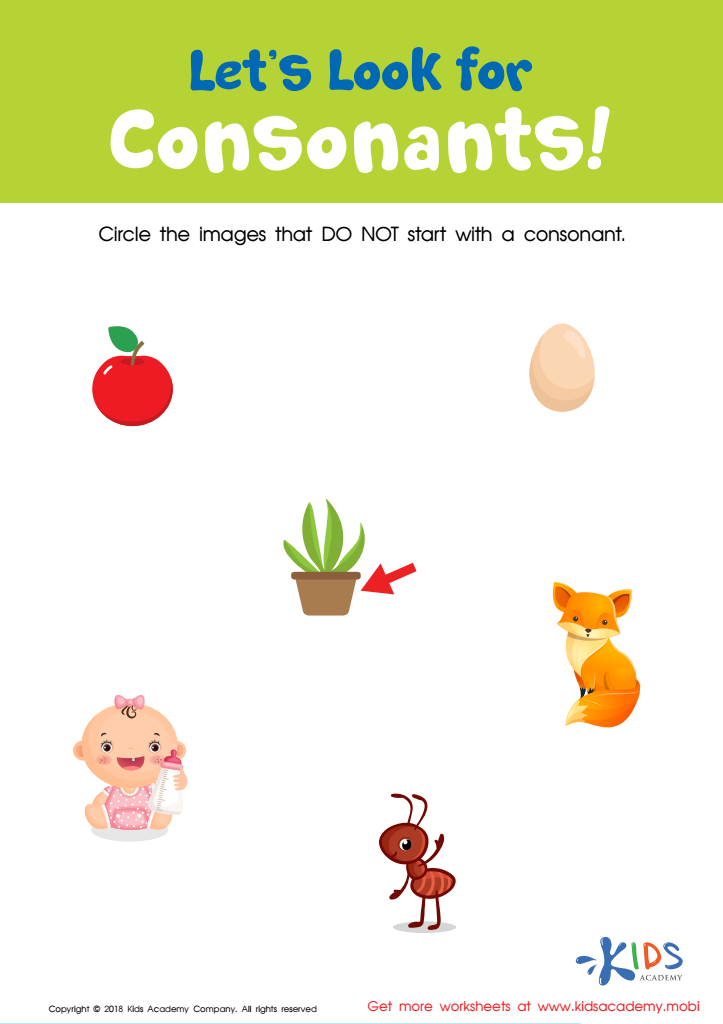
Let's Look for Consonants Worksheet
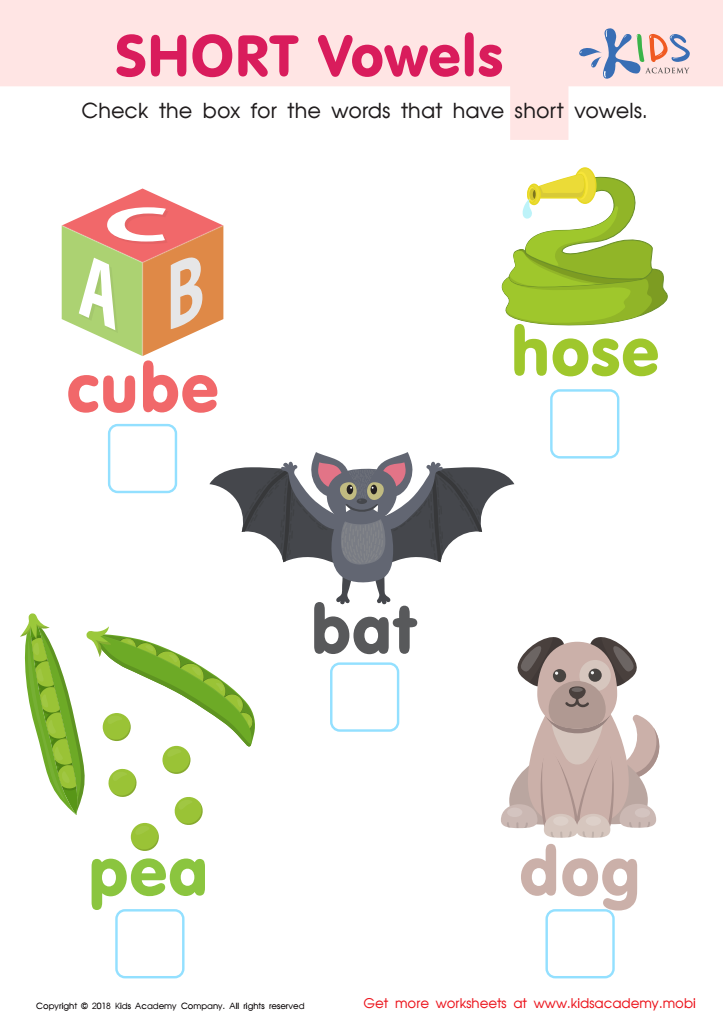
short vowels Worksheet
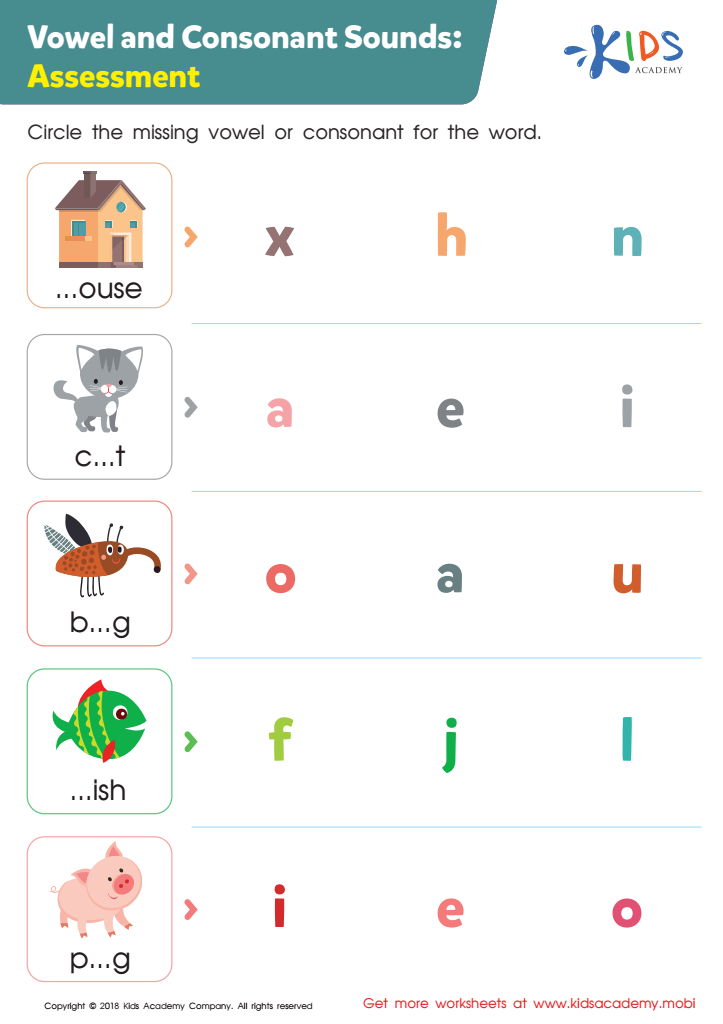
Vowel and Consonant Sounds: Assessment Worksheet
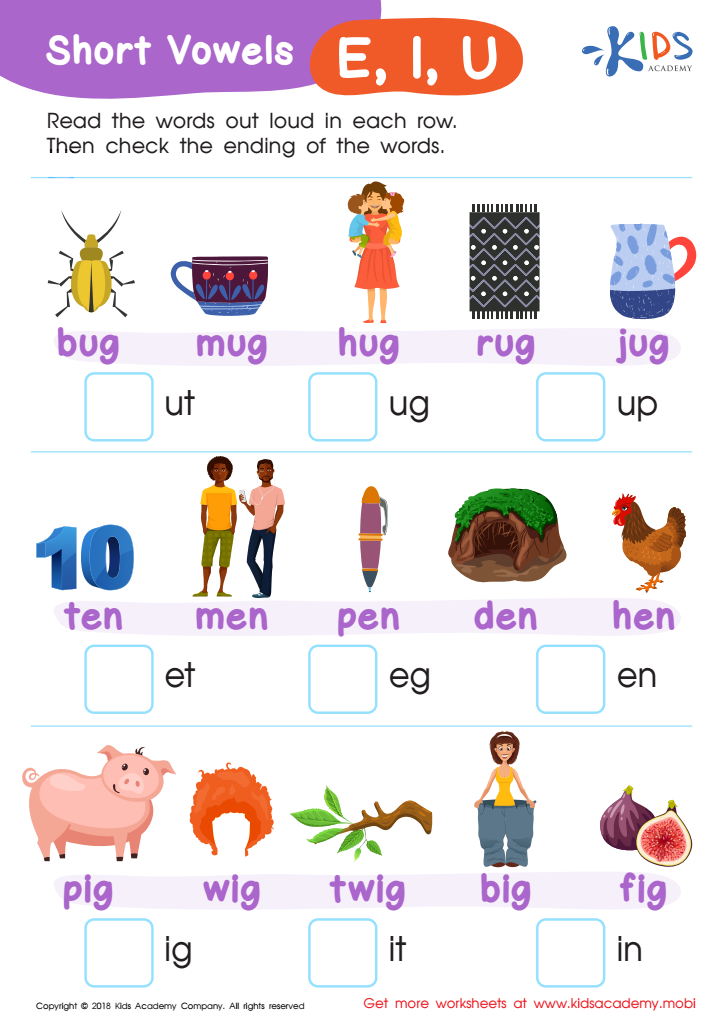
Short Vowels /e/, /i/, and /u/ Worksheet
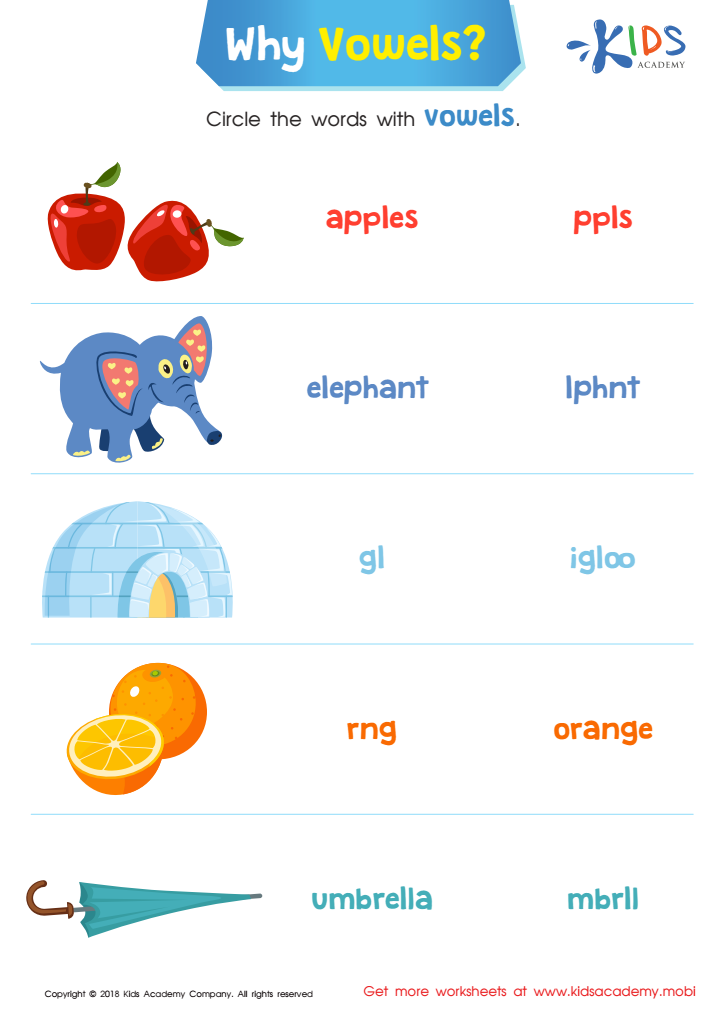
Why Vowels? Reading Worksheet
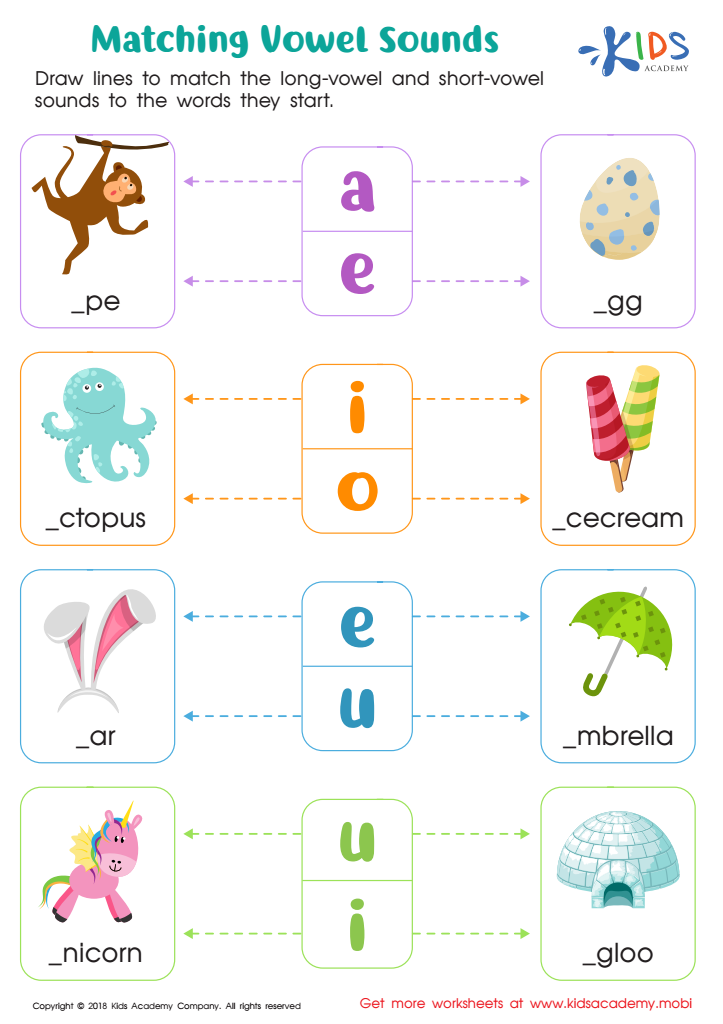
Matching Vowel Sounds Worksheet
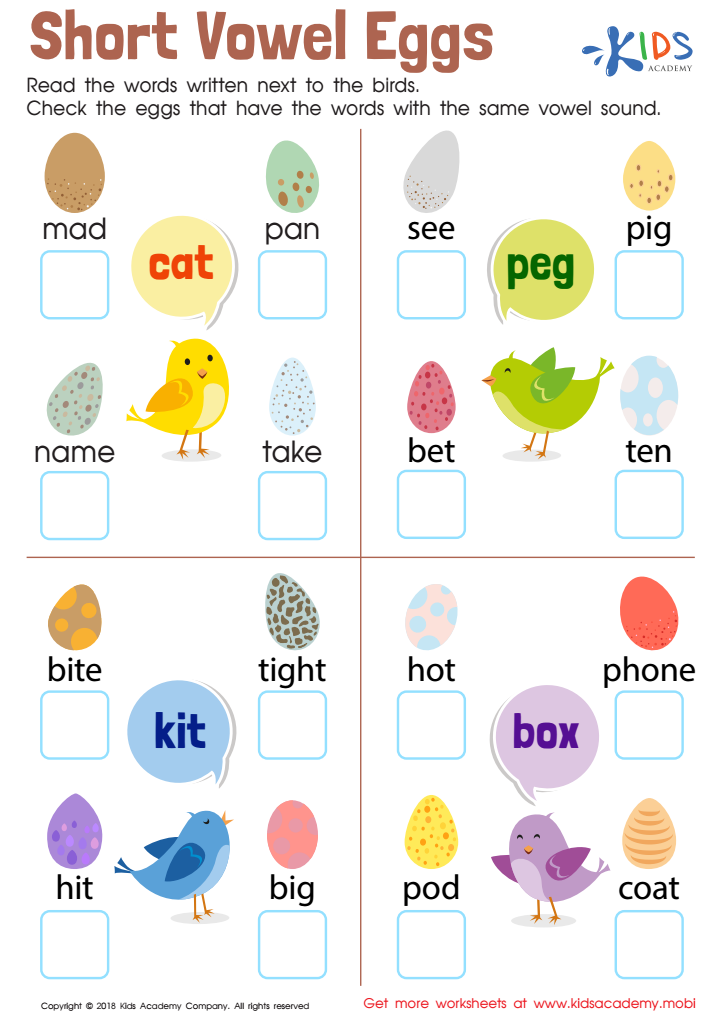
Short Vowel Eggs Worksheet
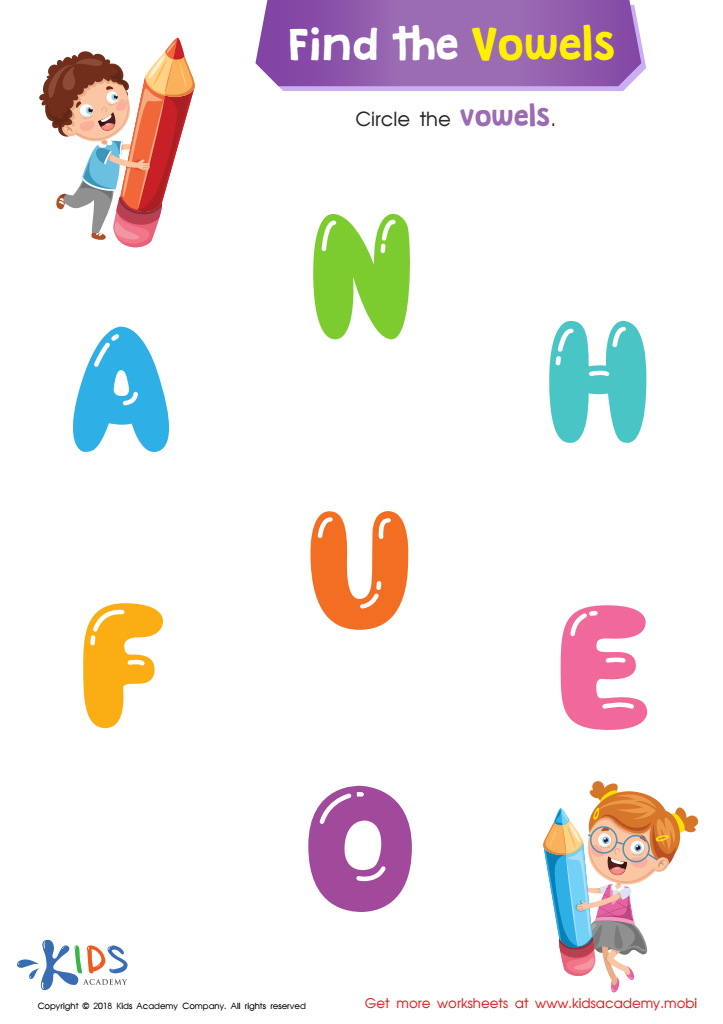
Find the Vowels Reading Worksheet
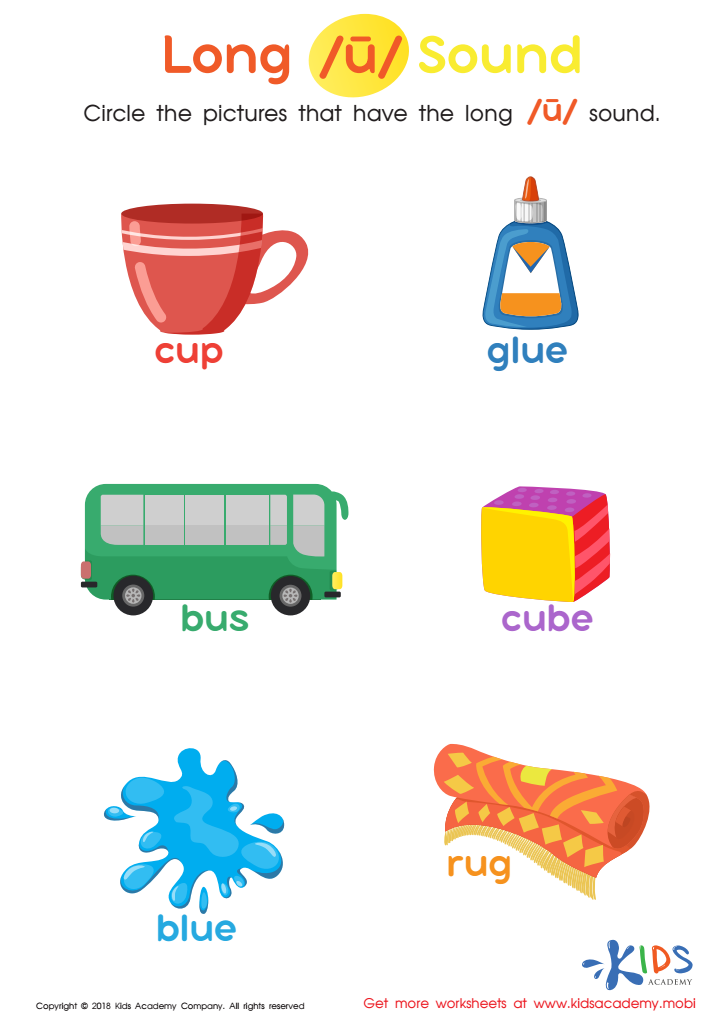
Long «u» Sound Worksheet
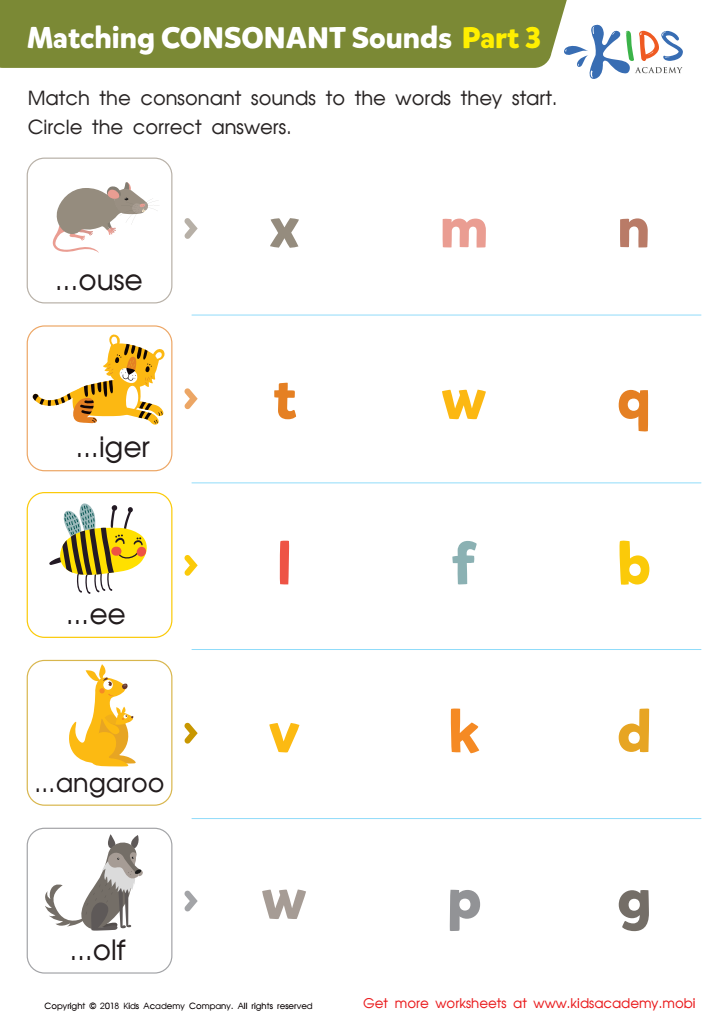
Matching Consonant Sounds: Part 3 Worksheet
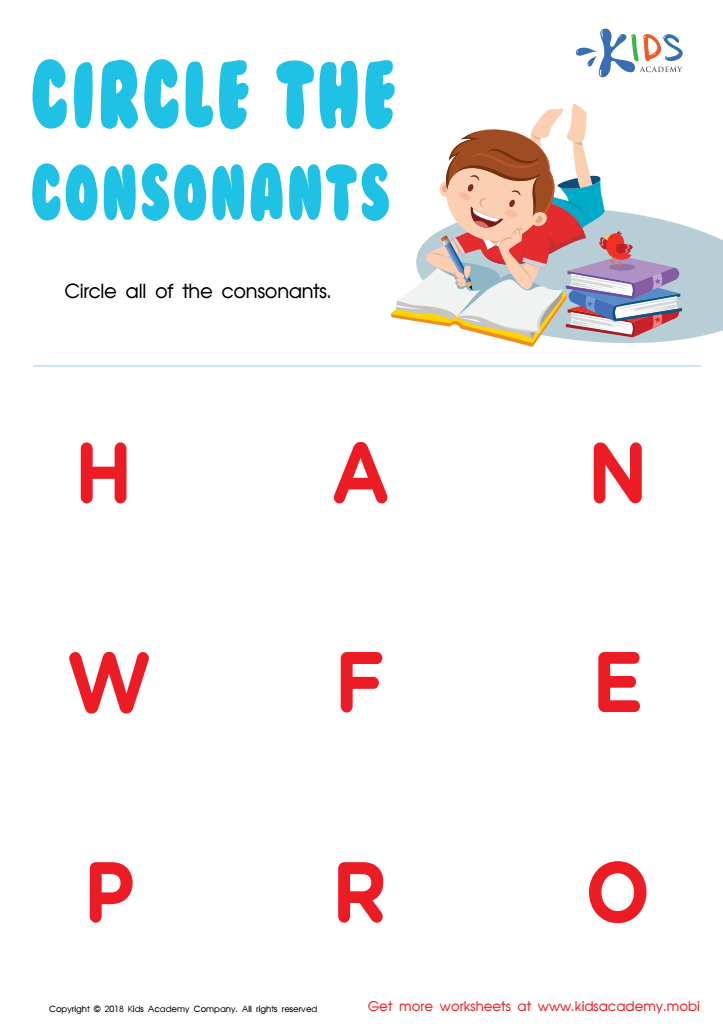
Circle the Consonants Worksheet
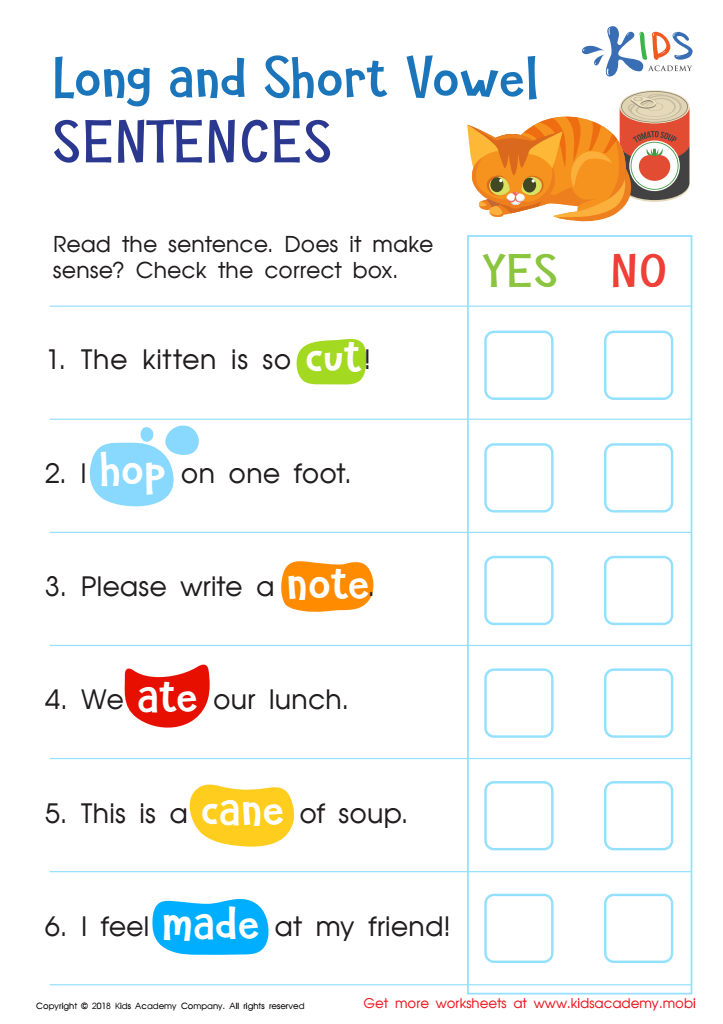
Long and Short Vowel Sentences: Assessment Worksheet
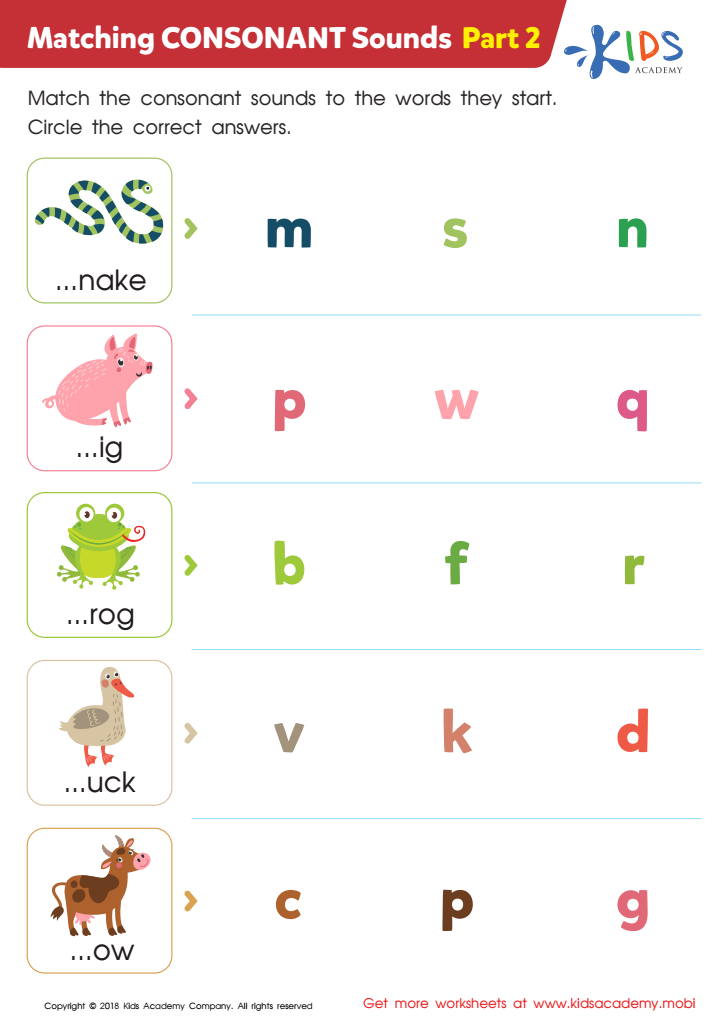
Matching Consonant Sounds: Part 2 Worksheet
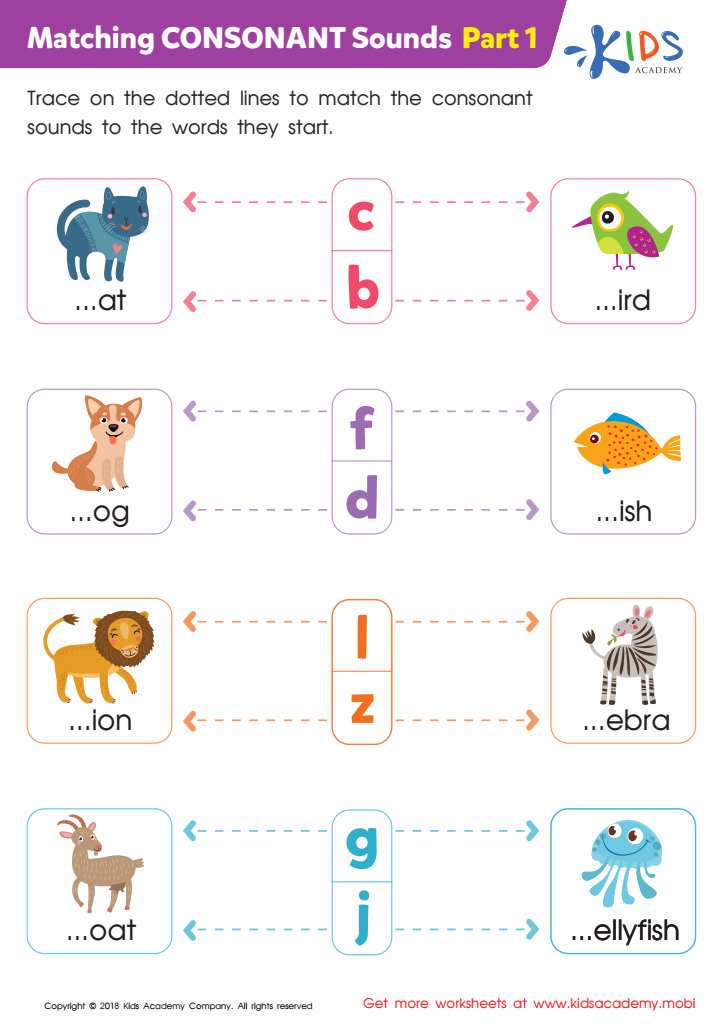
Matching Consonant Sounds: Part 1 Worksheet
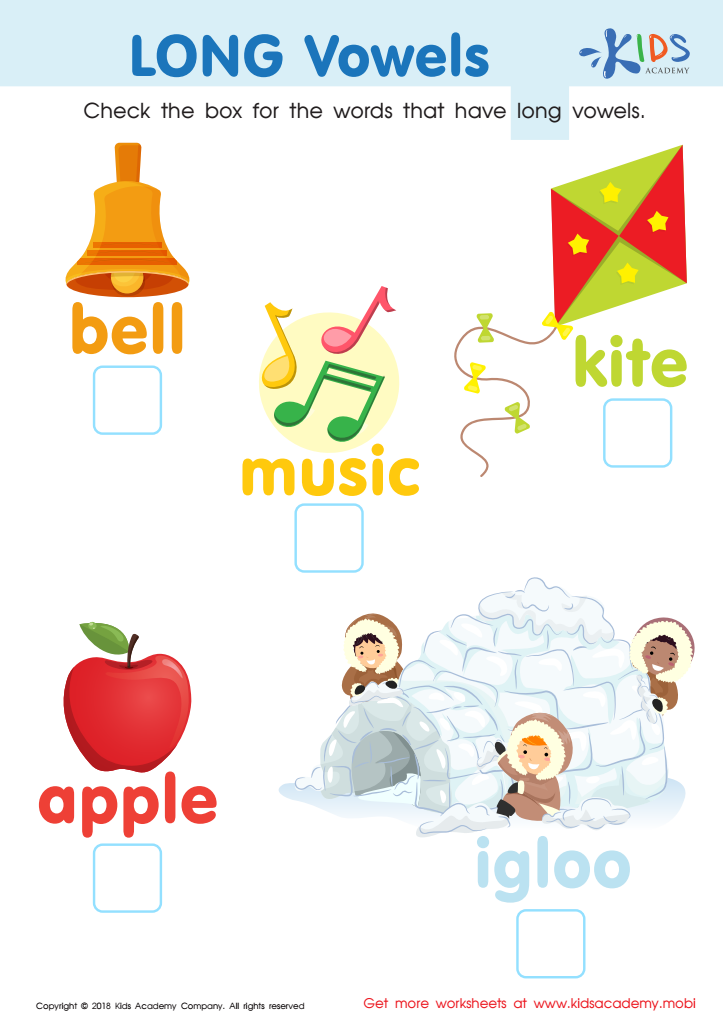
long vowels Worksheet



Parents and teachers should care deeply about vowels and consonants for children ages 3-6 because understanding these fundamental elements of language is crucial for early literacy development. During these formative years, children's brains are incredibly receptive to learning verbal and written communication skills. Introducing them to vowels and consonants helps to lay the foundation for reading and writing, essential skills for their future educational success.
Learning vowels and consonants enables children to start recognizing letter sounds, a critical step in phonemic awareness. This awareness is the ability to hear, identify, and manipulate phonemes, the smallest units of sound, and is necessary for understanding how words are constructed. For instance, knowing that the word "cat" is composed of the consonants 'c' and 't' and the vowel 'a' gives children the tools to begin decoding other words.
Moreover, mastering these basics promotes confidence and encourages a positive attitude toward learning. Activities that build these skills—like singing alphabet songs, playing with letter blocks, or engaging in reading aloud—are not only educational but also bonding experiences. Early proficiency in vowels and consonants can significantly impact a child's aptitude in spelling, vocabulary, and comprehension later on, making this early focus both a short-term investment in immediate skills and a long-term investment in academic achievement.







