Chess Worksheets for Ages 3-6 - Page 4
86 filtered results
-
From - To
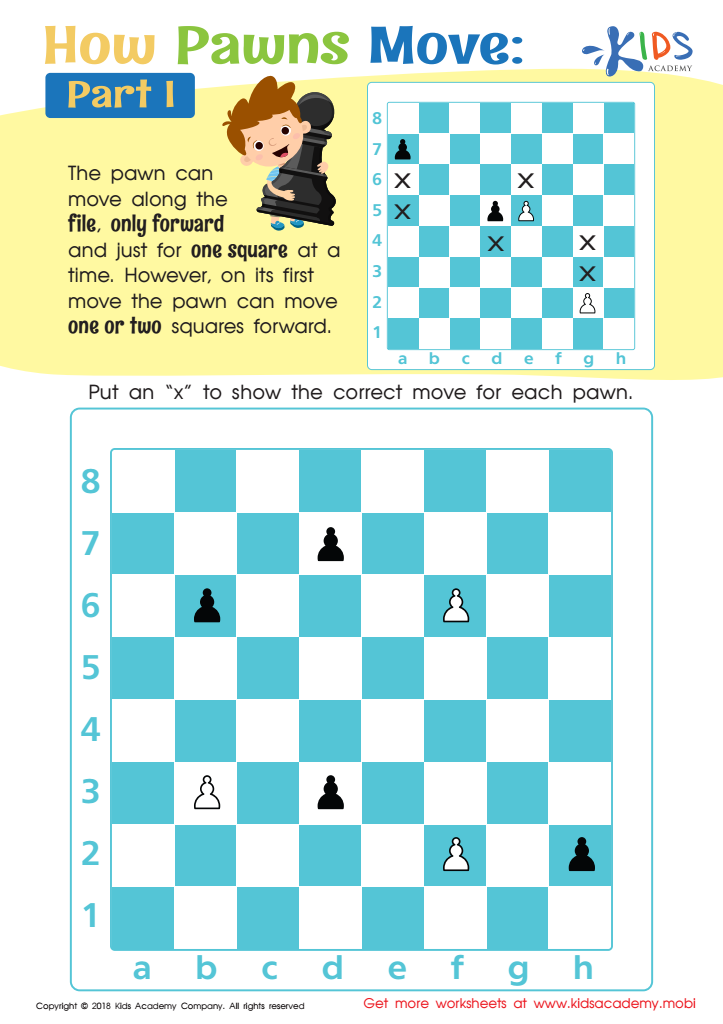
How Pawns Move: Part I Worksheet
 Assign to My Students
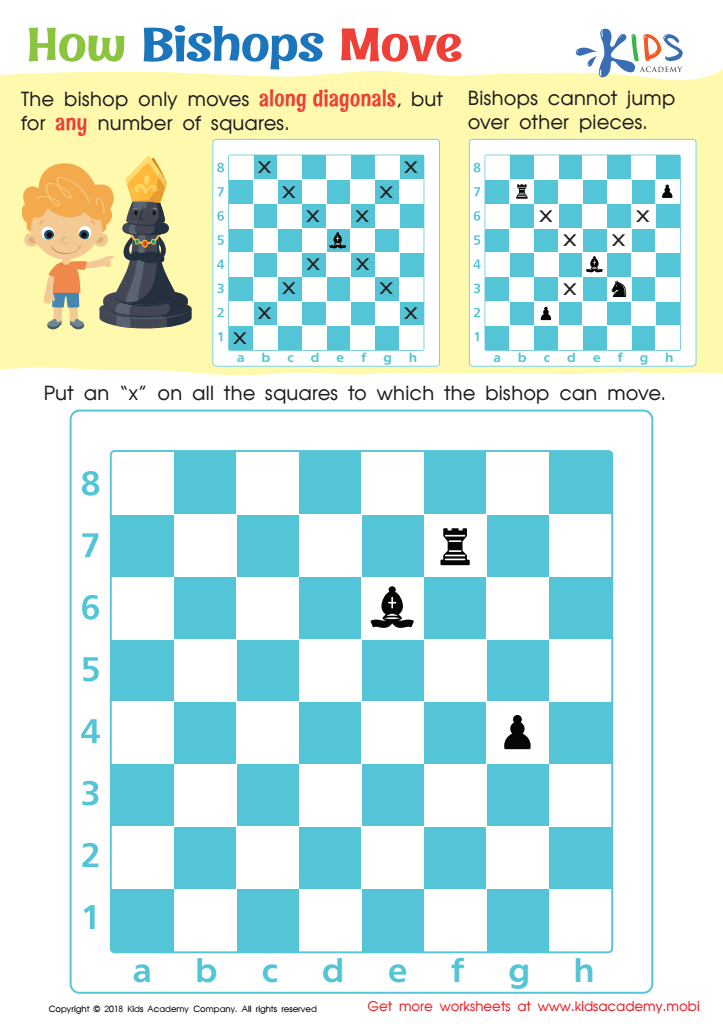
How Bishops Move Worksheet
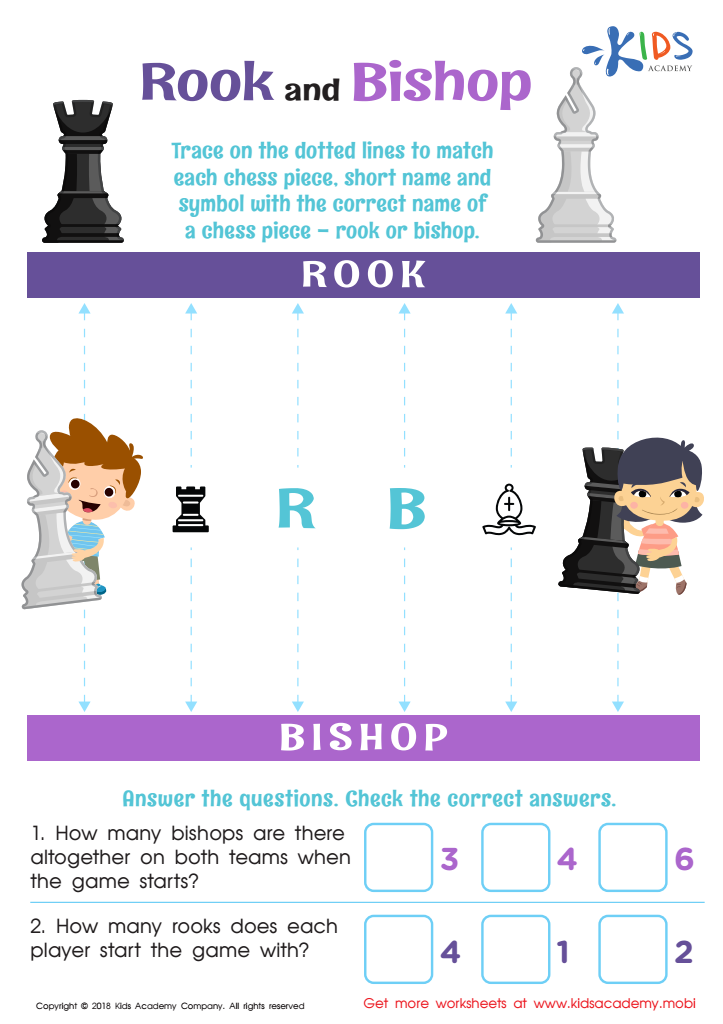
Rook and Bishop Worksheet
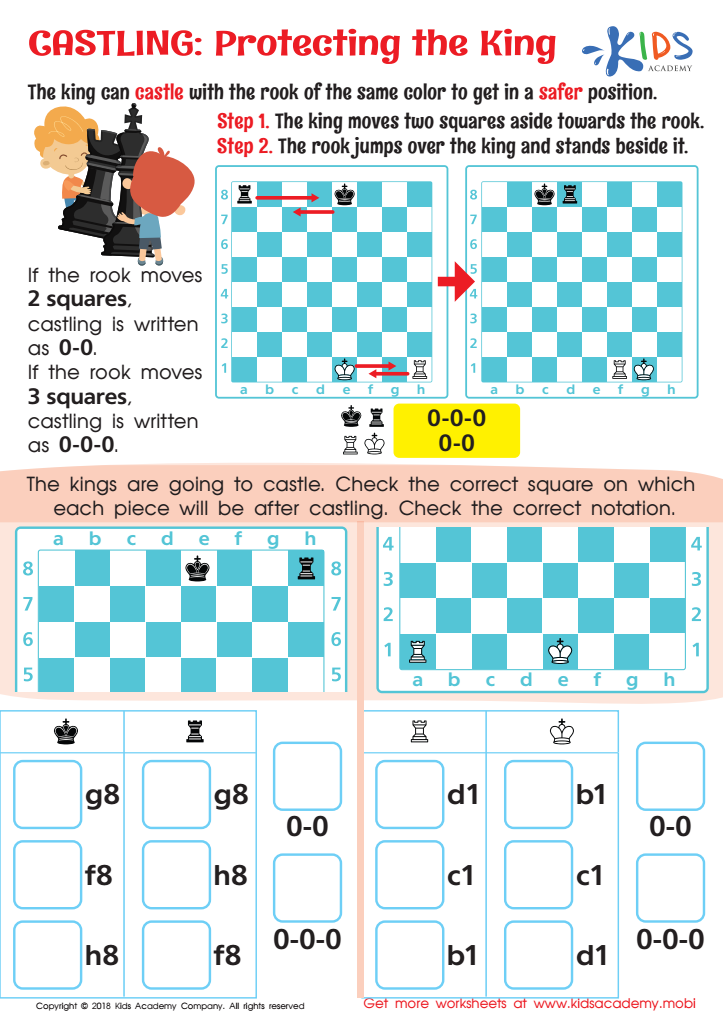
Castling: Protecting the King Worksheet
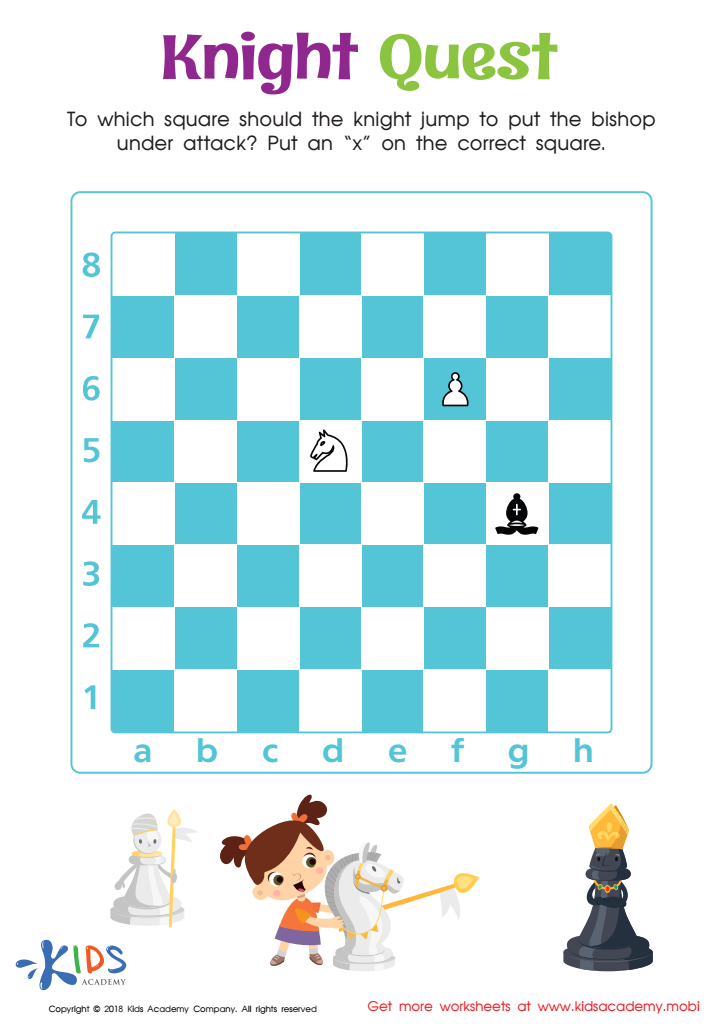
Knight Quest Worksheet
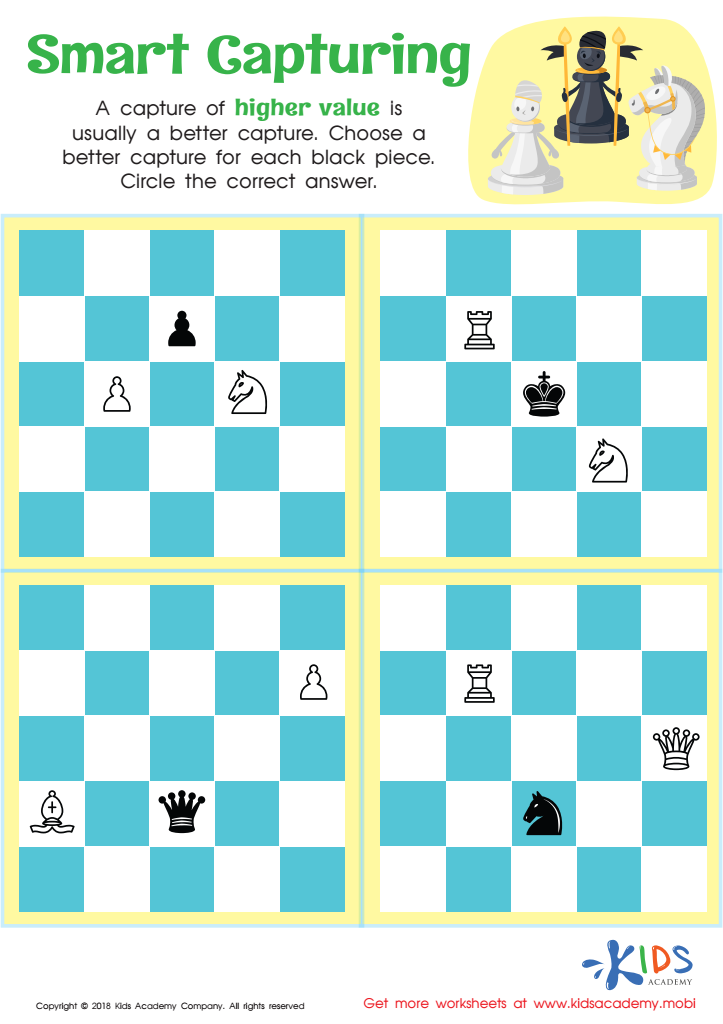
Smart Capturing Worksheet
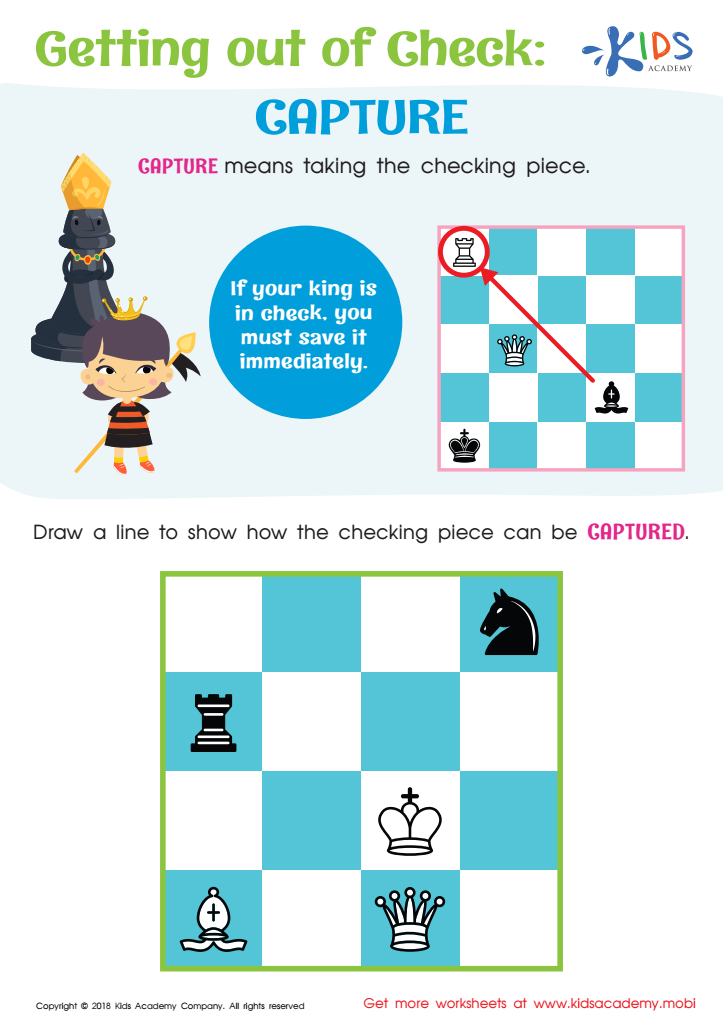
Getting out of Check: Capture
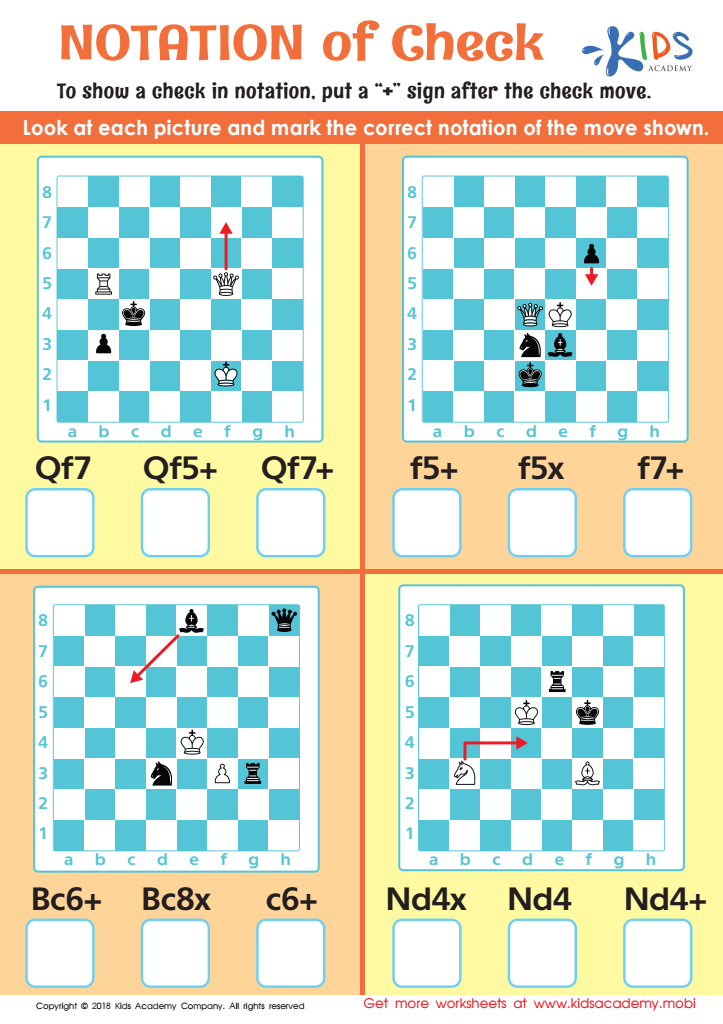
Notation of Check Worksheet
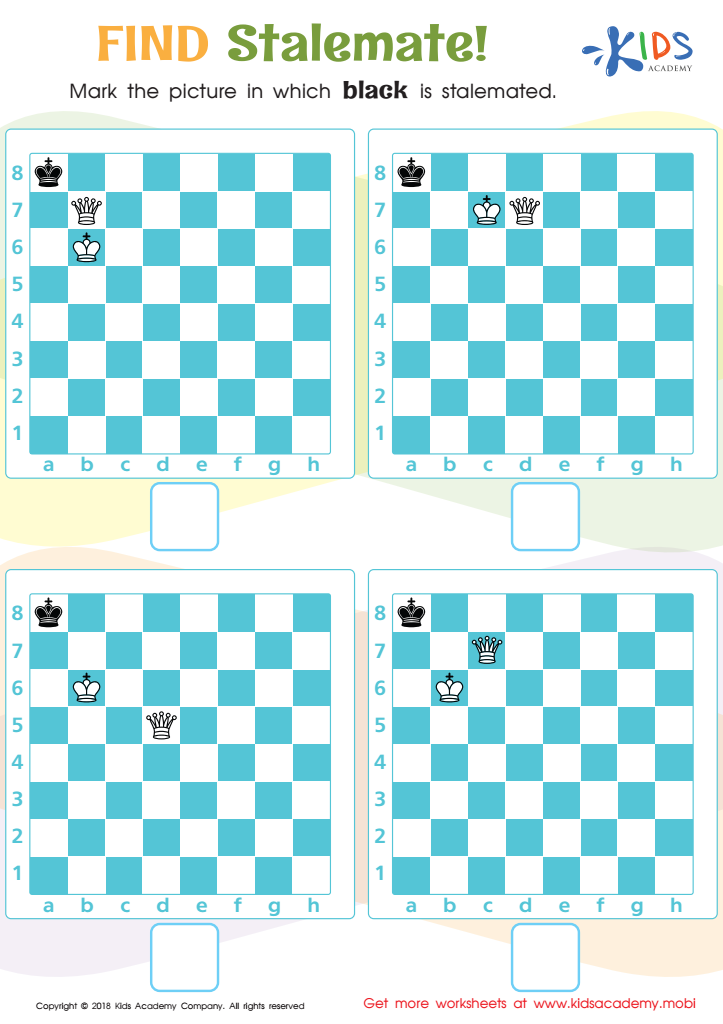
Find Stalemate! Worksheet
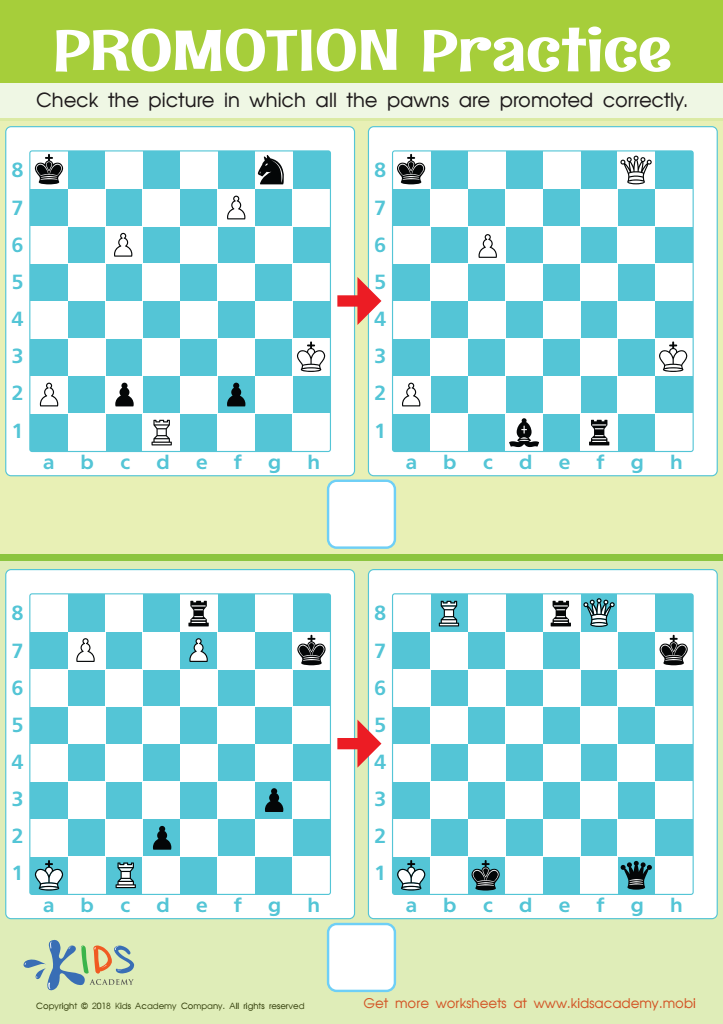
Promotion Practice Worksheet
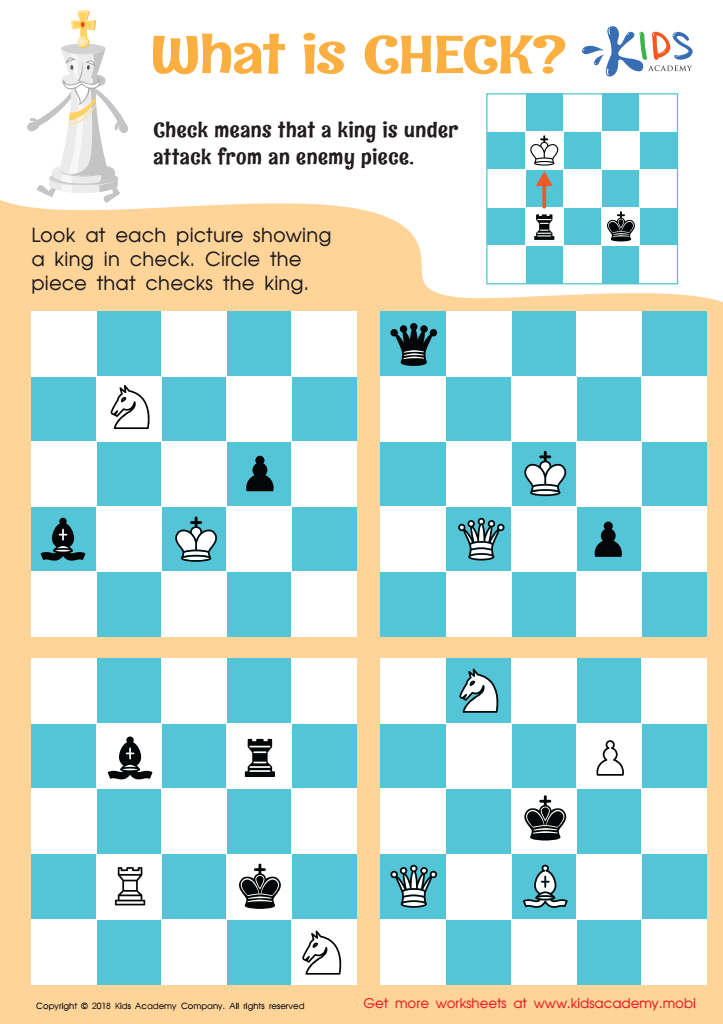
What is Check? Worksheet
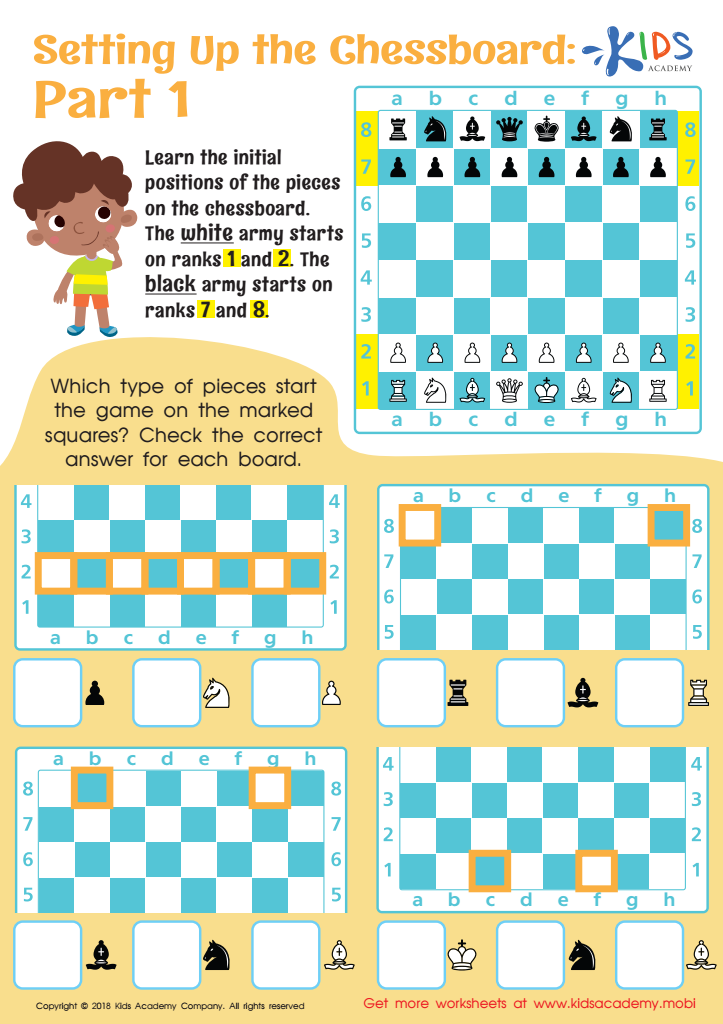
Setting up the Chessboard: Part 1 Worksheet
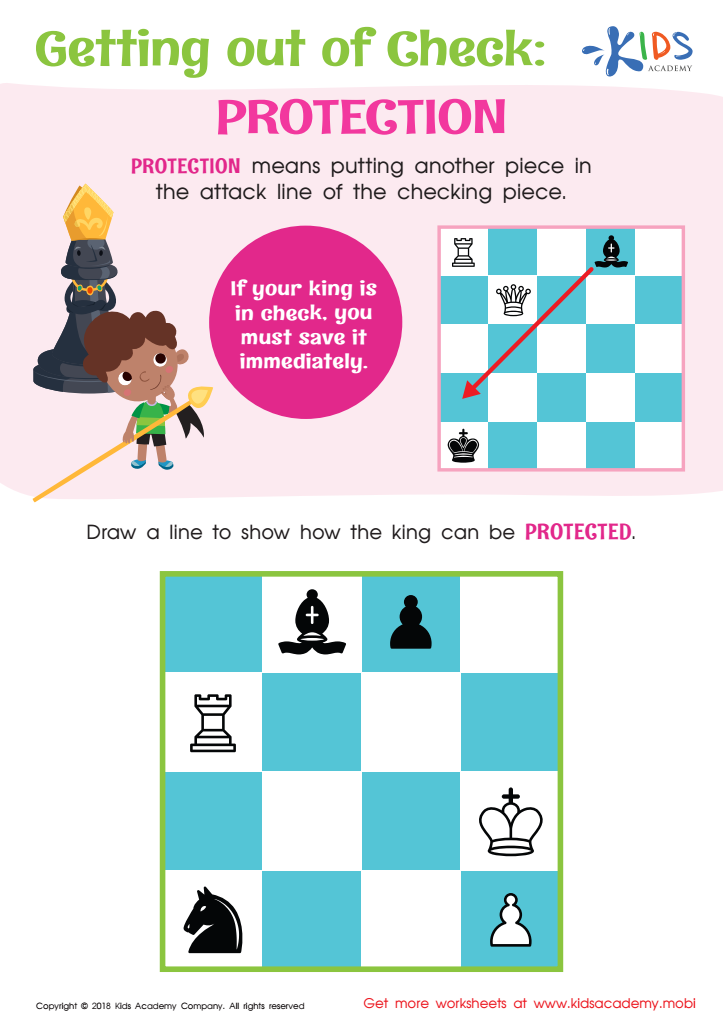
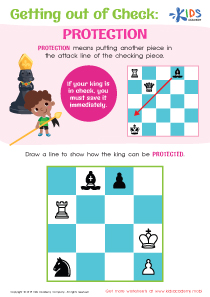
Getting out of Check: Protection
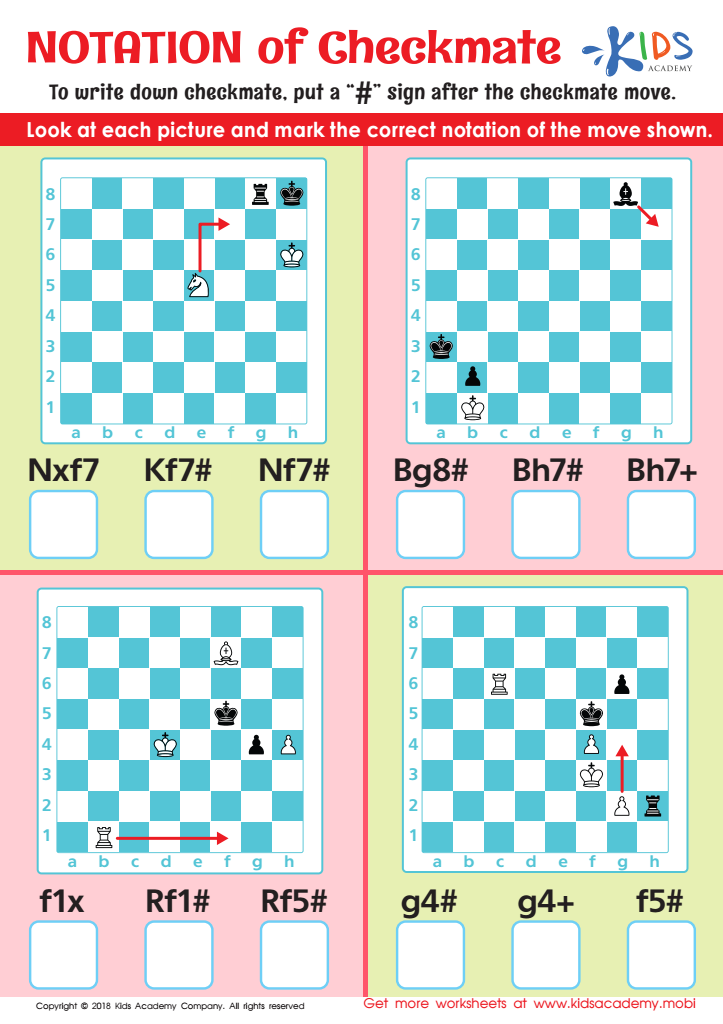
Notation of Checkmate Worksheet







Chess is a valuable educational tool for children aged 3-6, promoting cognitive, social, and emotional development. First, it fosters critical thinking and problem-solving skills. Young chess players learn to analyze situations, think ahead, and make strategic decisions, all of which are foundational for later academic success.
Additionally, chess enhances concentration and patience. The game requires children to focus and consider their moves carefully, helping them develop attentive habits early in life. This improved focus can positively impact other learning areas, from reading to math.
Socially and emotionally, chess encourages respect and empathy. By facing opponents, children learn to handle both victory and defeat gracefully, enhancing their resilience and sportsmanship. Playing with peers also builds essential social skills, such as communication and teamwork.
Moreover, introducing chess at a young age can offer a meaningful bonding experience, bringing families and communities together. When parents or guardians engage in chess with their children, it nurtures relationships while promoting educational play.
In summary, chess presents multifaceted benefits for young children, making it a smart investment for parents and teachers looking to cultivate a well-rounded, intellectually curious, and emotionally resilient generation.