Patterns Worksheets for Ages 3-6
6 filtered results
-
From - To
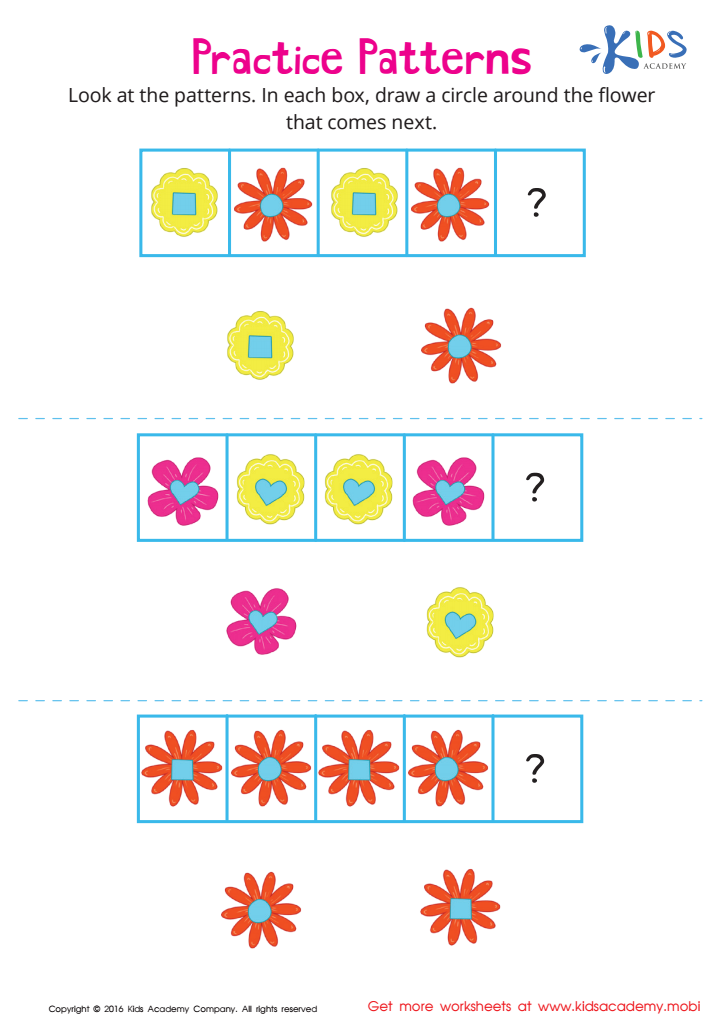
Discover the joy of learning with our engaging Patterns Worksheets for Ages 3-6! These carefully crafted printables from Kids Academy are designed to develop critical thinking, cognitive skills, and a foundational understanding of math concepts. Perfect for preschoolers and kindergartners, our worksheets feature colorful sequences, fun activities, and familiar objects to capture your child's imagination and attention. Each exercise helps young learners recognize and continue patterns, an essential skill for future math success. Make learning patterns enjoyable and interactive with our user-friendly worksheets. Start building important skills today with Kids Academy’s patterns resources!
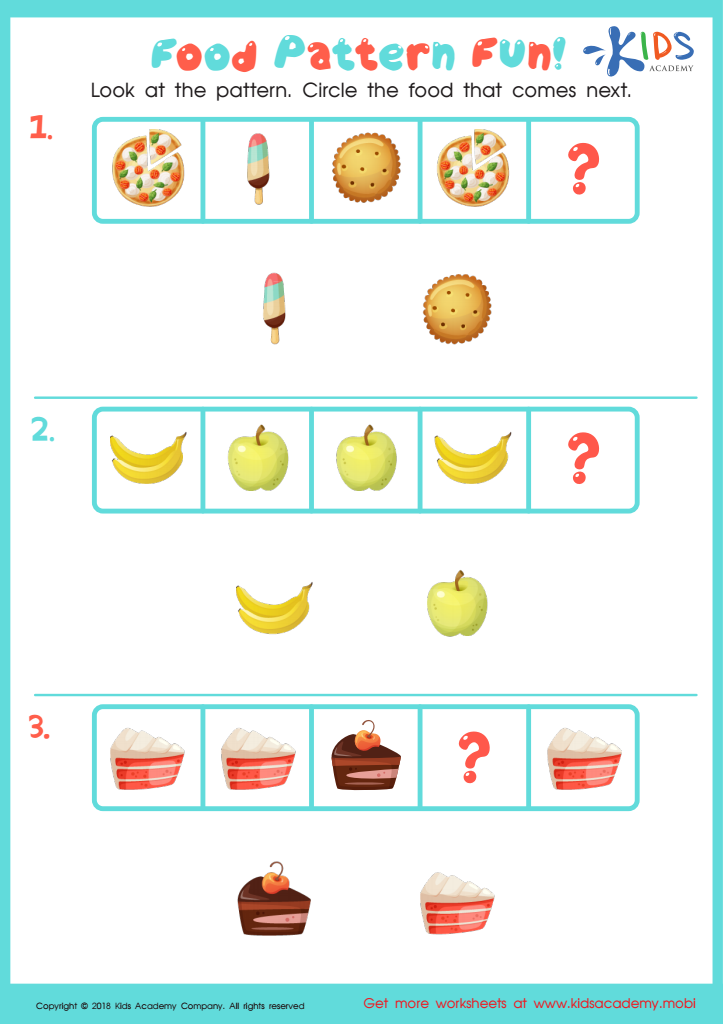
Food Pattern Fun Worksheet
 Assign to My Students
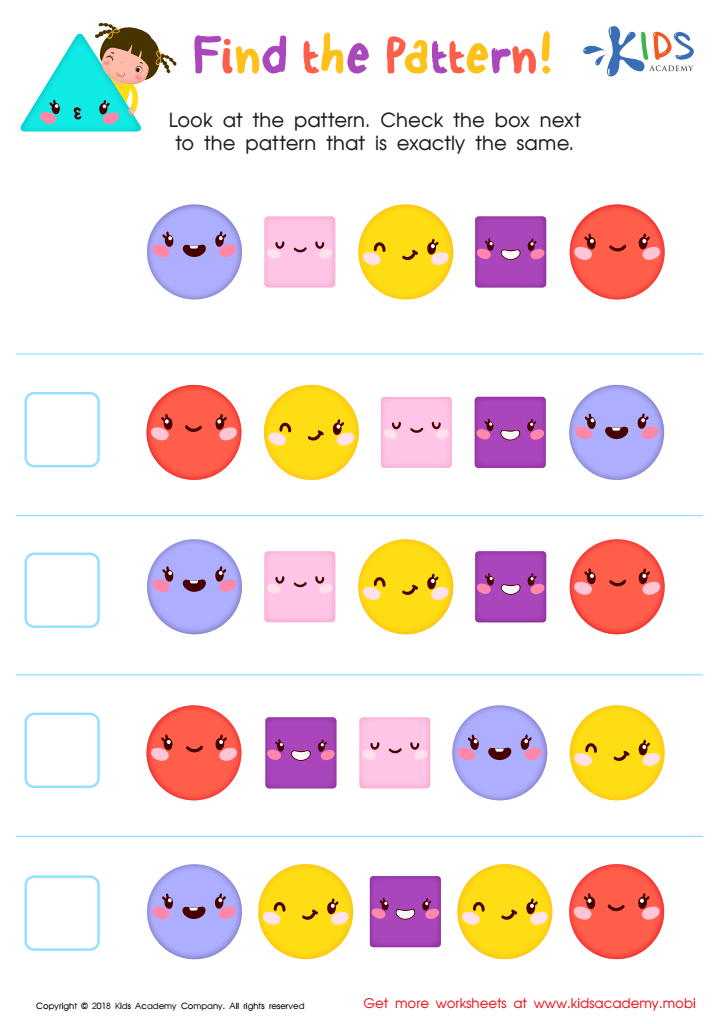
Find the Pattern Worksheet
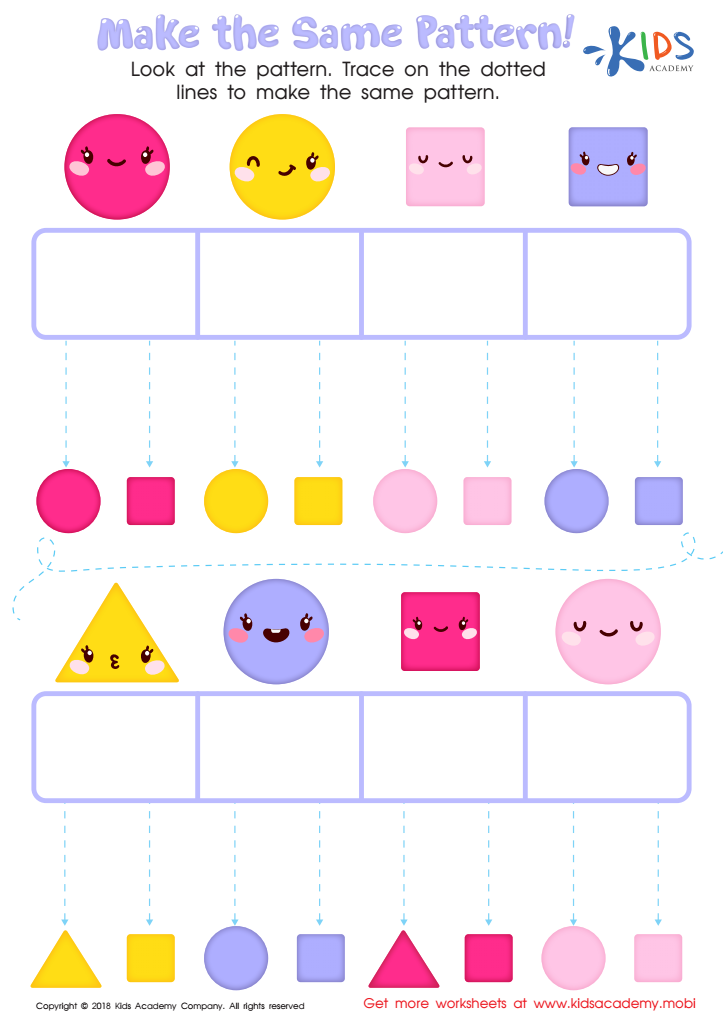
Make the Same Pattern Worksheet
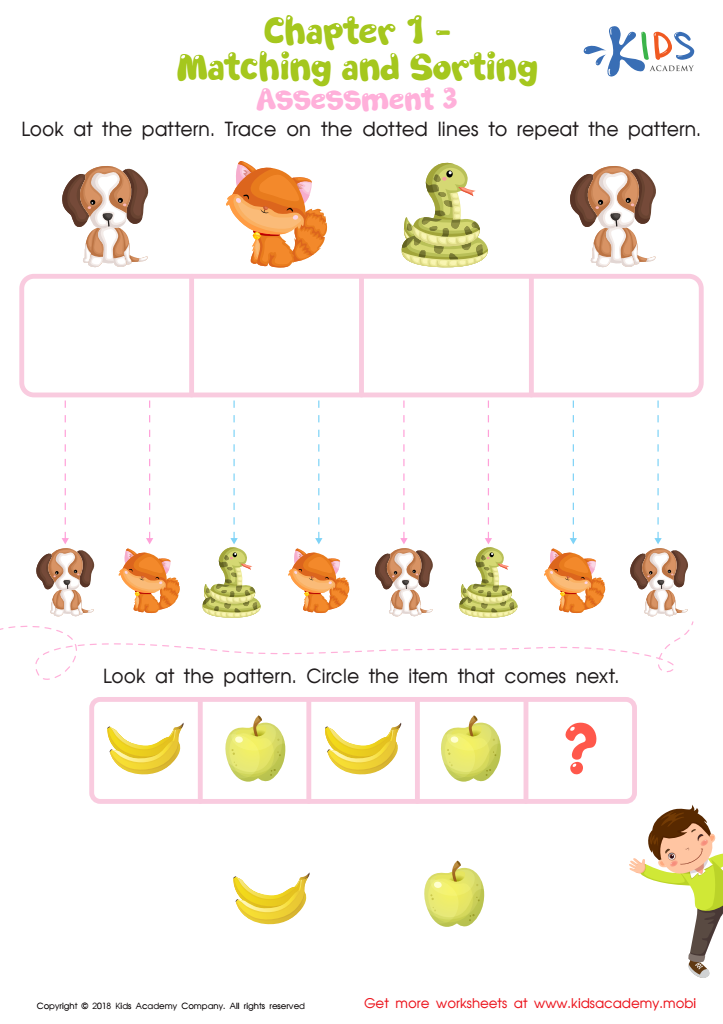
Matching and Sorting for Preschool: Assessment 3 Worksheet
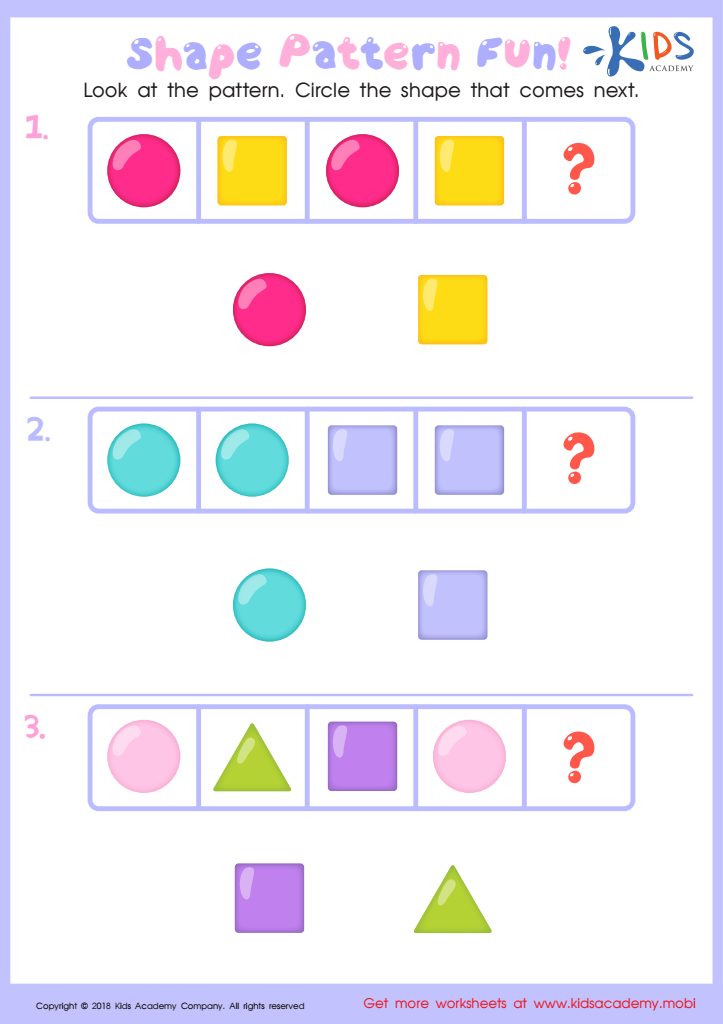
Shape Pattern Fun Worksheet








Patterns are fundamental to the cognitive development of young children aged 3-6. They play a crucial role in establishing a foundation for mathematical skills such as counting, addition, subtraction, and problem-solving. Recognizing and creating patterns help children understand the concept of sequences and predictability.
For parents and teachers, promoting an interest in patterns can foster overall intellectual growth. Patterns provide practice in critical thinking and reasoning—skills essential in various everyday tasks and future academic pursuits. They help children become acquainted with the natural order of things, increasing their ability to categorize and make sense of the world around them.
Moreover, engaging with patterns is not limited to math. In literacy, recognizing patterns in the arrangement of letters and sounds contributes to reading proficiency. In art, patterns introduce basic principles of design and aesthetics, encouraging creativity and attention to detail.
Activities involving patterns can be highly engaging and lend themselves well to play-based learning, which is developmentally appropriate for this age group. Simple activities like sorting colored beads, arranging blocks, or identifying shapes in a sequence can be highly effective.
In essence, understanding and creating patterns provides a robust platform for future academic success and real-world problem-solving abilities, making it a critical focus for both teachers and parents of young learners.








