Middle Vowel Worksheets for Ages 3-7
4 filtered results
-
From - To
Explore our engaging Middle Vowel Worksheets designed for children ages 3-7! These fun and interactive resources help young learners enhance their reading and writing skills by focusing on middle vowel sounds. Our worksheets include colorful illustrations and diverse activities, ensuring that kids remain motivated while mastering essential phonics concepts. Ideal for parents, teachers, and homeschoolers, these printable sheets cater to various learning styles and provide easy guidance for teaching vowel recognition. Strengthen your child's literacy foundation with our comprehensive middle vowel resources, perfect for early education settings or at-home learning. Start building their reading confidence today!
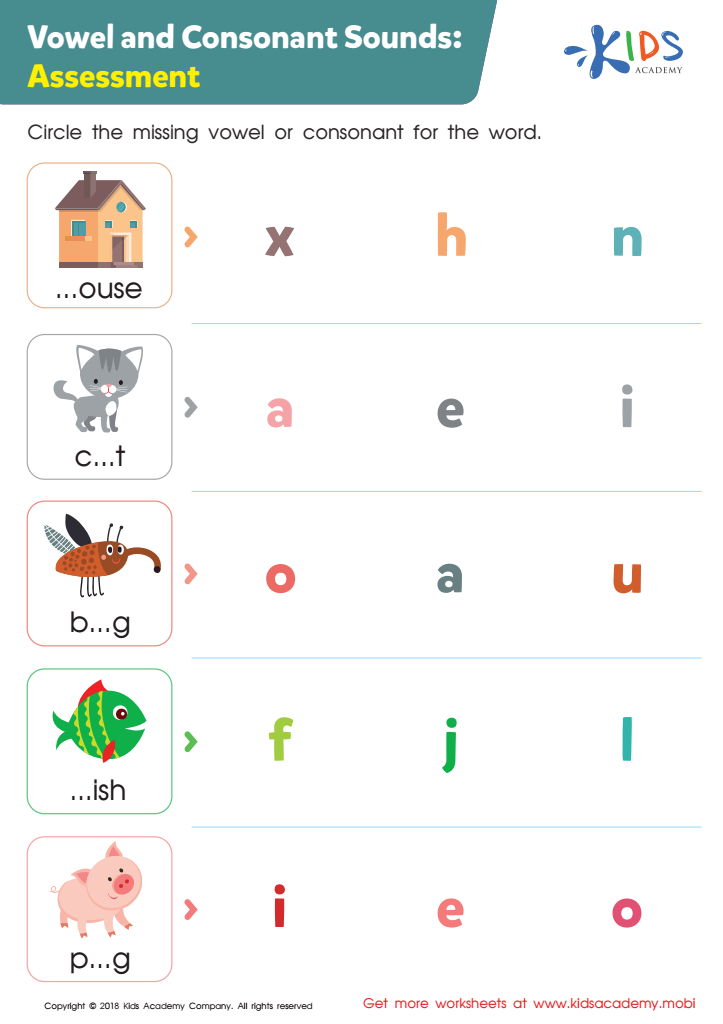
Vowel and Consonant Sounds: Assessment Worksheet
 Assign to My Students
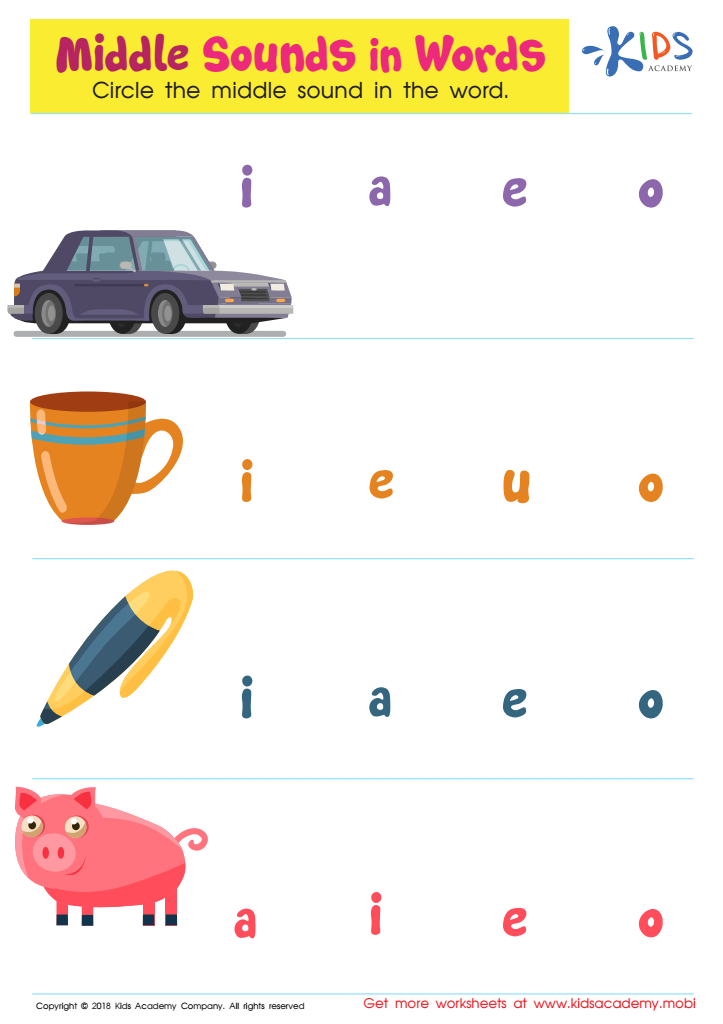
Middle Sounds in Words Worksheet
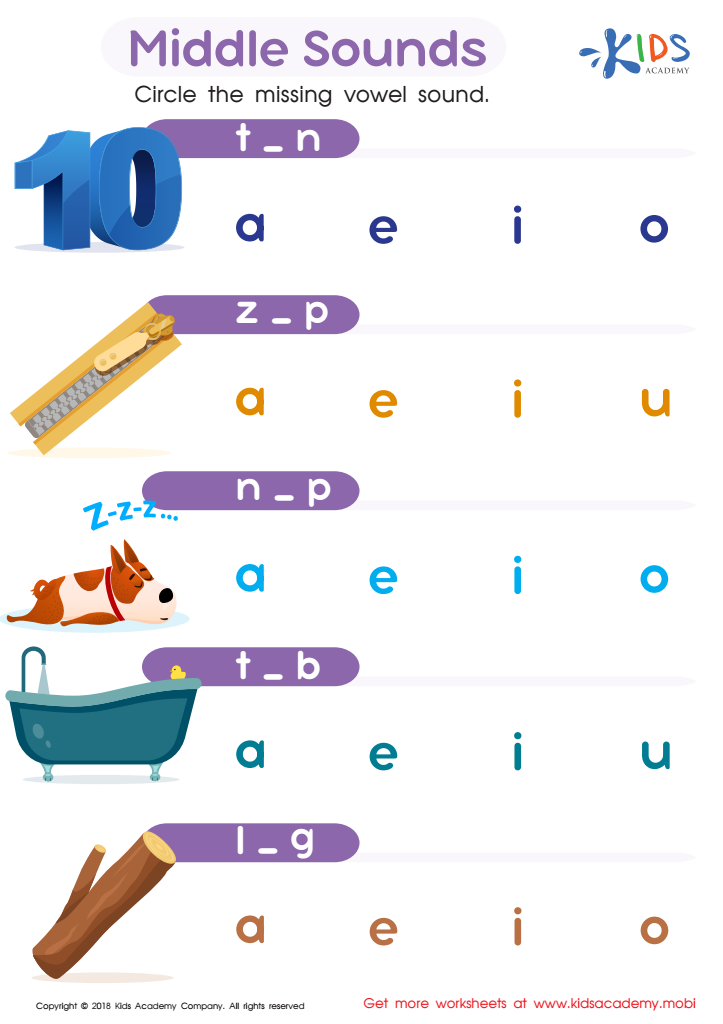
Middle Sounds Worksheet
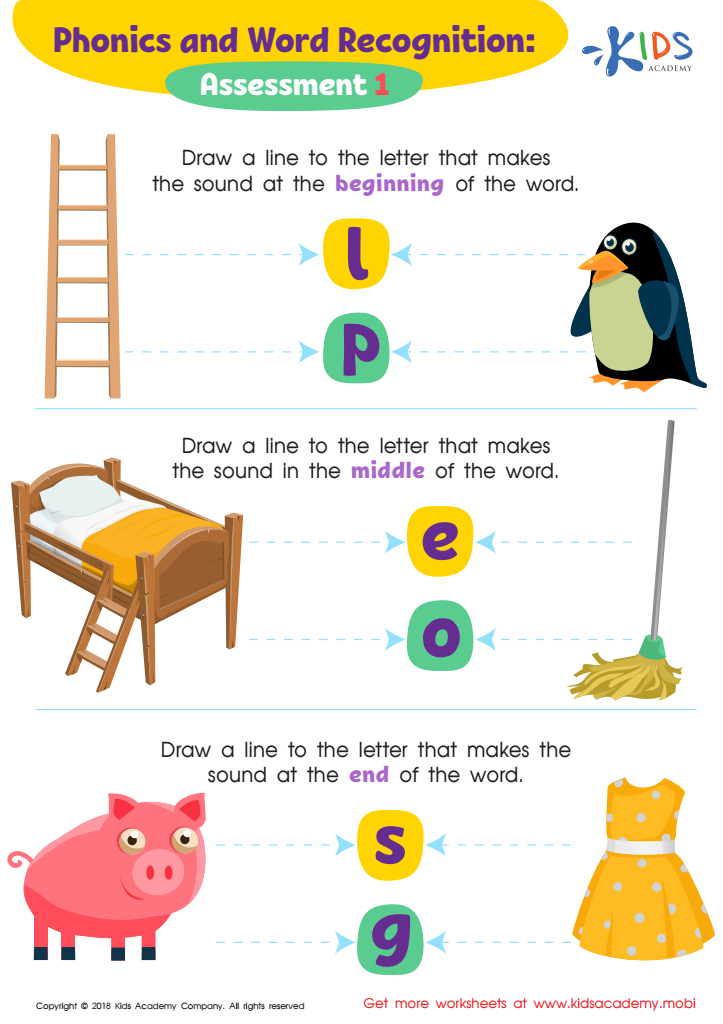
Phonics and Word Recognition: Assessment 1 ELA Worksheet



Middle vowels play a crucial role in early literacy development for children aged 3 to 7. They serve as the heart of many words and provide essential phonetic anchors that help young learners decode language. By understanding the concept of middle vowels, parents and teachers can enhance vocabulary and reading skills.
Using terms like “cat,” “bed,” and “pig” as examples, children learn how modifying the middle vowel affects word meaning and can lead to recognizing patterns in language. This recognition fosters confidence and encourages children to experiment with sounds, ultimately reinforcing phonics skills.
Moreover, developing an awareness of middle vowels supports spelling abilities; children begin to grasp how different vowels can change a word’s structure. Engaging activities like rhyming games or vowel-focused books can make the learning process fun and interactive.
By concentrating on middle vowels, adults can create a solid foundation for literacy, paving the way for fluent reading and writing in the future. Advocating for middle vowel education not only enriches children’s linguistic skills but also cultivates a lifelong love for reading and learning. The outcome is not just improved literacy but also enhanced critical thinking and communication skills as they grow.