Reading Non-Fiction Worksheets for Ages 3-7 - Page 4
74 filtered results
-
From - To
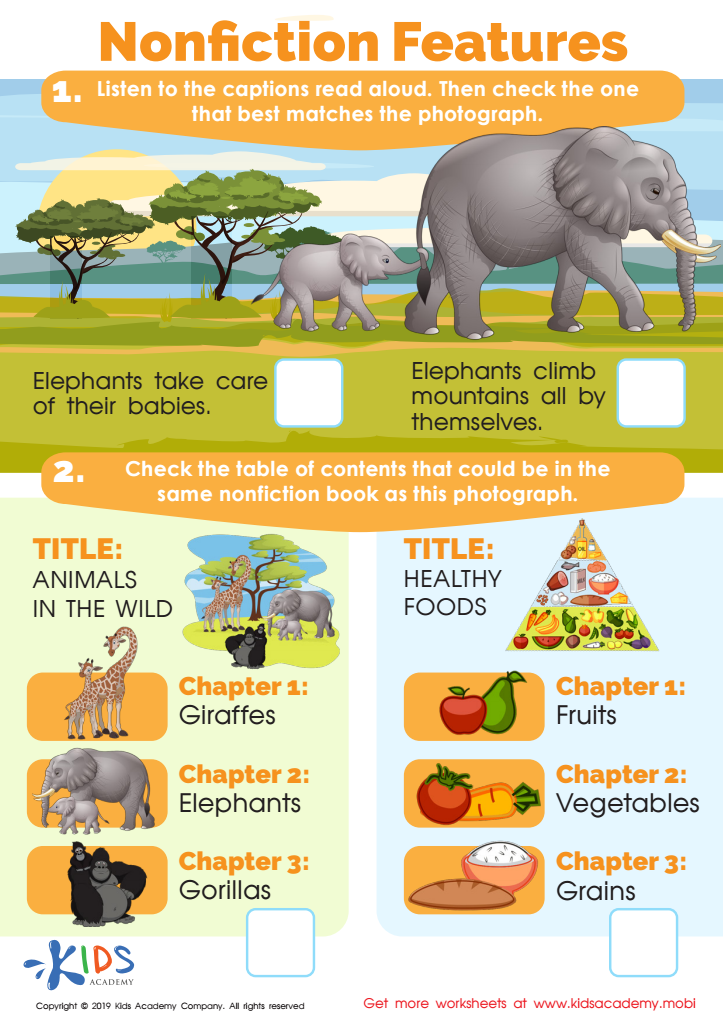
Nonfiction Features Worksheet
 Assign to My Students
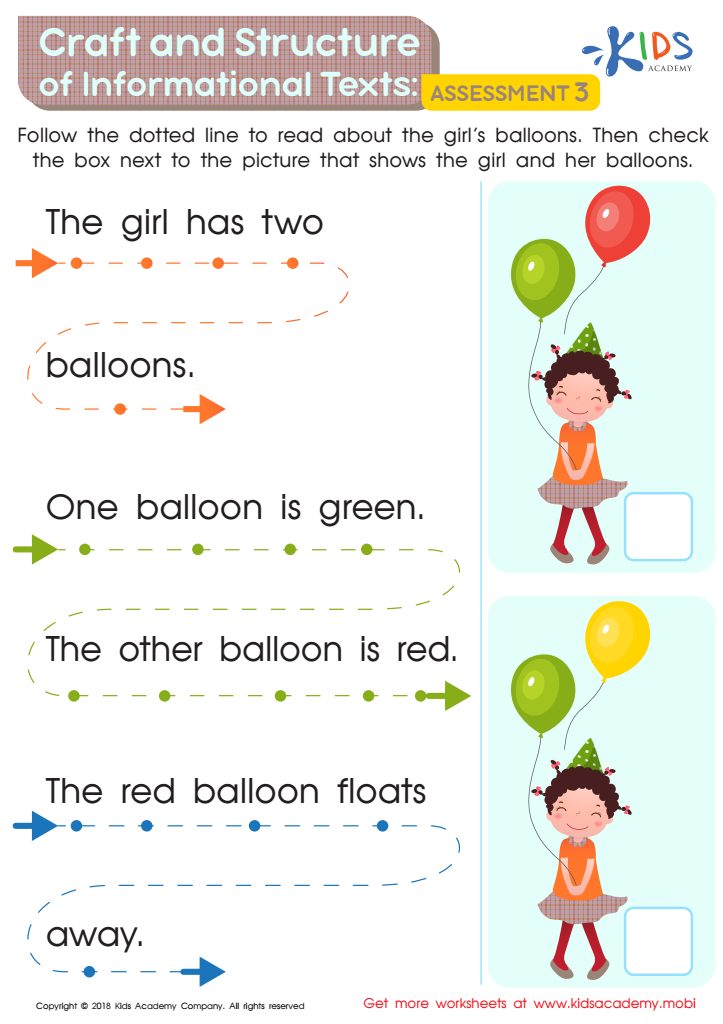
Craft and Structure of Informational Texts: Assessment 3 Worksheet







Reading non-fiction to children ages 3-7 is vital for several reasons. At this developmental stage, their brains are rapidly growing, and exposure to diverse types of content can significantly boost cognitive and language skills. Non-fiction books introduce young minds to real-world concepts, promoting curiosity and a better understanding of their surroundings. These books provide factual knowledge about animals, plants, weather, and daily life, helping children expand their vocabulary and comprehension.
Moreover, non-fiction fosters critical thinking. When children engage with factual information, they learn to ask questions, make connections, and seek explanations. This inquisitive mindset lays a strong foundation for future learning. Additionally, by including non-fiction in their reading repertoire, adults can emphasize the importance of different types of reading materials, not just those that are story-driven.
Lastly, non-fiction books often have rich, informative illustrations alongside text, aiding visual learning and keeping young readers engaged. Both parents and teachers play pivotal roles in shaping lifelong learning habits. By encouraging non-fiction reading early on, they help children become more informed, curious, and thoughtful individuals, setting them up for academic success and a well-rounded understanding of the world.








