Filters

100 filtered results

Clear all filters
Favorites
With answer key
Interactive

100 filtered results

Difficulty Level

Grade


Subject

    Check out this FREE Trial Lesson on Letter Recognition for age 3-9!

    D

    Favorites
    With answer key
    Interactive
    • 3-9
    • With answer key
    • Letter Recognition
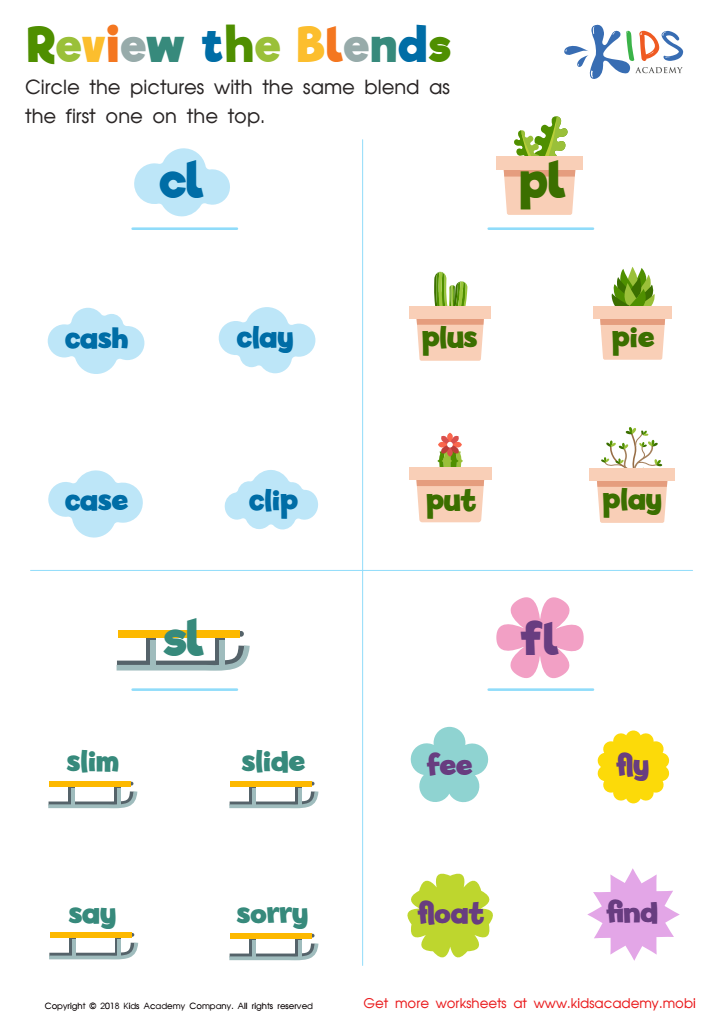
    Review the Blends Worksheet
    Review the Blends Worksheet

    Review the Blends Worksheet

    Consonant blends are two or three consonants that make a sound when pronounced together. L-blends like cl, bl, sl, fl and 3-letter blends like str, slp are common. This phonics worksheet helps early readers identify words containing two letter L-blends. Students must circle the words then read them aloud.
    Review the Blends Worksheet
    Worksheet
    letter d worksheets
    letter d worksheets

    Letter D Tracing Page

    Trace and write capital and lowercase letter "D" with our free printable alphabet worksheet! Be careful not to mix up "b" and "d" - just look at the ducks and write their first letter. The dolphin wants to join the fun too - do you like dolphins? Get more fun worksheets and activities at Kids Academy!
    Letter D Tracing Page
    Worksheet
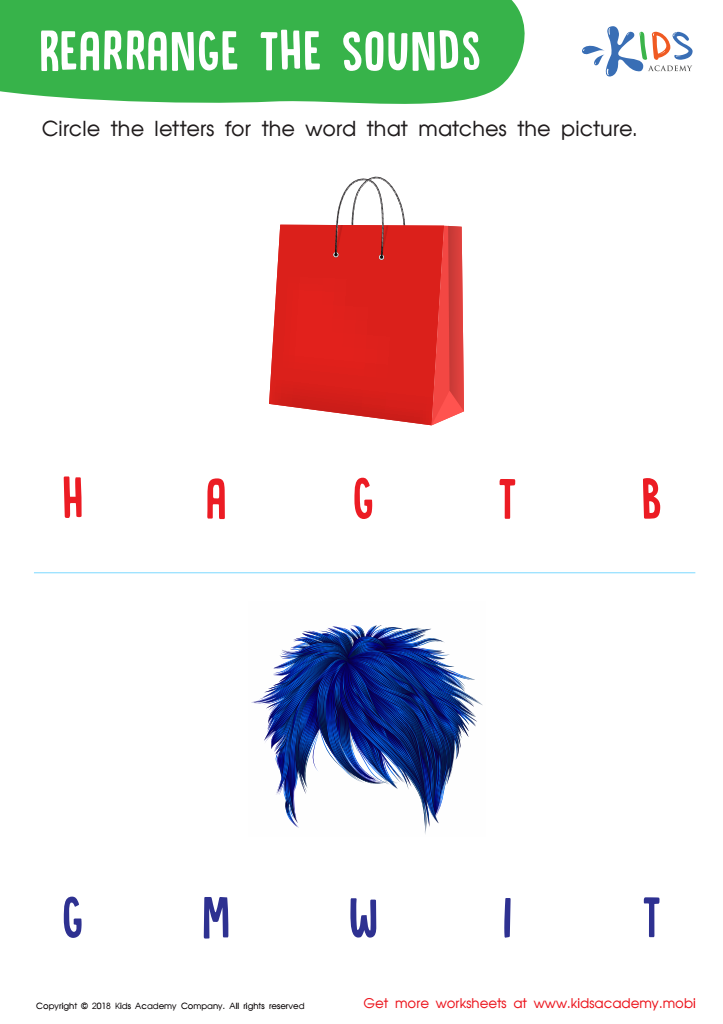
    Rearrange the Sounds Worksheet
    Rearrange the Sounds Worksheet

    Rearrange the Sounds Worksheet

    Ask students if they can identify the objects in the worksheet and spell the words. Guide them to find and circle the letters that match the picture. This exercise should be easy-peasy for advanced spellers.
    Rearrange the Sounds Worksheet
    Worksheet
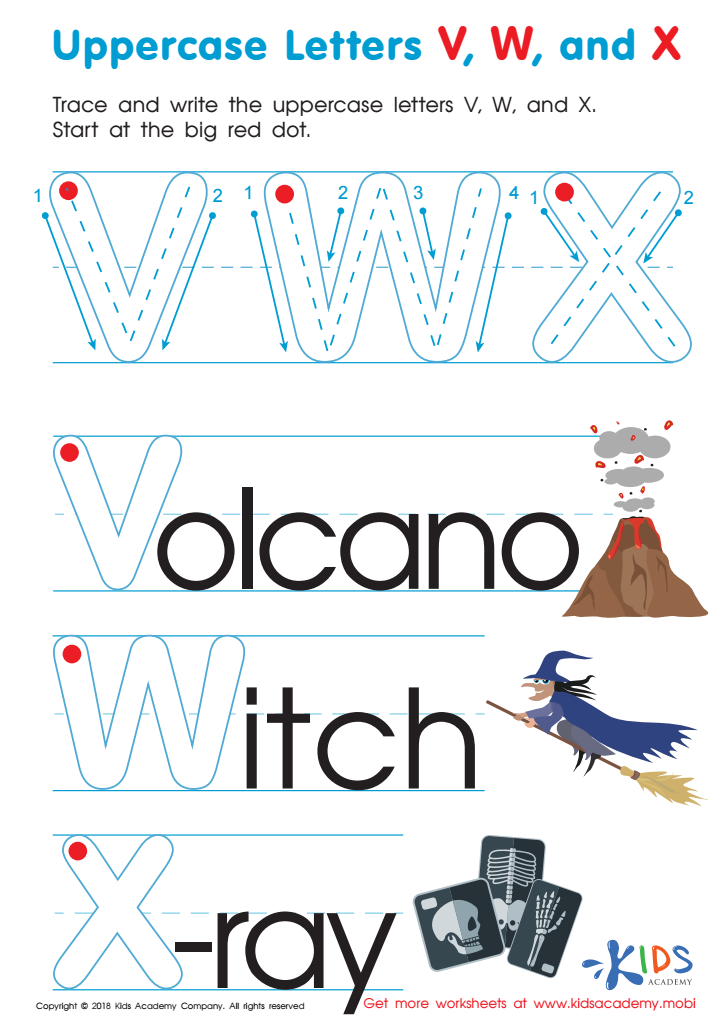
    Uppercase Letters V, W, and X Worksheet

    Uppercase Letters V, W, and X Worksheet

    Uppercase Letters V, W, and X Worksheet

    This worksheet is perfect for kids struggling to write uppercase letters V, W, and X. Warm up their brains first by having them name words starting with these letters. Then, help them trace and write each letter from the big red dot. With your assistance, they will quickly sharpen their writing skills.
    Uppercase Letters V, W, and X Worksheet

    Worksheet


    ... 4 5

    Letter recognition is a crucial foundation for literacy development in children aged 3 to 9. Understanding letters—their shapes, names, and sounds—provides young learners with the necessary tools to decode written language, facilitating reading and writing skills later on.

    For parents and teachers, promoting letter recognition helps prepare children for academic success. Research shows that early exposure to letters significantly predicts future reading abilities and overall literacy. By engaging children in fun and interactive activities like reading books, singing the alphabet, or playing letter-based games, caregivers create a stimulating learning environment.

    Moreover, letter recognition supports cognitive development. It encourages critical thinking and problem-solving skills as children learn to identify and manipulate letters in various contexts. As they build this foundational skill, they also improve their phonemic awareness, which is crucial when it comes to understanding speech sounds and language patterns.

    Lastly, fostering letter recognition boosts children's confidence and excitement towards reading. Positive early experiences with letters can instill a lifelong love for learning and books, setting the stage for their success both academically and socially. Therefore, it’s essential for parents and teachers to prioritize and nurture letter recognition during these formative years.