Patterns Worksheets for Ages 3-9
6 filtered results
-
From - To
Discover our vibrant collection of Patterns Worksheets designed for kids aged 3-9. These engaging activities help children recognize, create, and extend patterns, building critical thinking and early math skills. Colorful and fun, our worksheets are tailored to different ages and developmental stages, fostering cognitive development in young learners. Kids Academy offers a variety of pattern-based exercises, from simple sequences for preschoolers to more complex arrangements for older children. Perfect for both classroom and home learning, these worksheets ensure a well-rounded foundation in essential mathematical concepts. Unlock your child's potential with our expert-designed pattern activities!
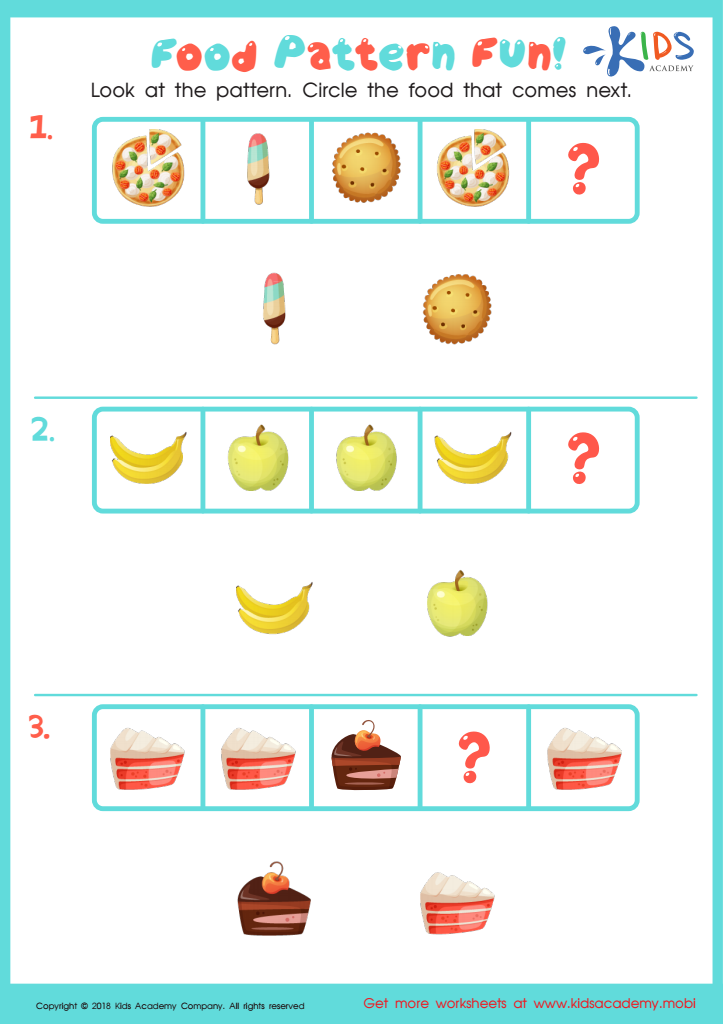
Food Pattern Fun Worksheet
 Assign to My Students
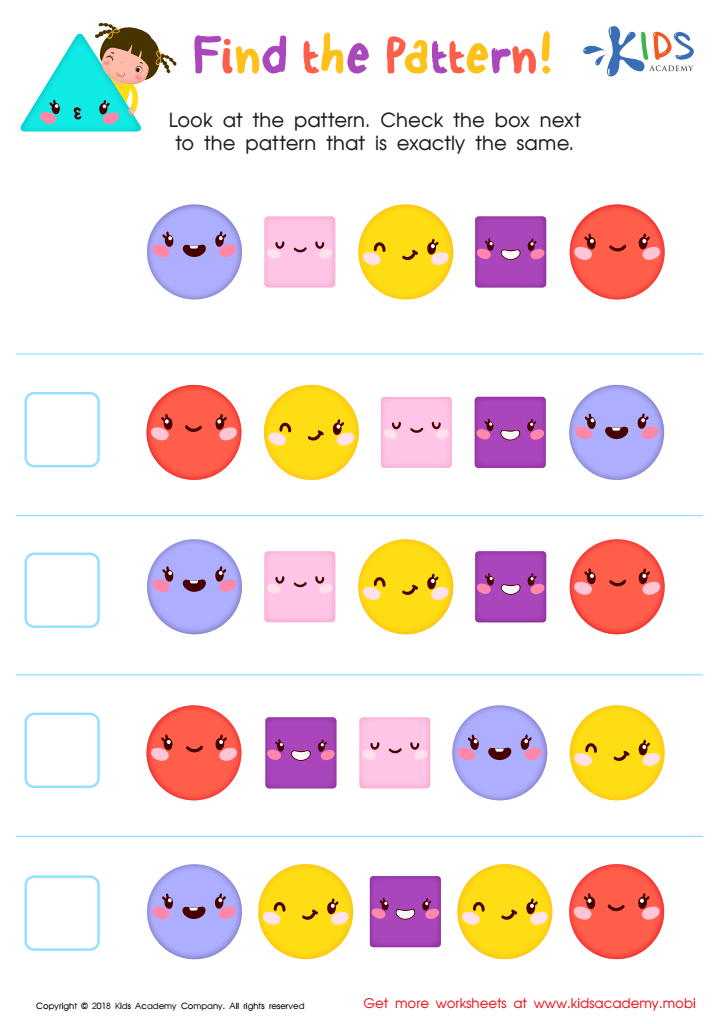
Find the Pattern Worksheet
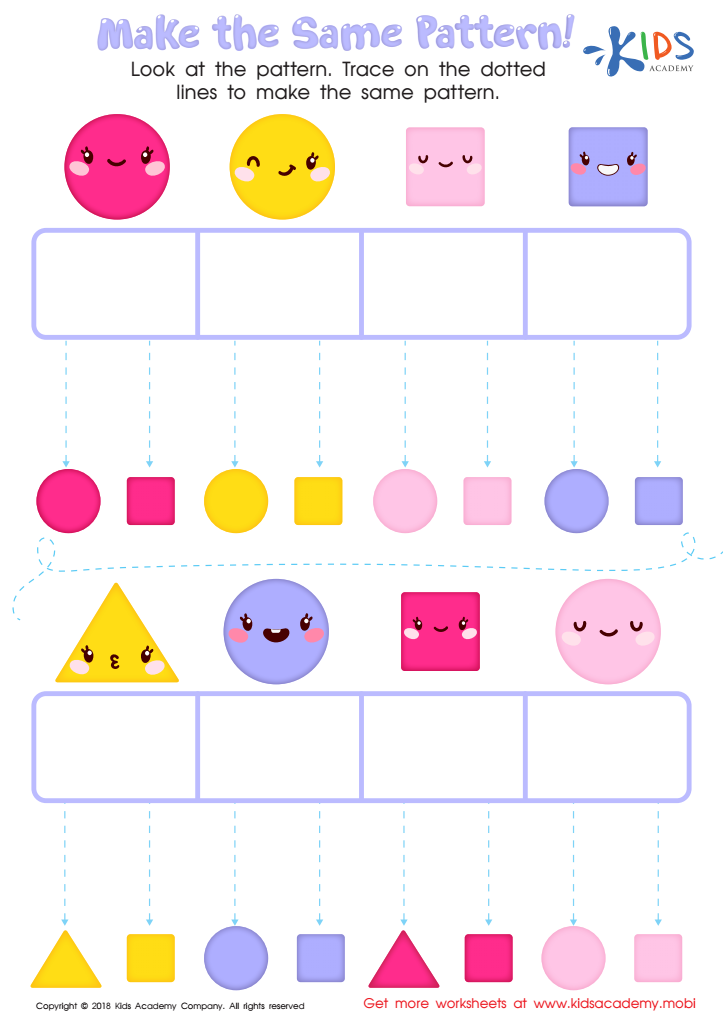
Make the Same Pattern Worksheet
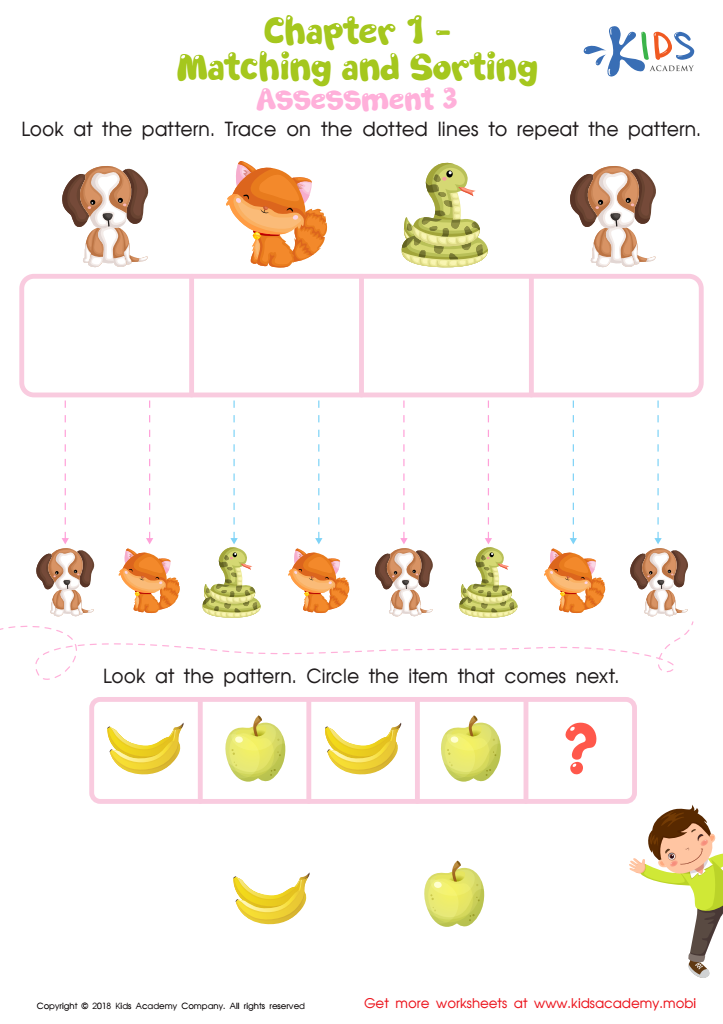
Matching and Sorting for Preschool: Assessment 3 Worksheet
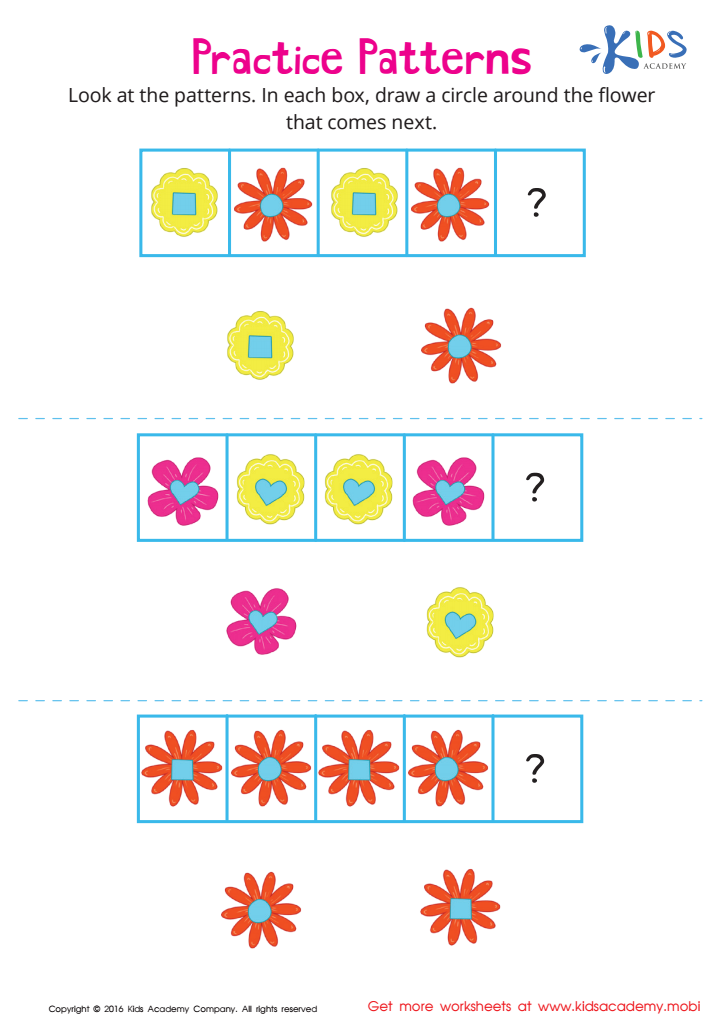
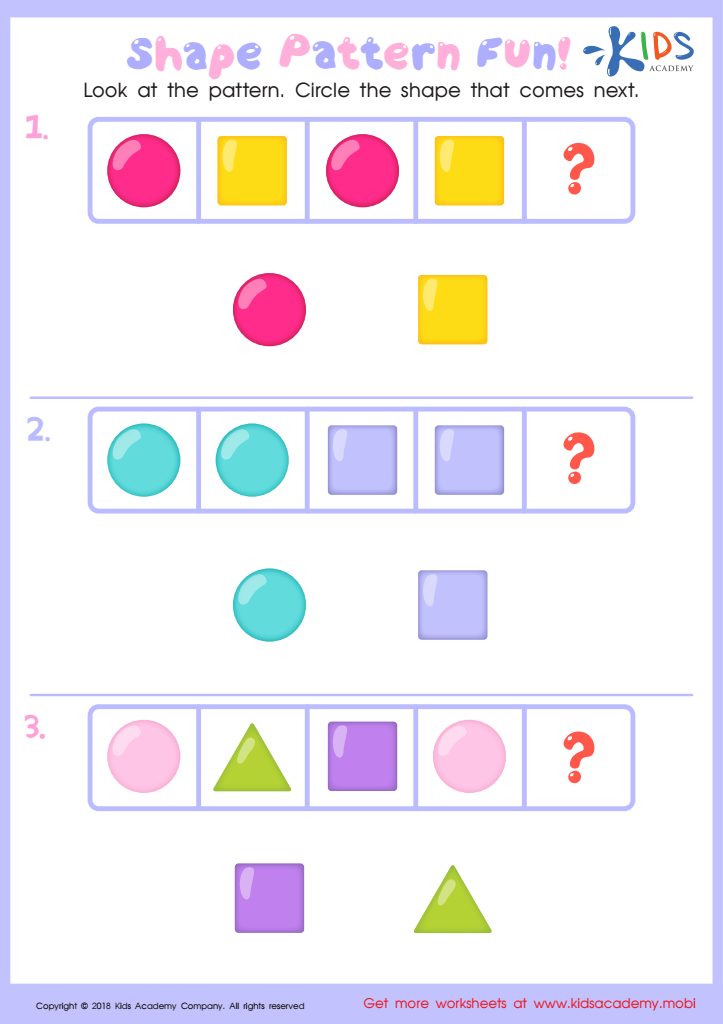
Shape Pattern Fun Worksheet








Understanding patterns is imperative for young children aged 3-9 because it lays the foundation for crucial cognitive and academic skills. Patterns help develop critical thinking and problem-solving abilities as children learn to predict what comes next, recognize relationships, and identify regularities. This foundation is essential for advanced mathematical concepts, reading comprehension, and science literacy.
For instance, in math, recognizing numerical or geometric patterns aids in understanding sequences, multiplication, and algebraic thinking. In language arts, recognizing patterned text, such as rhyme schemes and story structures, bolsters reading and linguistic skills. Identifying patterns in scientific phenomena underpins early notions of observation and experimentation.
Moreover, patterns are integral to everyday routines and social behavior. Simple patterns nurture organizational skills crucial for time management and following instructions, thereby contributing to better classroom behavior and academic performance.
Engaging children in activities that highlight patterns—like sorting games, rhythmic songs, or patterned crafts—makes learning interactive and fun, thereby boosting confidence and fostering a love for learning. Therefore, parents and teachers should prioritize pattern recognition activities to tap into a child’s natural curiosity and set the stage for lifelong analytical and academic success.








