Word Problems Worksheets for Ages 3-9 - Page 6
123 filtered results
-
From - To
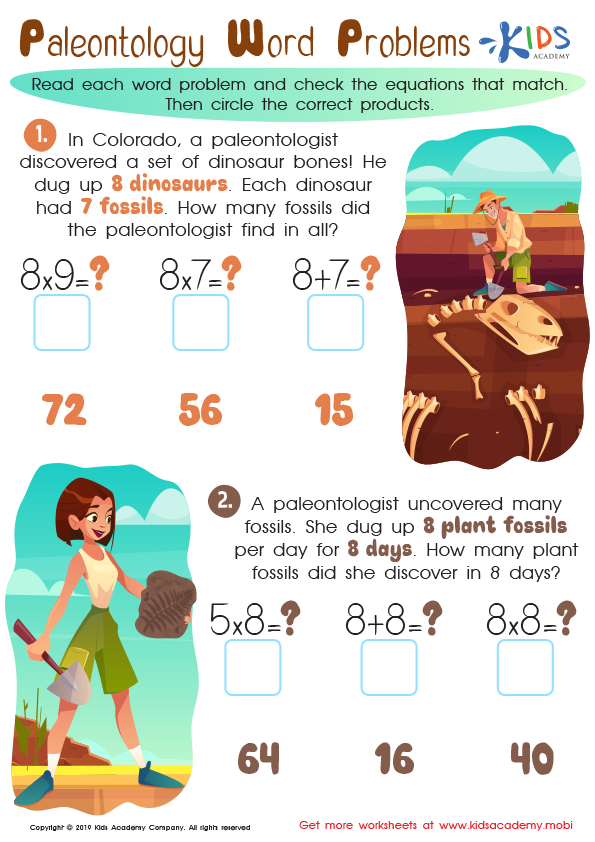
Archeology Word Problems Worksheet
 Assign to My Students
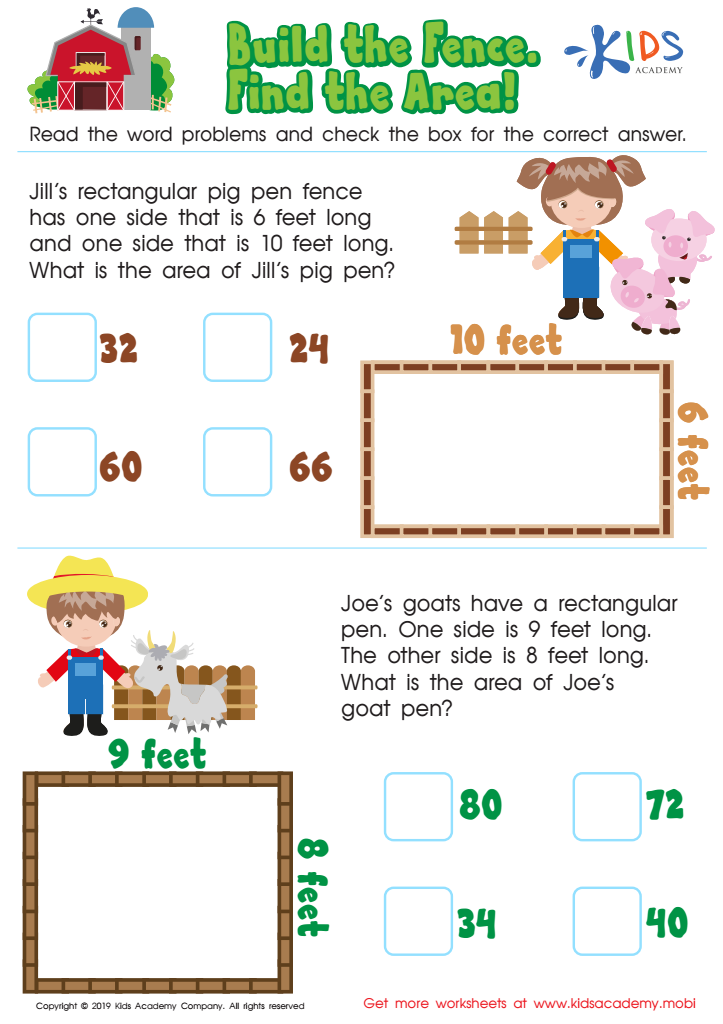
Build the Fence, Find the Area Worksheet
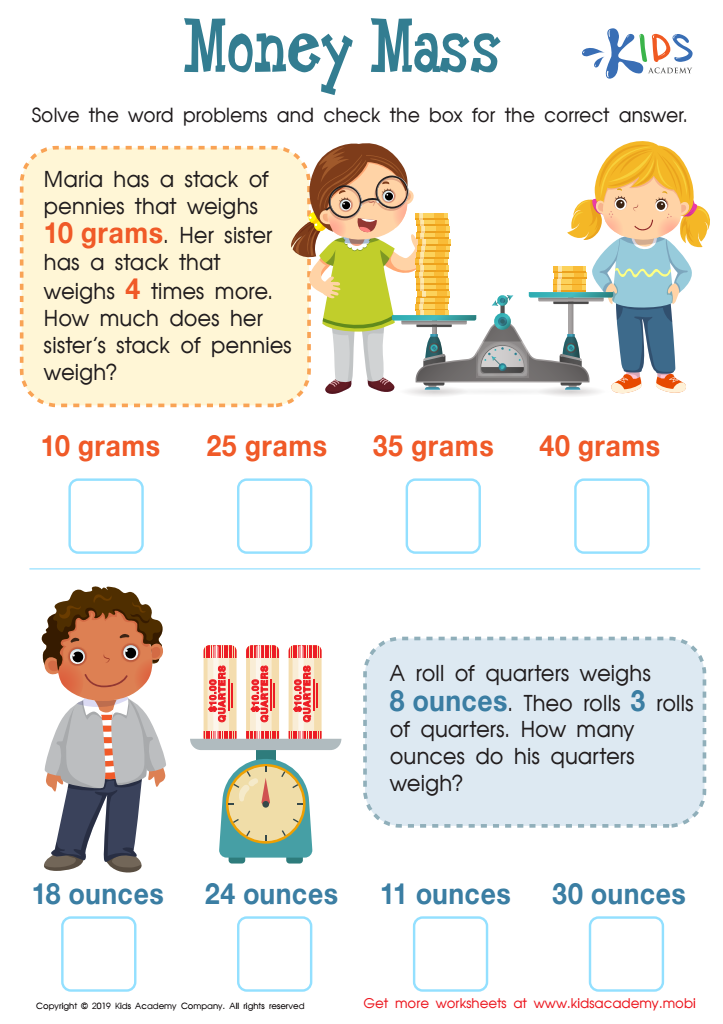
Money Mass Worksheet






.jpg)

Word problems are essential for children aged 3-9 for several compelling reasons. First, they promote critical thinking and problem-solving skills, which are foundational for future learning. Tackling word problems requires students to extract relevant information and conceptualize it in mathematical terms, enhancing their ability to reason and make connections.
Second, word problems bridge the gap between abstract math concepts and real-life situations. When children learn to apply math skills to everyday scenarios, they can better understand the practical utility of mathematics, making learning more engaging and meaningful.
Additionally, word problems improve language skills. As children read and interpret these problems, they expand their vocabulary and comprehension abilities, fostering better communication skills. This integration of math, language, and reasoning supports holistic development.
Furthermore, engaging with word problems enhances perseverance and resilience as children face challenges and learn to approach problems methodically. As they work through tough problems, they develop a growth mindset, understanding that effort and persistence lead to success.
Overall, parents and teachers should prioritize word problems as they cultivate a range of cognitive skills, making math both relatable and enjoyable for young learners. This foundation is crucial for ensuring students are well-equipped for their future academic journeys.








