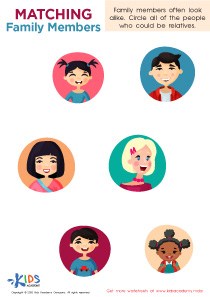
Governance and Civics Worksheets for Ages 3-9 - Page 3
51 filtered results
-
From - To
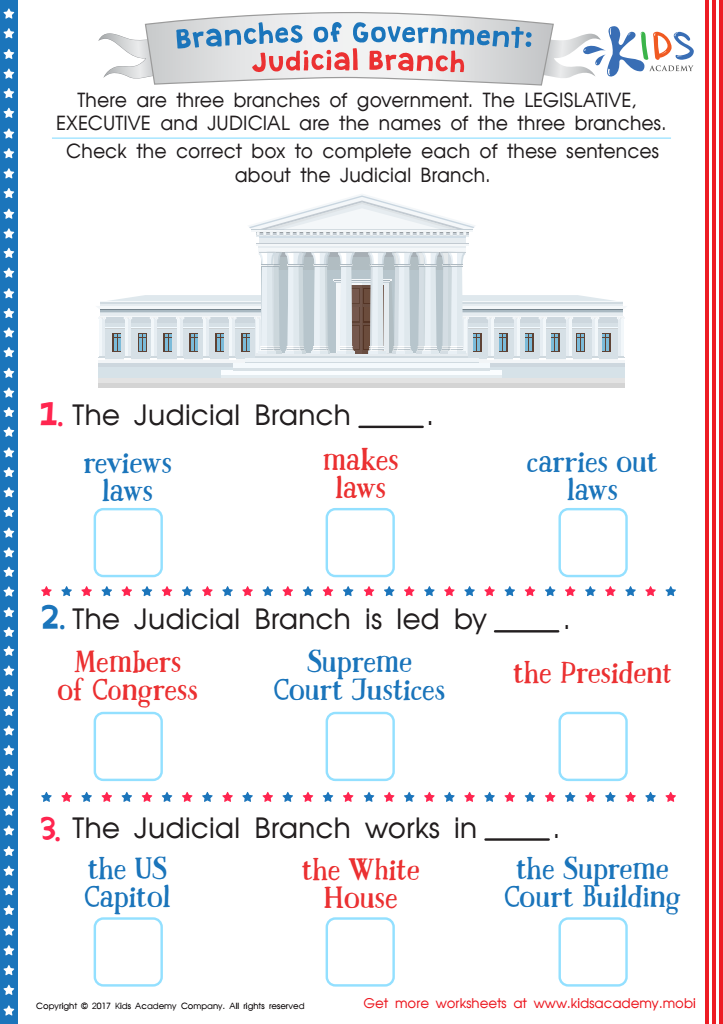
Braches of the Government: Judicial Branch Worksheet
 Assign to My Students
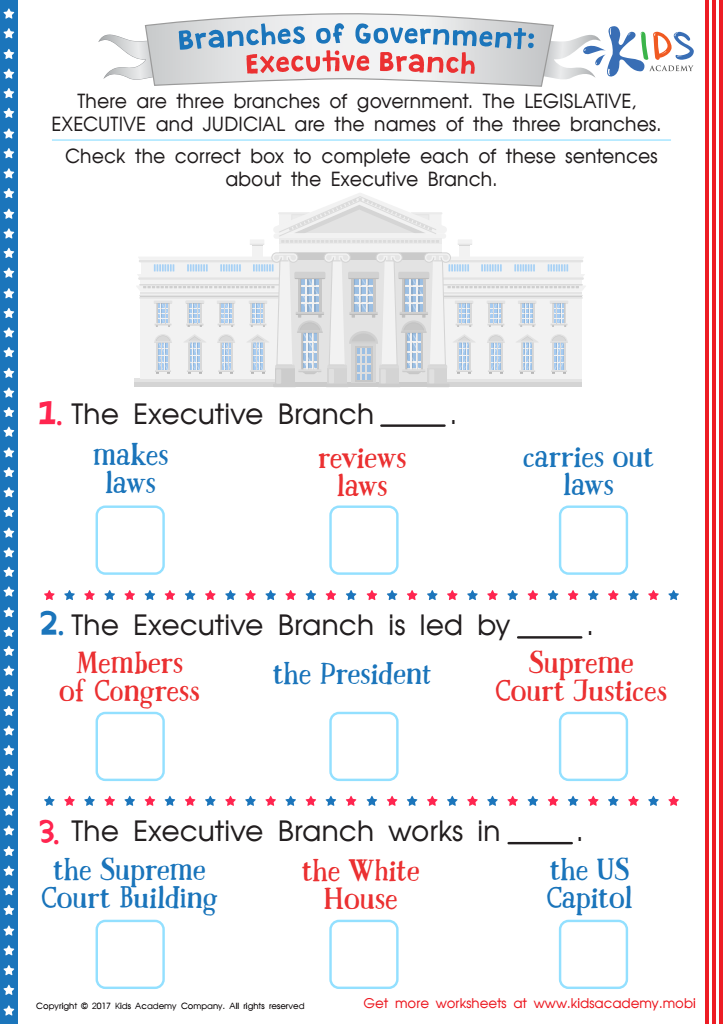
Branches of the Government: Executive Branch Printable
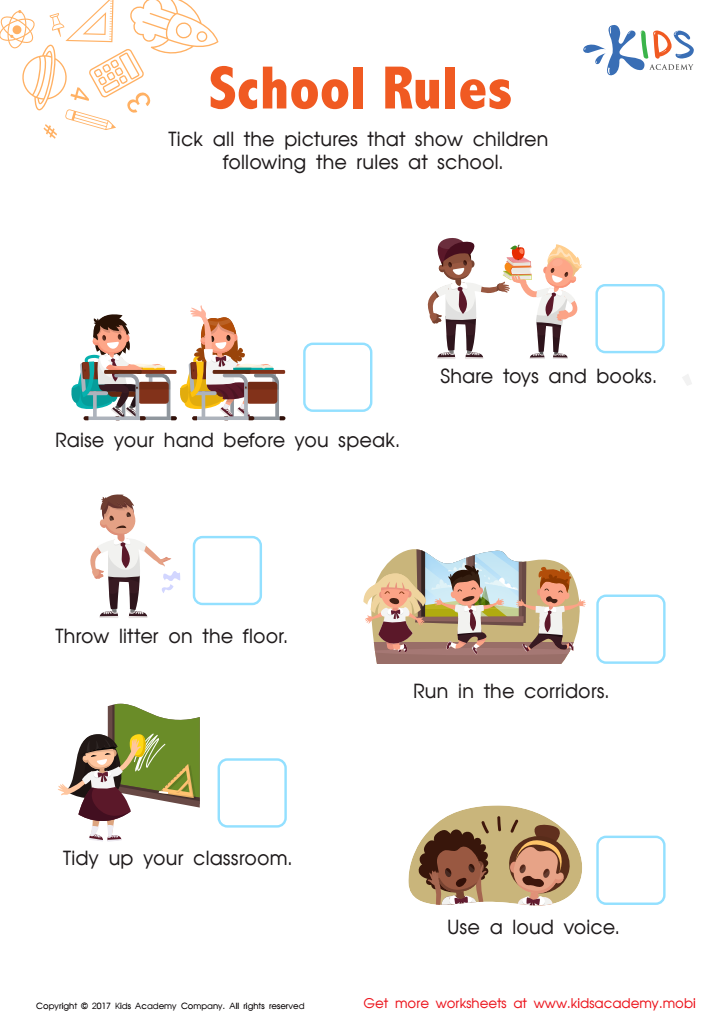
School Rules Worksheet


Teaching governance and civics to children aged 3-9 lays the foundation for informed, responsible citizenship as they grow. At this stage of development, children are remarkably impressionable and curious about the world around them. Educating them about governance nurtures critical thinking skills, encouraging them to ask questions about fairness, rules, and the roles of leaders in their communities.
By instilling values of respect, cooperation, and empathy early on, parents and teachers can empower children to understand the importance of community. Engaging them in discussions about rules—simple ones, like those established in classrooms or homes—helps children grasp concepts of justice and cooperation while fostering a sense of belonging.
Moreover, including civics in early education promotes self-worth and personal agency. Children learn that their voices matter and that they can contribute positively to society. Interaction through group play, community service, and role-playing exercises can further enhance their comprehension of civic responsibilities.
As these young minds develop, the principles of governance and civics can become integral to their identities, helping them evolve into active, caring citizens who understand the importance of participation, equity, and the impact of collective choices in their communities.