Elementary Phonics Worksheets for Ages 4-7 - Page 2
30 filtered results
-
From - To
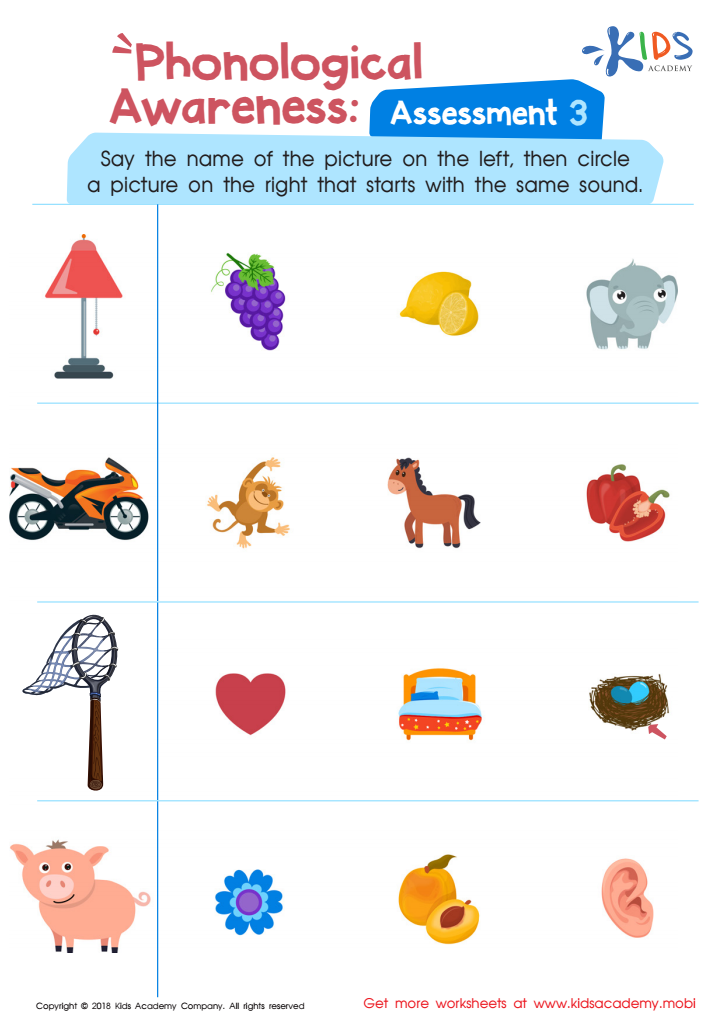
Phonological Awareness: Assessment 3 Worksheet
 Assign to My Students
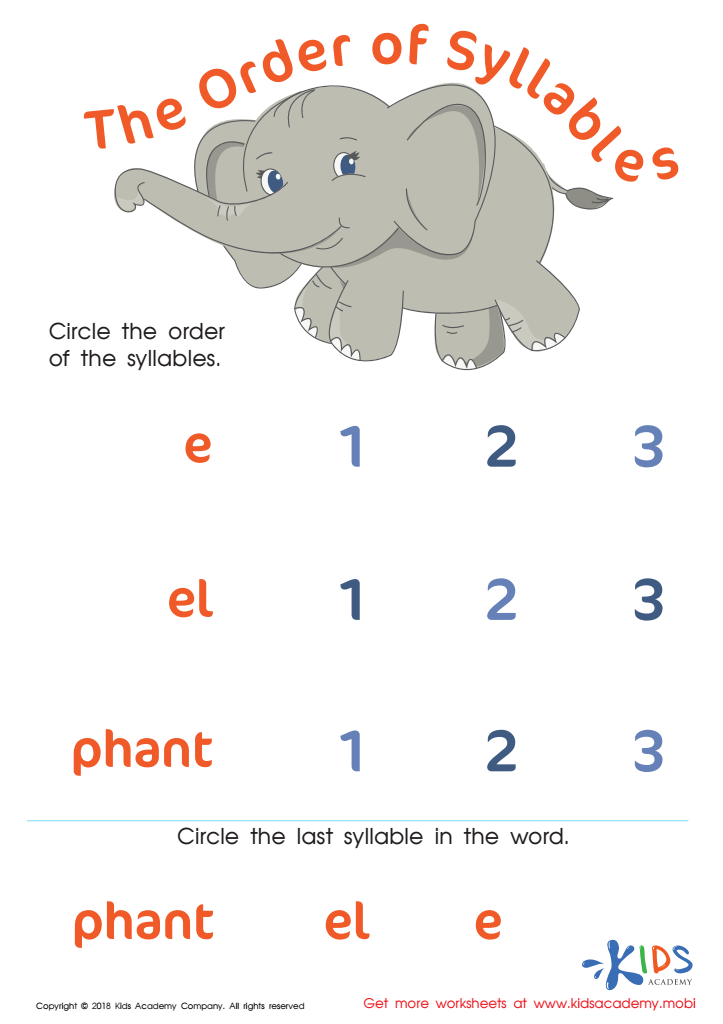
The Order of Syllables Worksheet
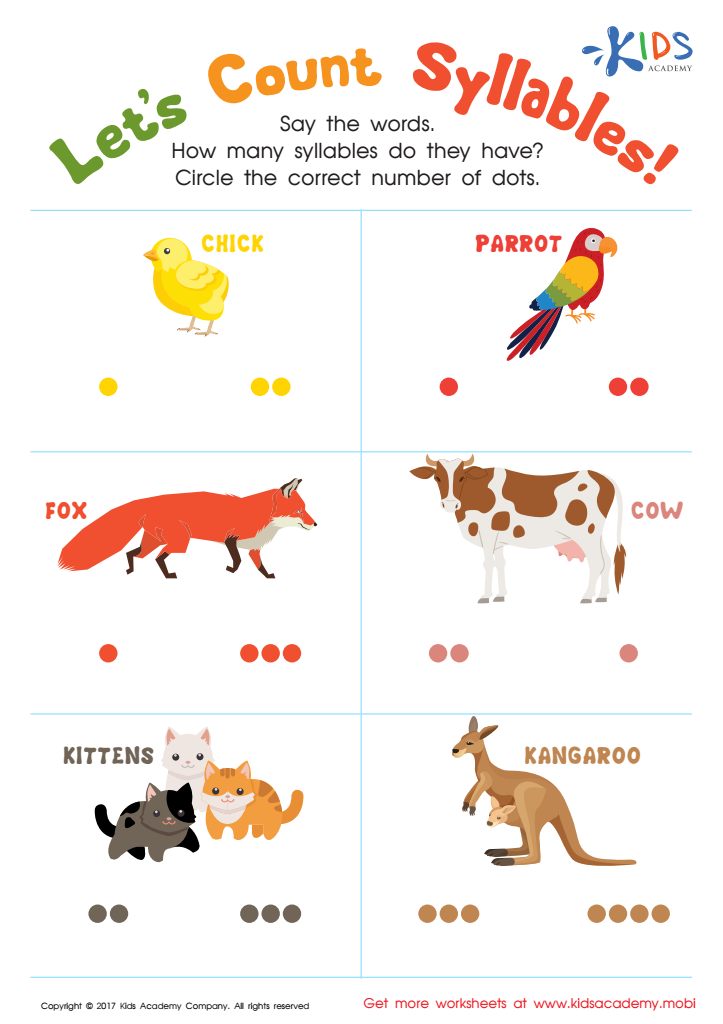
Lets Count Syllables Worksheet
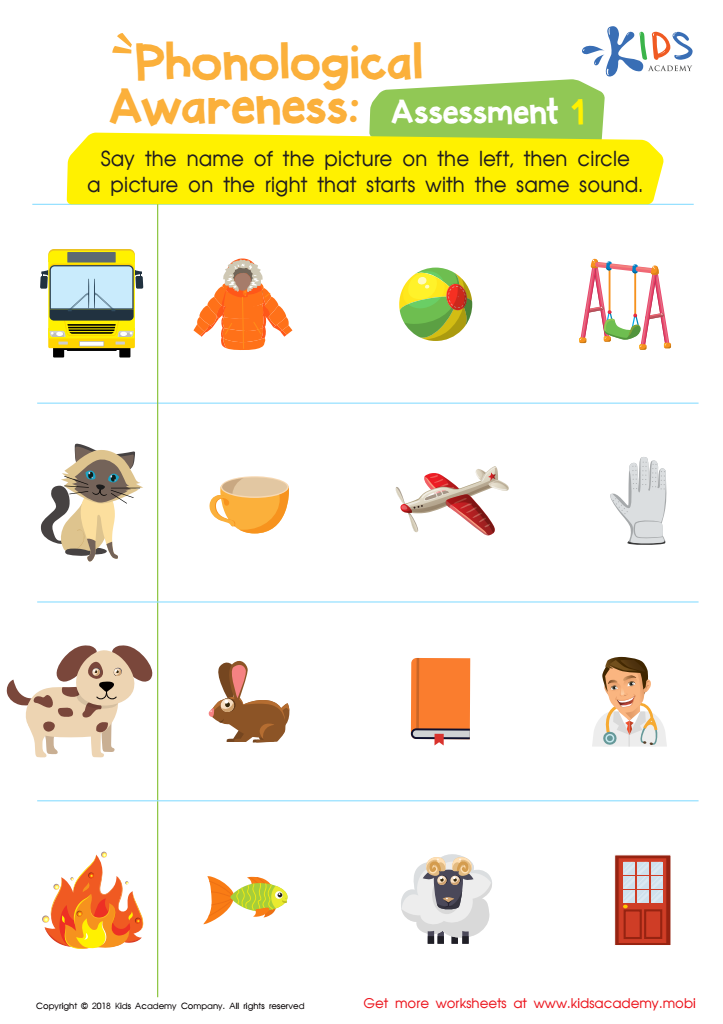
Phonological Awareness: Assessment 1 Worksheet
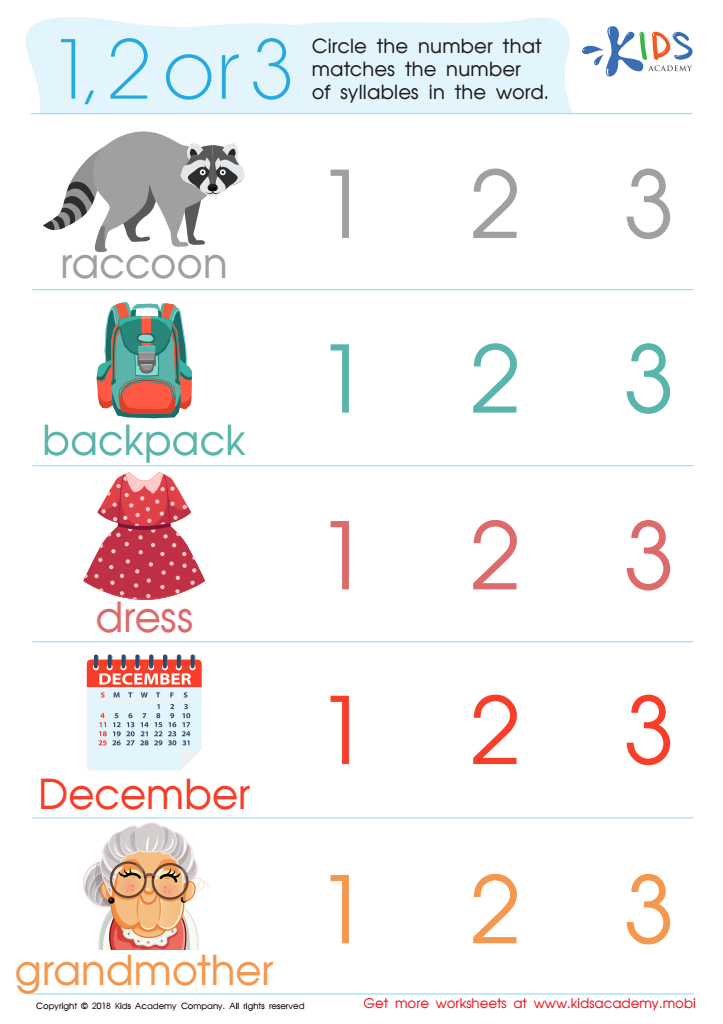
1, 2 or 3? Worksheet
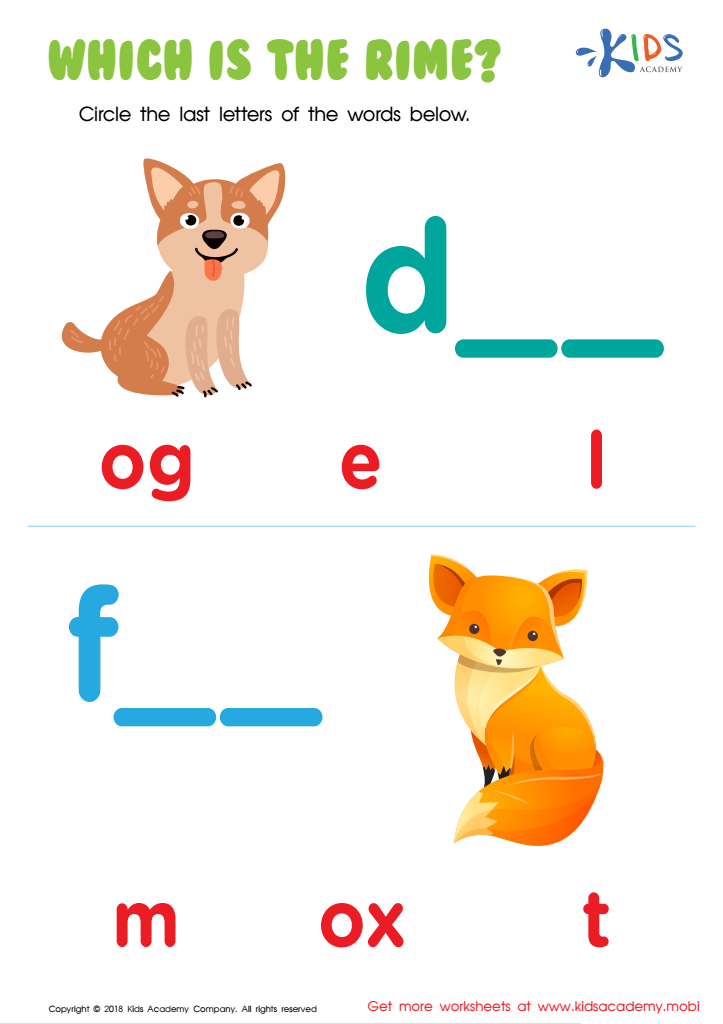
Which Is the Rime? Worksheet




Elementary phonics is crucial for young children, ages 4-7, as it lays the foundation for reading and writing skills. This period is a pivotal developmental stage where children become aware of phonemes—the sounds associated with letters or groups of letters. By understanding these connections, children can decode words, recognize spelling patterns, and develop a love for reading.
Parents and teachers should care about phonics because research shows that proficient phonics instruction significantly enhances literacy outcomes. Children who are strong in phonics demonstrate improved reading fluency and comprehension, which leads to greater academic success throughout their schooling. Additionally, early phonetic skills contribute to enhanced vocabulary and language development, enriching a child’s ability to communicate effectively.
Moreover, teaching phonics promotes self-confidence in young learners. As they grasp the mechanics of reading, they feel empowered to tackle new texts independently. This confidence can foster a lifelong appreciation for literature and learning.
In today’s digital age, where strong literacy skills are essential for navigating information and communication, prioritizing phonics instruction is vital. Parents and teachers together can ensure that children build a strong literacy foundation, ultimately preparing them for future learning and success in life.







