Sorting Worksheets for Ages 4-8 - Page 2
27 filtered results
-
From - To
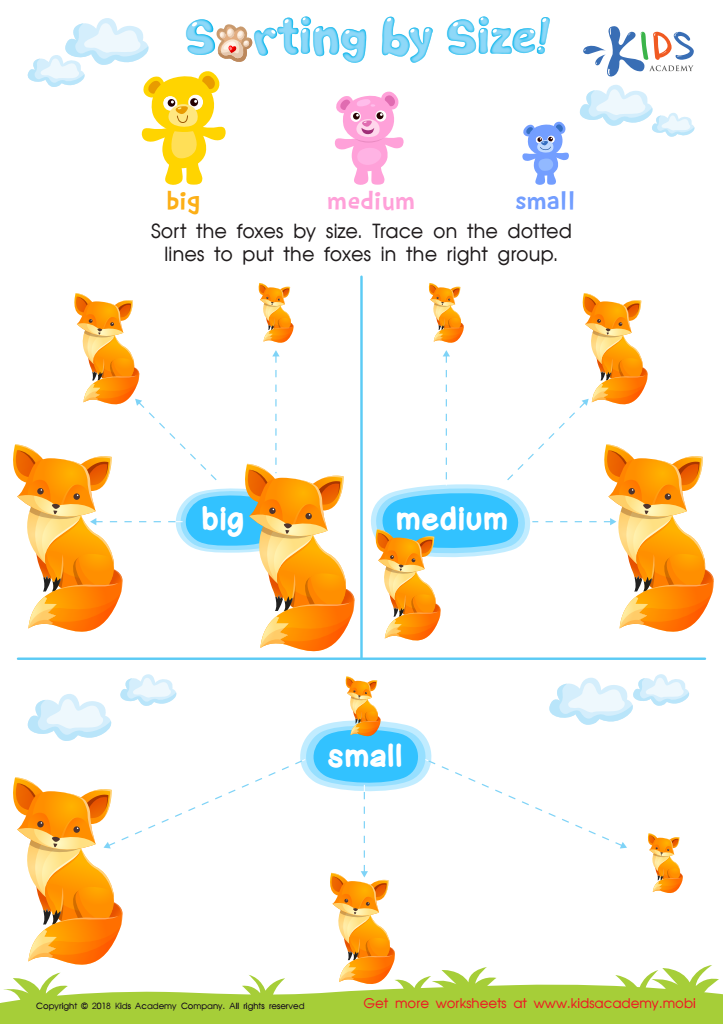
Sorting by Size Worksheet
 Assign to My Students
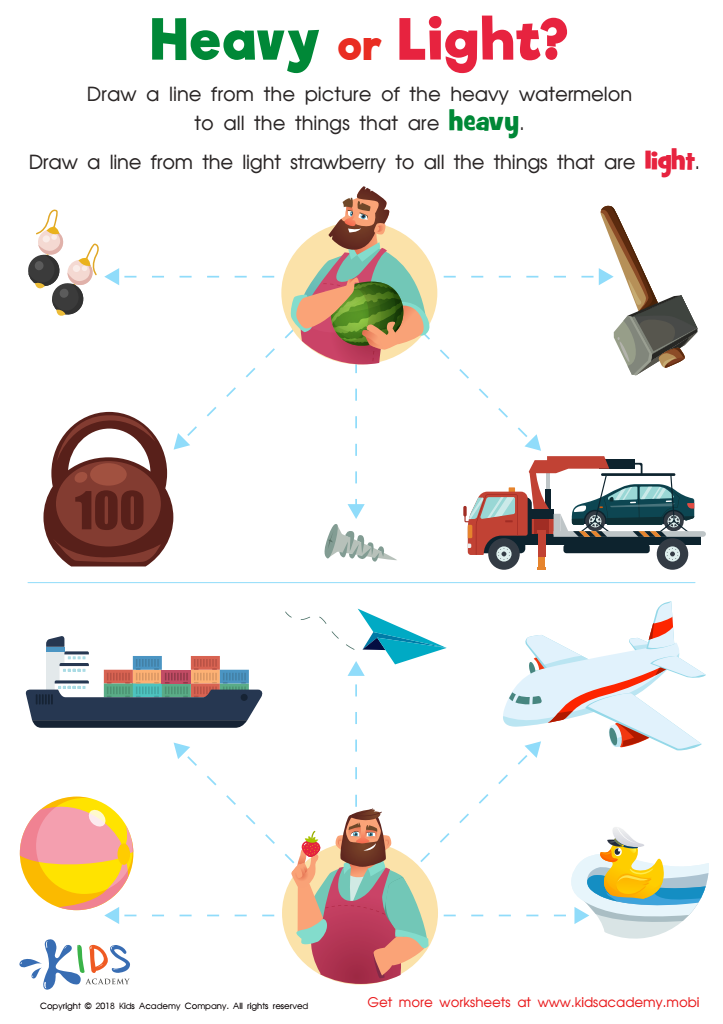
Heavy or Light? Worksheet
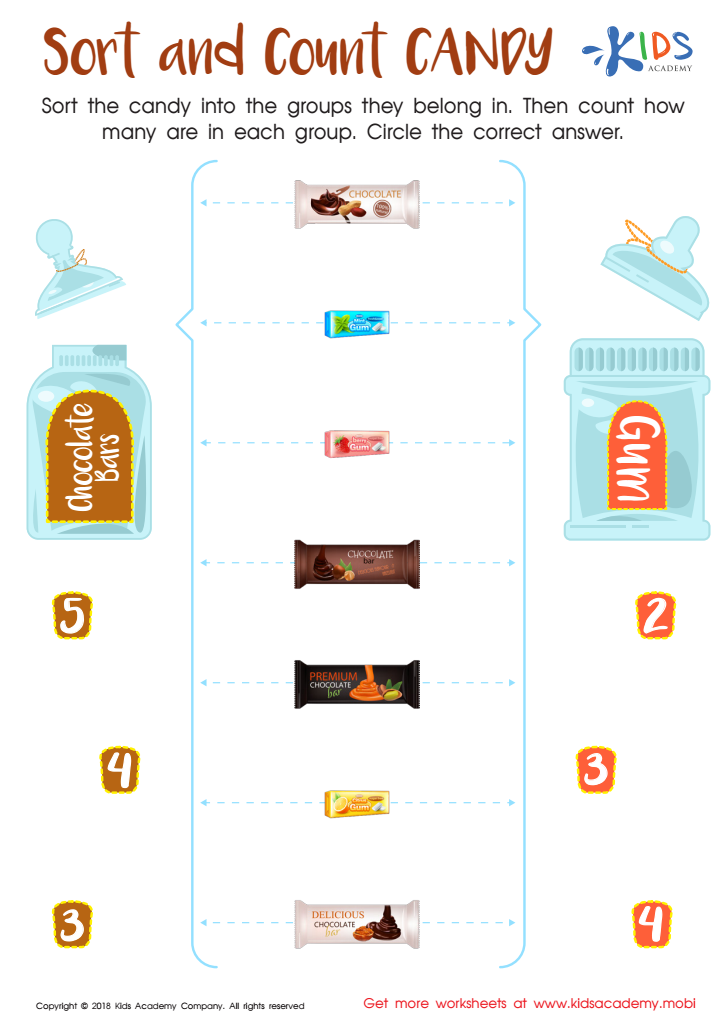
Sort and Count Candy Worksheet








Sorting is a foundational cognitive skill critical for children aged 4-8, laying the groundwork for more complex concepts and learning. By engaging in sorting activities, children enhance their ability to categorize and organize information, fostering logical thinking and problem-solving skills. This practice supports the development of essential mathematical concepts, as sorting is closely related to understanding patterns, shapes, and quantities.
Moreover, sorting sharpens a child’s observational skills as they learn to identify similarities and differences, enabling them to make connections in various contexts. For teachers and parents, promoting sorting activities can also nurture a child's language and communication abilities, as they describe categories and articulate their reasoning.
Additionally, sorting activities encourage fine motor skills development through hands-on manipulation of objects. When children participate in sorting, they gain confidence and independence, which fosters a sense of accomplishment.
In a social context, sorting can facilitate collaboration and teamwork skills when children work together, enhancing their ability to communicate and negotiate. Therefore, teachers and parents should prioritize sorting tasks to enrich children's learning experiences, ensure cognitive growth, and prepare them for future academic success. Overall, integrating sorting into early education offers numerous benefits that will support children's holistic development.








