Geometry Worksheets for Ages 4-9 - Page 9
198 filtered results
-
From - To
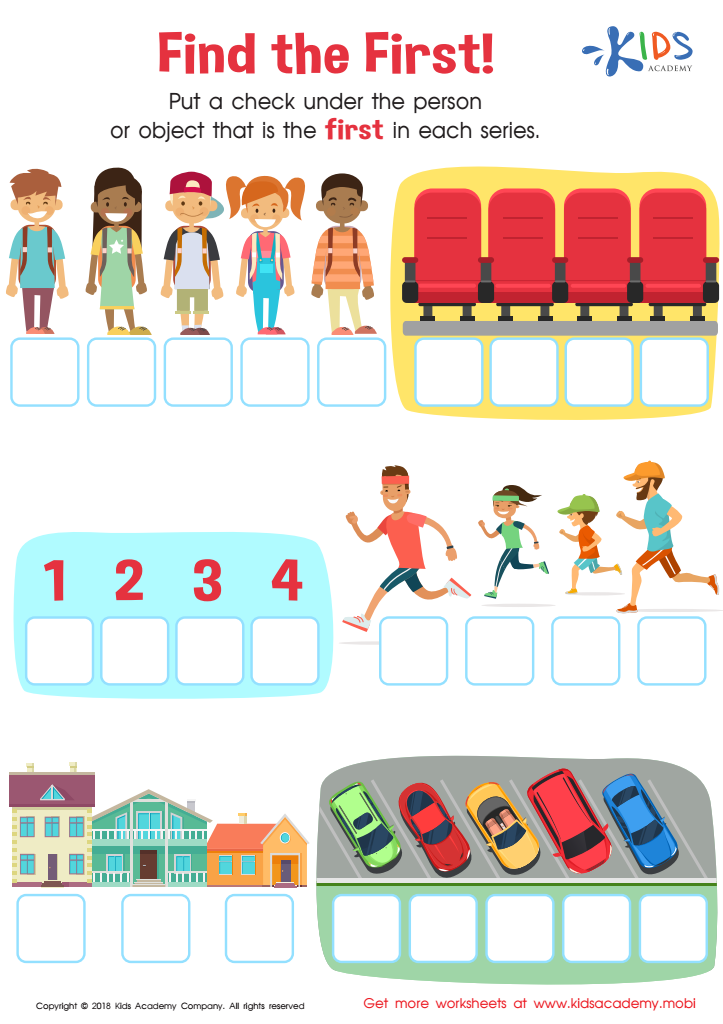
Find the First! Worksheet
 Assign to My Students











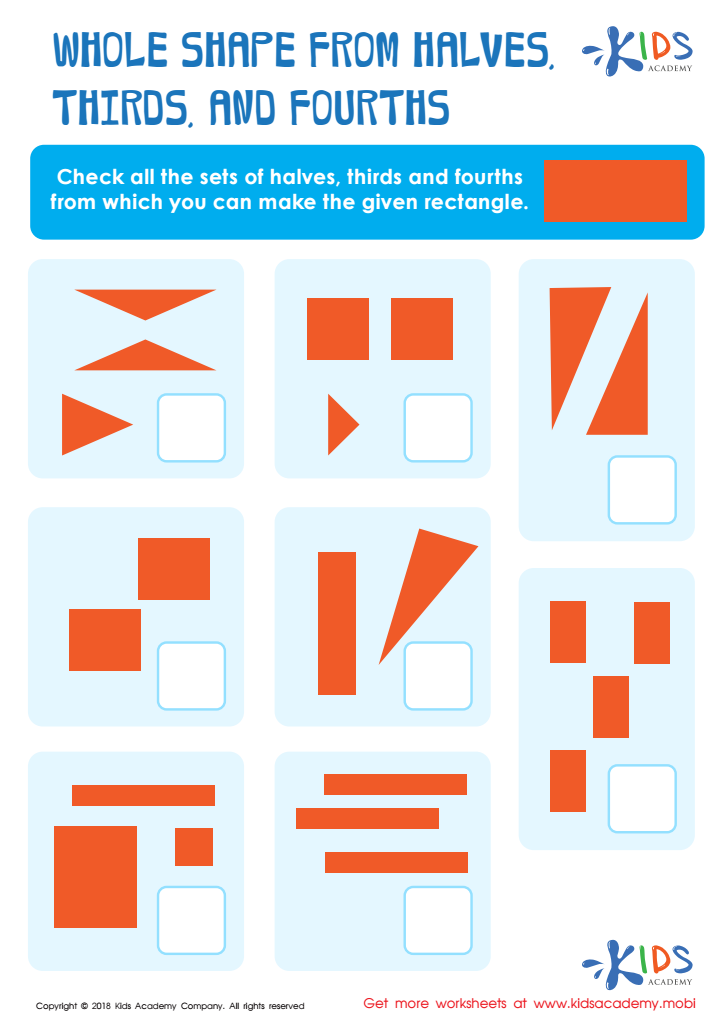
Whole Shape from Halves, Thirds and Fourths Worksheet
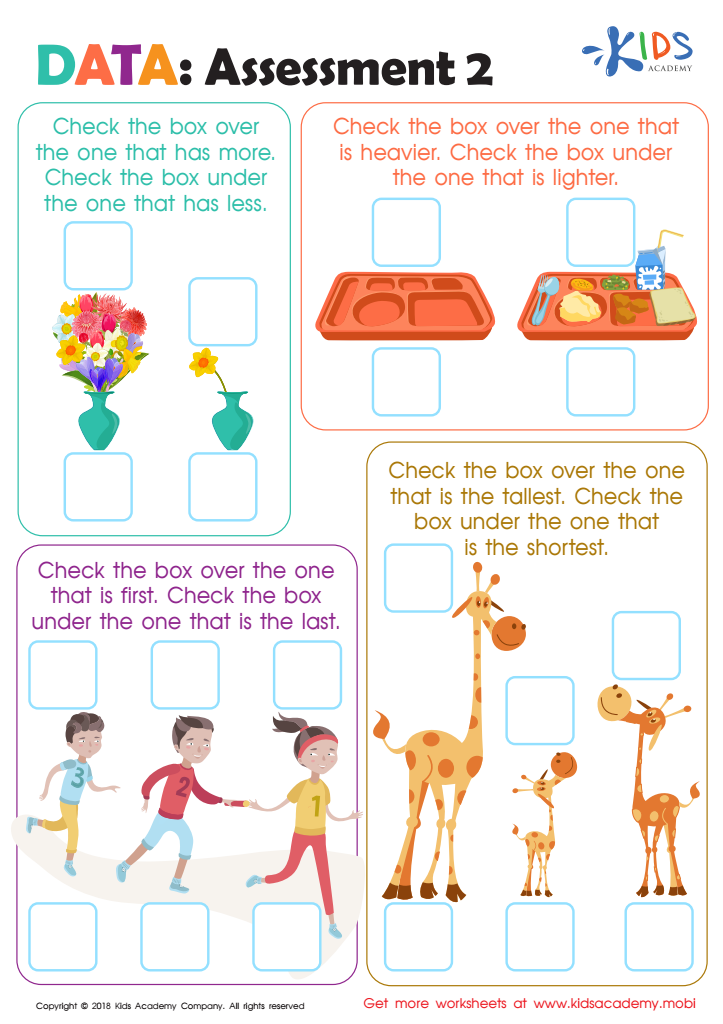
Data: Assessment 2 Worksheet
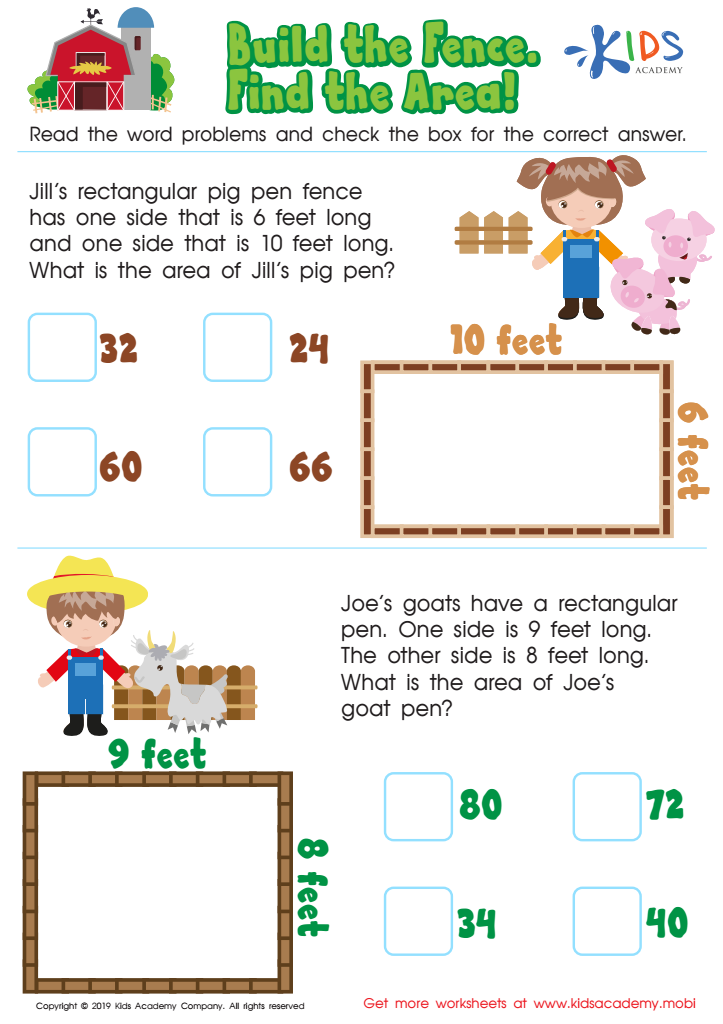
Build the Fence, Find the Area Worksheet
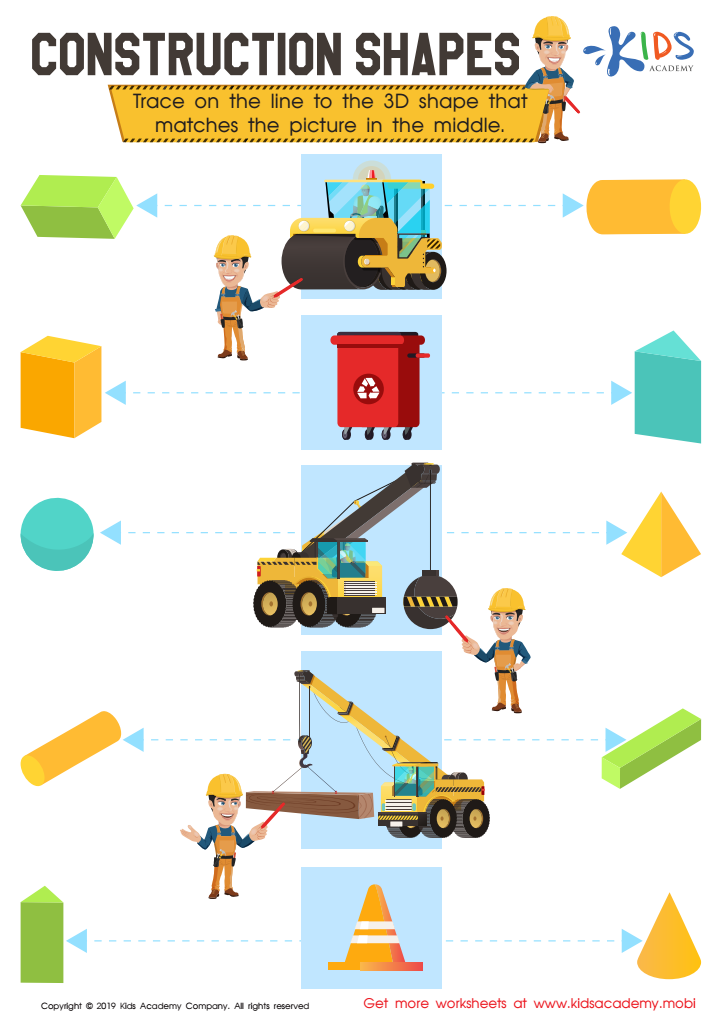
Construction Shapes Worksheet
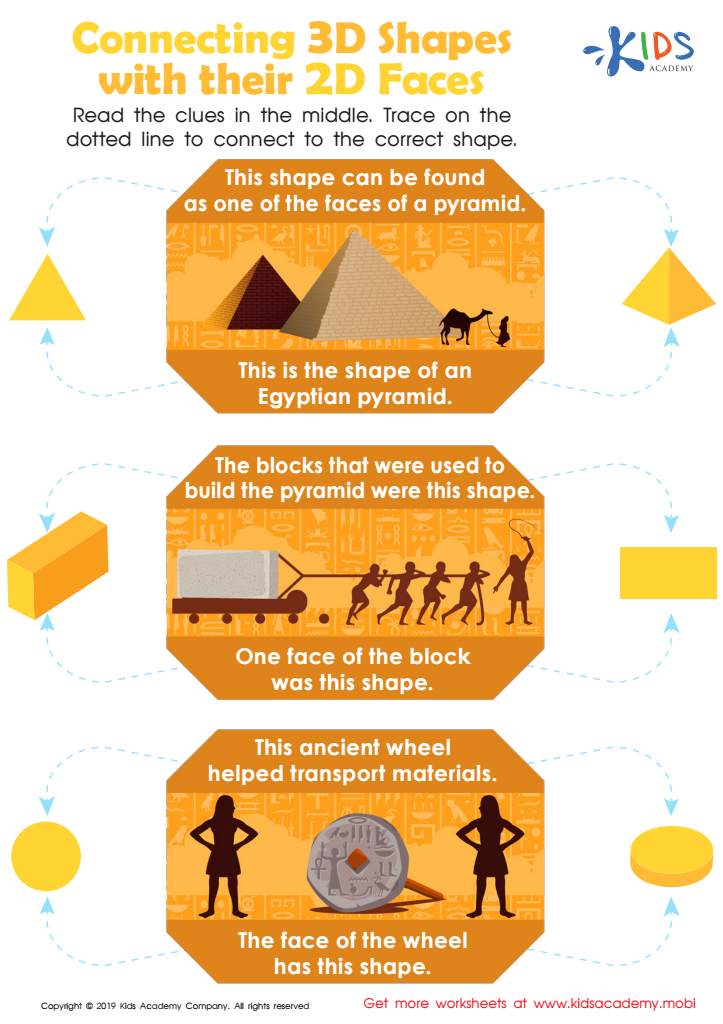
Connecting 3D Shapes with Their 2d Faces Worksheet








Geometry is a fundamental aspect of early childhood education, significantly impacting children's cognitive development and real-world understanding. For children aged 4 to 9, engaging with geometric concepts fosters critical thinking, spatial awareness, and problem-solving skills. At this age, children are naturally curious, and geometry allows them to explore shapes, sizes, and spatial relationships in tangible ways, enhancing their observational skills.
Moreover, geometry forms the foundation for more complex mathematical concepts later in life. By introducing basic shapes and spatial reasoning at an early age, parents and teachers set the stage for mathematical success in future education. This early exposure can also improve children's STEM (Science, Technology, Engineering, Mathematics) literacy, a crucial element in today’s technology-driven world.
Additionally, learning geometry encourages creativity and imagination. Through activities like building with blocks, drawing, or engaging in arts and crafts, children express themselves while grasping spatial relationships and geometric properties. As they navigate their environment, they begin to make connections to everyday life, recognizing geometry in architecture, art, nature, and more.
Ultimately, supporting children's understanding of geometry nurtures their overall development, equipping them with essential skills for both academic and personal growth. Therefore, it is vital for parents and teachers to prioritize and promote geometric learning.








