Word Problems Worksheets for Ages 5-8 - Page 6
123 filtered results
-
From - To
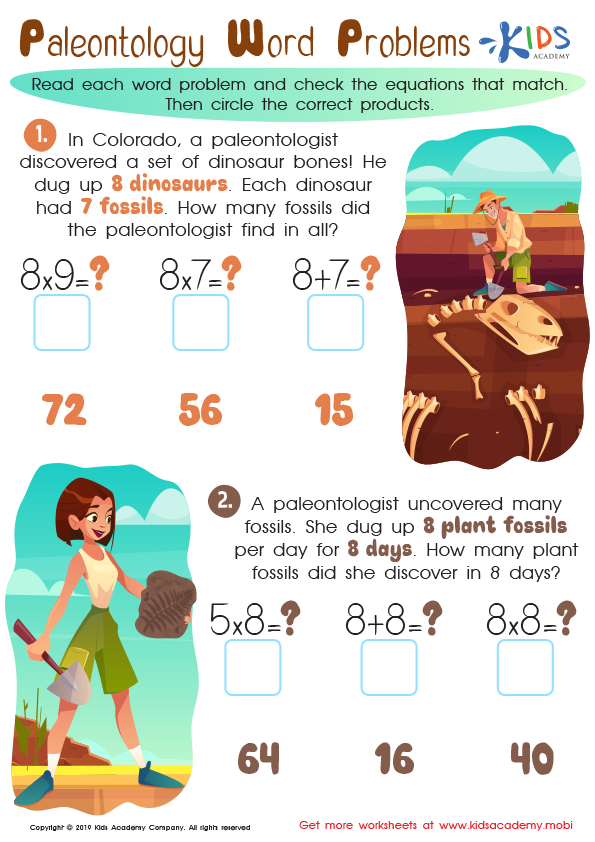
Archeology Word Problems Worksheet
 Assign to My Students
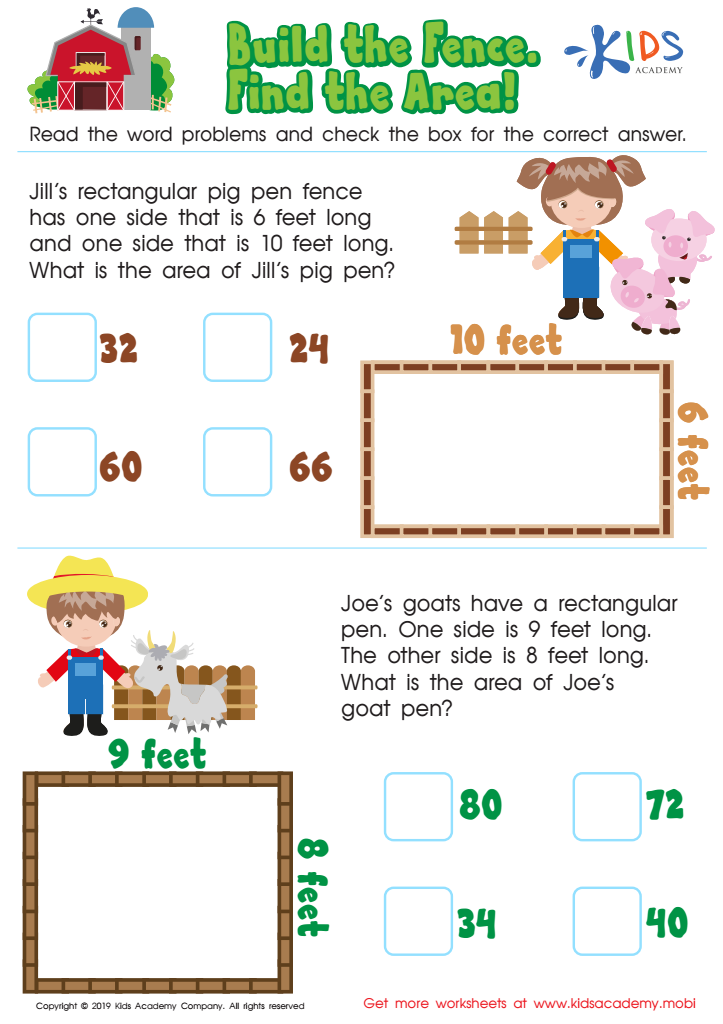
Build the Fence, Find the Area Worksheet
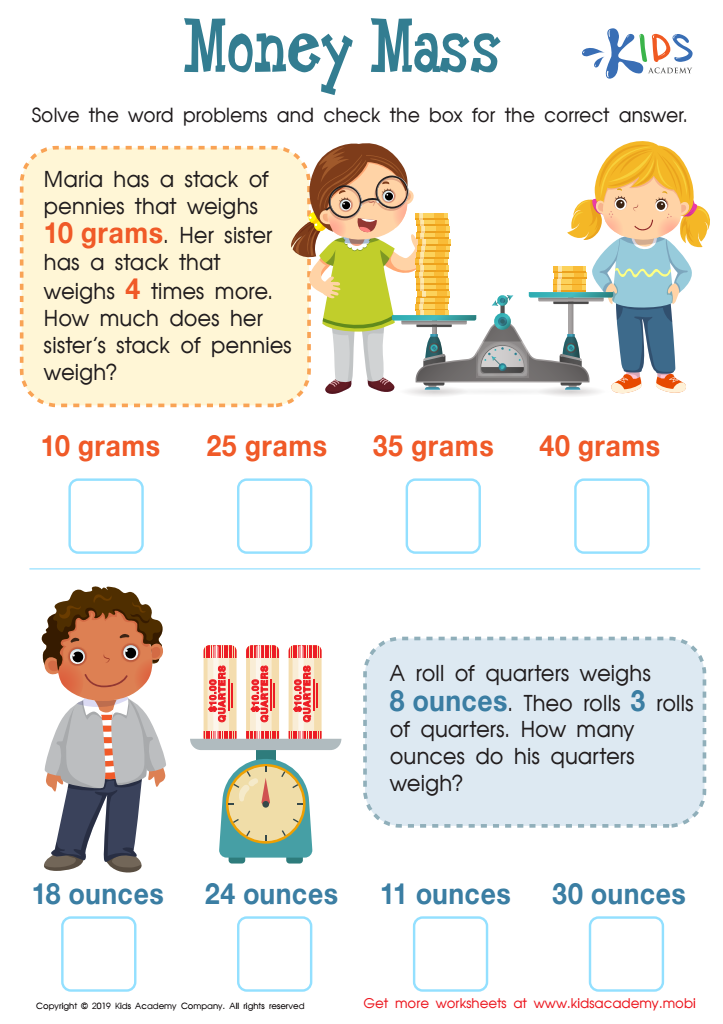
Money Mass Worksheet








Word problems play a critical role in the mathematical development of children aged 5-8, offering myriad benefits that parents and teachers should prioritize. Firstly, word problems enhance comprehension skills, requiring students to decode text while identifying relevant information. This process fosters critical thinking, as children learn to distinguish between essential and extraneous details, helping them develop analytical skills that are vital across subjects.
Moreover, tackling word problems cultivates problem-solving abilities. Children learn to apply mathematical concepts to real-world scenarios, bridging the gap between abstract numbers and tangible situations. This practical application builds confidence and reinforces the importance of math in daily life.
Furthermore, working on word problems encourages collaboration and communication. Young learners often discuss solutions with peers or adults, fostering teamwork and enhancing their ability to articulate their thought processes.
Additionally, incorporating word problems helps to maintain engagement and motivation by making math interesting and relatable. It encourages creativity, as children may visualize scenarios or think of multiple solutions.
Ultimately, by emphasizing word problems, parents and teachers are equipping children with essential skills that are foundational for their future academic success and everyday decision-making. Encouraging this practice ensures a holistic approach to early mathematical education.








