Middle Vowel Worksheets for Ages 5-9
4 filtered results
-
From - To
Unlock your child’s reading potential with our engaging Middle Vowel Worksheets designed specifically for ages 5-9! These thoughtfully-crafted worksheets help young learners master middle vowel sounds through fun activities and illustrations. Ideal for in-class learning or homeschool, our resources encourage phonetic awareness and word recognition essential for reading fluency. Each worksheet offers interactive exercises, including sound matching, fill-in-the-blank, and vowel identification tasks, making learning enjoyable and effective. Foster a strong foundation in literacy as your child develops confidence with the middle vowels A, E, I, O, and U. Explore our collection and start building essential reading skills today!
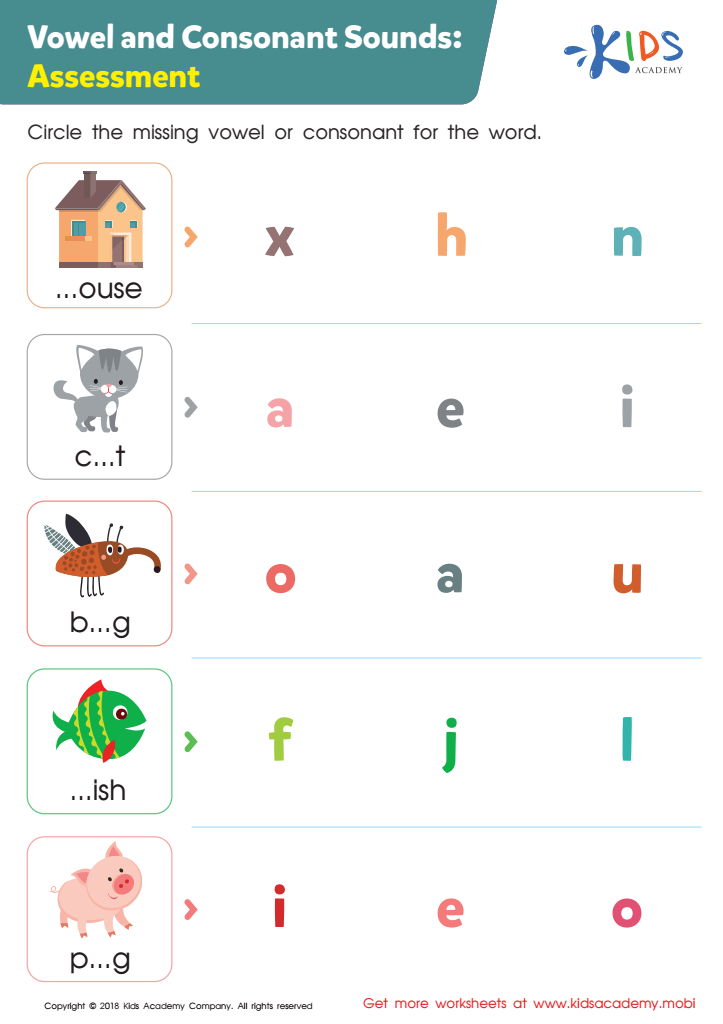
Vowel and Consonant Sounds: Assessment Worksheet
 Assign to My Students
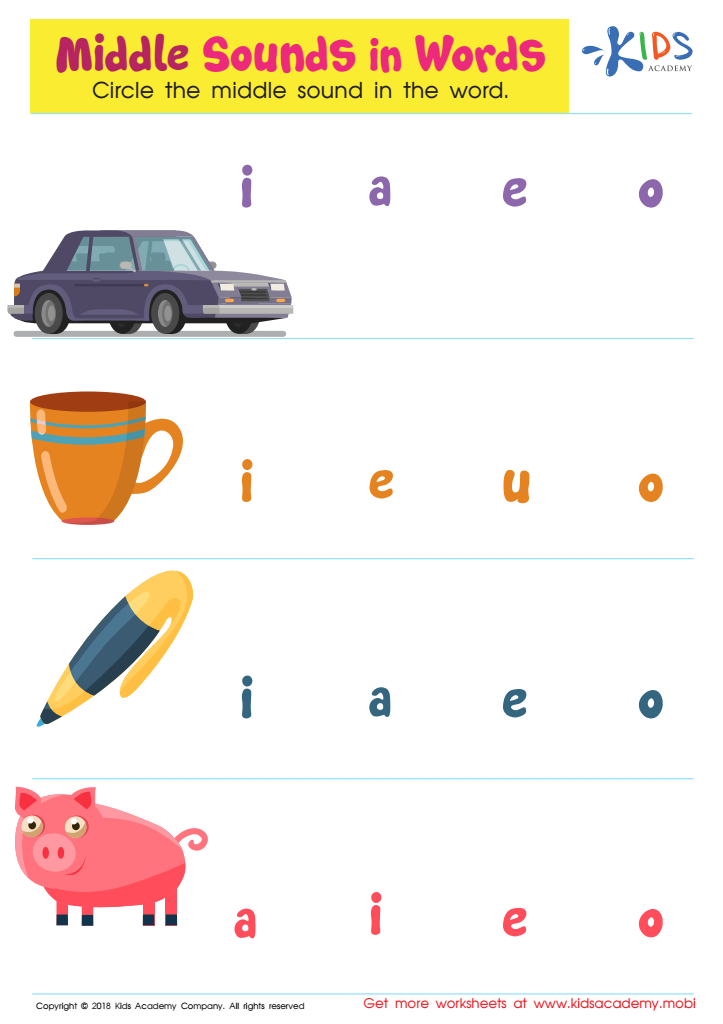
Middle Sounds in Words Worksheet
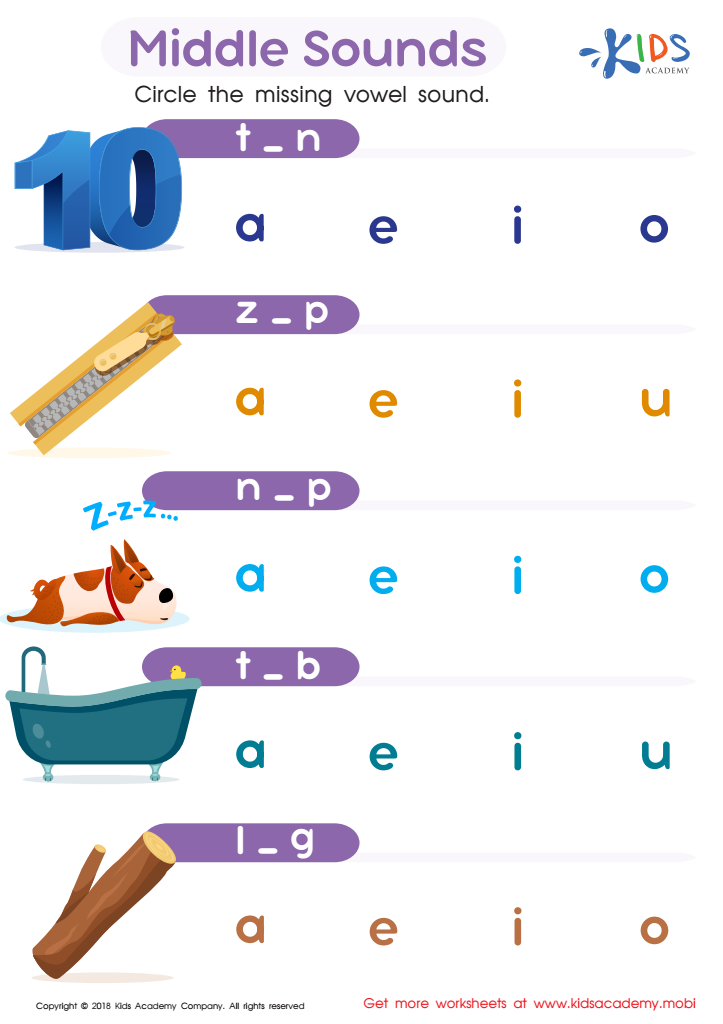
Middle Sounds Worksheet
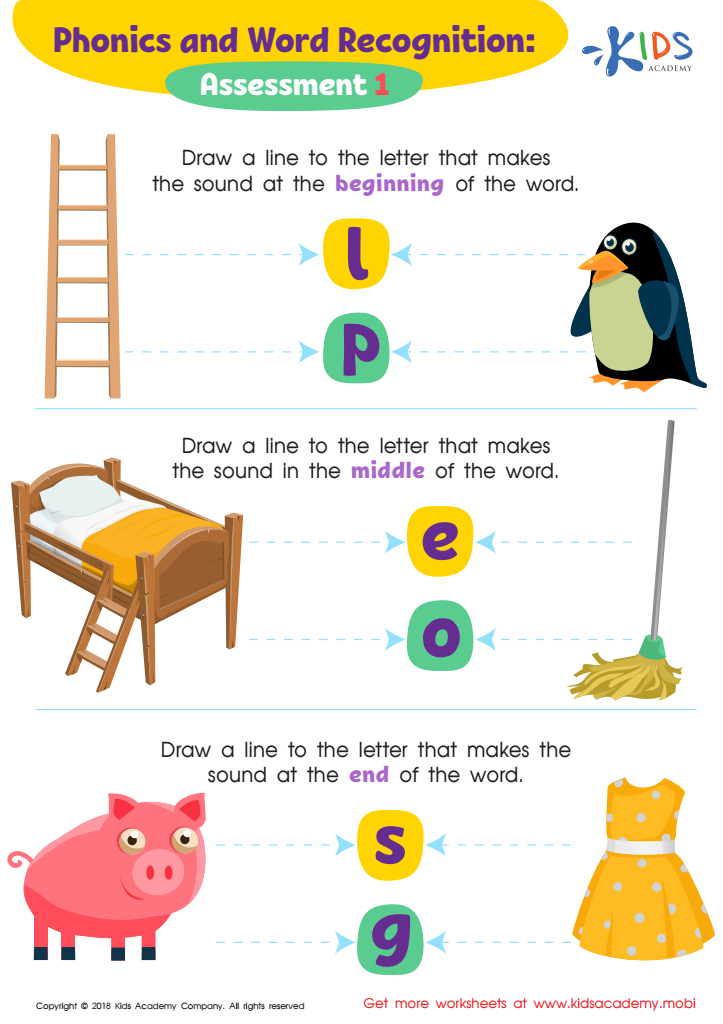
Phonics and Word Recognition: Assessment 1 ELA Worksheet



Middle vowel sounds are crucial in early literacy development, especially for children aged 5-9. Understanding middle vowels enhances phonemic awareness, a foundational skill that helps children recognize and manipulate sounds within words. This awareness is essential for developing reading and spelling capabilities, as the correct identification of middle vowels can significantly impact a child's ability to decode unfamiliar words and improve their overall vocabulary.
For teachers and parents, focusing on middle vowels can foster a more engaging learning experience. Activities centered around middle vowels, such as rhyming games and sound exercises, can make phonics fun and effective. When children grasp middle vowel sounds, they gain greater confidence in their reading and writing skills, leading to a more positive attitude towards literacy.
Additionally, a solid grasp of middle vowels helps reduce spelling difficulties, which can lower frustration levels in learning environments. Consequently, students become more motivated and willing to participate in reading activities. By prioritizing middle vowel instruction, parents and teachers foster literacy development that lays the groundwork for each child's academic success, enabling them to build critical thinking and comprehension skills that will benefit them throughout their educational journey.