Upper & Lowercase Letters Worksheets for Ages 5-9 - Page 3
50 filtered results
-
From - To
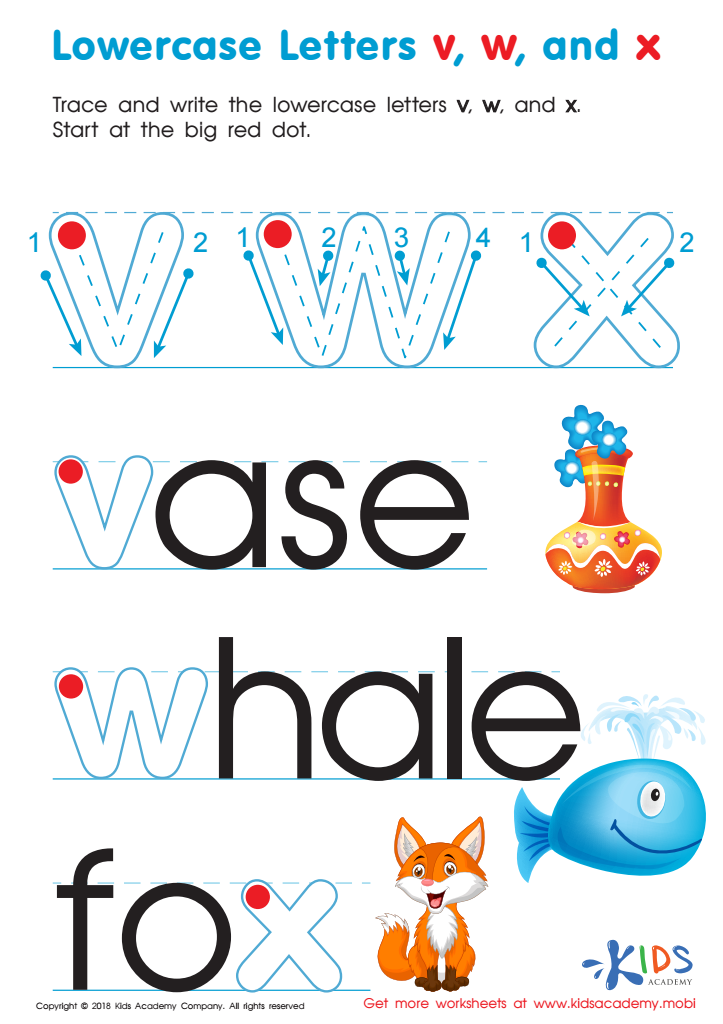
Lowercase Letters v w x Worksheet
 Assign to My Students

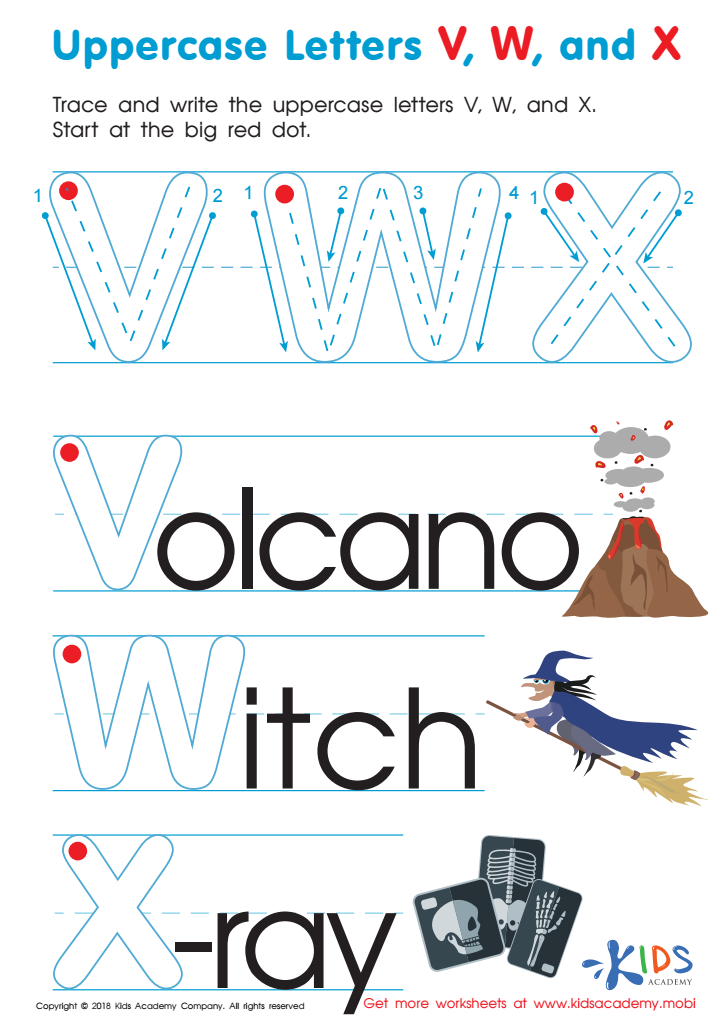
Uppercase Letters V, W, and X Worksheet






Understanding uppercase and lowercase letters is crucial for children ages 5-9, as this foundational skill impacts their reading, writing, and overall literacy development. Parents and teachers should care about this distinction because it plays a significant role in recognizing words and their meanings. Uppercase letters are used at the beginning of sentences and for proper nouns, while lowercase letters are essential for general text. Mastery of both types helps children to decode and understand text more effectively.
Moreover, knowledge of letter cases supports spelling and phonics skills, allowing children to grasp sound-letter associations that are vital for reading fluency. Practicing with both uppercase and lowercase letters enhances fine motor skills as children learn to write distinctly different forms of letters.
Additionally, this understanding fosters confidence in young learners, as they start to recognize their own names and other familiar words in both letter cases. As children engage with writing and reading, their cognitive and social skills can be enriched through activities centered around uppercase and lowercase letters. In summary, parents and teachers should prioritize this area of literacy to build a strong foundation for future academic success and foster a love for reading and learning.







