Chess Worksheets for Ages 6-9 - Page 2
86 filtered results
-
From - To
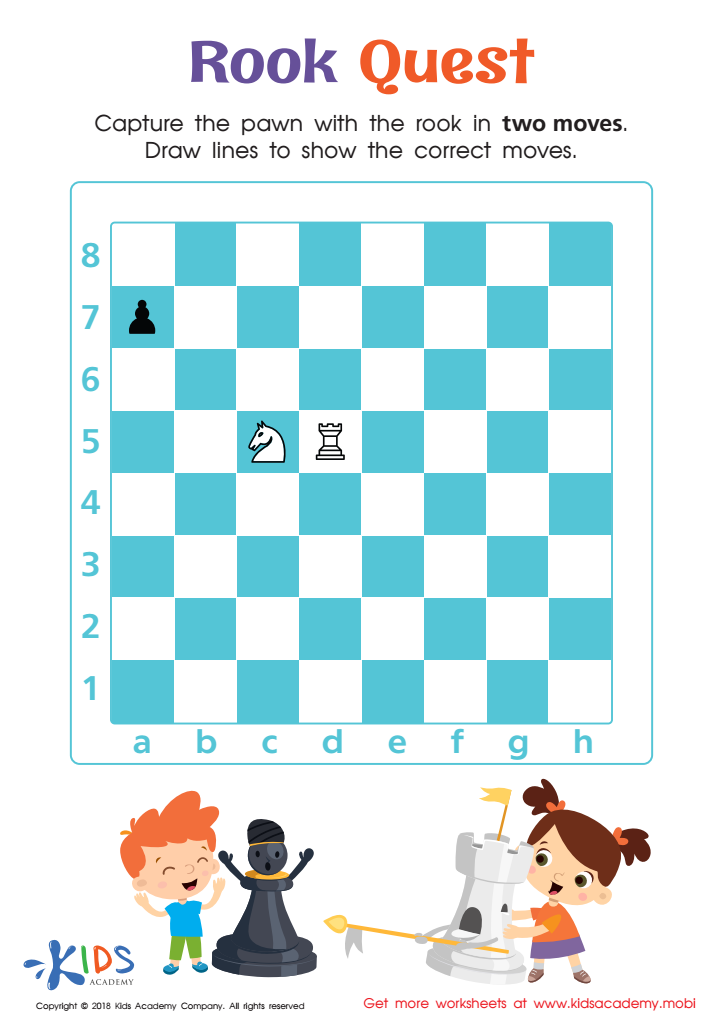
Rook Quest Worksheet
 Assign to My Students
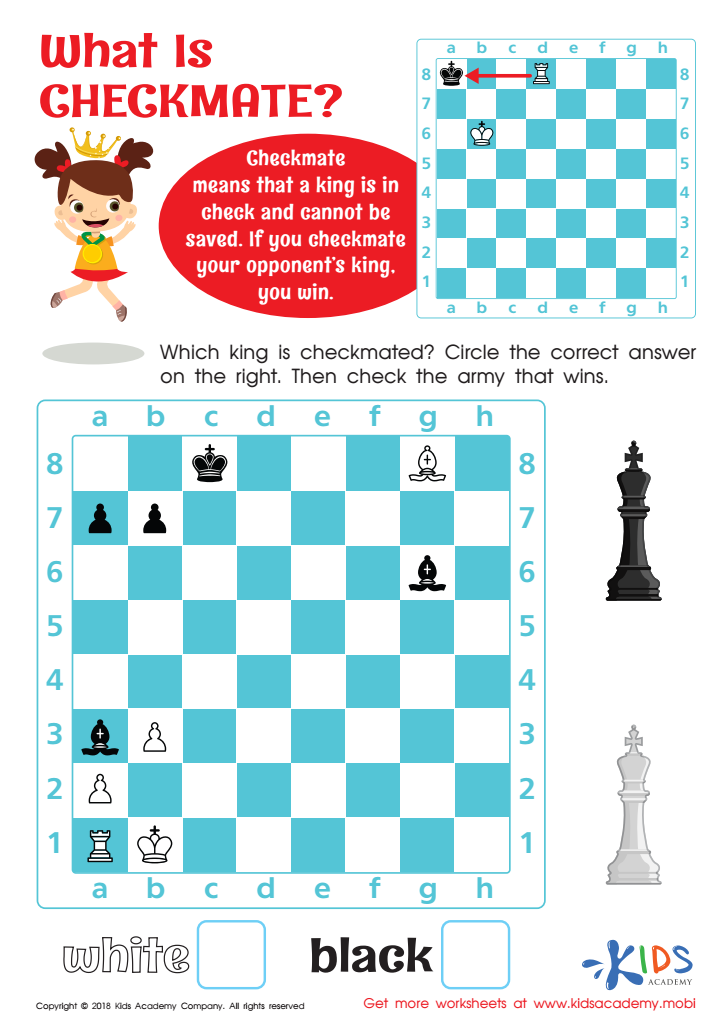
What is Checkmate? Worksheet
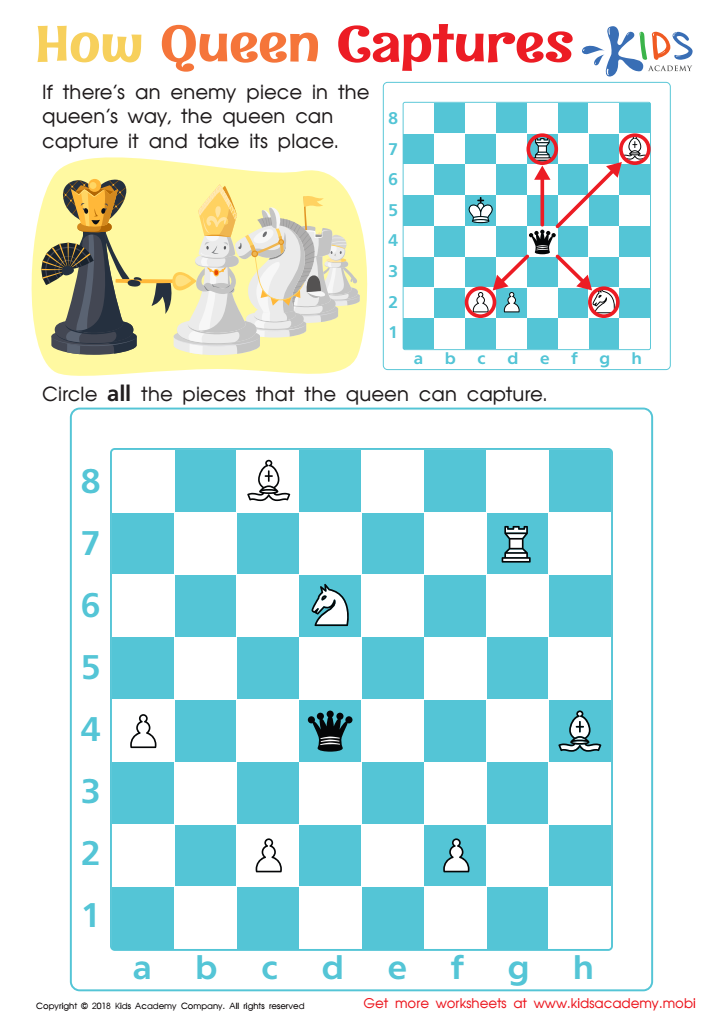
How Queen Captures Worksheet
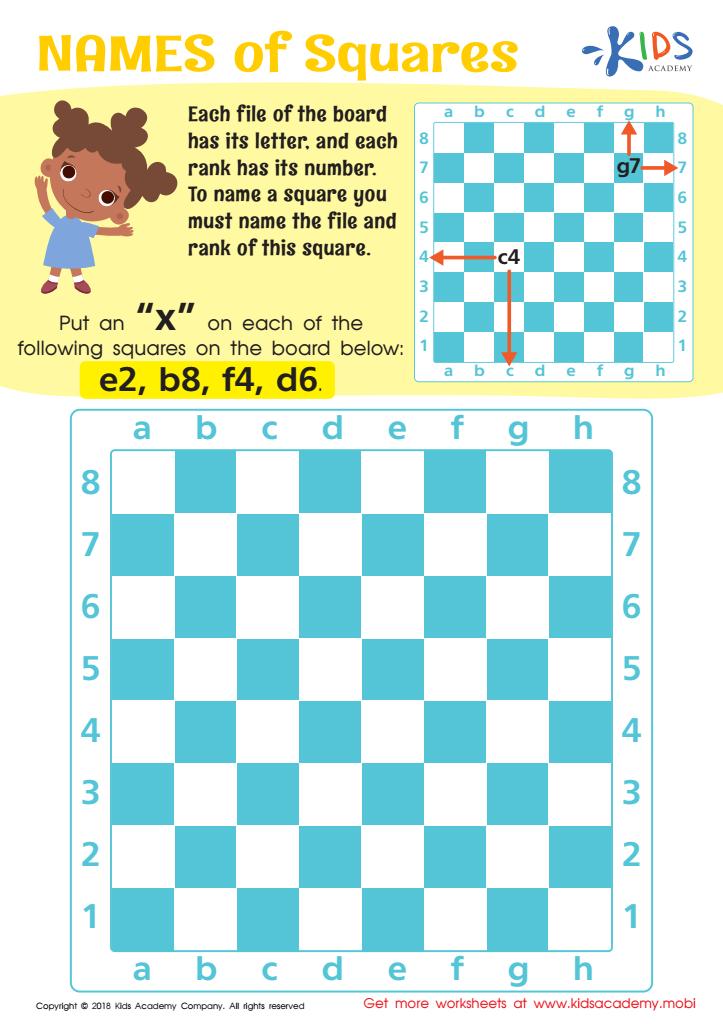
Names of Squares Worksheet
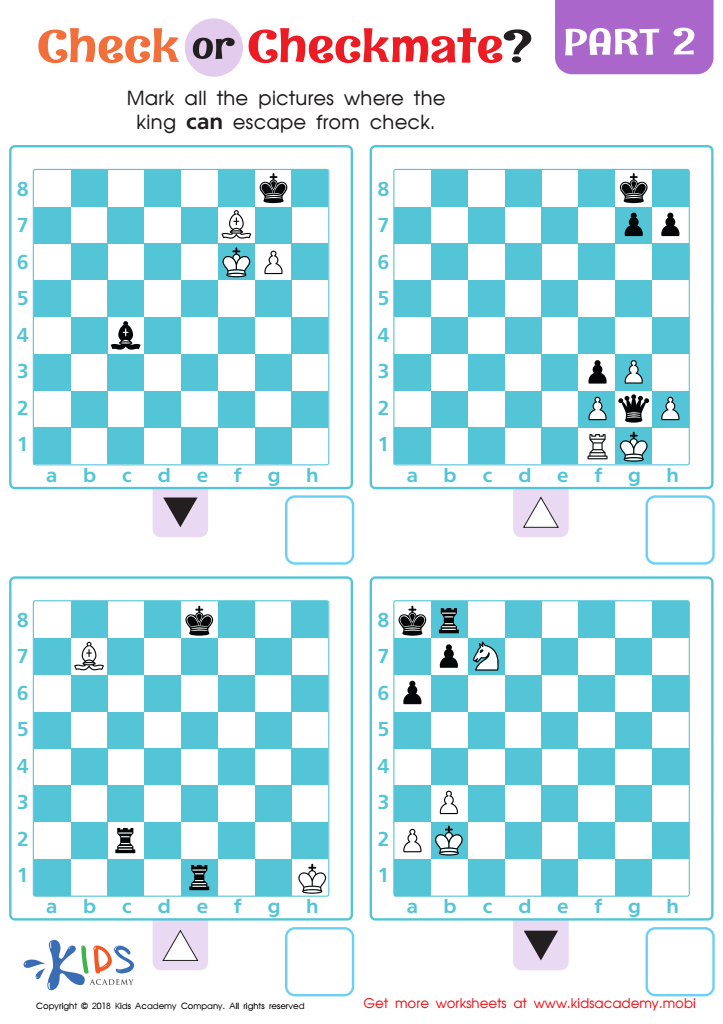
Check or Checkmate: Part 2 Worksheet
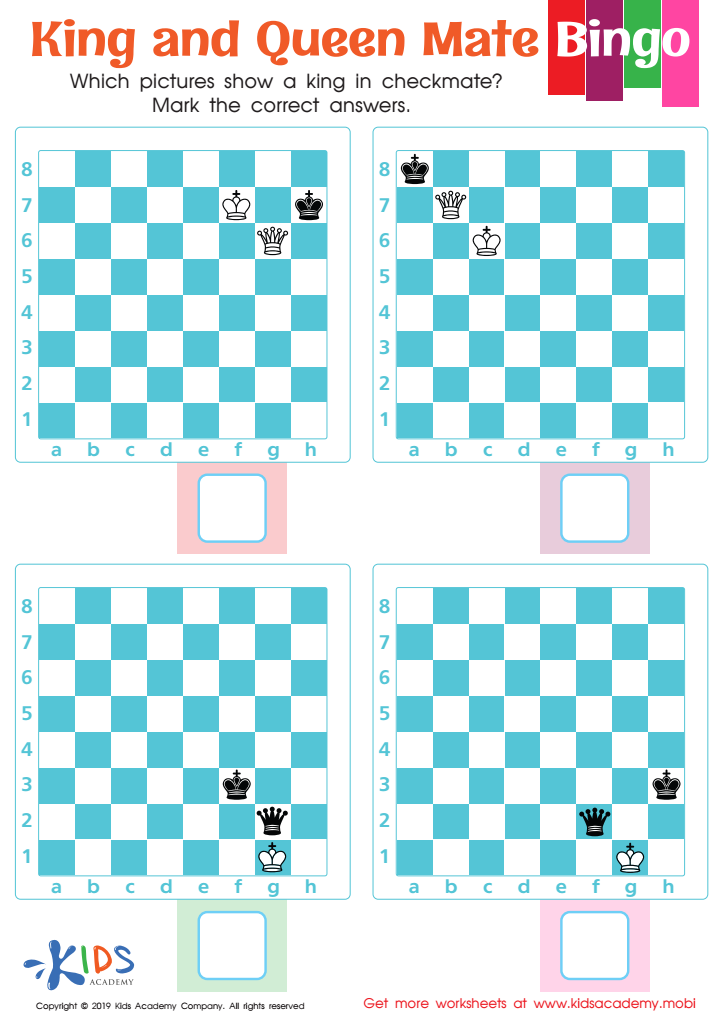
King and Queen Mate: Bingo Worksheet
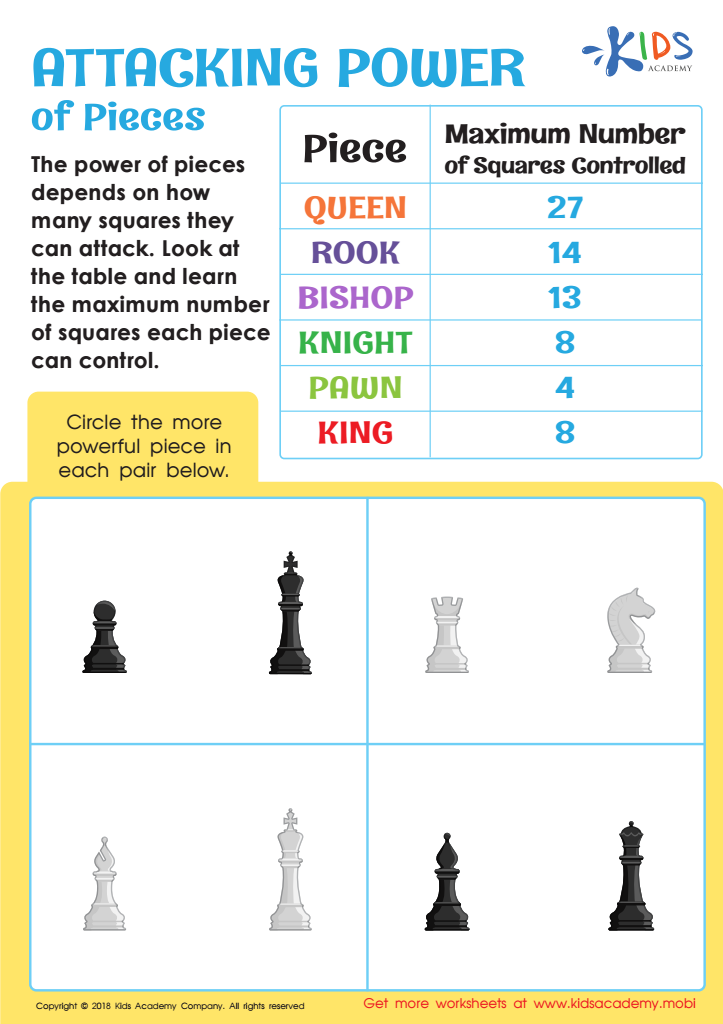
Attacking Power of Chess Pieces Worksheet
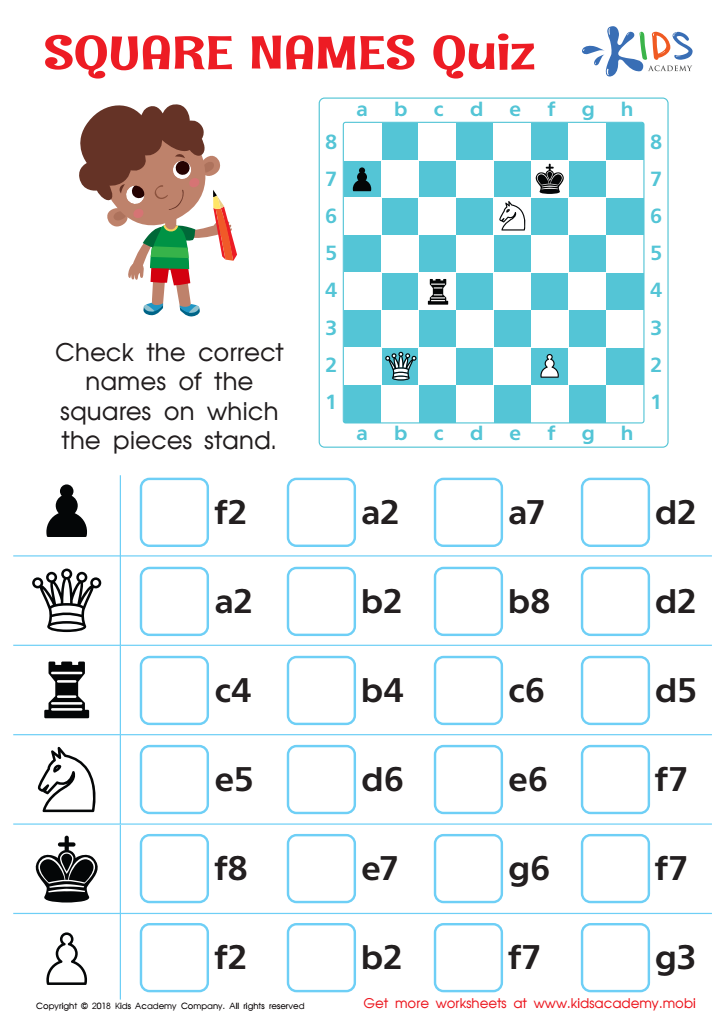
Square Names Quiz Worksheet
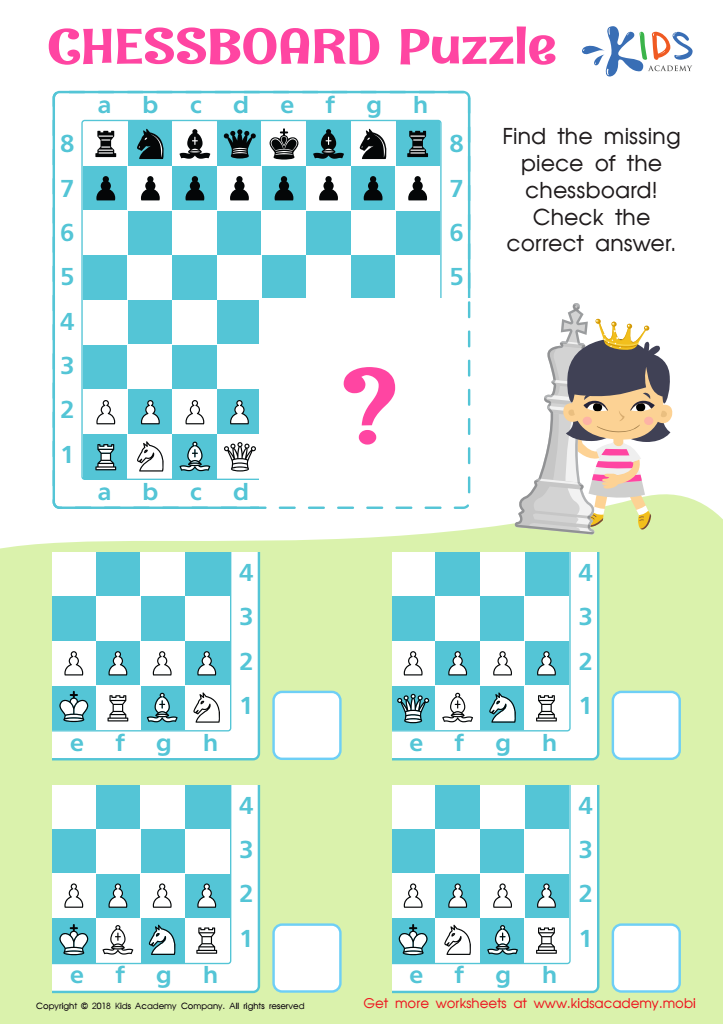
Chessboard Puzzle Worksheet
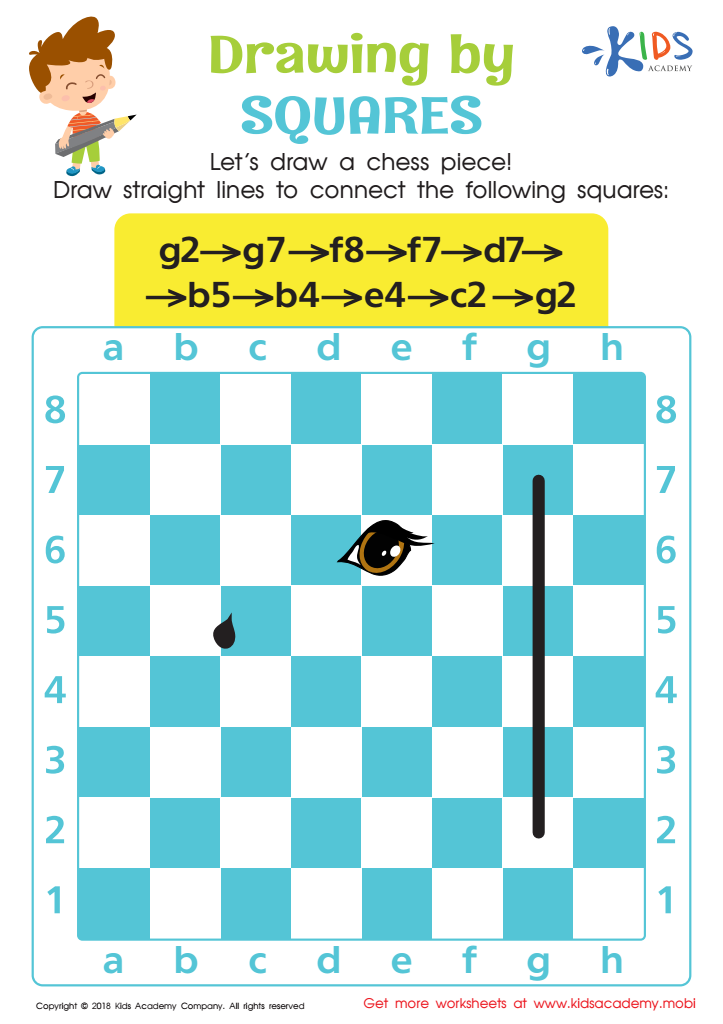
Drawing by Squares Worksheet
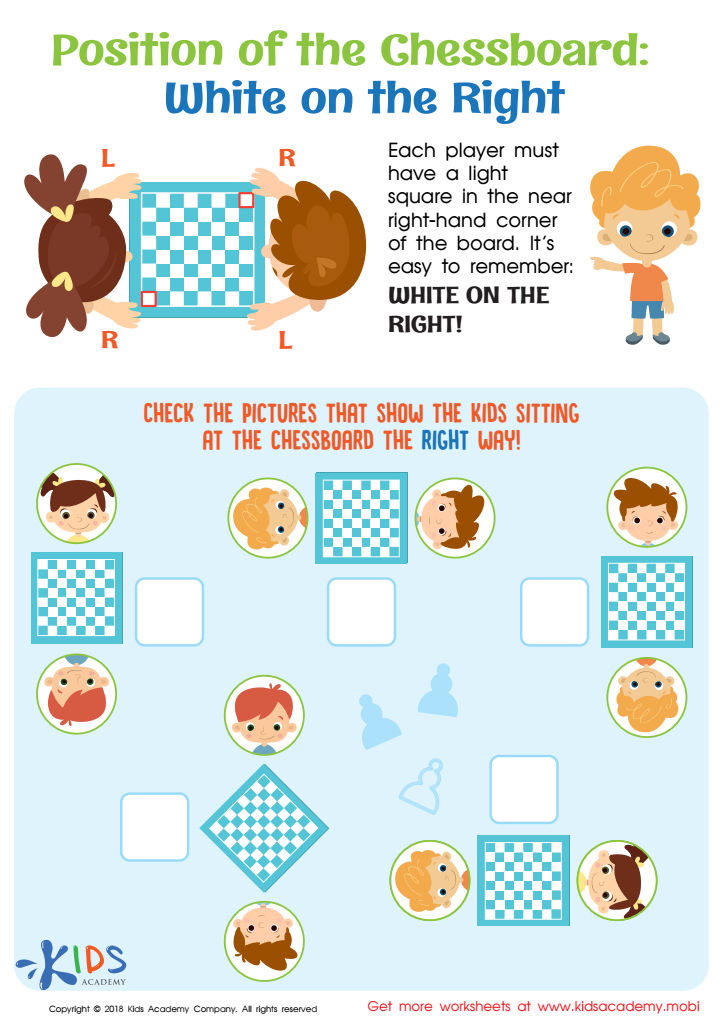
Position of the Chessboard: White on the Right Worksheet
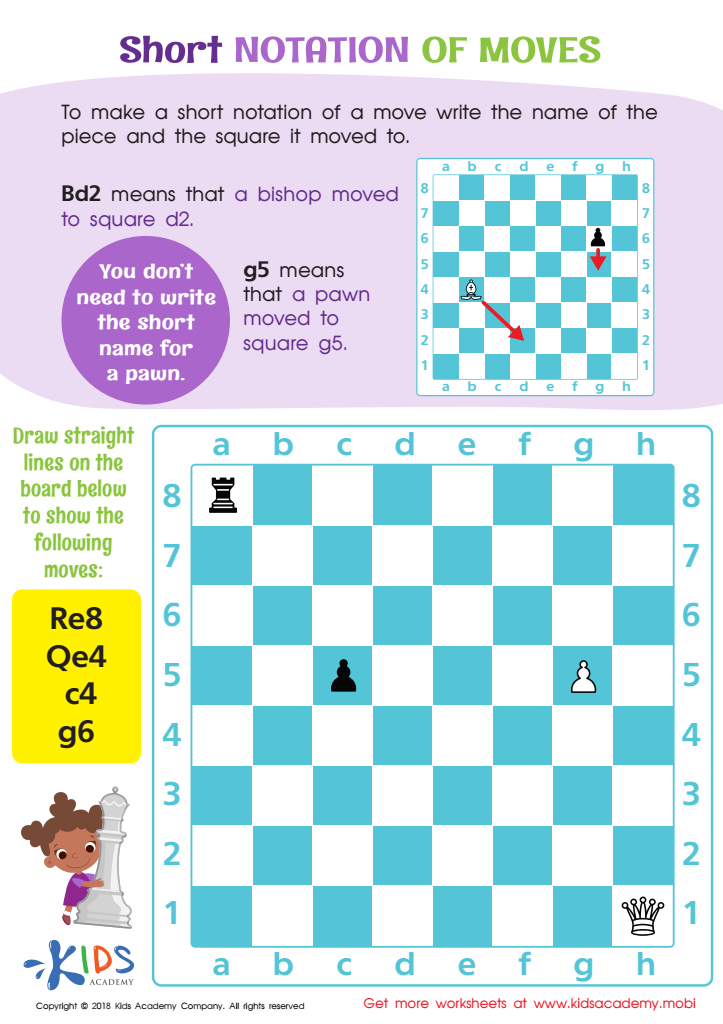
Short Notation of Moves Worksheet
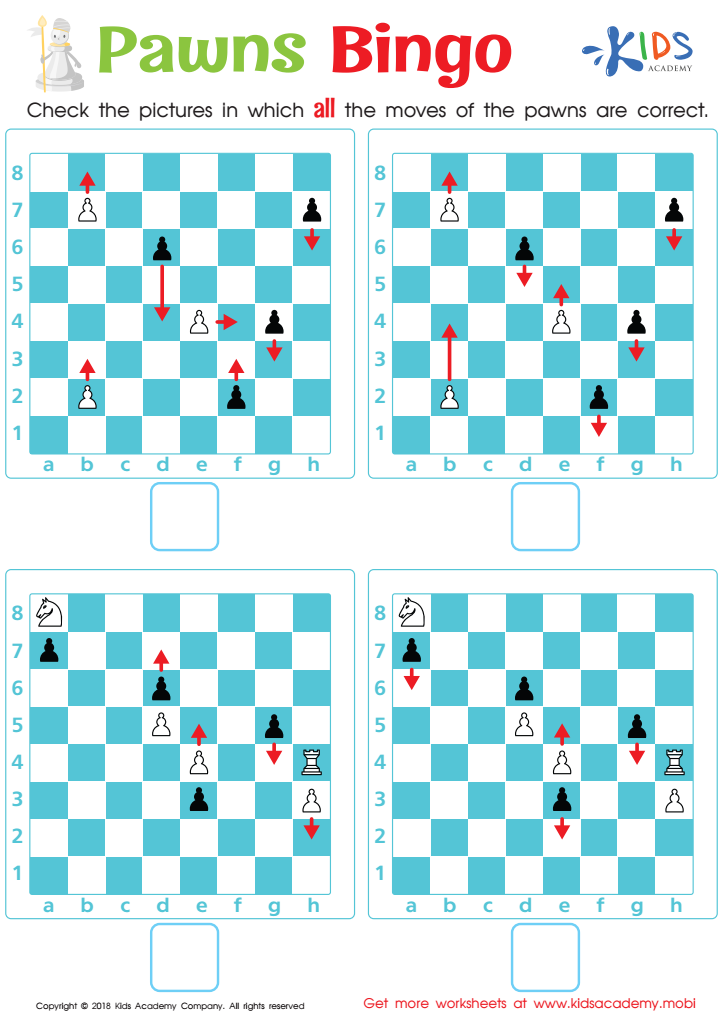
Pawns Bingo Worksheet
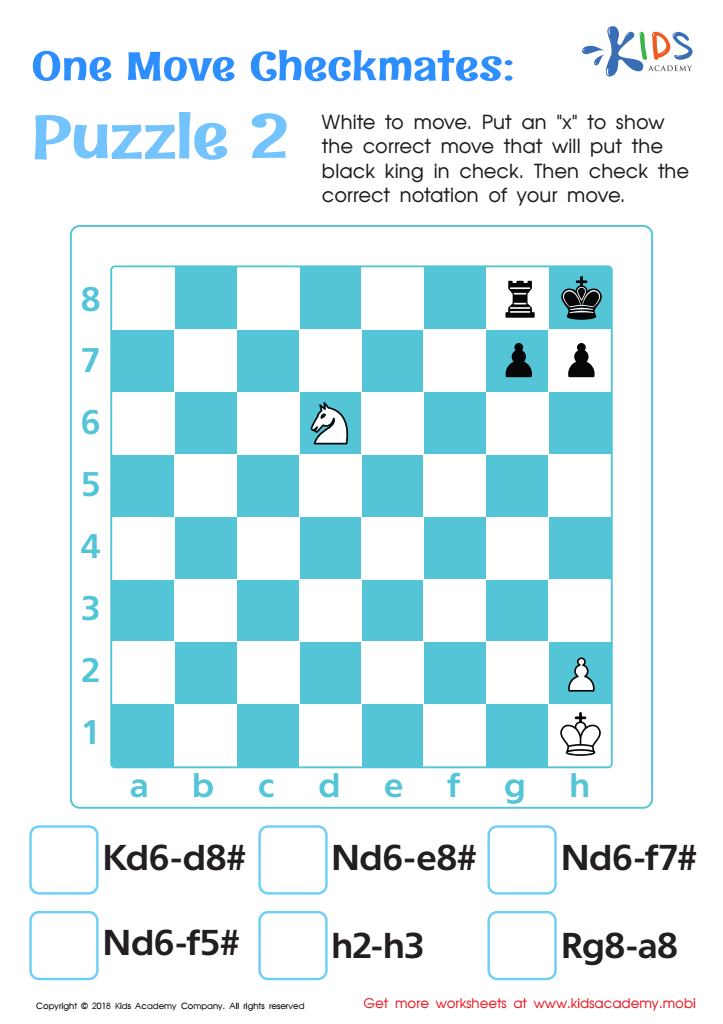
One Move Checkmates: Puzzle 2 Worksheet
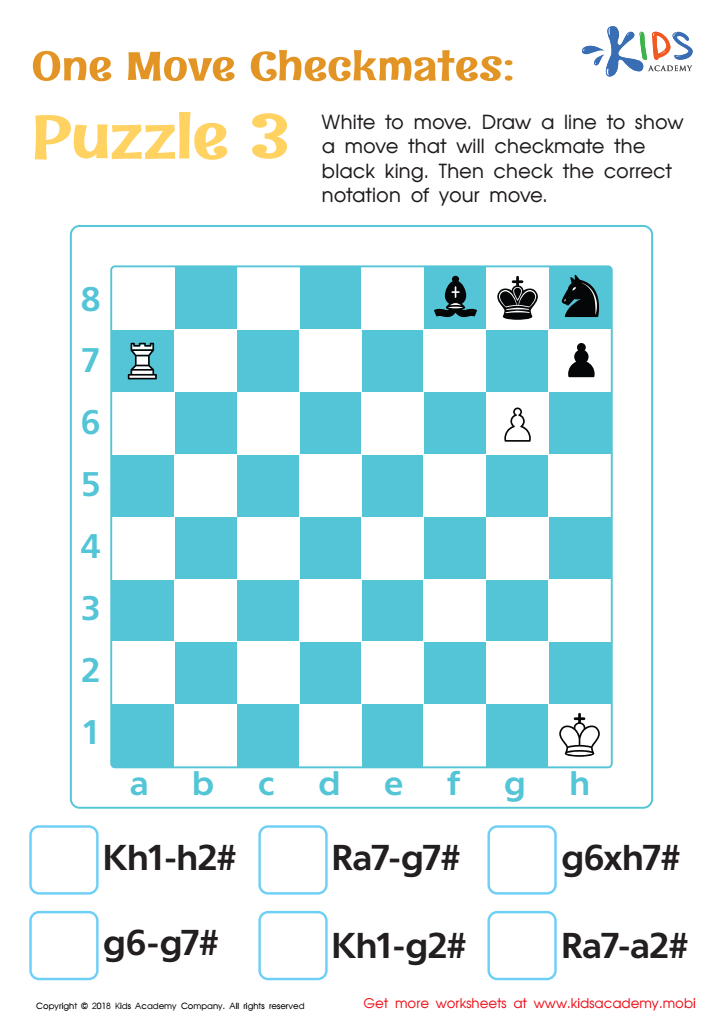
One Move Checkmates: Puzzle 3 Worksheet
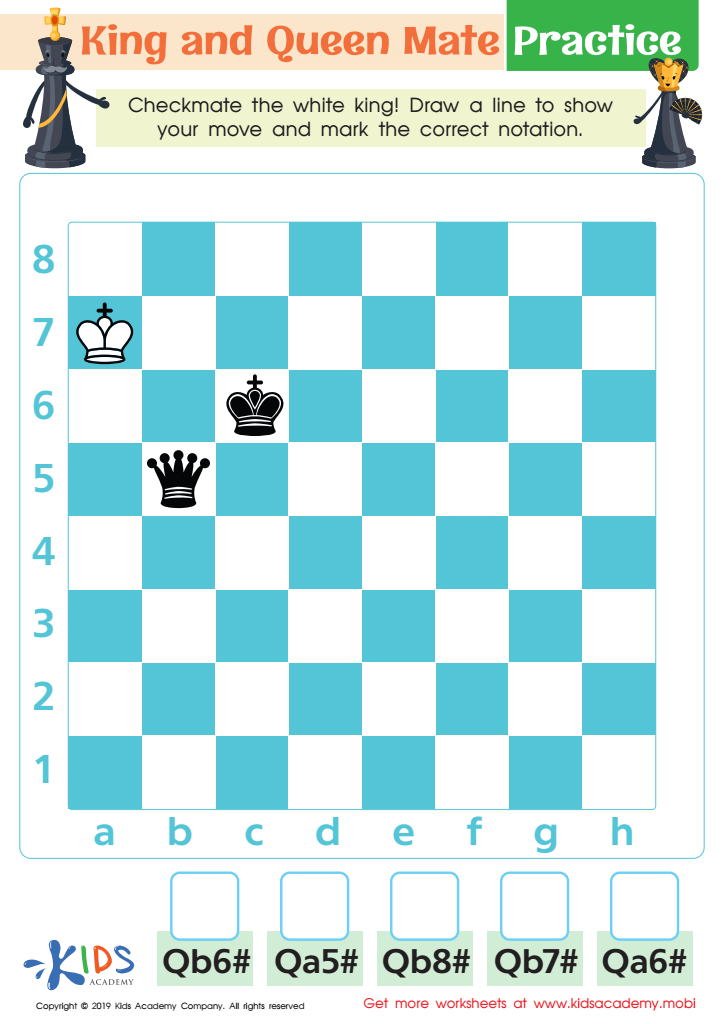
King and Queen Mate Practice Worksheet
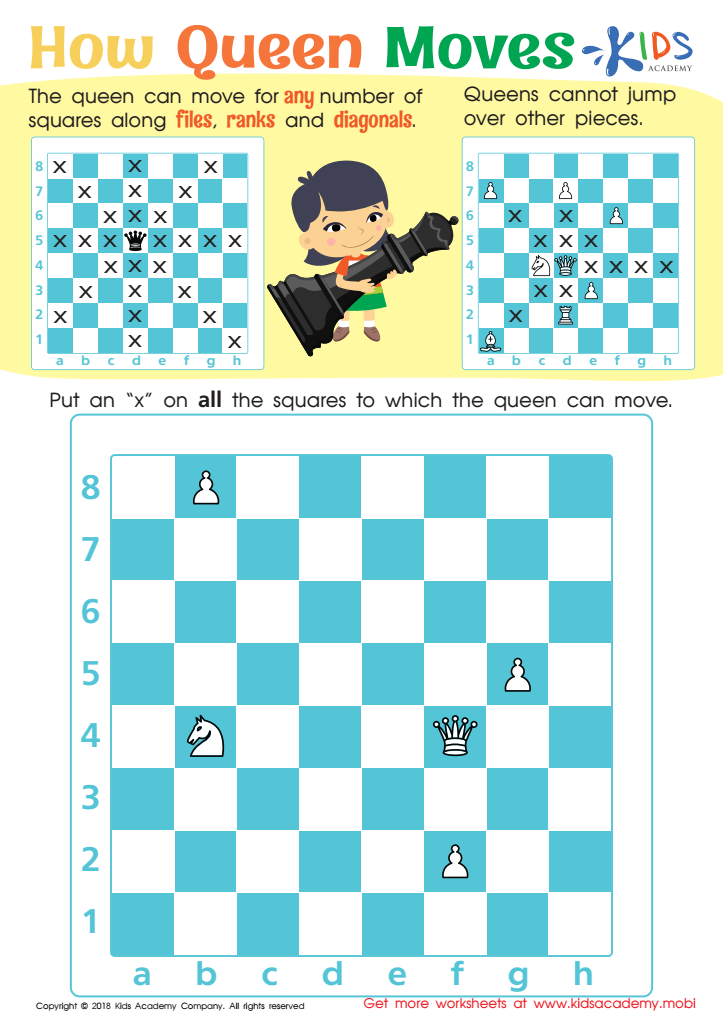
How Queen Moves Worksheet
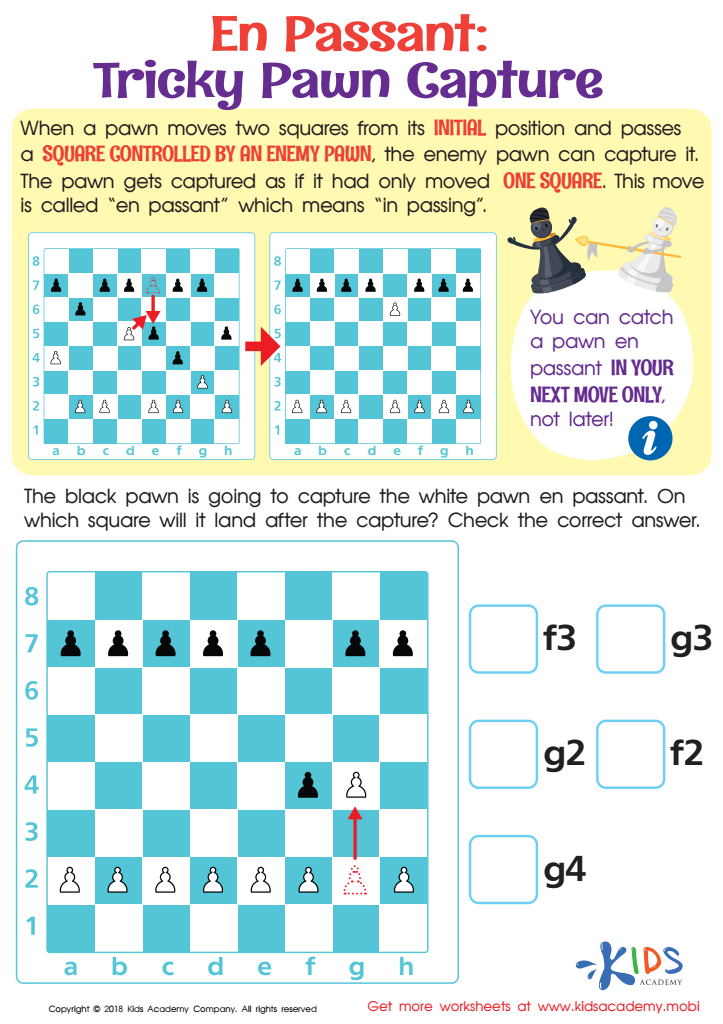
En Passant: Tricky Pawn Capture Worksheet
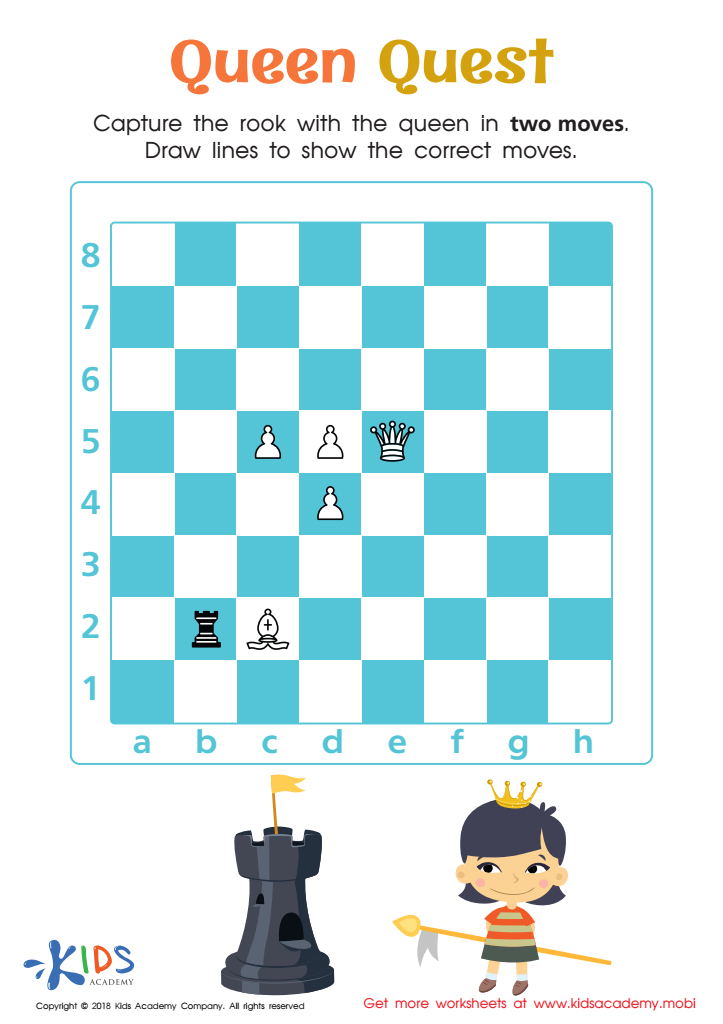
Queen Quest Worksheet
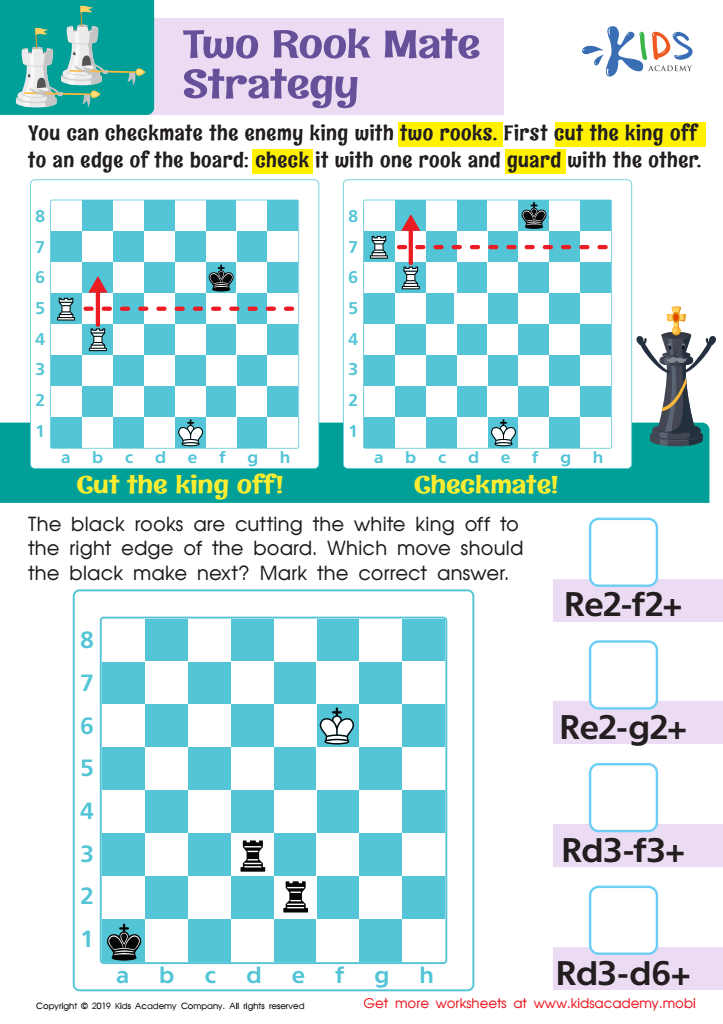
Two Rook Mate Strategy Worksheet
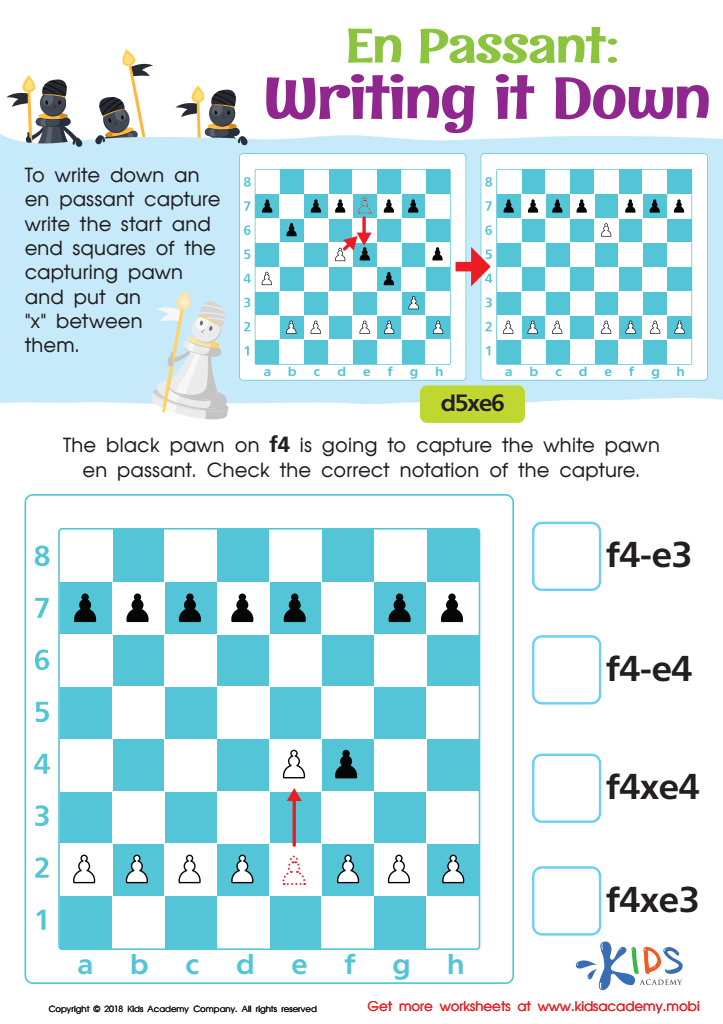
En Passant: Writing it Down Worksheet
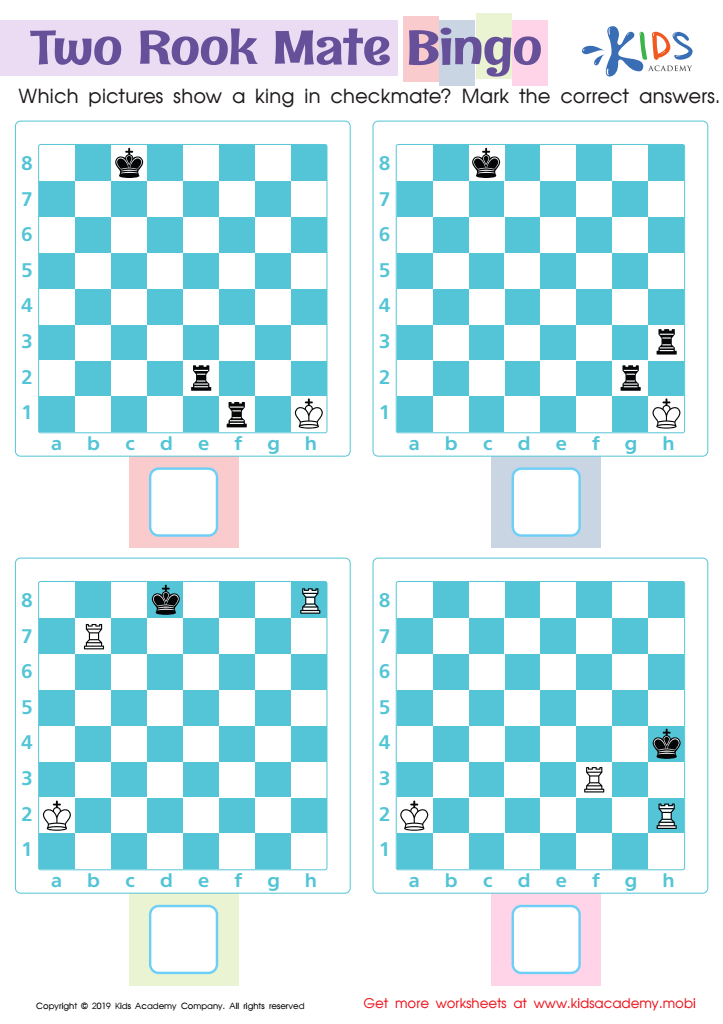
Two Rook Bingo Worksheet
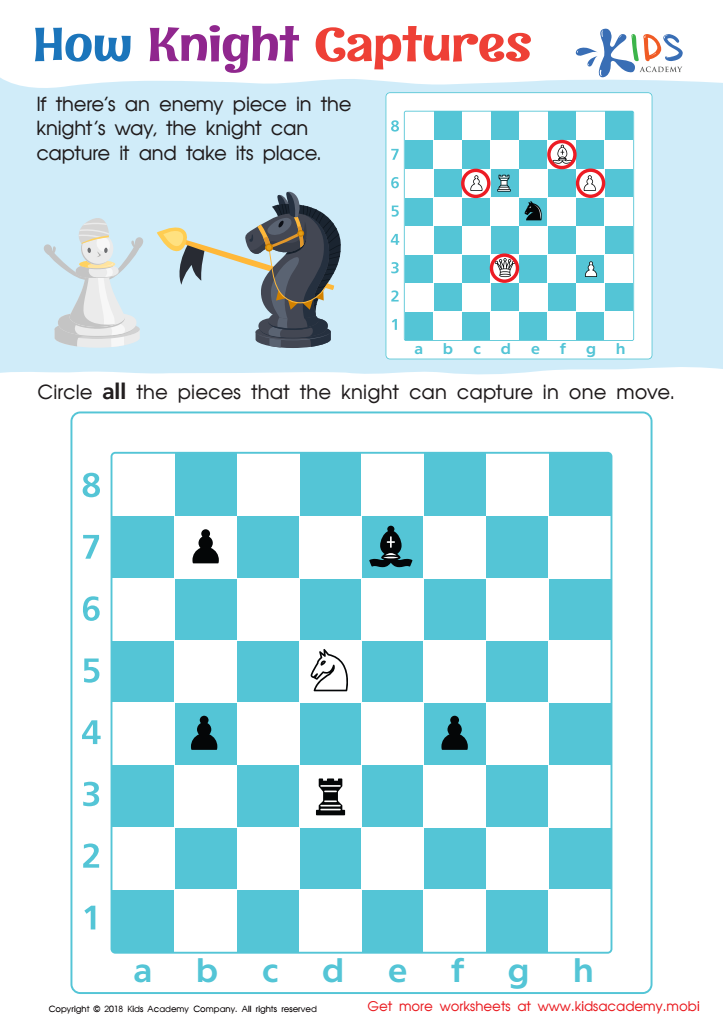
How Knight Captures Worksheet
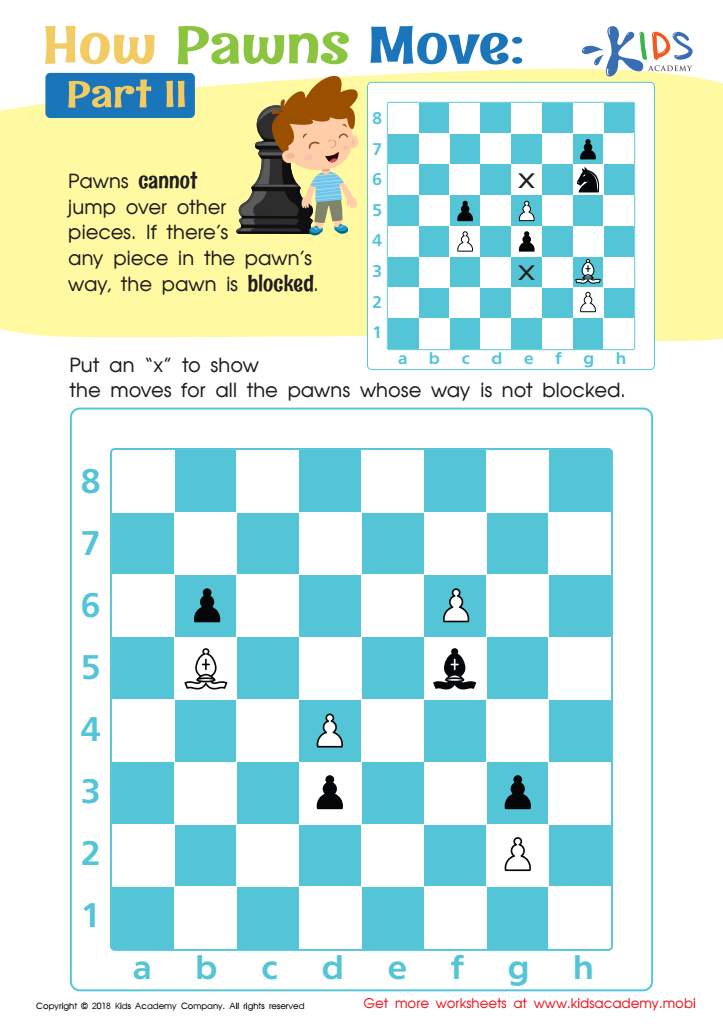
How Pawns Move: Part II Worksheet


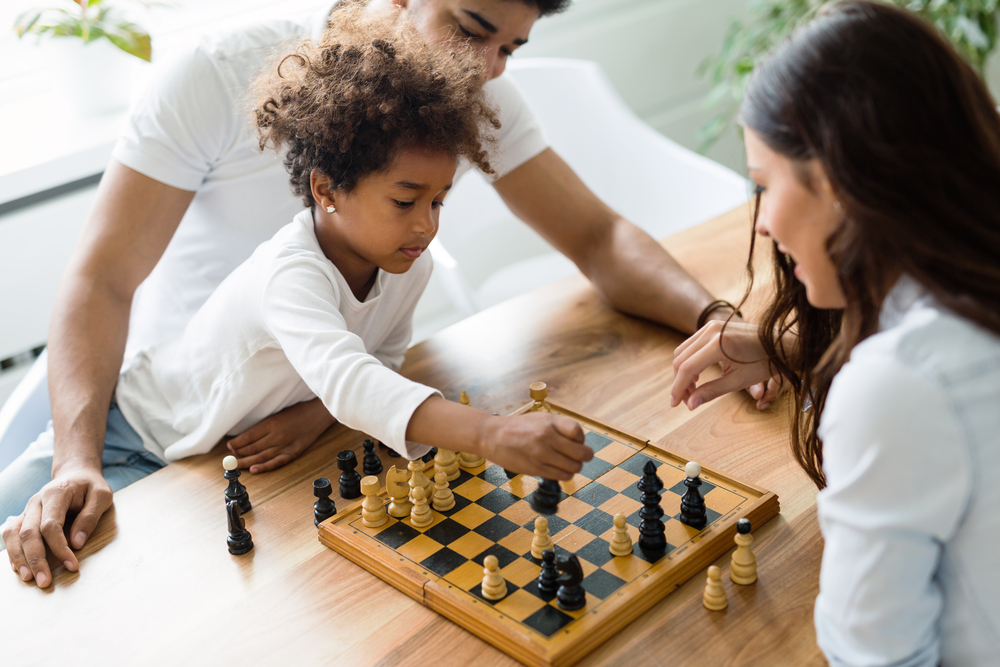


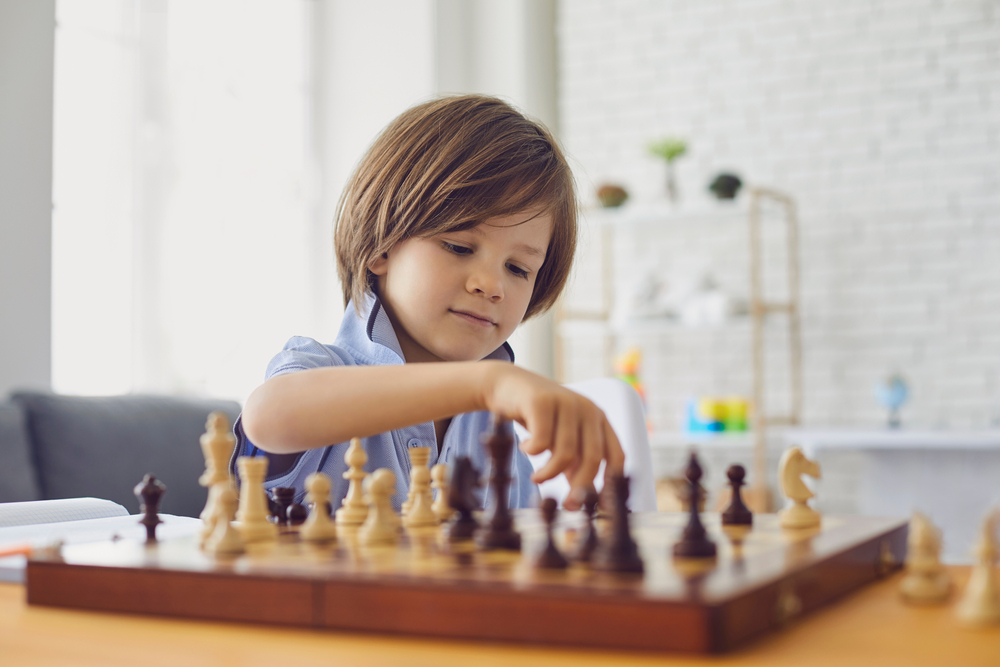

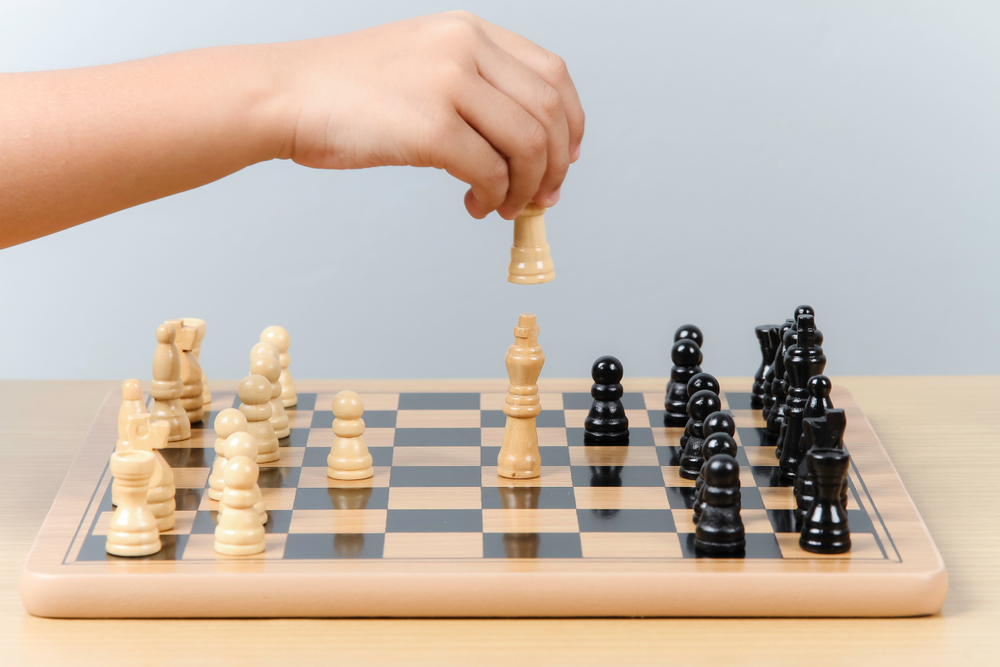
Chess is more than just a game; it offers numerous cognitive, social, and emotional benefits for children aged 6 to 9. Firstly, it enhances critical thinking skills as children learn to anticipate their opponent's moves and strategize accordingly. This boosts problem-solving abilities and promotes creativity in decision-making.
Secondly, chess teaches patience and discipline, as players must thoughtfully consider each move. This fosters tolerance for delayed gratification, which is essential for academic success and personal development. The game also enhances concentration and focus, skills that benefit children in the classroom and beyond.
Moreover, playing chess can improve memory and cognitive function. Kids learn to remember various tactics and strategies, which can translate into strengthened retention in academic subjects. Additionally, chess encourages social interaction. It provides a platform for children to compete amicably, forge friendships, and develop sportsmanship.
Finally, learning chess can build self-esteem. As children grasp the rules and strategies and improve their skills, they gain confidence in their abilities. For parents and teachers, integrating chess into children's lives supports holistic development, preparing them not just academically, but also socially and emotionally for future challenges. Encouraging engagement in chess offers powerful lifelong advantages.