Short Vowels Worksheets for Ages 7-9
8 filtered results
Difficulty Level
Grade
Age
-
From - To
Subject
Activity
Standards
Discover our engaging Short Vowels Worksheets designed specifically for children aged 7-9! These worksheets provide an interactive way to reinforce essential phonics skills, helping young learners distinguish between short vowel sounds in a fun and captivating manner. Whether you're a teacher seeking classroom resources or a parent looking to support your child's learning journey, our carefully crafted activities enhance reading and writing proficiency. From fill-in-the-blank exercises to matching games, each worksheet is tailored to keep kids motivated and eager to learn. Explore our vast collection today and help your child build a strong foundation in phonics with these effective tools!
Favorites
With answer key
Interactive
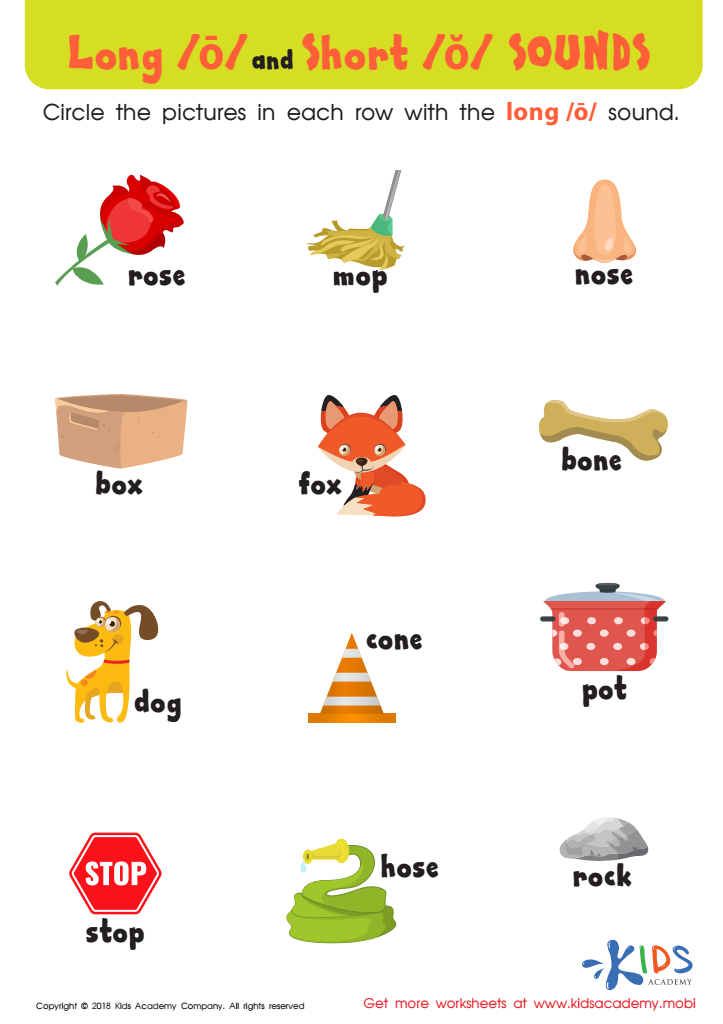
Reading: Long O and Short O Sounds Worksheet
Students practice distinguishing between short and long O sounds with this reading worksheet. They sound out each word, then circle the pictures with the long O sound. Perfect for individual practice or to work with peers! Improves understanding of this skill and helps avoid confusion.
 Assign to My Students
Reading: Long O and Short O Sounds Worksheet
Worksheet
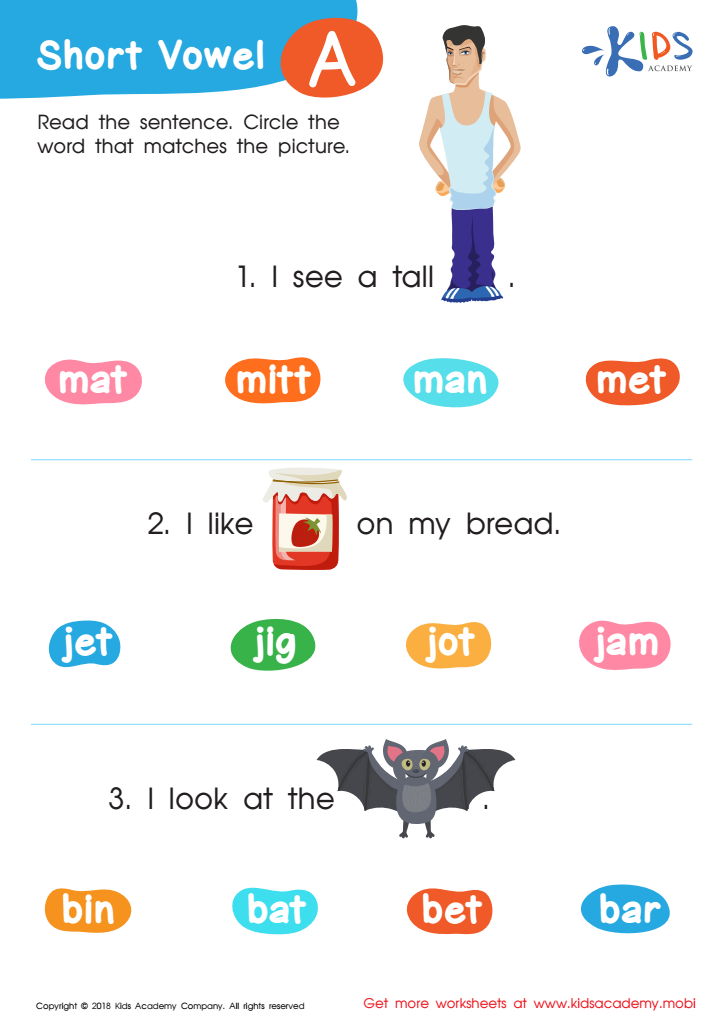
Short Vowel /a/ Worksheet
This free PDF helps new readers use sight words and pictures to read basic sentences. Then, they use accompanying word choices to find the correct word with the short a vowel sound. A key early reading skill, discriminating between short vowel sounds can be tricky in monosyllabic words, so use this PDF to help your reader reinforce it.
Short Vowel /a/ Worksheet
Worksheet
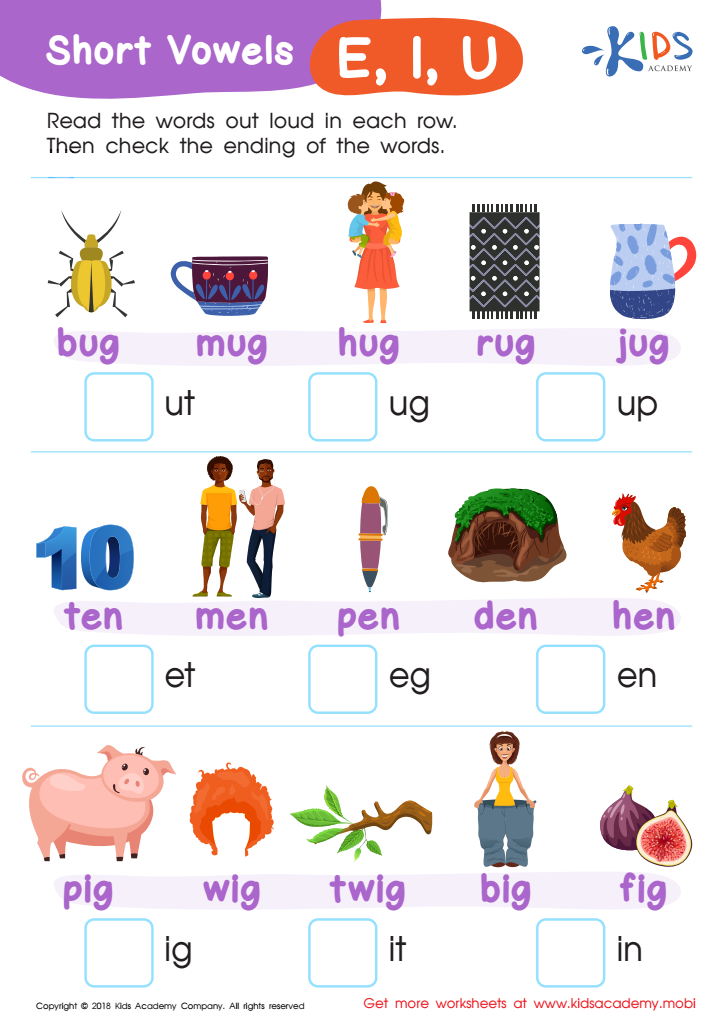
Short Vowels /e/, /i/, and /u/ Worksheet
Your emergent reader can have fun while practicing their short vowel sounds with this free, brightly colored worksheet. They'll identify one-syllable words by their pictures, then match the correct ending for each. They'll gain an understanding of how short vowel sounds vary in closed syllables with different endings, without even realizing it!
Short Vowels /e/, /i/, and /u/ Worksheet
Worksheet
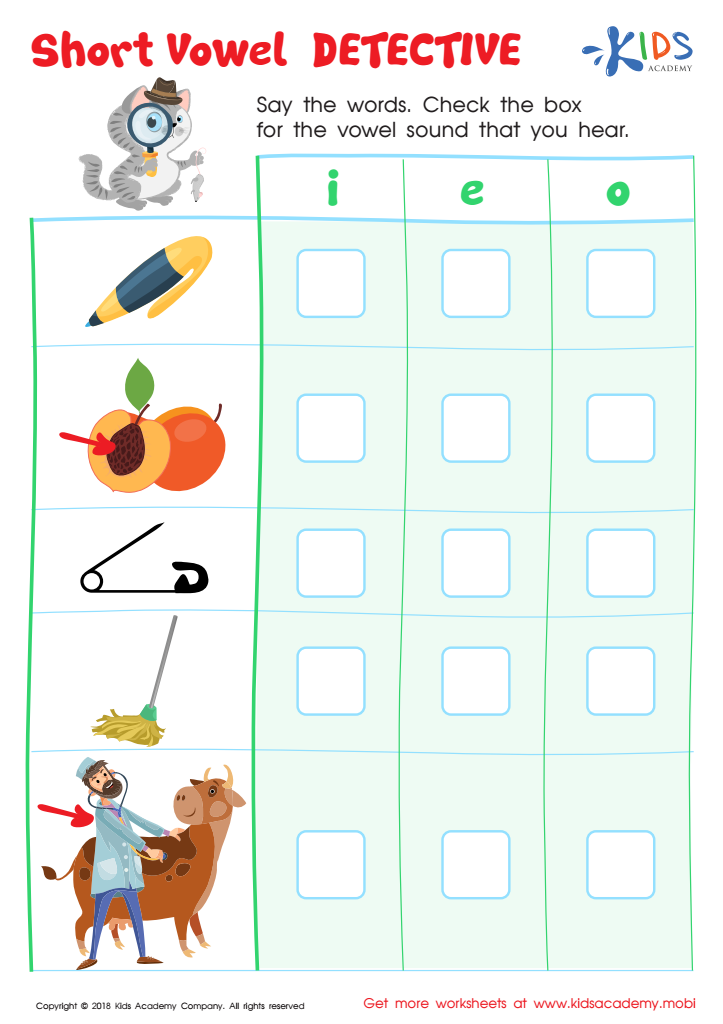
Short Vowel Detective Worksheet
Help your kids become phonetics masters by teaching them how to tell the difference between long and short vowels. As it may be difficult for them, take a look at a worksheet together. Have them pronounce the words and check the box for the vowel sound they hear. This is a great way for them to learn quickly and easily.
Short Vowel Detective Worksheet
Worksheet
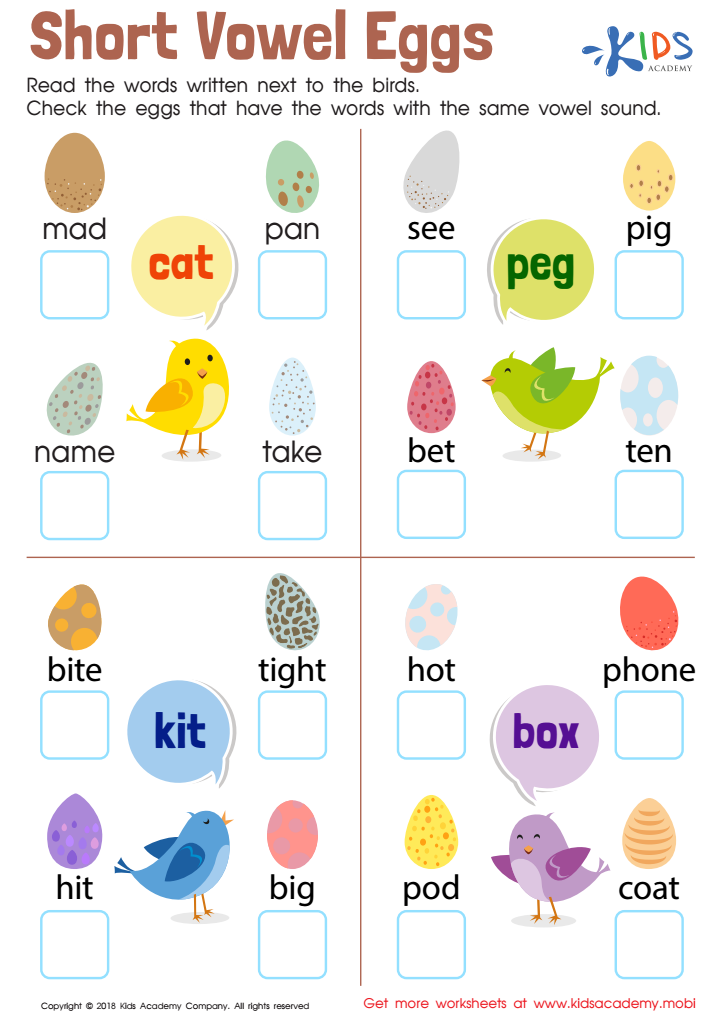
Short Vowel Eggs Worksheet
Your students will love helping these birdies pick the short vowel eggs! Have them read the words in the thought bubbles, then check off the boxes with the same short vowel sounds. The bright colors of this free Worksheet will draw them in and get them practicing their vowels!
Short Vowel Eggs Worksheet
Worksheet
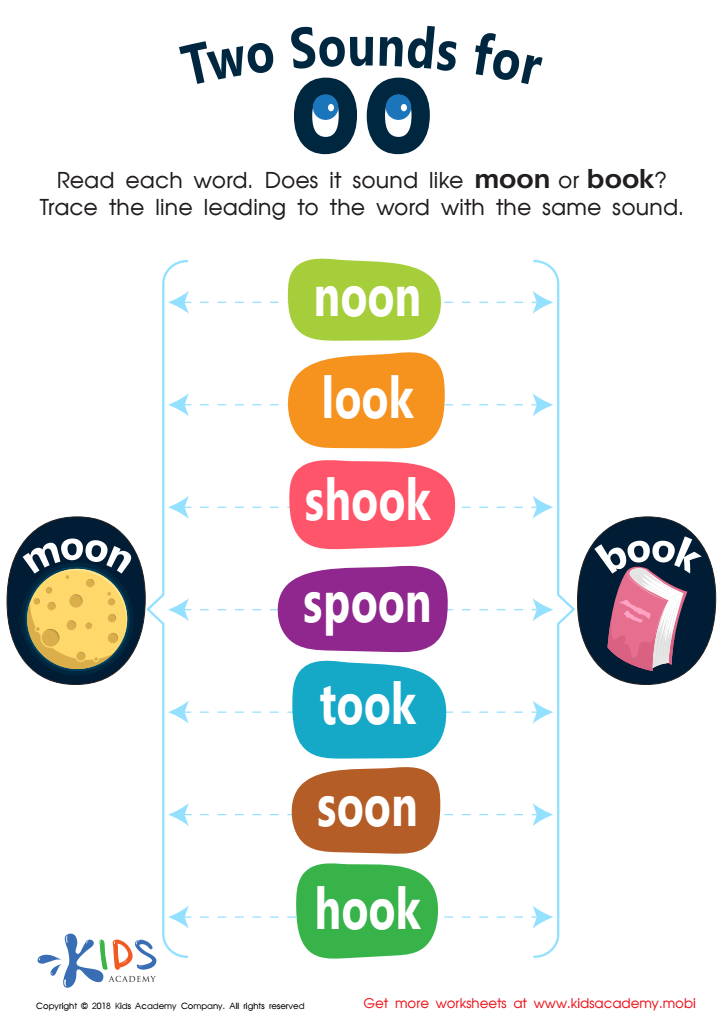
Two Sounds for OO Worksheet
This worksheet helps kids learn the different sounds of the -oo digraph. They match words based on whether they sound like moon or book, plus practice fine motor skills tracing lines. Fun and educational!
Two Sounds for OO Worksheet
Worksheet
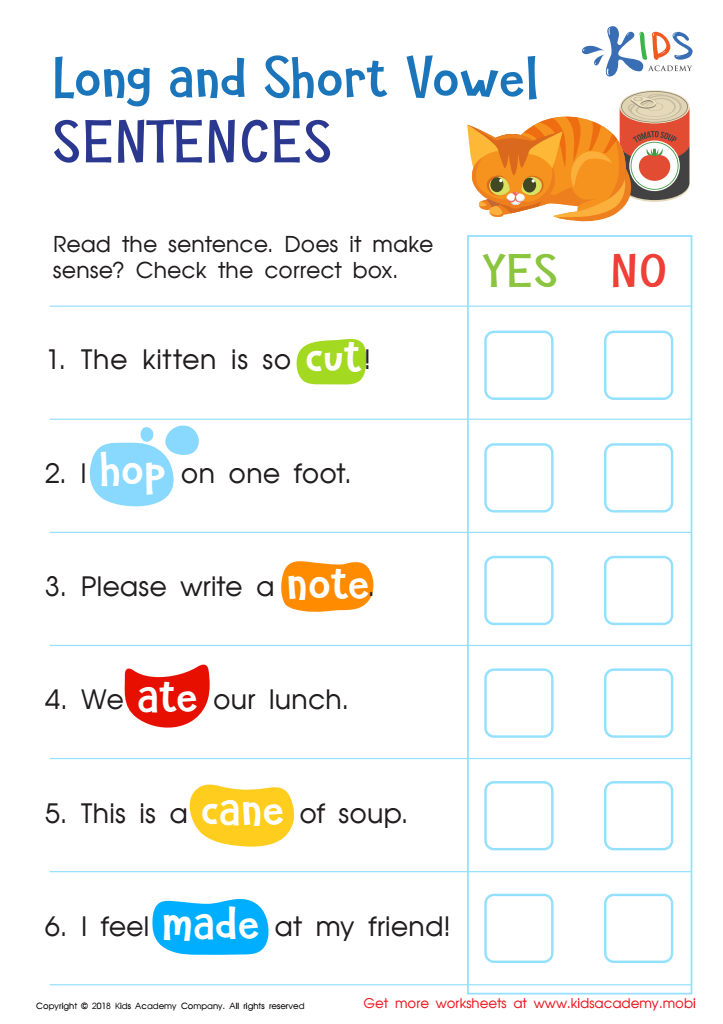
Long and Short Vowel Sentences: Assessment Worksheet
This printable worksheet helps kids practice differentiating between short and long vowel sounds. They'll use context clues to figure out which words make sense in simple sentences. A great way to build reading and writing skills!
Long and Short Vowel Sentences: Assessment Worksheet
Worksheet
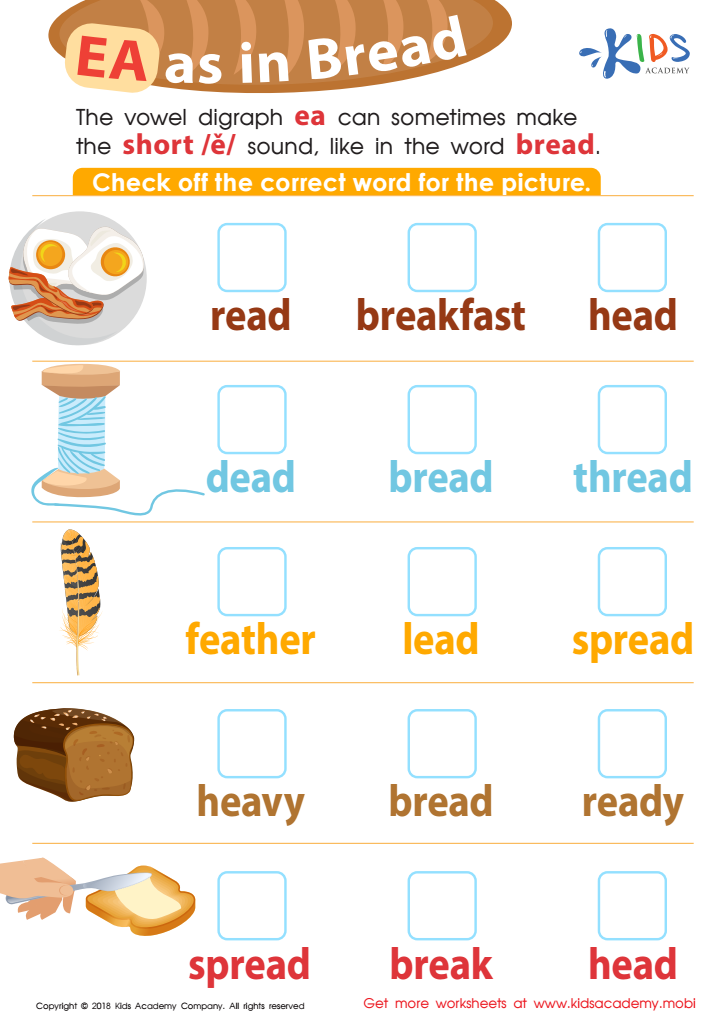
Reading: EA as in Bread Worksheet
The vowel digraph ea can be read in two ways. Examples of the long sound are "read" and "lead"; examples of the short sound are "bread" and "head". Ask your kids to give you more examples and then have them check off the correct word for the pictures on this worksheet. This will help them understand the ea sound.
Reading: EA as in Bread Worksheet
Worksheet
Join Kids Academy for Free
Who is primarily going to use this learning content?



Short vowels are foundational for early literacy, especially for children ages 7-9. Understanding short vowels – a, e, i, o, u – helps young learners decode words and improve their reading skills. At this age, children are beginning to read more complex texts, and mastery of short vowels supports their ability to recognize and sound out words confidently.
Moreover, knowing short vowels impacts spelling. Children who struggle with these sounds may find themselves making frequent spelling errors, which can affect their confidence in writing. By developing a strong grasp of short vowels, students build a solid foundation for understanding word formation and reading fluency.
In addition, phonemic awareness, which includes recognizing short vowels, is crucial for language development. Engaging with these sounds helps children enhance their auditory processing skills, leading to better comprehension and communication abilities.
For parents and teachers, fostering an environment that emphasizes short vowel understanding encourages a love for reading and writing. Interactive activities such as word games, songs, and storytelling that highlight short vowels can create a fun and supportive learning atmosphere, ensuring that children not only learn but also enjoy their literacy journey. Monitoring progress in this area gives insights into a child’s overall reading development and needed support.