Filters

96 filtered results

Clear all filters
Favorites
With answer key
Interactive

96 filtered results

Difficulty Level

Grade


Check out this FREE Trial Lesson on Reading Fiction for age 7-9!

Key Details in a Text

Favorites
With answer key
Interactive
  • 7-9
  • With answer key
  • Reading Fiction
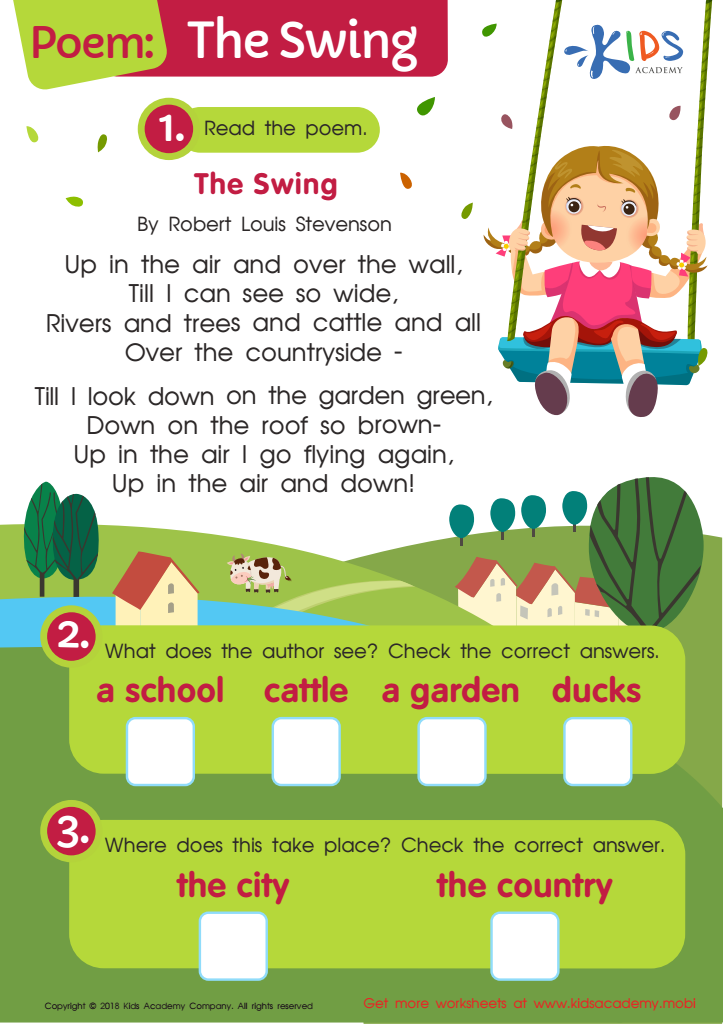
Poem: The Swing Worksheet

Poem: The Swing Worksheet

Encourage your child's love of writing by displaying their poems on the fridge or walls. This worksheet focuses on a swing, something your child enjoys, and contains questions to help your child think more deeply about the poem. Read it together, then answer the questions and watch as your child's creativity and writing skills blossom!
Poem: The Swing Worksheet
Worksheet
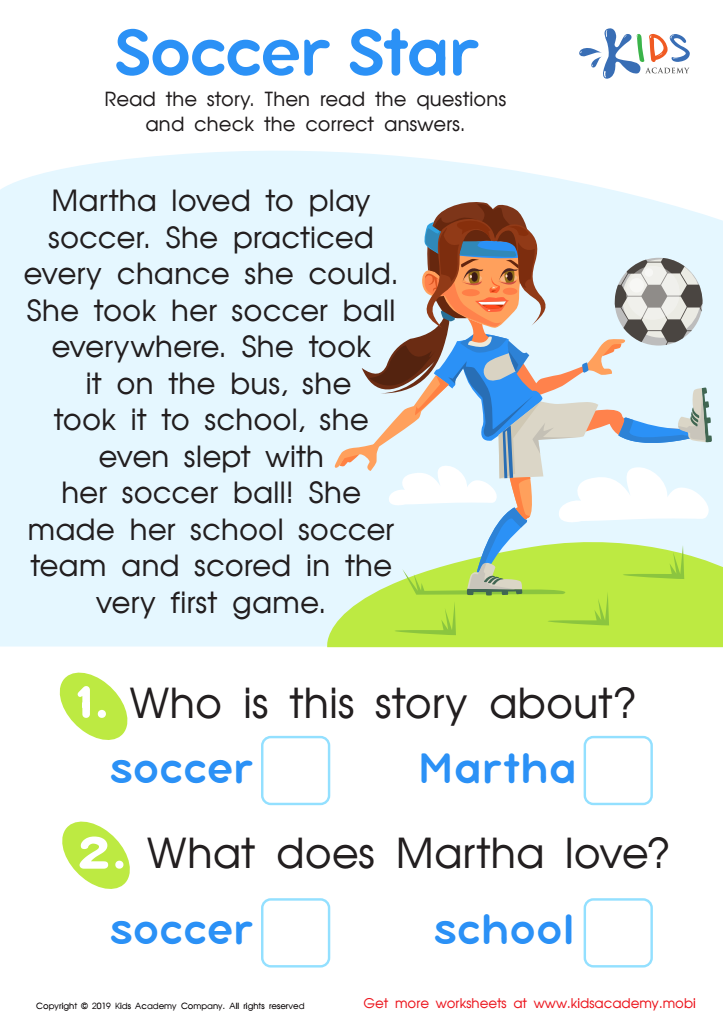
Soccer Star Worksheet

Soccer Star Worksheet

Do your kids play sports? Ask them what their favourite activities are and what they like most about them. Look at the picture in the worksheet with your kids. Can they tell you what sport the girl is playing? Read the story and help them answer the two questions at the bottom.
Soccer Star Worksheet
Worksheet
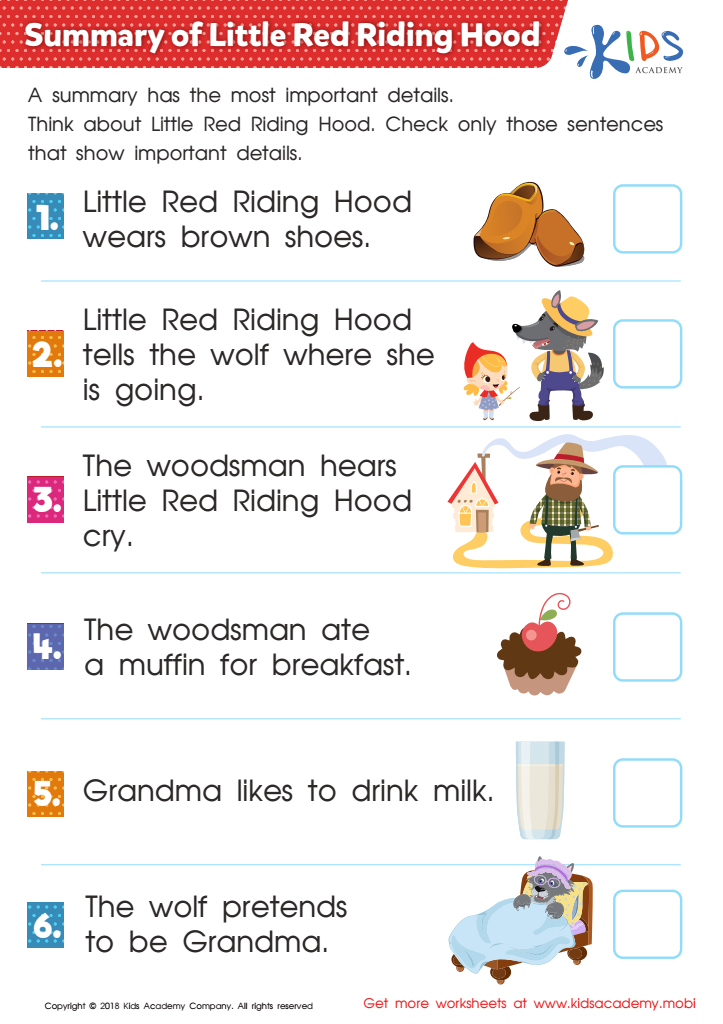
Summary of Little Red Riding Hood Worksheet

Summary of Little Red Riding Hood Worksheet

Young students may find it hard to summarize stories. This worksheet helps them learn to distinguish between important story details and unimportant ones. Practice reading Little Red Riding Hood and pick out only the important details with the help of this downloadable worksheet.
Summary of Little Red Riding Hood Worksheet
Worksheet
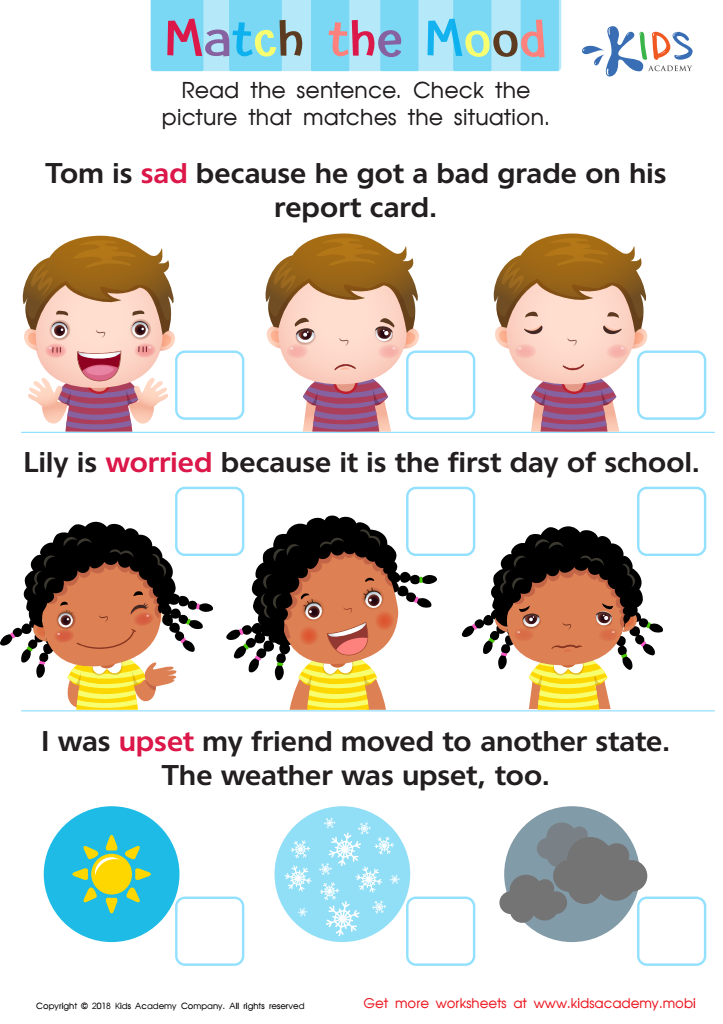
Match The Mood Worksheet

Match The Mood Worksheet

Ask your kid what kind of moods they usually experience; e.g. sad, happy, hurt or worried. Read aloud the sentences in the worksheet and help them match the situation to the picture. Max 80 words.
Match The Mood Worksheet
Worksheet
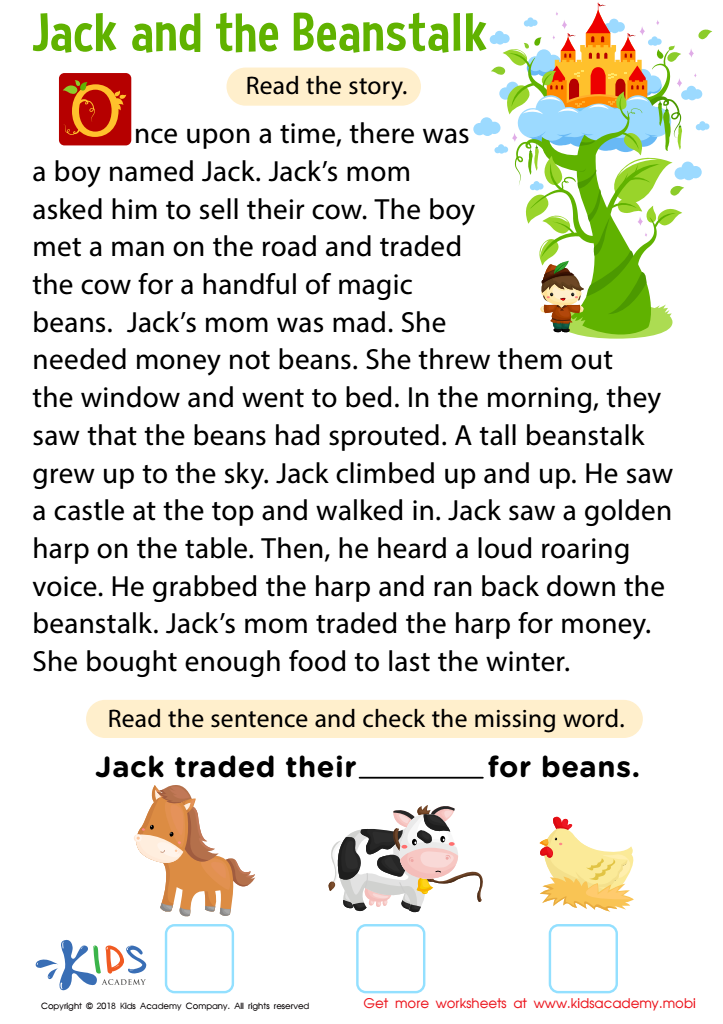
Jack and Beanstalk Worksheet

Jack and Beanstalk Worksheet

Story time can be a fun and educational experience for your kids. Read them the classic Jack and the Beanstalk - and even read it twice to help them pay attention. Afterwards, help them fill in the blank on the worksheet to expand their vocabulary and learn more from the story.
Jack and Beanstalk Worksheet
Worksheet
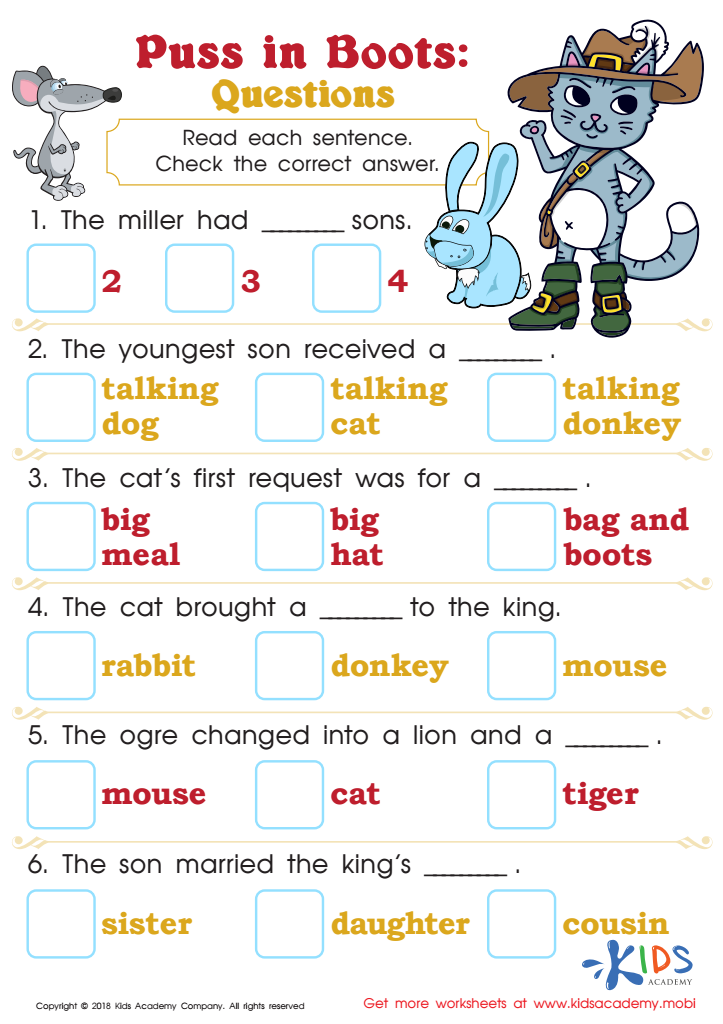
Puss in Boots: Questions Worksheet

Puss in Boots: Questions Worksheet

This worksheet contains questions to be checked with boxes for the correct answers. It also has pictures of animals; ask kids to identify them, noting the objects with them. Read the questions and have kids provide the answers. Help them check the boxes for the right answer.
Puss in Boots: Questions Worksheet
Worksheet
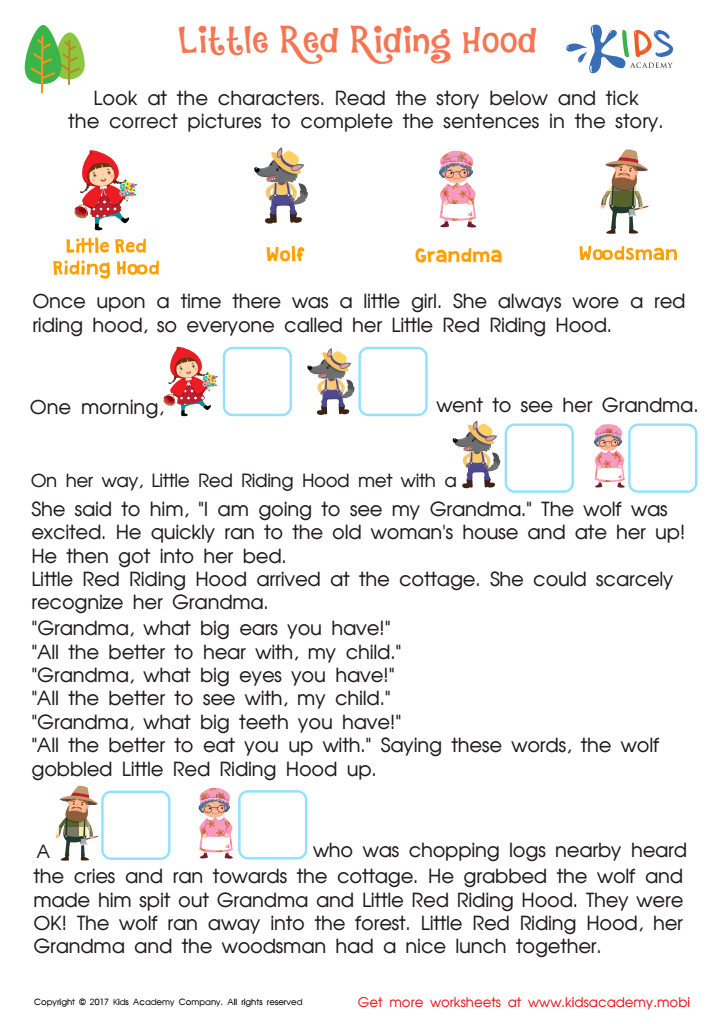
Worksheet: Little Red Riding Hood

Little Red Riding Hood Printable

Give them this worksheet to practice. Help your child strengthen their reading skills with this worksheet. It asks them to read Little Red Riding Hood and fill in the missing words using context clues from the text. Encourage your child to look at the surrounding words to determine the answer and get the best results!
Little Red Riding Hood Printable
Worksheet
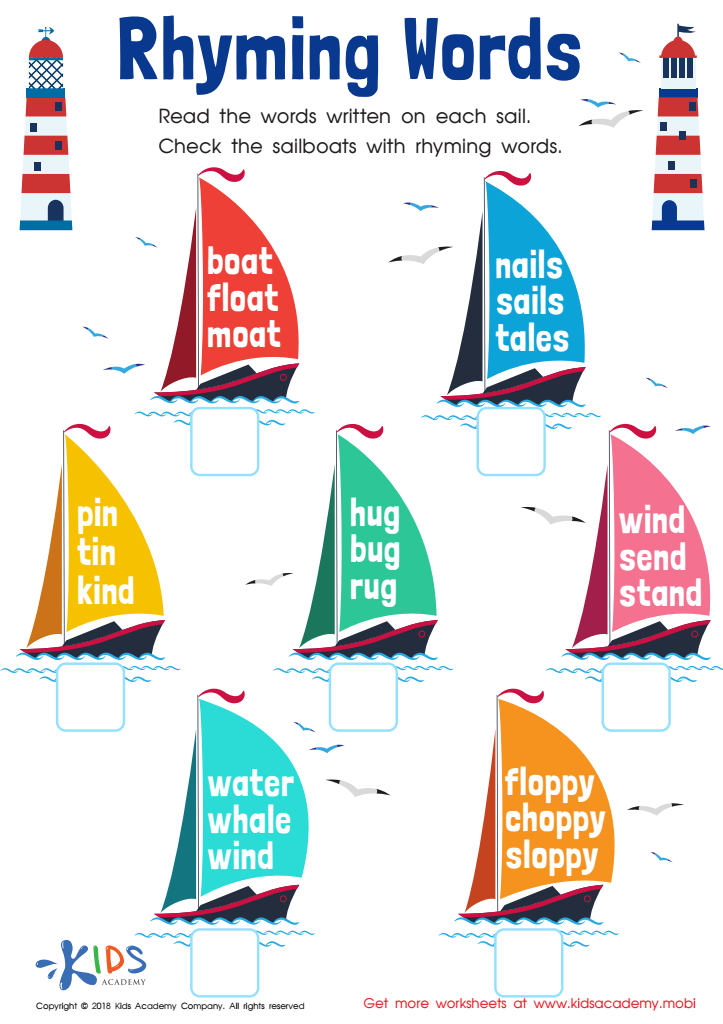
Rhyming Words Worksheet

Rhyming Words Worksheet

Does your child know about rhyming words? Get them interested in poetry and explain that these words have similar sounds when pronounced. Read the words on each sailboat to your child and ask them to identify the rhyming pairs. Guide them to check the sailboats.
Rhyming Words Worksheet
Worksheet
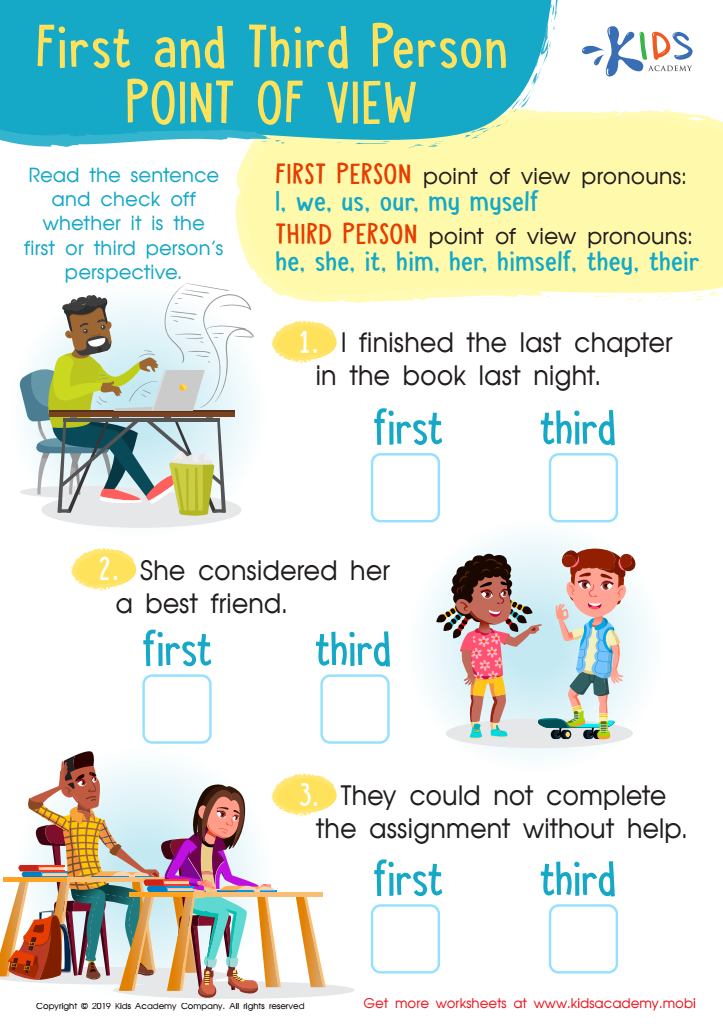
First and Third Person Point of View Worksheet

First and Third Person Point of View Worksheet

Remind kids what a point of view is in a story. First person is from the character's perspective; third person is from the narrator's. Ask students to check if sentences in the exercise are in first or third person point of view.
First and Third Person Point of View Worksheet
Worksheet
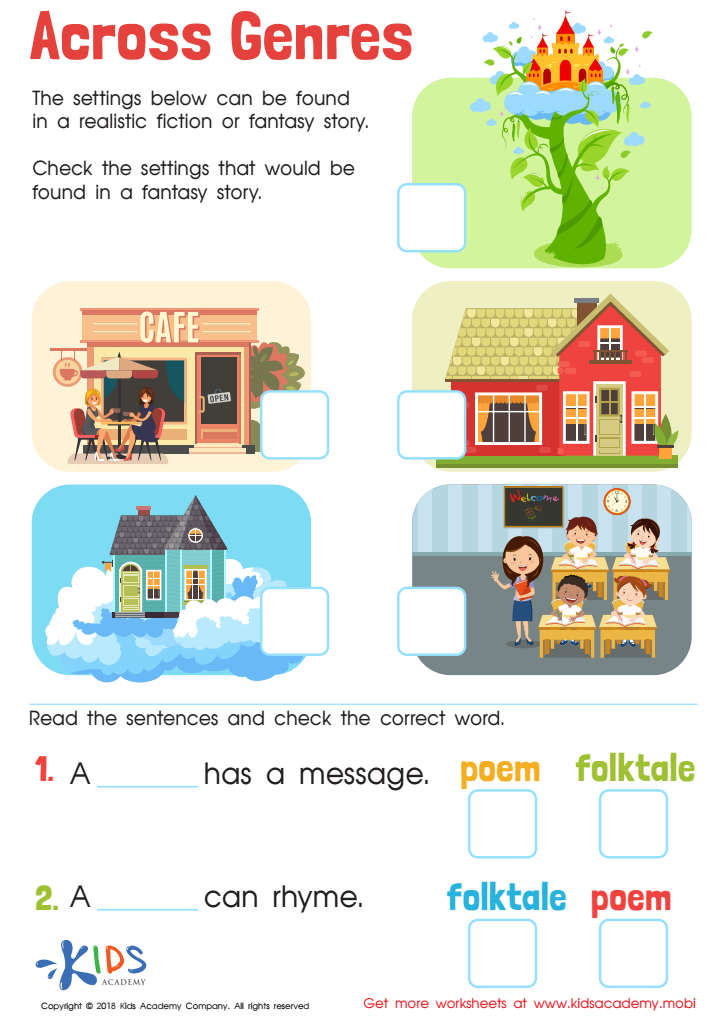
Across Genres Worksheet

Across Genres Worksheet

Young readers can sharpen their reading skills by identifying elements of various literature genres. This PDF offers practice with realist stories, fantasies, poems and folktales. It will help them answer comprehension questions confidently, by recognizing settings and spotting which rhymes and which offers a traditional message.
Across Genres Worksheet
Worksheet
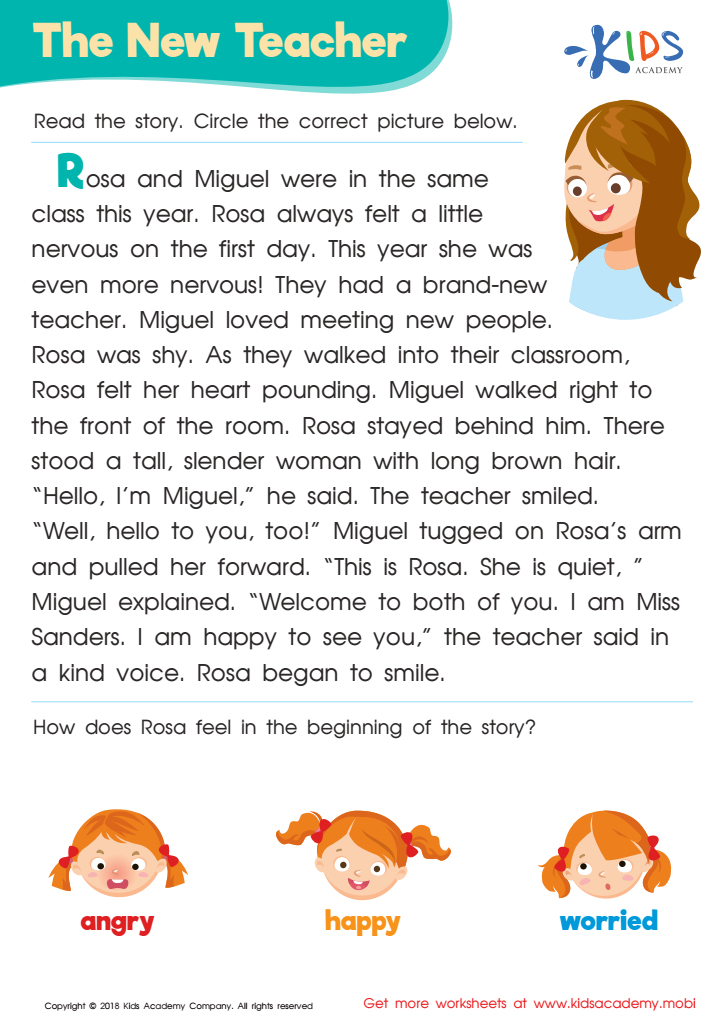
The New Teacher Worksheet

The New Teacher Worksheet

Encourage your kids to write their own short story before doing this exercise. It's about Rosa and Miguel on their first day of school, meeting their teacher. Read the story aloud and ask them to focus on Rosa's feelings. Then, help them circle the correct picture for the question.
The New Teacher Worksheet
Worksheet
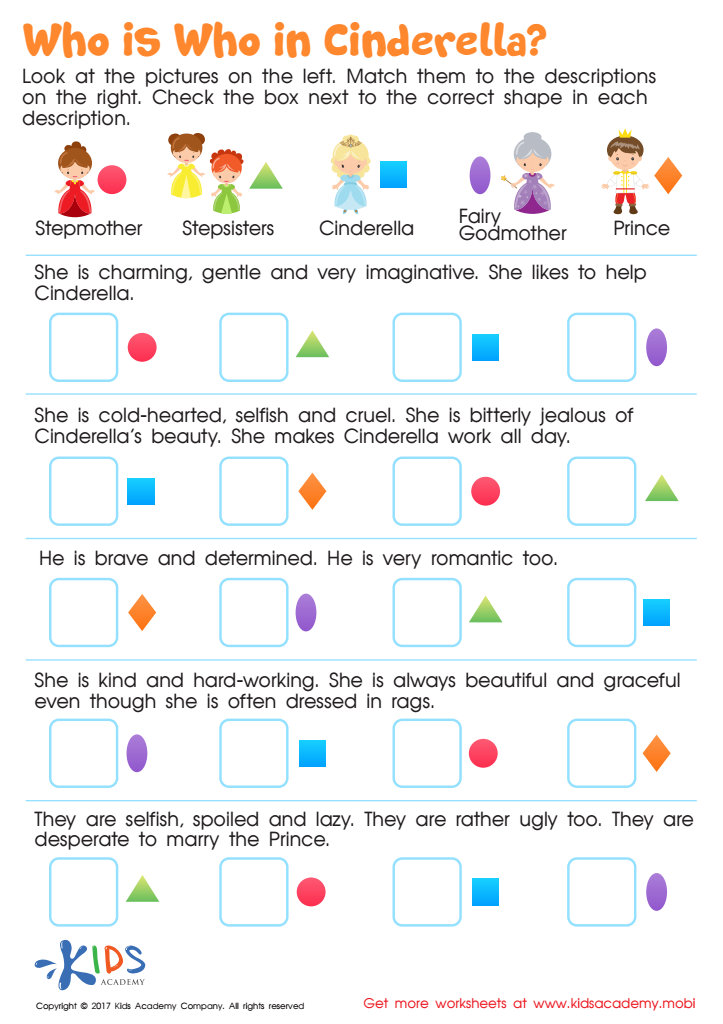
Cinderella comprehension worksheet

Cinderella Comprehension Worksheet
Help your child hone reading comprehension and analysis skills with this fun Cinderella worksheet! They'll practice identifying character traits and building a deeper understanding of the story.
Cinderella Comprehension Worksheet
Worksheet
The Big Surprise Worksheet

The Big Surprise Worksheet

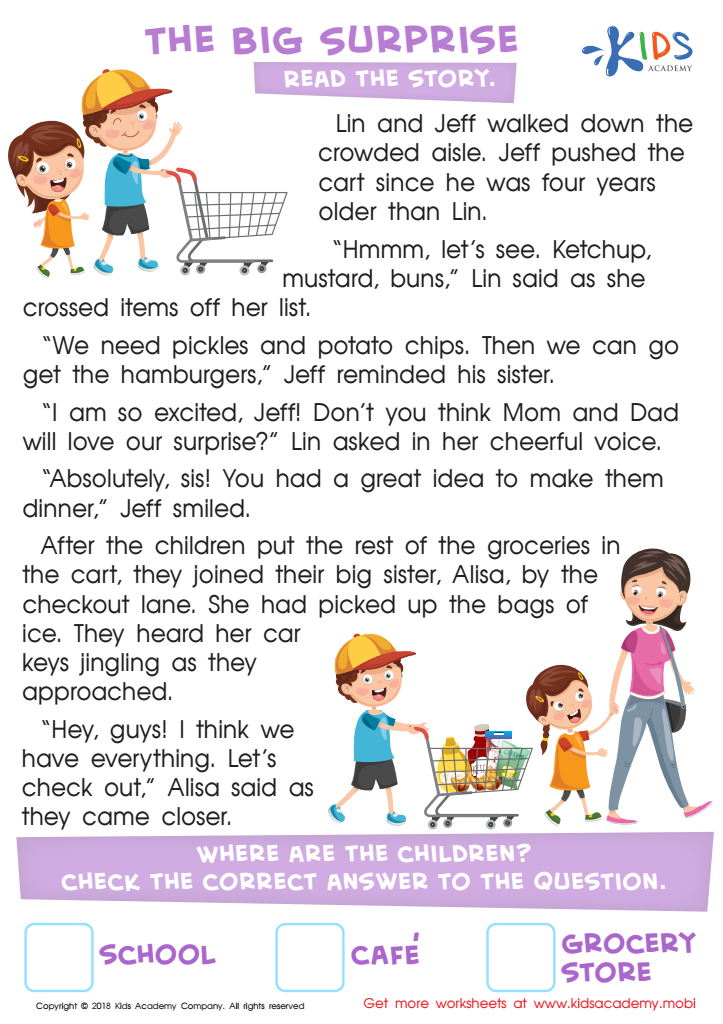
Read this story to your kids: Lin and Jeff are in the supermarket with their big sister Alisa. They're excited to buy groceries. Listen closely to the details and ask the questions at the end to check your understanding. Read it twice to ensure full comprehension.
The Big Surprise Worksheet
Worksheet
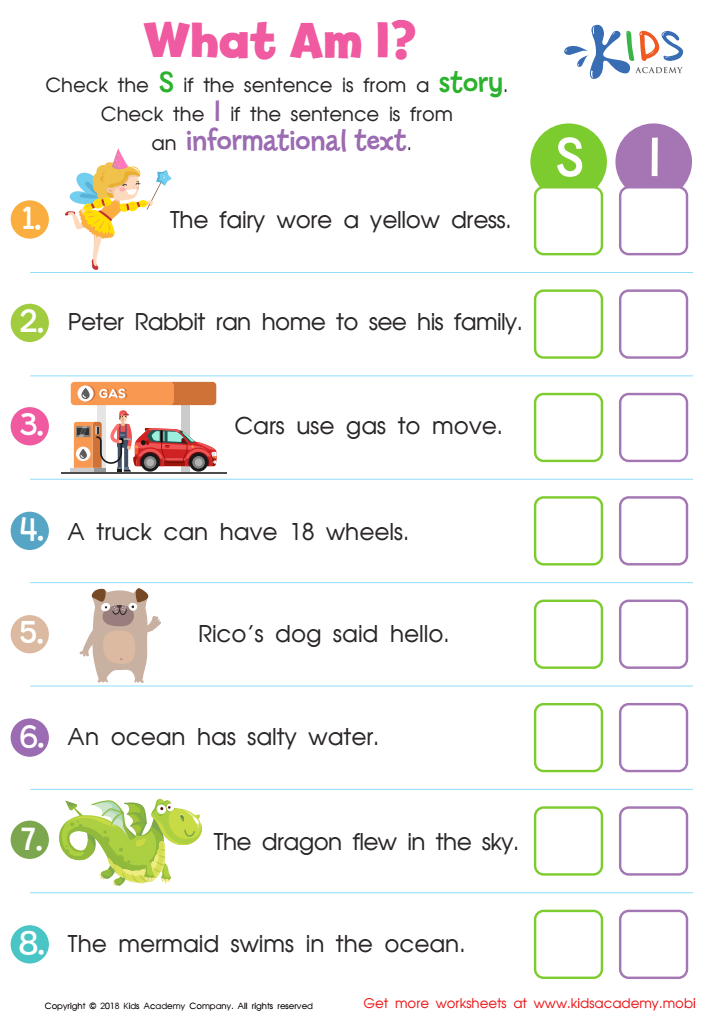
What Am I? Worksheet

What Am I? Worksheet

This worksheet assesses students' ability to differentiate between stories and texts they read for facts. Students learn to distinguish between reading for pleasure and reading for information. It includes statements from both a story and an informational text, and students must decide what type of text it is.
What Am I? Worksheet
Worksheet
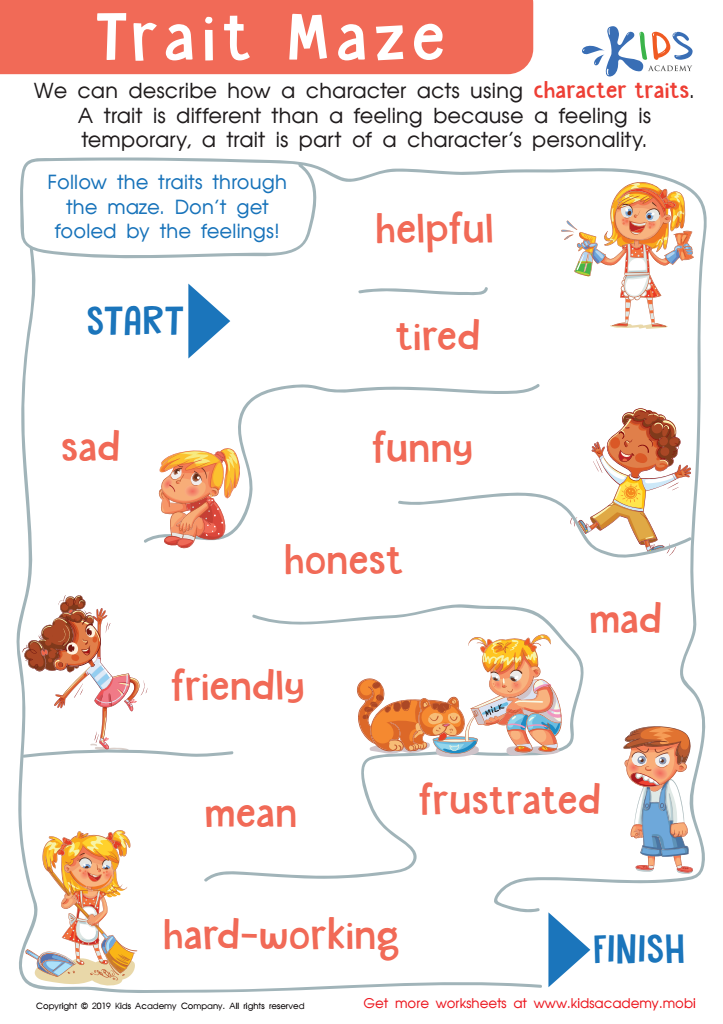
Trait Maze Worksheet

Trait Maze Worksheet

A trait is a character's personality and should not be confused with a feeling, which is temporary. In this worksheet, kids learn about traits by following them through a maze and ignoring the feelings on the path.
Trait Maze Worksheet
Worksheet
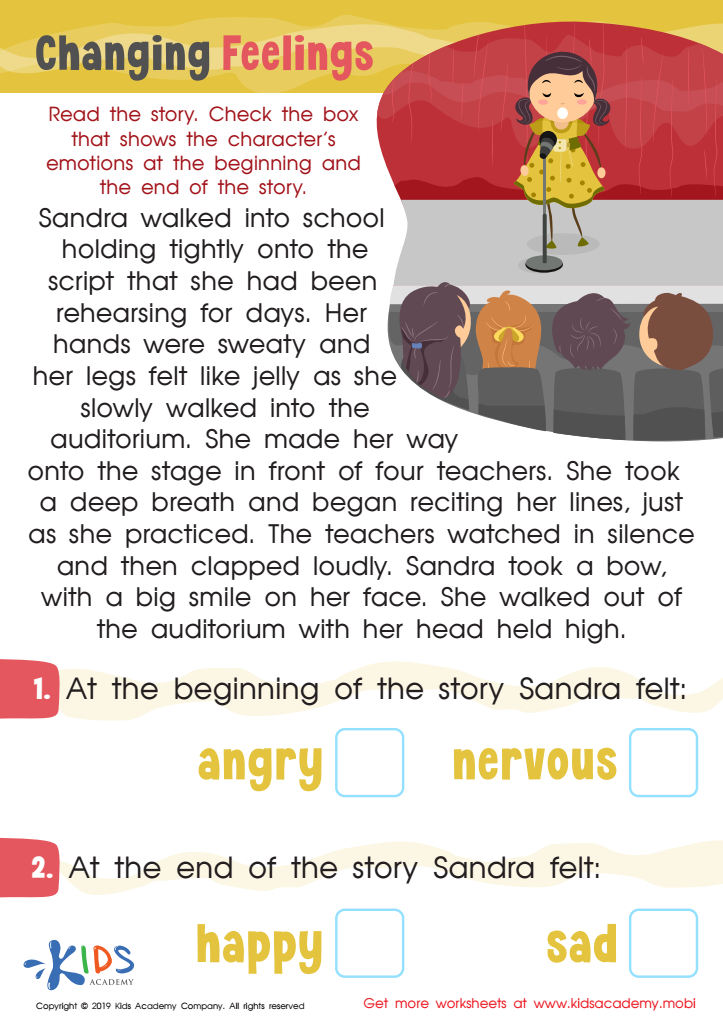
Changing Feelings Worksheet

Changing Feelings Worksheet

Help your kids practice reading skills with this exercise. Ask them to read the short passage, then check the boxes showing the character's emotions at the start and end. This will help them improve their reading and understanding.
Changing Feelings Worksheet
Worksheet
Little Elephant's Birthday Worksheet

Little Elephant's Birthday Worksheet

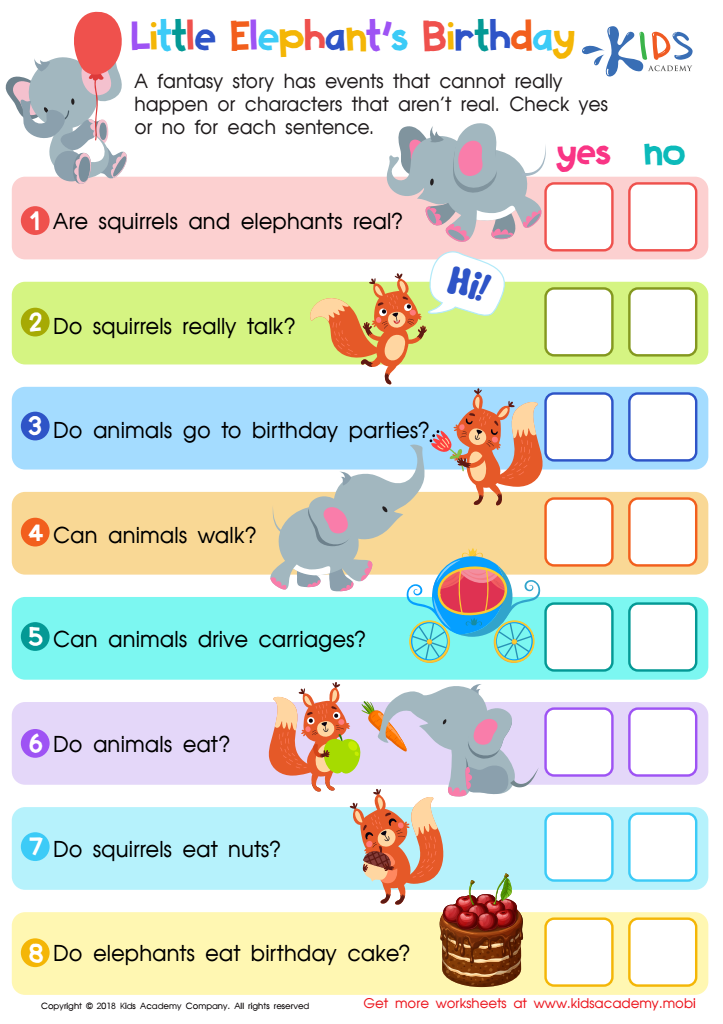
It's Little Elephant's birthday! Help your students celebrate with this fun worksheet full of colors and pictures. Deciding which questions are facts and which are fiction will help them differentiate between fantasy stories and reality. Let them have fun learning why certain elements of fantasy can't be true!
Little Elephant's Birthday Worksheet
Worksheet
The Ant and the Grasshopper worksheet PDF

The Ant and The Grasshopper Printable
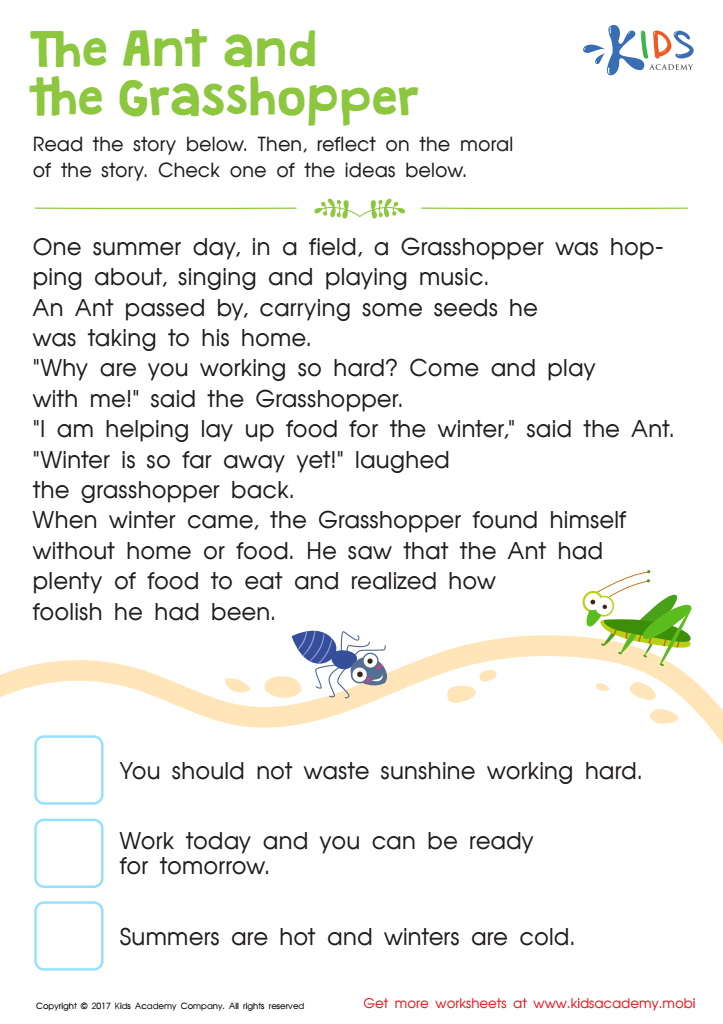
Aesop's fables have clear messages, which make them memorable and loved by children and adults. Use Kids Academy's ant and grasshopper worksheet to help your child reflect on stories and discover the life lesson.
The Ant and The Grasshopper Printable
Worksheet
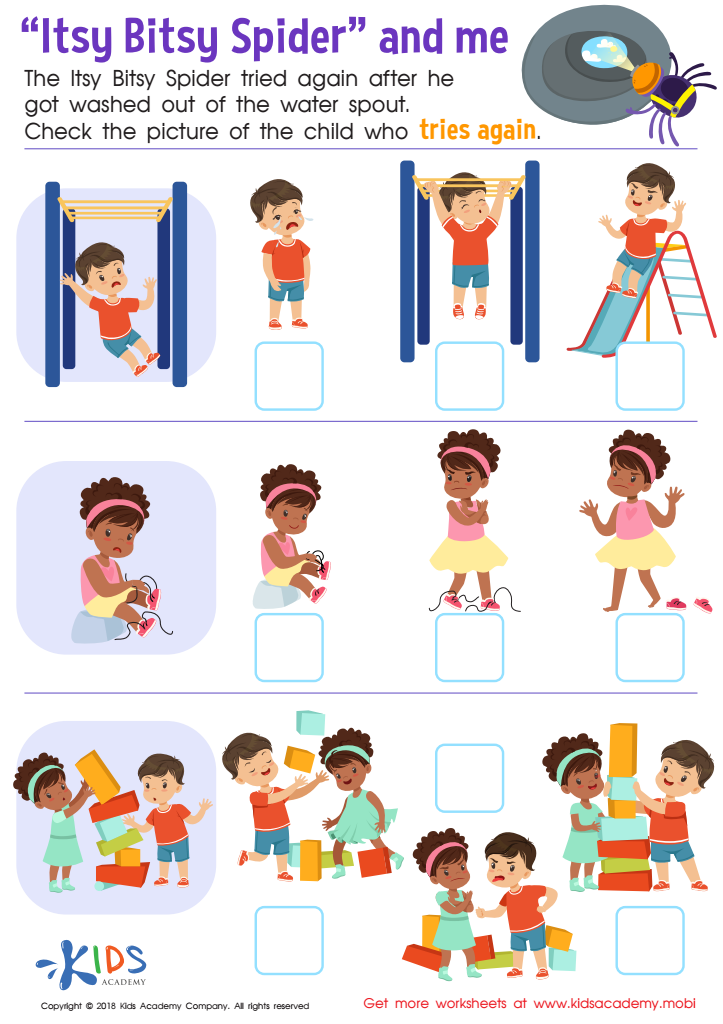
Itsy Bitsy Spider and Me Worksheet

Itsy Bitsy Spider and Me Worksheet

Ensure your child's success - teach them determination and perseverance! Introduce them to the Itsy-Bitsy spider and this fun worksheet. It shows kids working hard and teaches them to 'try again.' Have them identify scenes and check the box for those who succeeded.
Itsy Bitsy Spider and Me Worksheet
Worksheet
Robin Hood's Day Off Worksheet

Robin Hood's Day Off Worksheet

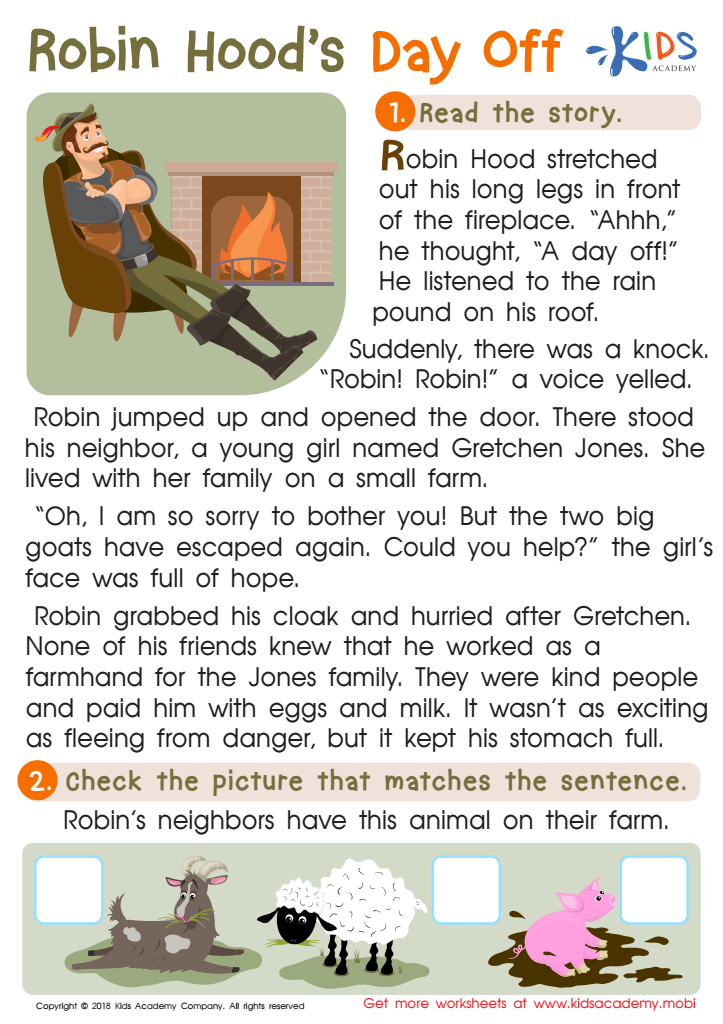
Encourage your child to express their personality by writing stories. Show them this worksheet's short story about Robin Hood and read it slowly and carefully. Read it again if needed and ask the question below the story. This will help your child use their knowledge to answer it.
Robin Hood's Day Off Worksheet
Worksheet
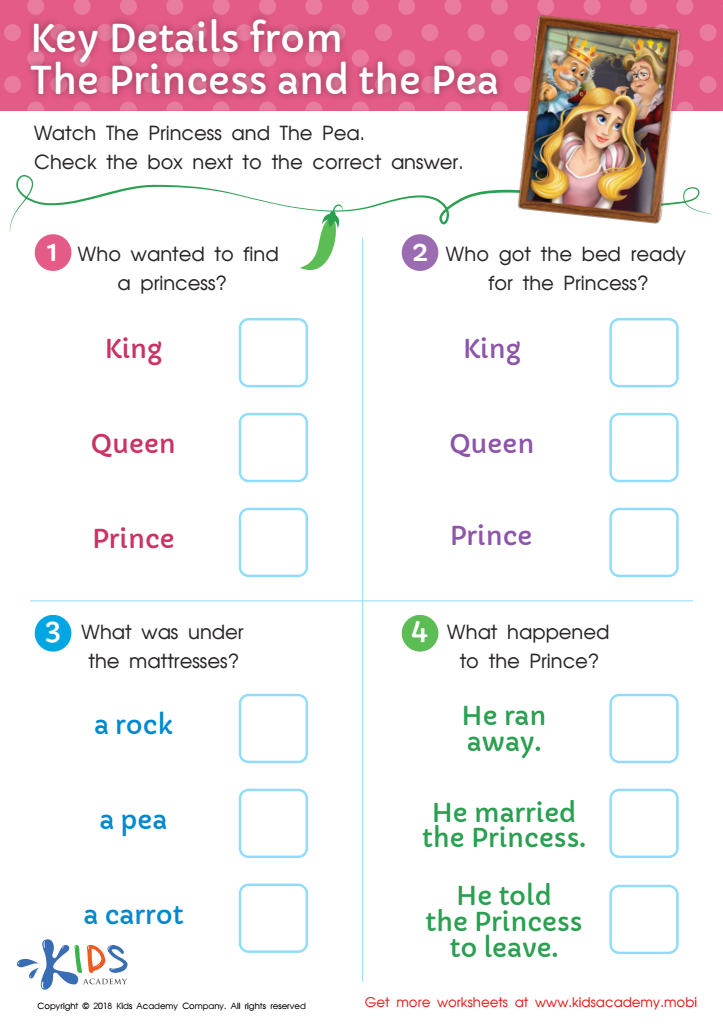
Key Details from the Princess and the Pea Worksheet

Key Details from the Princess and the Pea Worksheet

After reading The Princess and the Pea, ask your students questions to assess their comprehension of the story. Check their knowledge of key details. This printable can be used to help evaluate their understanding. Encouraging the recall of story events helps build important reading skills.
Key Details from the Princess and the Pea Worksheet
Worksheet
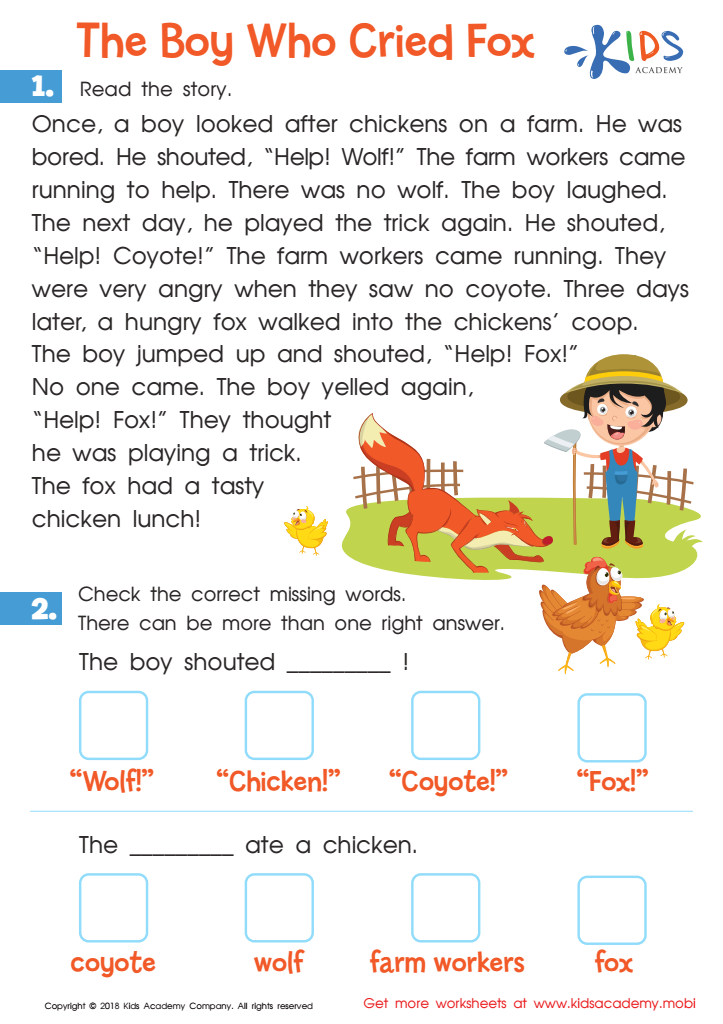
The Boy Who Cried Fox Worksheet

The Boy Who Cried Fox Worksheet

This worksheet encourages students to recall details from a story and answer questions to test their comprehension. Perfect for reading lessons, enrichment, or extra help.
The Boy Who Cried Fox Worksheet
Worksheet
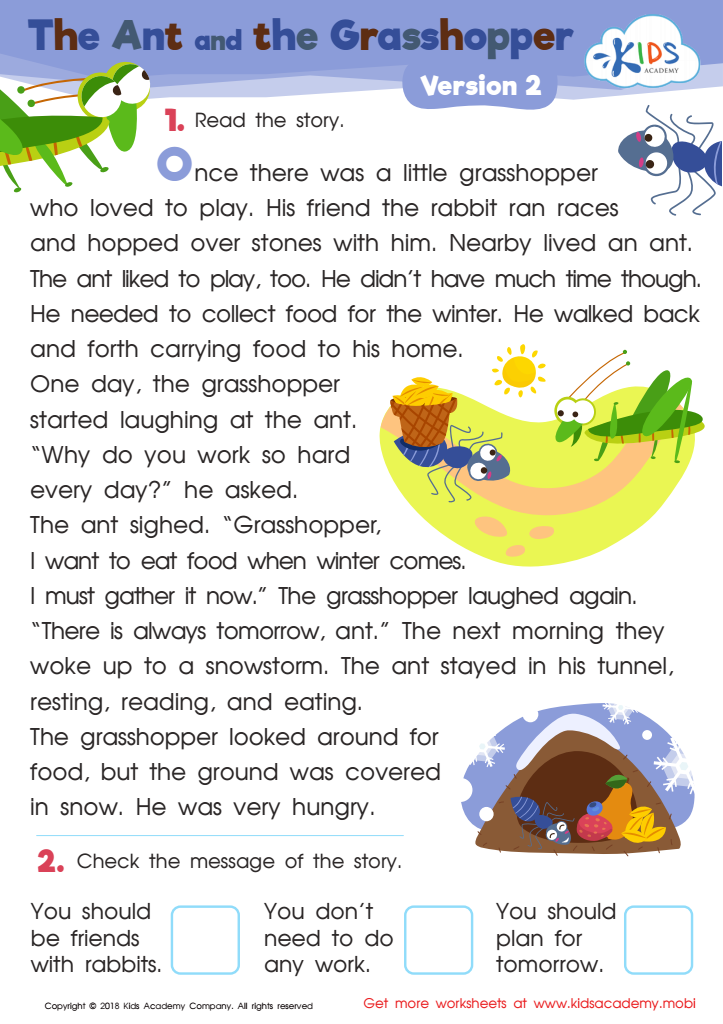
The Ant and The Grasshopper Version 2 Worksheet

The Ant and The Grasshopper Version 2 Worksheet

Story time is a great way to bond with kids and share a fun story. The Ant and the Grasshopper is a classic with a lesson for everyone. Listen together and then ask your students what the message of the story was. Prompt them with choices from the worksheet and see which one they select. It's a great way to increase their vocabulary and help them learn important lessons.
The Ant and The Grasshopper Version 2 Worksheet
Worksheet
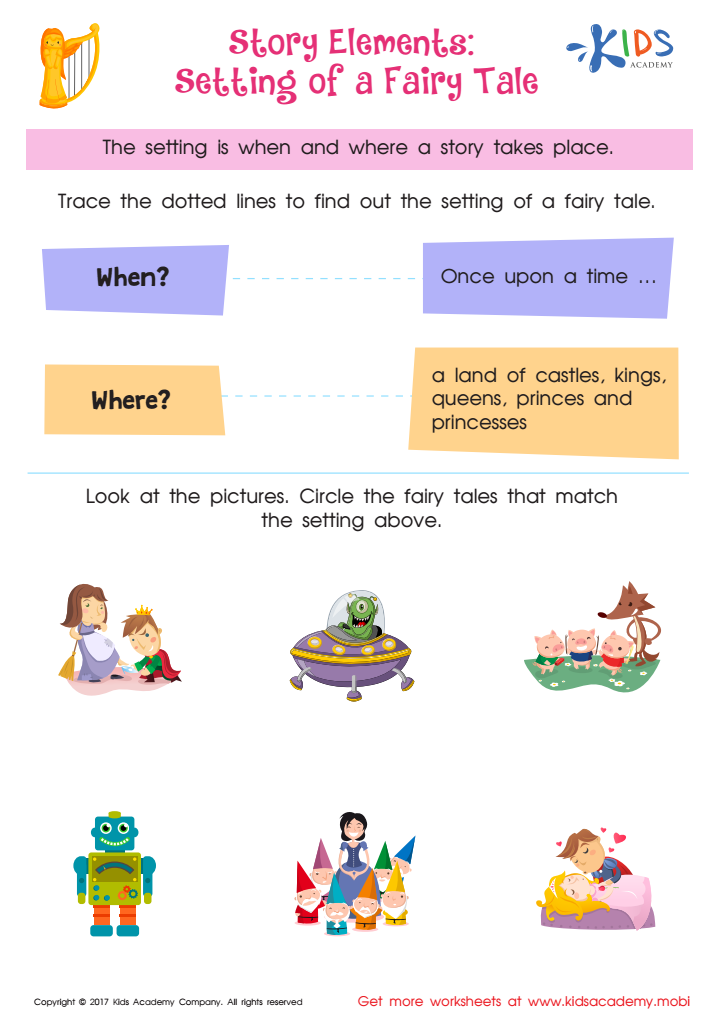
Worksheet: Story Elements

Story Elements: Setting of a Fairy Tale Printable

Help your child learn to analyze stories starting with setting. Use Story Elements worksheet to break down setting into two parts. This will help your child recognize setting quickly and understand its importance in the plot.
Story Elements: Setting of a Fairy Tale Printable

Worksheet


Reading fiction for children aged 7-9 is essential for their cognitive, social, and emotional development. During this stage, children are transitioning from early reading skills to more complex comprehension. Engaging with fictional stories fosters imagination and creativity, allowing them to explore different worlds, cultures, and perspectives. This is crucial for developing empathy, as they learn to understand characters' feelings and motivations.

Moreover, fiction introduces new vocabulary and language structures, enhancing language development. By encountering a variety of narratives, children also improve their analytical skills as they learn to predict outcomes, identify themes, and recognize the different elements of storytelling.

Additionally, fiction can serve as a tool to discuss complex emotions and situations that children may encounter in their own lives. Stories often mirror real-life challenges, providing a safe space for discussions about friendship, conflict resolution, and moral dilemmas.

Ultimately, prioritizing reading fiction for children in this age group not only supports their academic growth but also enriches their emotional intelligence and social skills. Both parents and teachers play a vital role in fostering a love for reading, encouraging lifelong learning, and supporting holistic development during these formative years.