Filters

96 filtered results

Clear all filters
Favorites
With answer key
Interactive

96 filtered results

Difficulty Level

Grade


Check out this FREE Trial Lesson on Reading Fiction for age 7-9!

Words Used for Rhythm and Meaning

Favorites
With answer key
Interactive
  • 7-9
  • With answer key
  • Reading Fiction
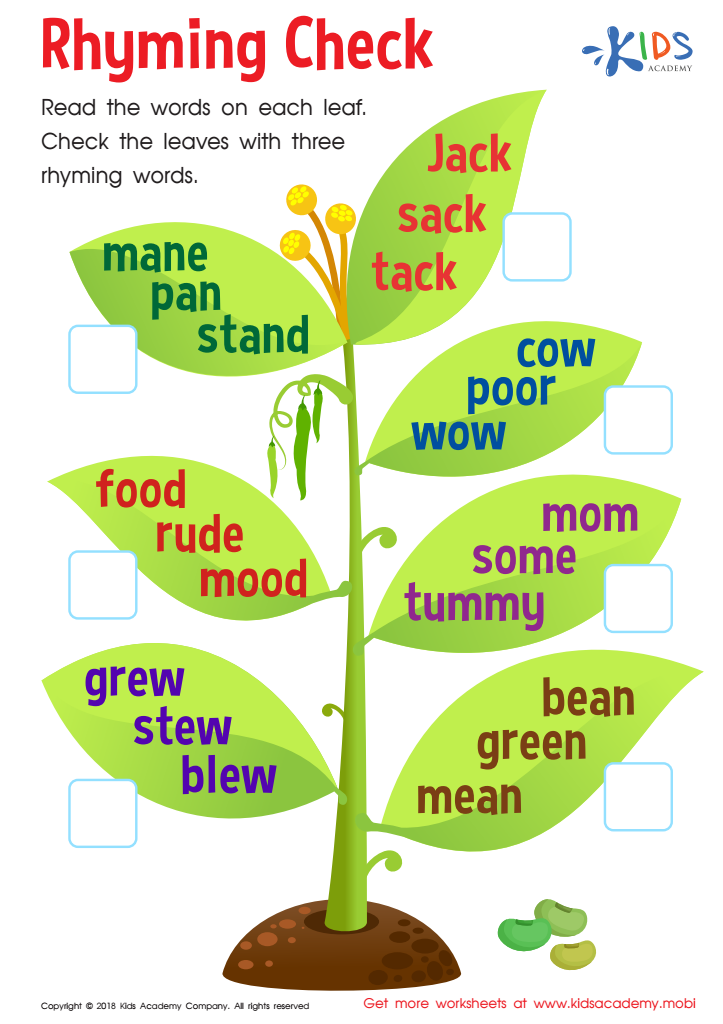
Rhyming Check Worksheet

Rhyming Check Worksheet

Help your child read the words on each leaf of a worksheet. Make sure they know that spellings can be misleading and tricky. When finished, ask them to identify the leaves with three rhyming words. This exercise helps their pronunciation skills and encourages critical thinking.
Rhyming Check Worksheet
Worksheet
Nursery rhyme match-up worksheet

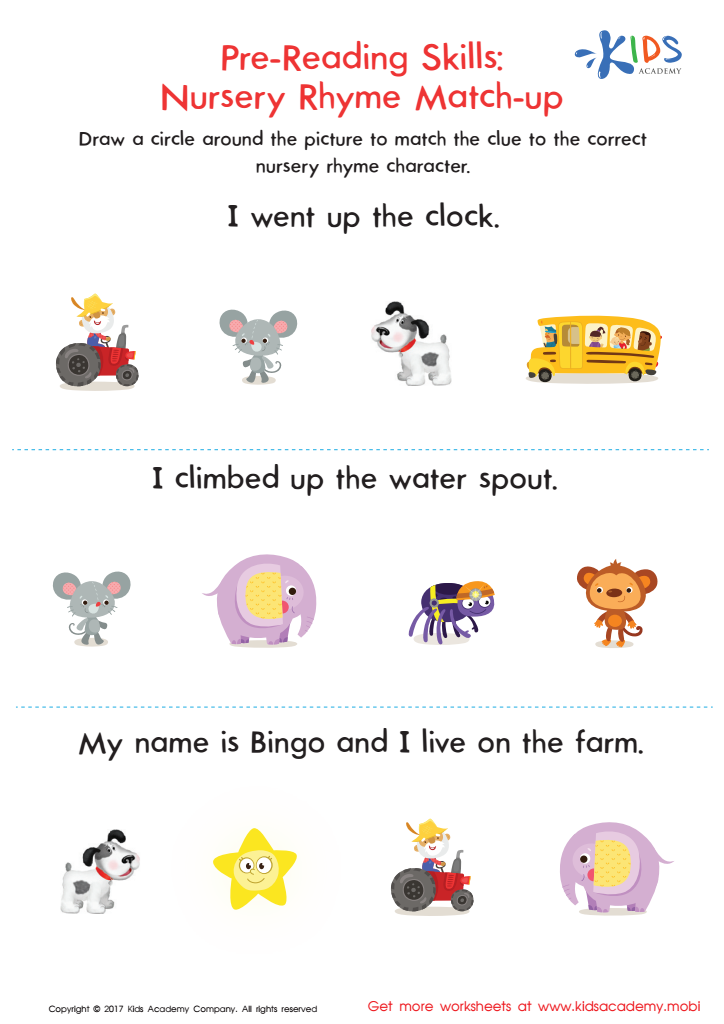
Nursery Rhyme Match–Up Worksheet

This worksheet helps kids build pre-reading skills using stories they know and love! By connecting with prior knowledge, kids can develop ideas about characters and set the stage for reading strategies.
Nursery Rhyme Match–Up Worksheet
Worksheet
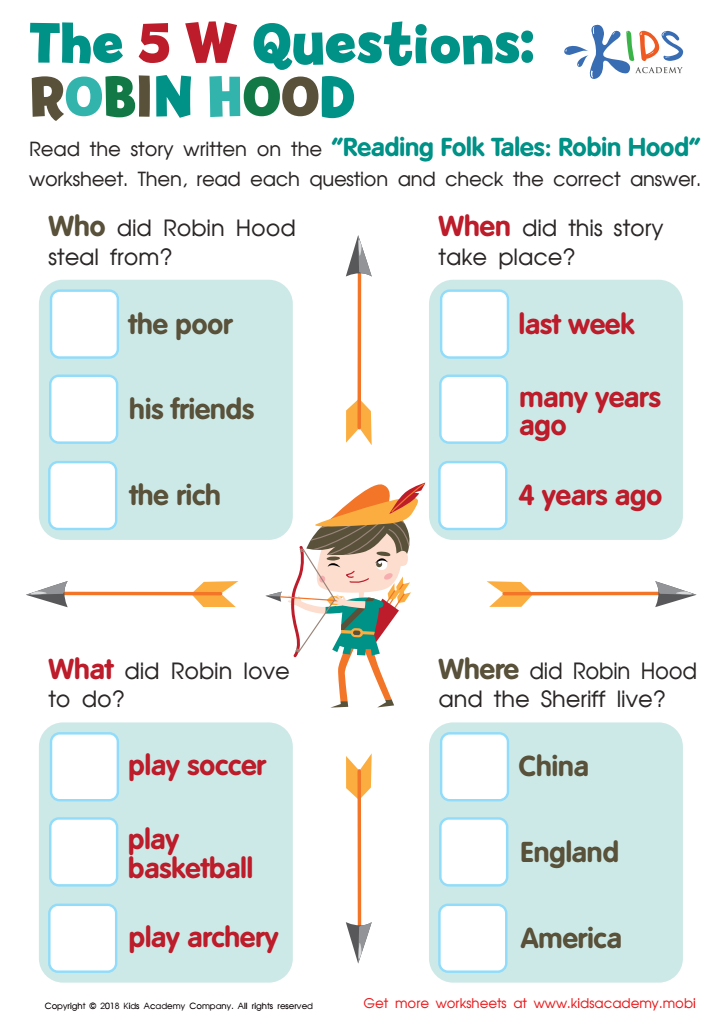
The 5 W Questions: Robin Hood Worksheet

The 5 W Questions: Robin Hood Worksheet

Before embarking on this Robin Hood adventure, ensure your child reads and comprehends the 'Reading Folk Tales: Robin Hood' worksheet. Have them consider the story's lessons, and observe the details. Read the questions and help your kids select the correct answers.
The 5 W Questions: Robin Hood Worksheet
Worksheet
Homework Blues Worksheet

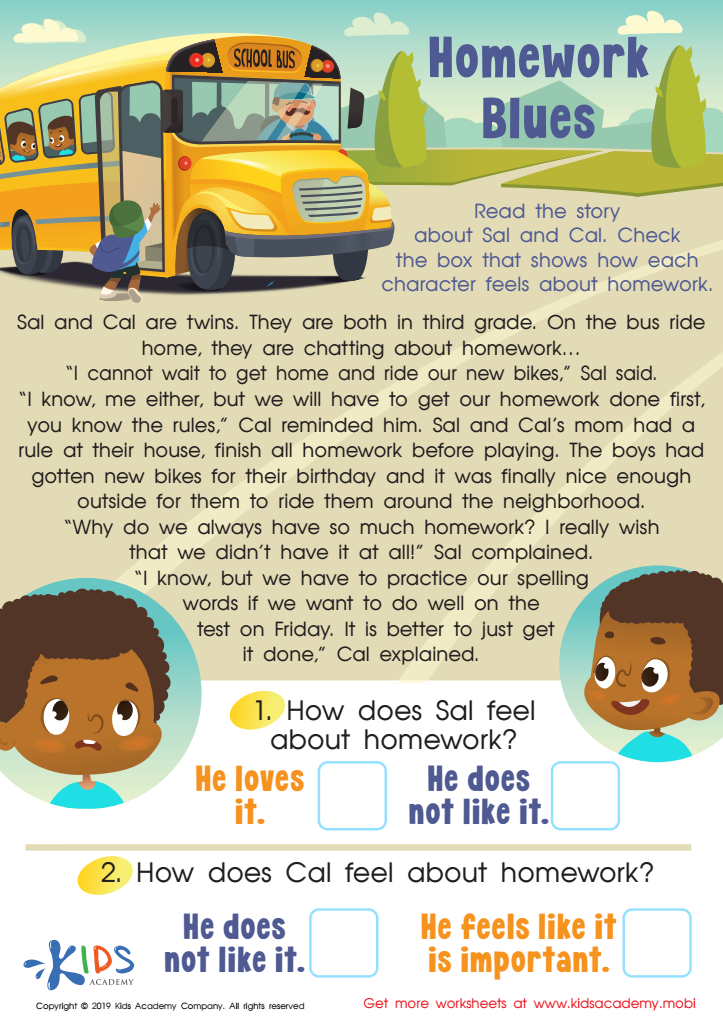
Homework Blues Worksheet

Cal and Sal don't love doing homework, just like your kids. Use this worksheet to help your children understand why homework is important. Read the passage together and then answer the questions at the bottom of the page. It's a fun way to learn together!
Homework Blues Worksheet
Worksheet
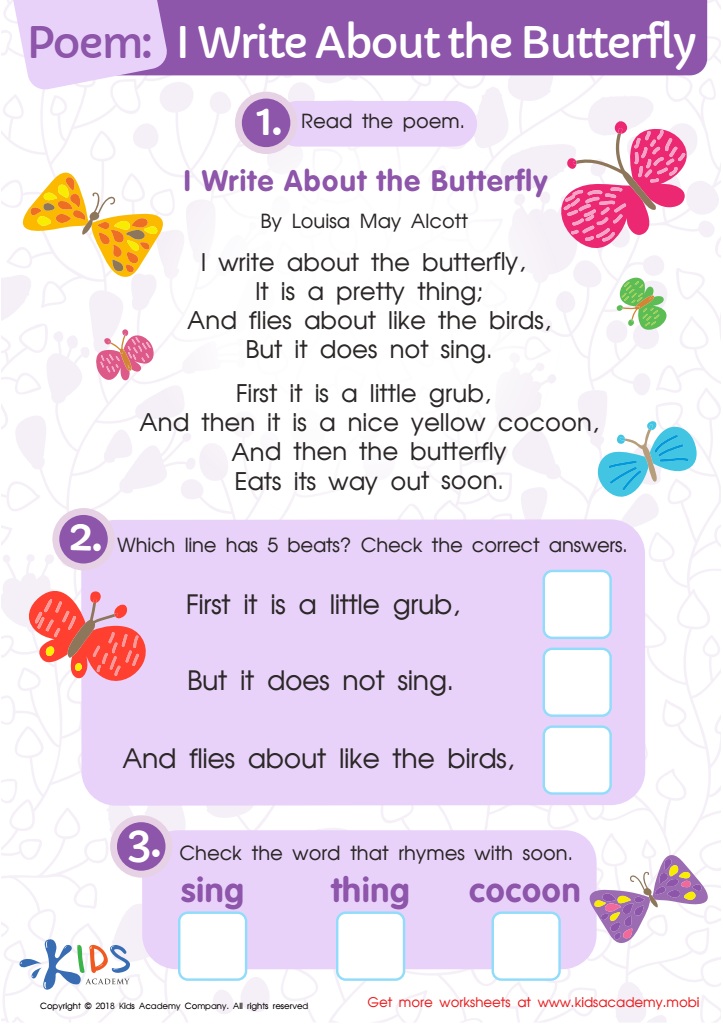
Poem: I Write About The Butterfly Worksheet

Poem: I Write About The Butterfly Worksheet

Do your kids like poetry? Encourage them to explore and connect with their poetic side! Read the butterfly poem from this worksheet aloud, then help them answer the questions. It's a great way to grow their appreciation of poetry and of the natural world.
Poem: I Write About The Butterfly Worksheet
Worksheet
Worksheet: The Boy Who Cried Wolf

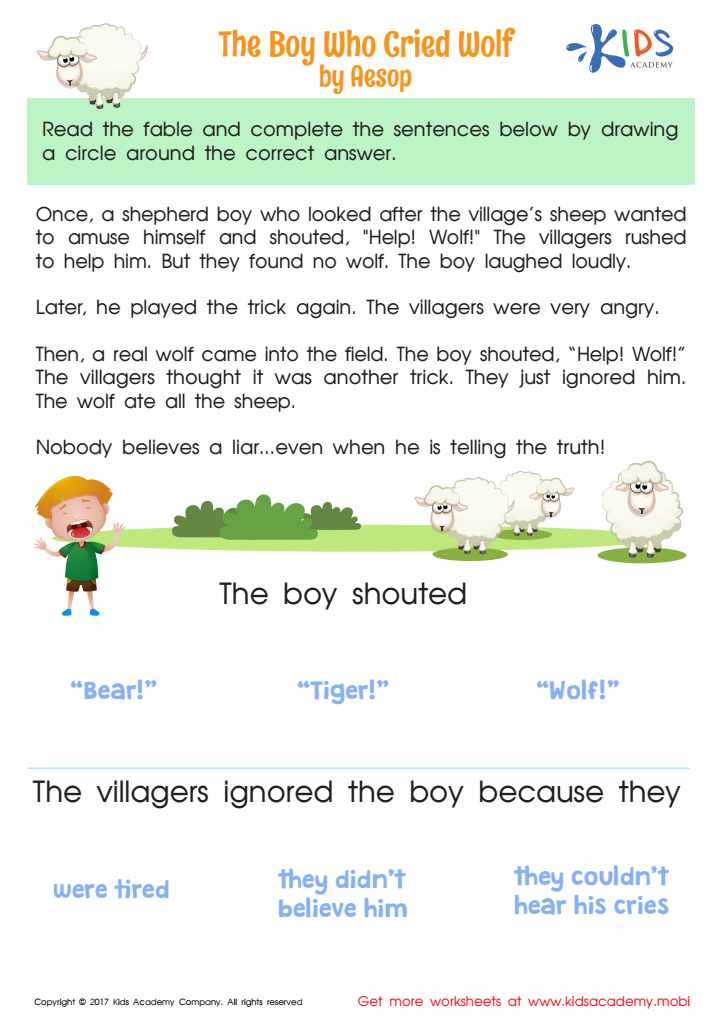
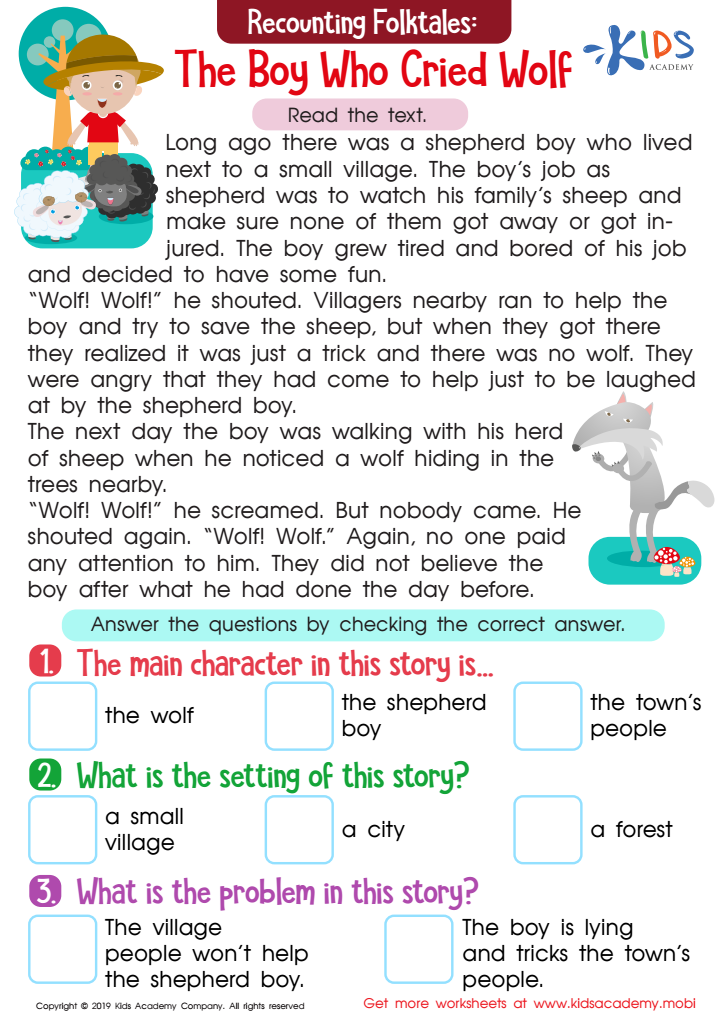
The Boy Who Cried Wolf Worksheet

Test your child's reading comprehension with The Boy Who Cried Wolf worksheet. Read the fable, then answer the questions. Use the text to help your child check their answers are correct. Boost reading skills in a fun, interactive way!
The Boy Who Cried Wolf Worksheet
Worksheet
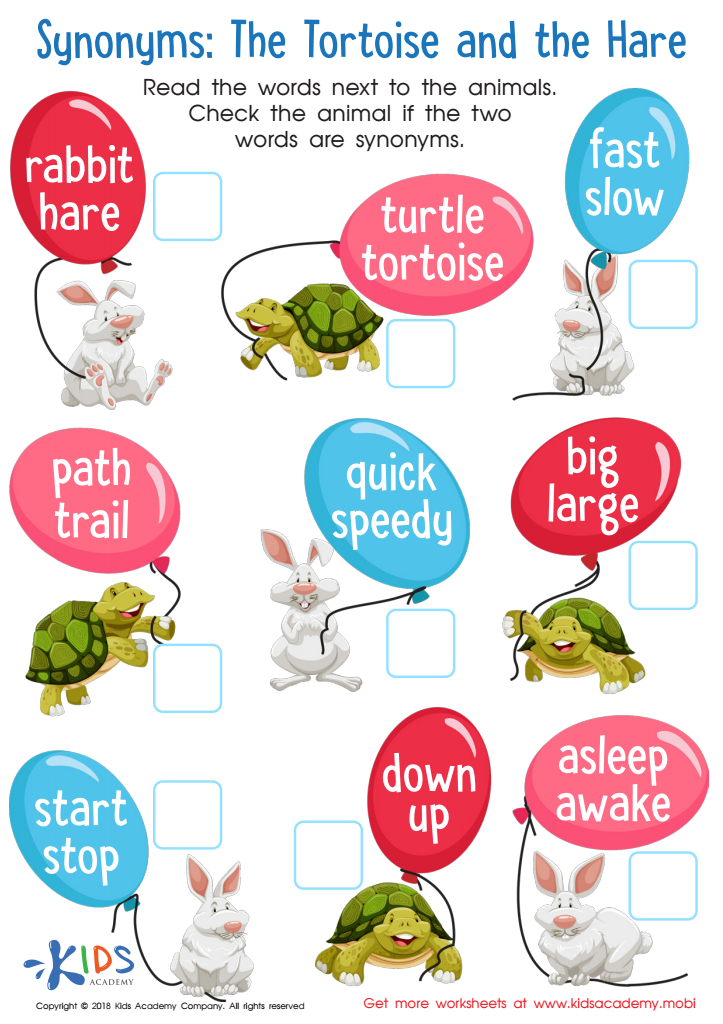
Synonyms: The Tortoise and Hare Worksheet

Synonyms: The Tortoise and Hare Worksheet

Help your kids identify words with similar meanings with this worksheet featuring a colourful picture of the Tortoise and the Hare. Show them how to check the boxes of animals with words that have similar meaning, then let them find more on their own. They'll love the challenge and you'll appreciate the educational value.
Synonyms: The Tortoise and Hare Worksheet
Worksheet
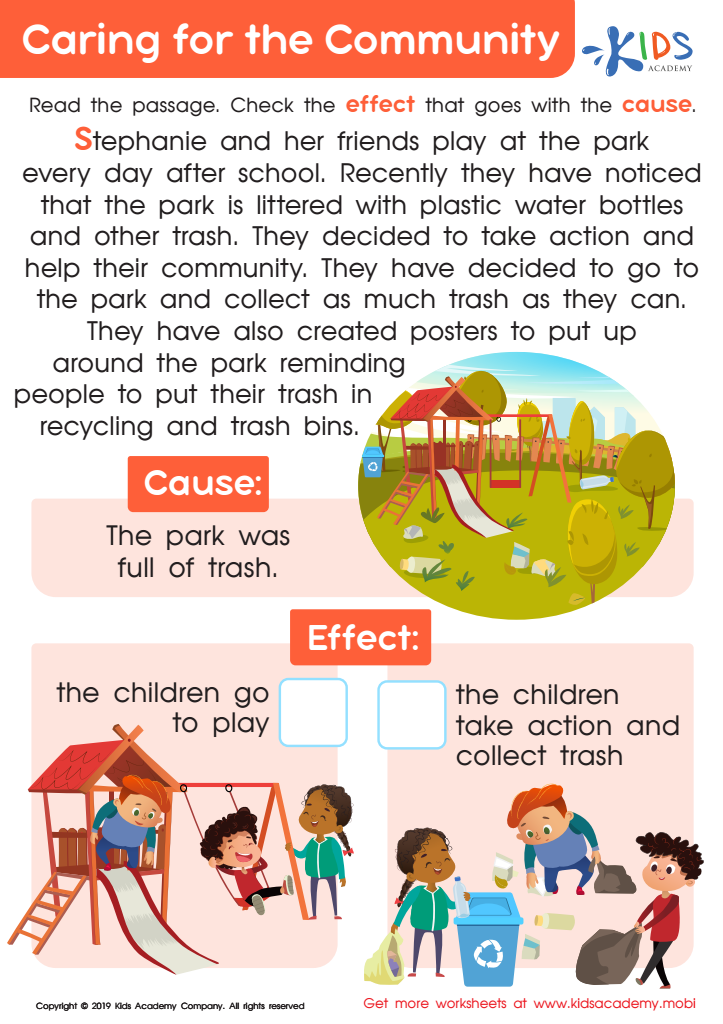
Caring for the Community Worksheet

Caring for the Community Worksheet

Before beginning, get your kids in the right mind-set by having them name ways to care for their community. Read the passage with them, pointing at pictures, then ask them to match the ‘cause’ with the ‘effect’ on the worksheet. This will help them learn more about how to care for their community.
Caring for the Community Worksheet
Worksheet
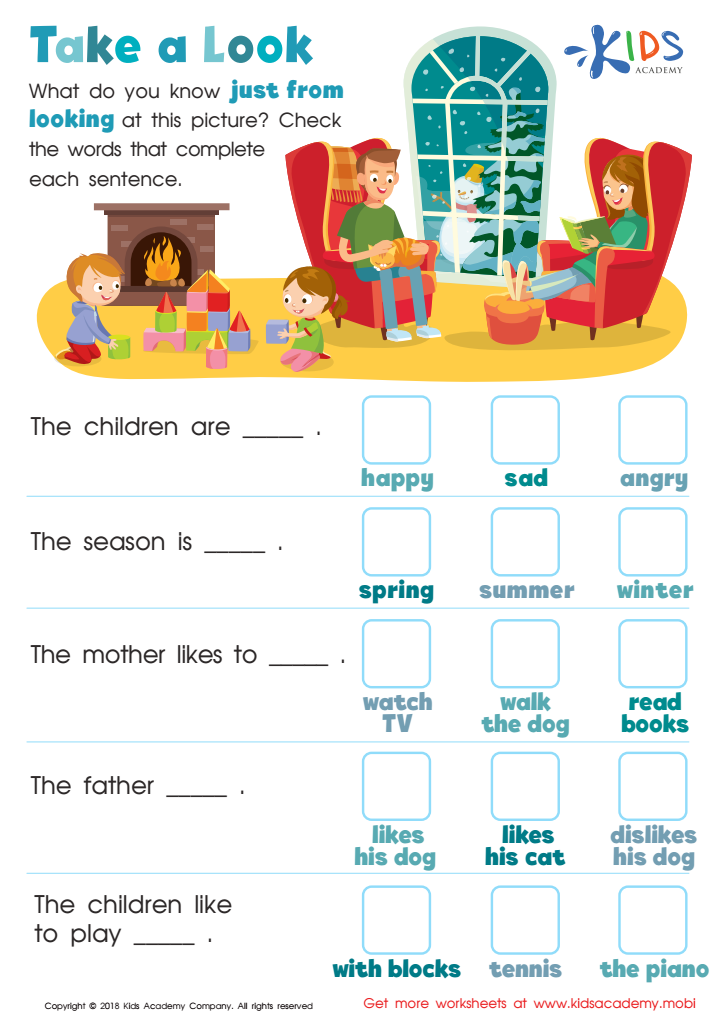
Take a Look - Part 1 Worksheet

Take a Look - Part 1 Worksheet

Young learners gain understanding when using picture clues when reading. Looking at illustrations can help students learn the meaning of key vocabulary when reading fiction or informational text. Ask your students to look at the worksheet and observe what they can learn from the picture. It's a great comprehension strategy for early readers.
Take a Look - Part 1 Worksheet
Worksheet
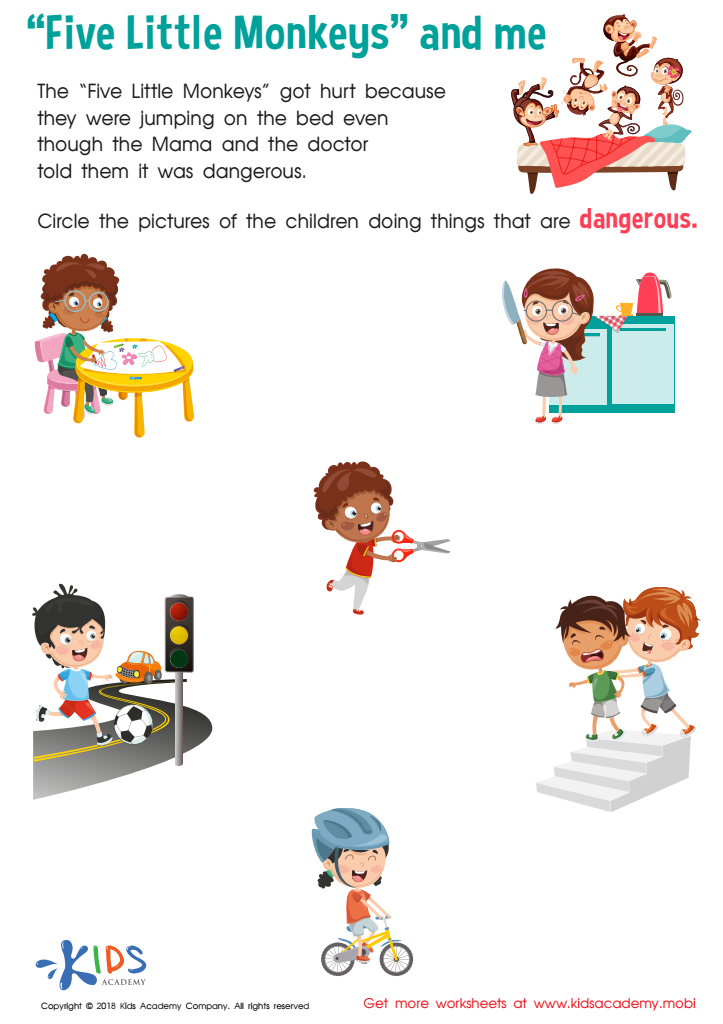
Five Little Monkeys and Me Worksheet

Five Little Monkeys and Me Worksheet

This free PDF worksheet provides preschoolers an understanding of danger and appropriate play. It allows them to recognize dangerous situations and why they can be risky, granting kids perspective from both parents and teachers. It's a fun, safe way to help them internalize what's dangerous and what's not.
Five Little Monkeys and Me Worksheet
Worksheet
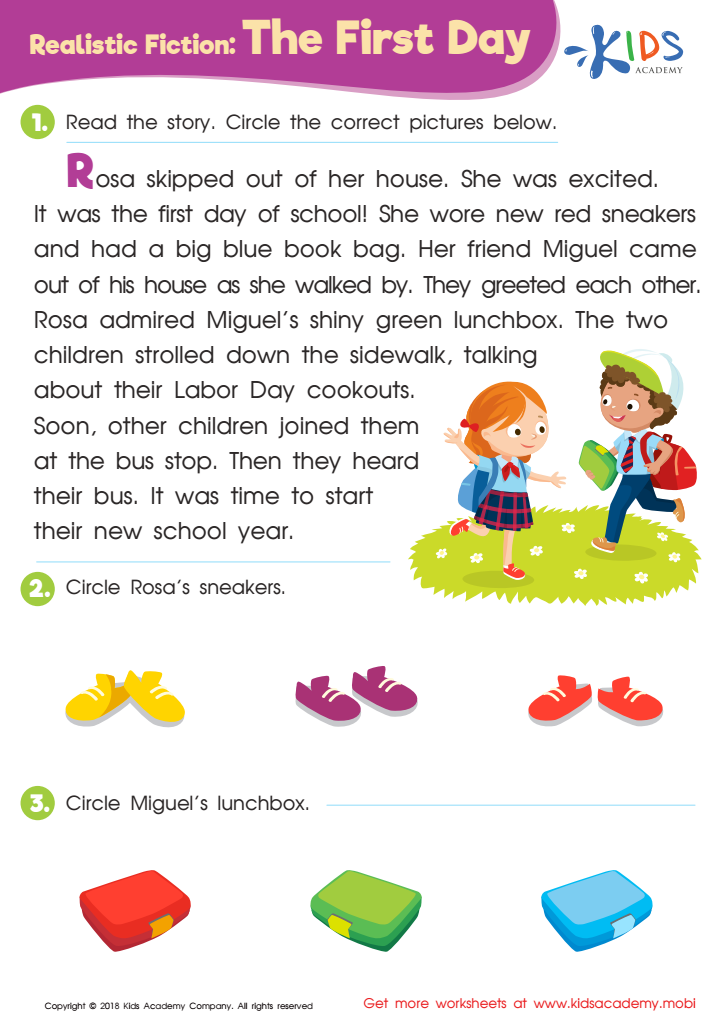
Realistic Fiction: The First Day Worksheet

Realistic Fiction: The First Day Worksheet

Fiction is made-up events, so story-writing is fiction writing. In this worksheet, there's a short story about Rosa, her friend Miguel, and their first day back at school. Read the story aloud to your kids and help them circle the right pictures to the questions. Repeat if needed.
Realistic Fiction: The First Day Worksheet
Worksheet
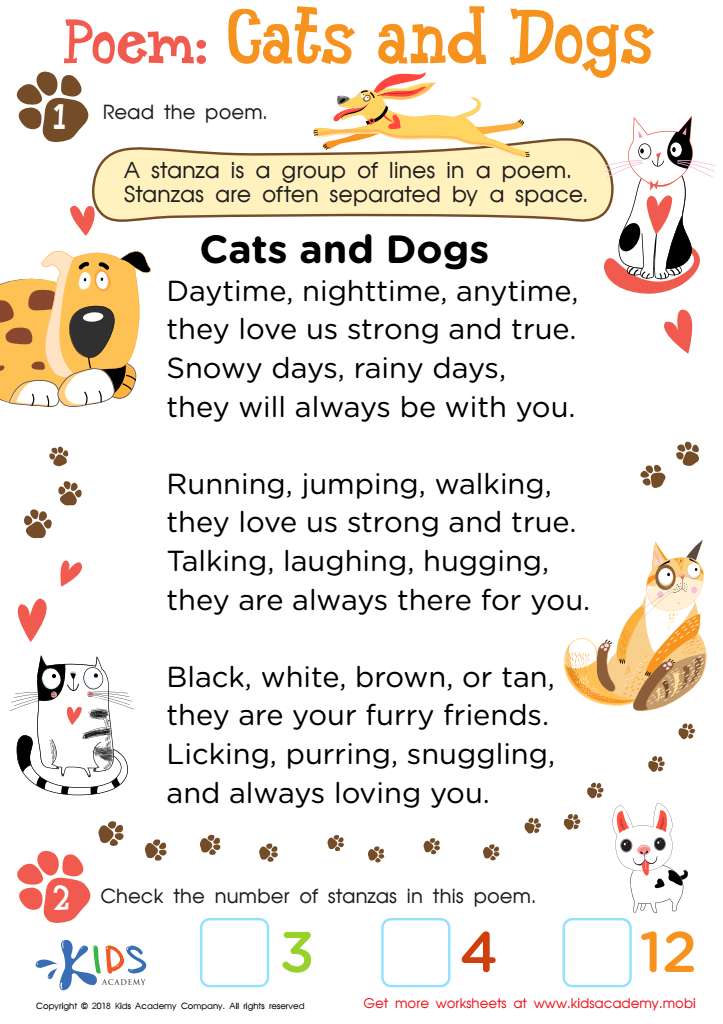
Poem: Cats and Dogs Worksheet

Poem: Cats and Dogs Worksheet

Read the poem to your child and point out where each stanza ends. Ask if they know what a stanza is (if not, explain it's a group of lines in a poem). Help them answer the question at the bottom of the printout. This simple, sweet poem about cats is easy for your child to relate to.
Poem: Cats and Dogs Worksheet
Worksheet
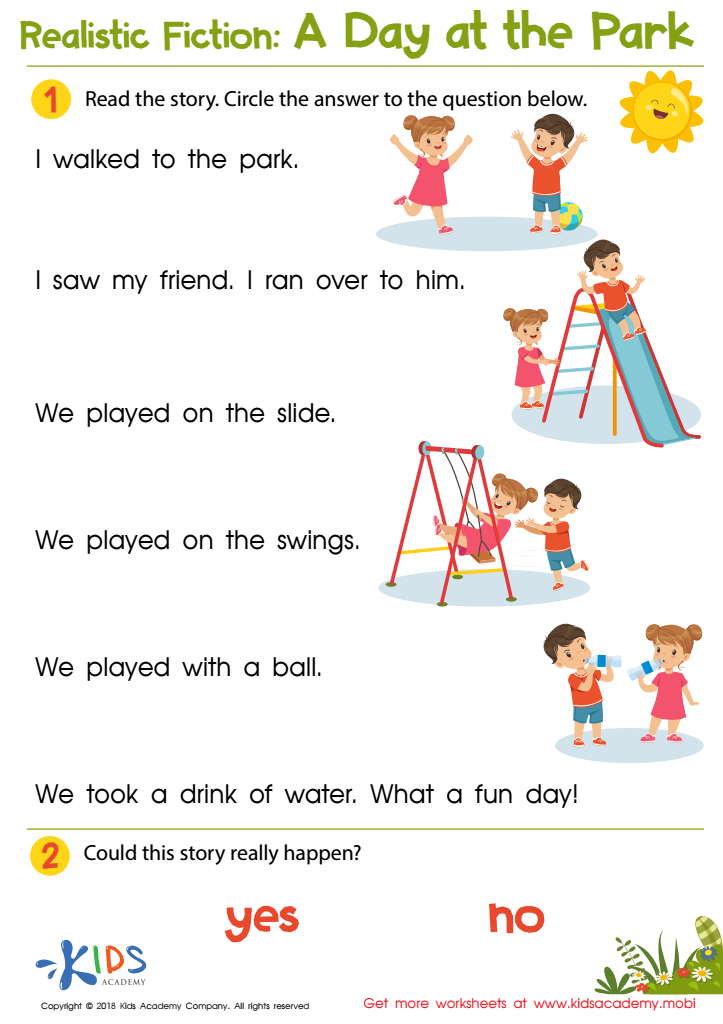
A Day at the Park Worksheet

A Day at the Park Worksheet

Kids as young as preschool-age can be taught to evaluate stories! Use this fun worksheet about a day at the park. Read each sentence aloud, looking at the pictures. Ask your child if the events in the story could happen in real life - if yes, circle yes, otherwise circle no. When finished, discuss with them the genre, realistic fiction.
A Day at the Park Worksheet
Worksheet
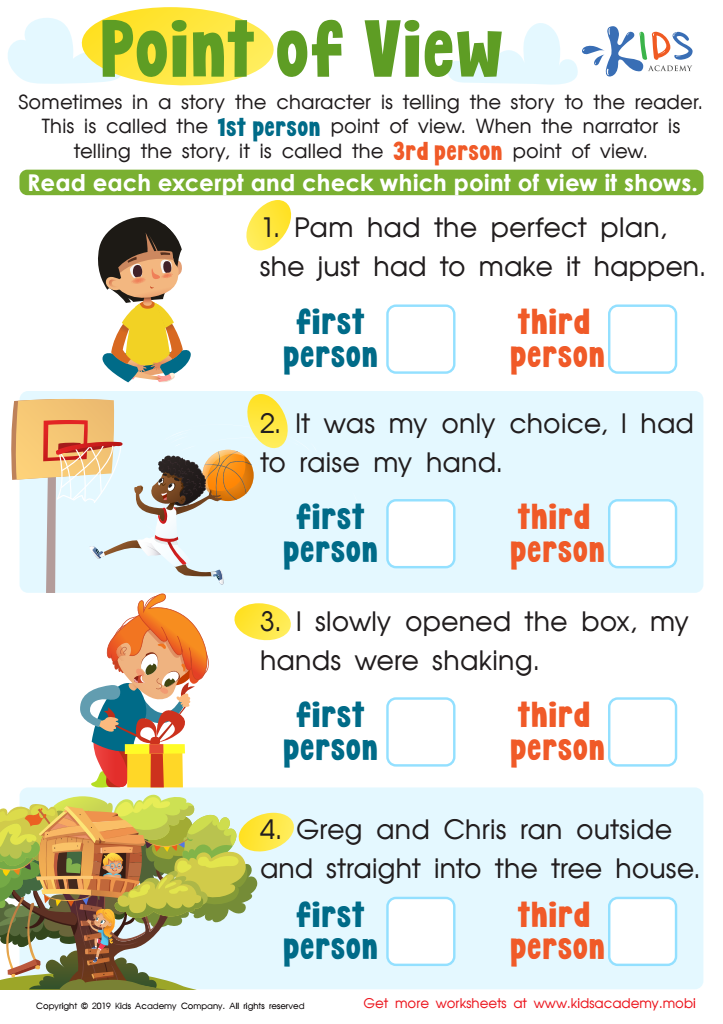
Point of View Printable

Point of View Printable

Teach your kids about points of view with this worksheet! In a story, characters can tell the story in first person or it can come from a narrator in third person. Read the excerpt in the worksheet and ask your kids to identify which point of view it is.
Point of View Printable
Worksheet
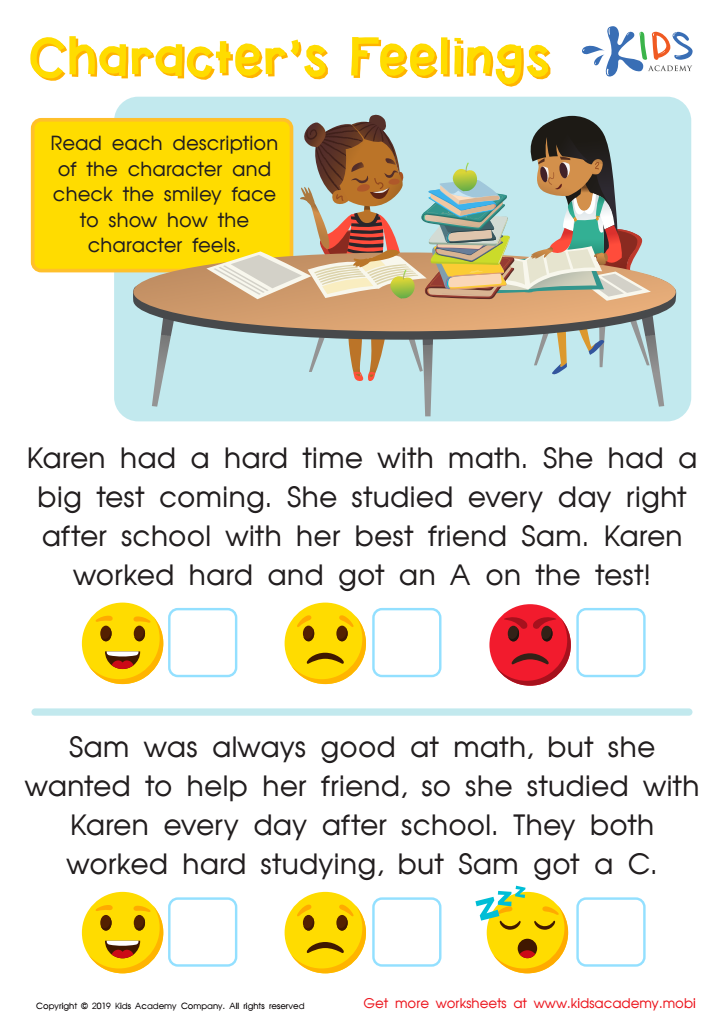
Character’s Feelings Worksheet

Character’s Feelings Worksheet

To help your child with reading and writing, encourage them to read simple texts and comprehension passages. This will help them learn new words, build their grammar and practice their reading skills. Go through a worksheet together, read the character descriptions then ask your child to pick the smiley face which shows how the character feels.
Character’s Feelings Worksheet
Worksheet
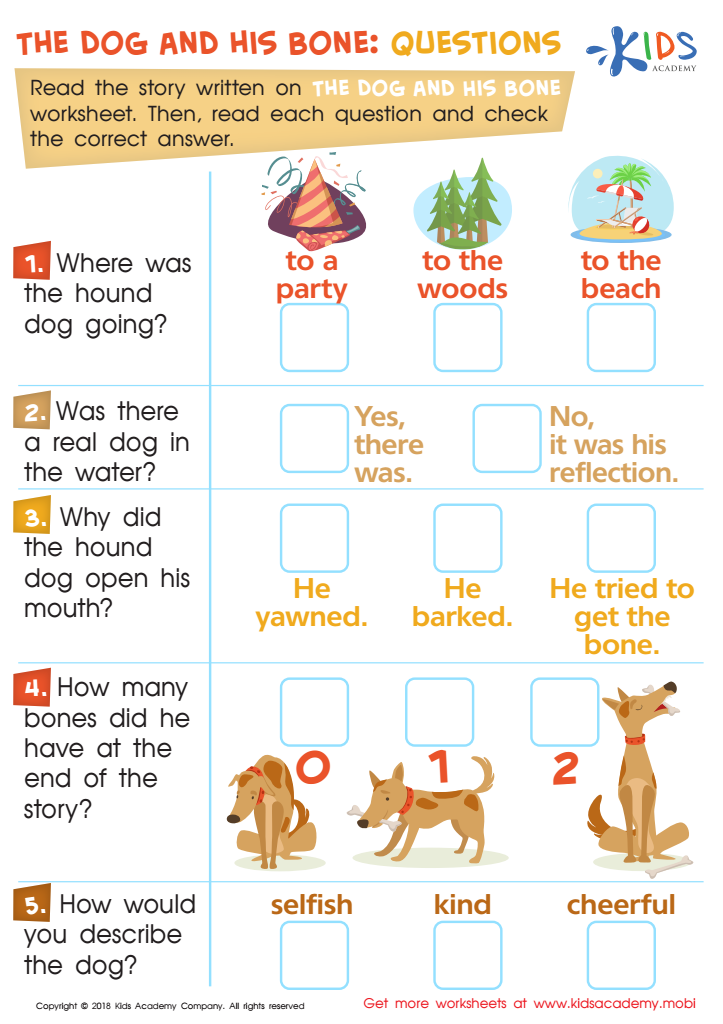
The Dog and His Bone: Questions Worksheet

The Dog and His Bone: Questions Worksheet

Read the story of The Dog and His Bone to your child and help them understand it. Have them read it aloud if possible. Then, read the five questions on the worksheet and guide them to select the correct answers.
The Dog and His Bone: Questions Worksheet
Worksheet
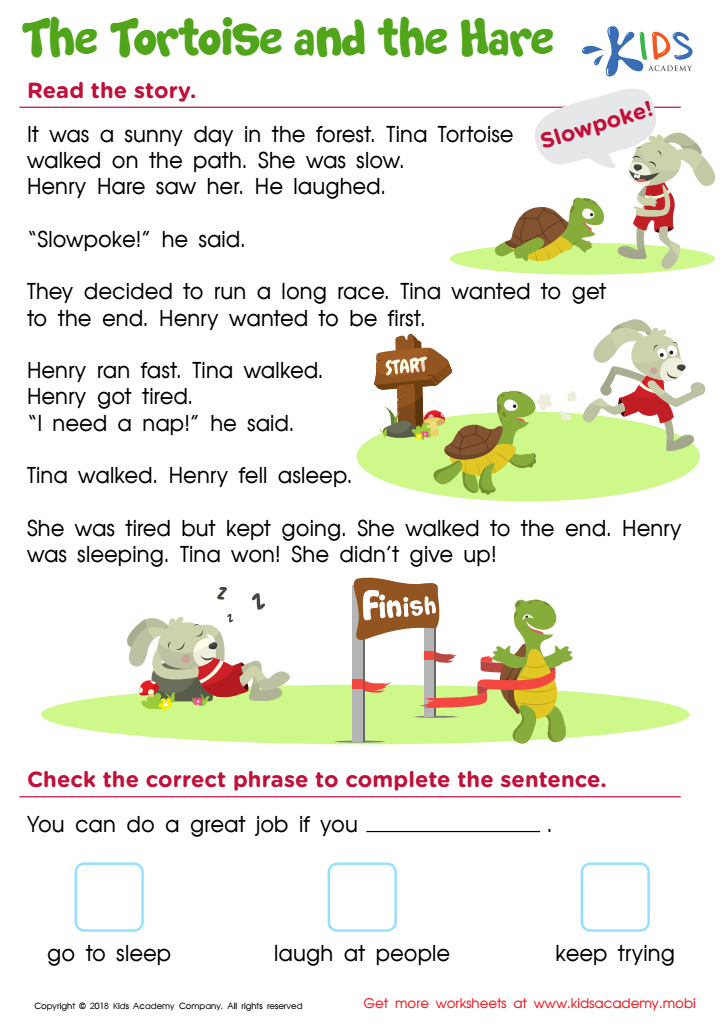
The Tortoise and the Hare Worksheet

The Tortoise and the Hare Worksheet

Help your child uncover the hidden moral in a classic children's tale with this free downloadable worksheet. Joyful illustrations bring the story to life and help young readers visualize the events. With your help, they can answer the question and fill in the blank with the phrase that serves as the story's lesson. Check the box to complete the worksheet!
The Tortoise and the Hare Worksheet
Worksheet
The Boy Who Cried Wolf Part 1 Worksheet

The Boy Who Cried Wolf Part 1 Worksheet

Storytime can be your kid's favorite part of the day. Ask them what their favorite stories are, then read the text in the printout. Read along with them, making sure they understand each word. At the end, go over the questions and have them check the correct answers.
The Boy Who Cried Wolf Part 1 Worksheet
Worksheet
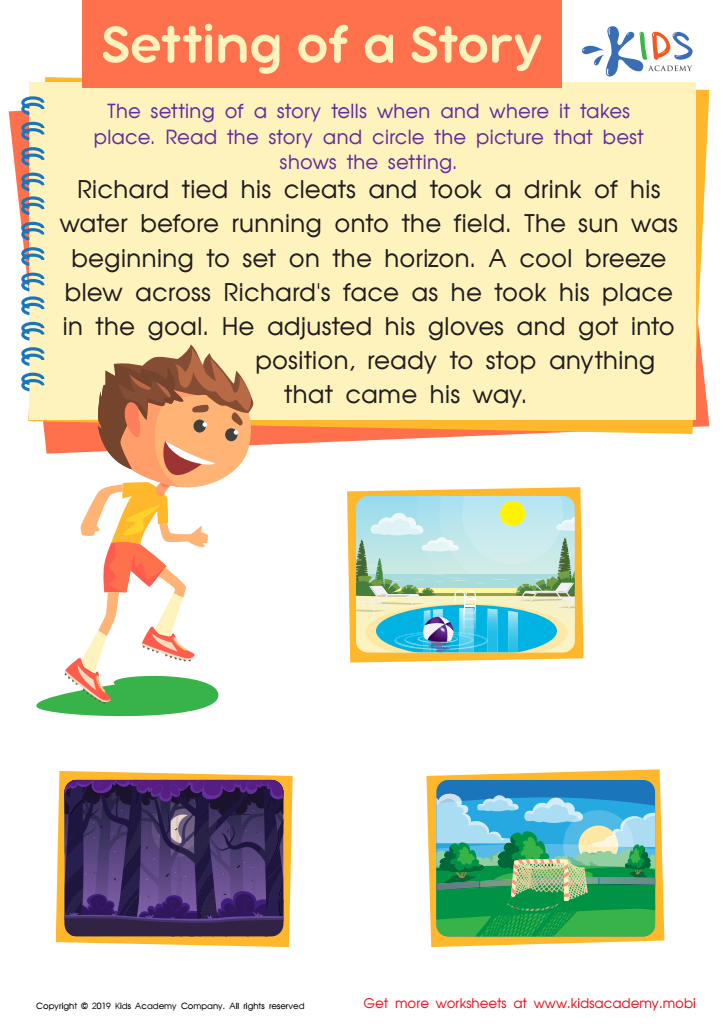
Setting of a Story Worksheet

Setting of a Story Worksheet

You need characters, theme, POV, plot and setting to tell a good story. Ask your kids to explain them and use this worksheet with a story to teach them about setting. Read the story with your kids, then have them circle the picture that best shows the setting.
Setting of a Story Worksheet
Worksheet
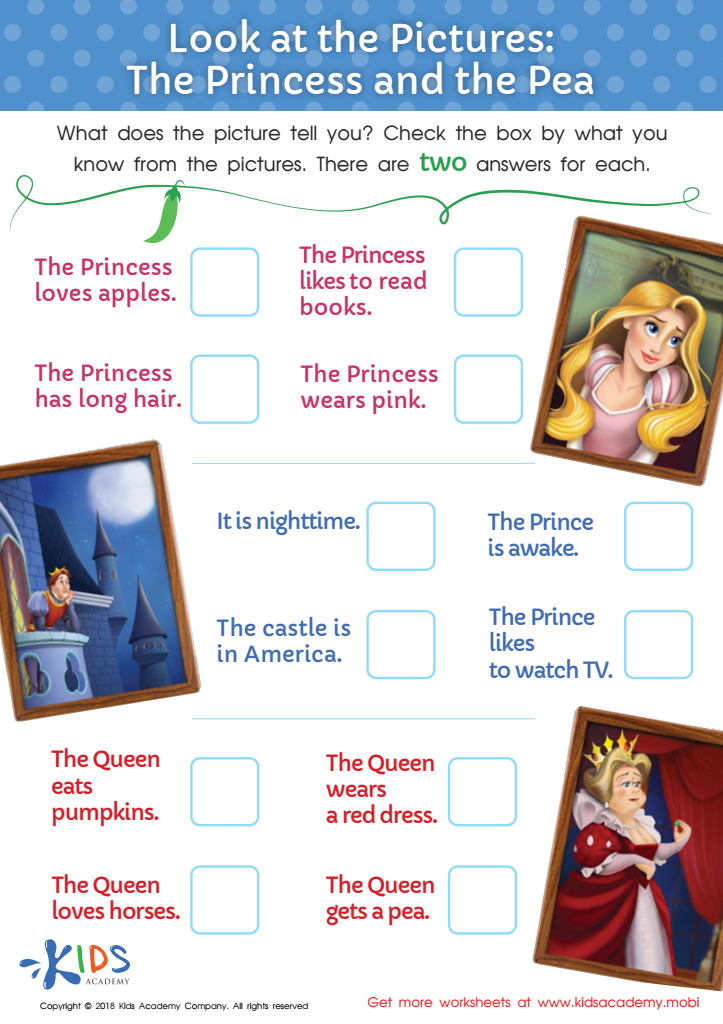
Look at the Pictures: The Princess and the Pea Worksheet

Look at the Pictures: The Princess and the Pea Worksheet

Early readers can benefit from picture clues to understand stories and text. Looking at images helps them learn the meaning of words and comprehend events. Use this worksheet on The Princess and the Pea to let students observe and learn from the pictures. It's a great way to help them comprehend early reading materials.
Look at the Pictures: The Princess and the Pea Worksheet
Worksheet
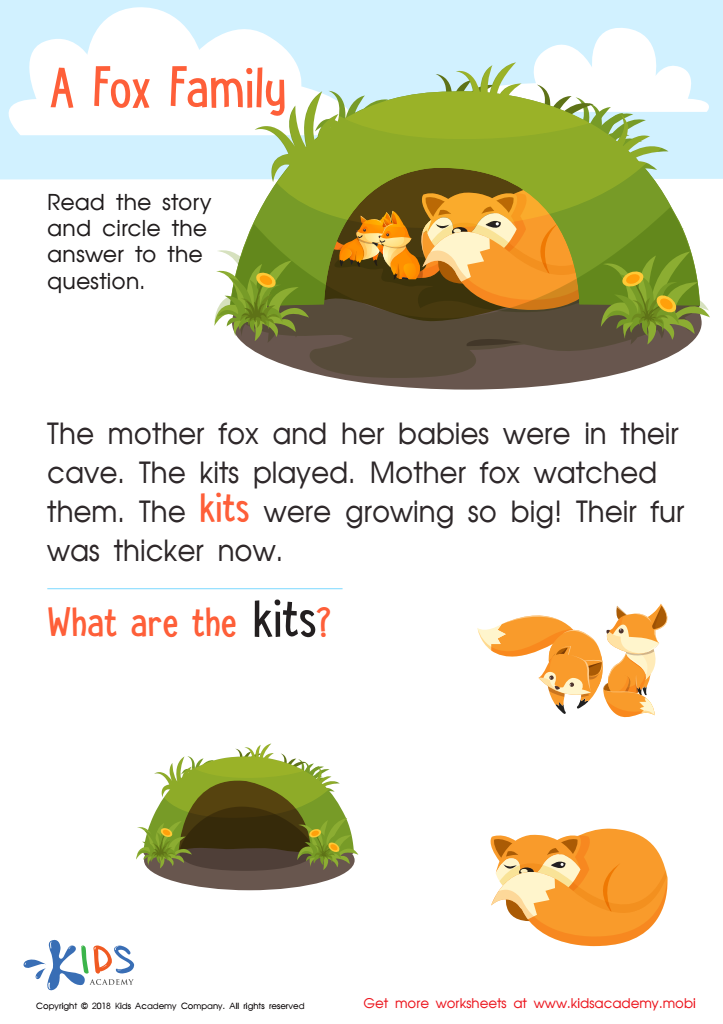
A Fox Family Worksheet

A Fox Family Worksheet

Reading is an easy way to learn new words. This worksheet introduces an interesting story about a fox family, teaching your child that "kits" refers to baby foxes. Read the text together and circle the picture to answer the question.
A Fox Family Worksheet
Worksheet
Think About It: Assessment Worksheet

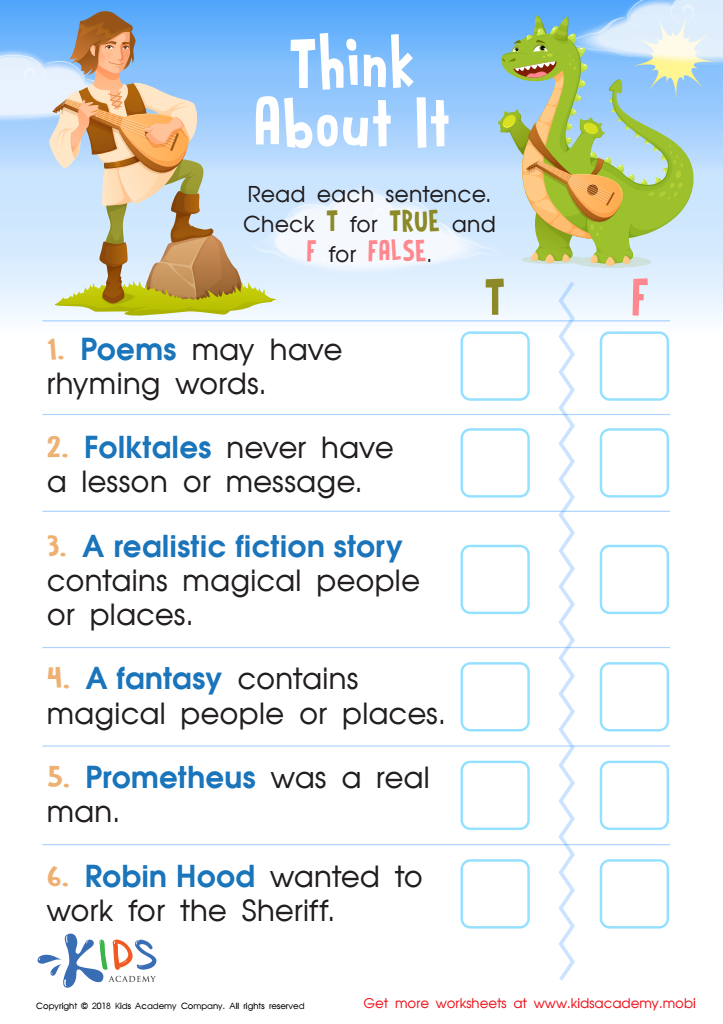
Think About It: Assessment Worksheet

Reading is a fun and important way to learn. Help your students become better readers with this simple yet colorful worksheet. Read each sentence aloud, then have them read it by themselves. Ask them to check T for True and F for False. It's a great way to practice their reading skills!
Think About It: Assessment Worksheet
Worksheet
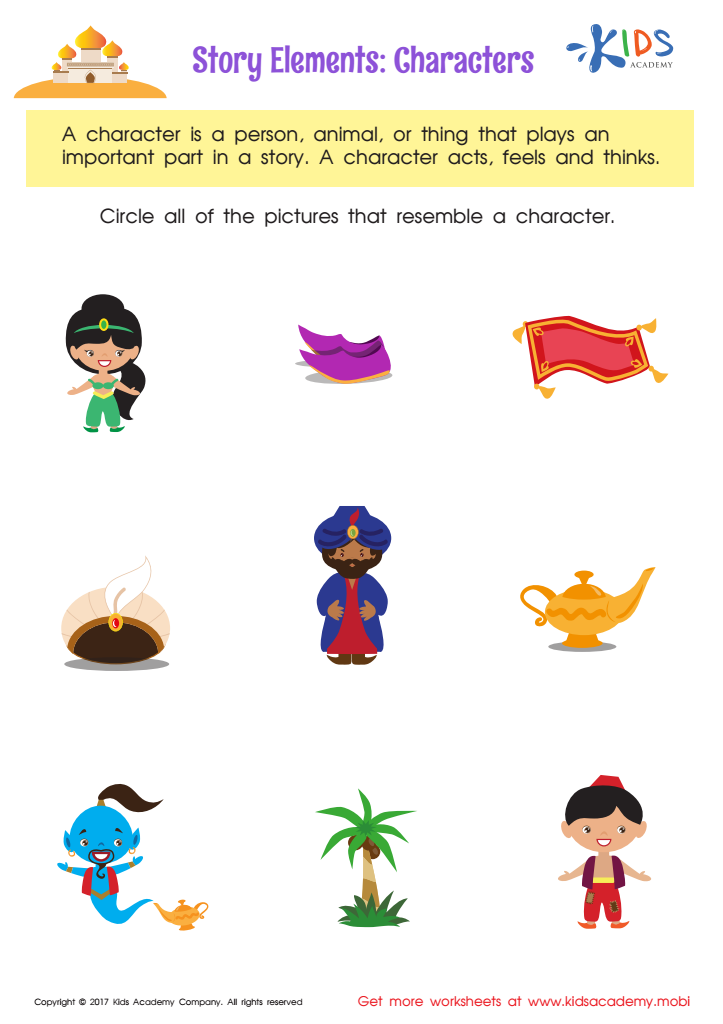
Reading Comprehension Worksheet: Aladdin

Story Elements Printable

Read the text and review the characters, settings and plot in a guided discussion. Take your child on a journey to the Middle East and review the characters, settings and plot of their favorite childhood stories with this Aladdin-themed worksheet! It'll help them master early analysis skills and learn about characterization. Enjoy a fun, guided discussion with your child as you review important story elements.
Story Elements Printable
Worksheet
The Boy Who Cried Wolf Part 2 Worksheet


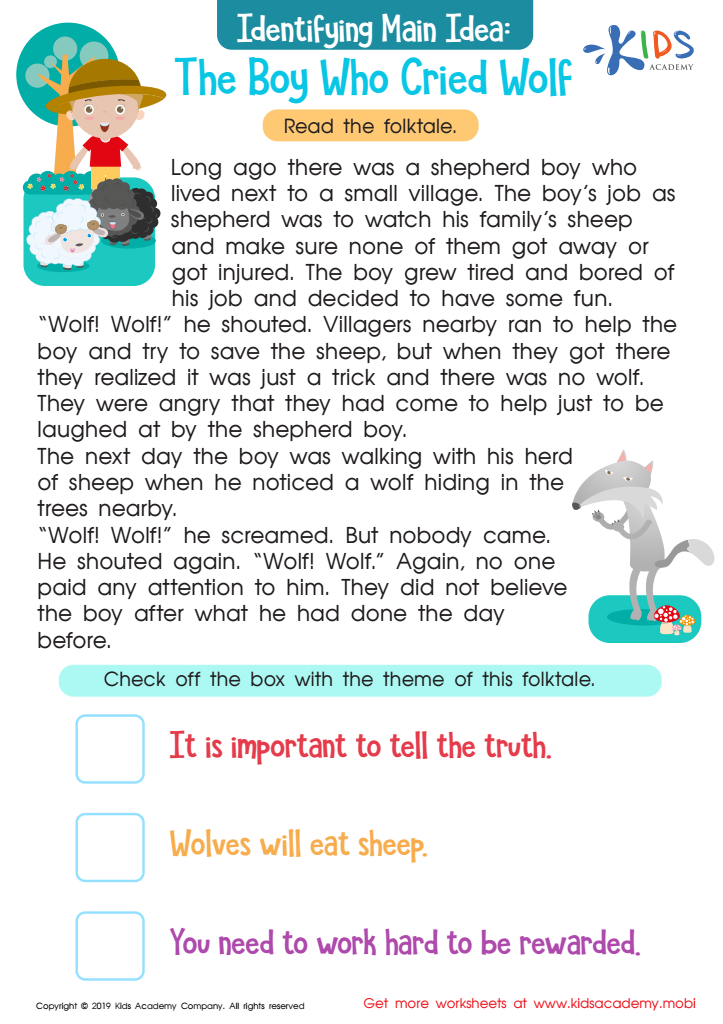
The Boy Who Cried Wolf Part 2 Worksheet

Kids love story time - no doubt they know their favorites! This worksheet tells a story with a theme or main idea. Read it carefully with your kids and ensure they understand every word. Then, help them answer the simple questions at the bottom of the page.
The Boy Who Cried Wolf Part 2 Worksheet
Worksheet


... 3 4

Reading fiction for children aged 7-9 is essential for their cognitive, social, and emotional development. During this stage, children are transitioning from early reading skills to more complex comprehension. Engaging with fictional stories fosters imagination and creativity, allowing them to explore different worlds, cultures, and perspectives. This is crucial for developing empathy, as they learn to understand characters' feelings and motivations.

Moreover, fiction introduces new vocabulary and language structures, enhancing language development. By encountering a variety of narratives, children also improve their analytical skills as they learn to predict outcomes, identify themes, and recognize the different elements of storytelling.

Additionally, fiction can serve as a tool to discuss complex emotions and situations that children may encounter in their own lives. Stories often mirror real-life challenges, providing a safe space for discussions about friendship, conflict resolution, and moral dilemmas.

Ultimately, prioritizing reading fiction for children in this age group not only supports their academic growth but also enriches their emotional intelligence and social skills. Both parents and teachers play a vital role in fostering a love for reading, encouraging lifelong learning, and supporting holistic development during these formative years.