K.G.A.1 Geometry worksheets With Answers for Kindergarten - Page 2
27 filtered results
Difficulty Level
Grade
Age
-
From - To
Subject
Activity
Standards
Favorites
With answer key
Interactive
How Pawns Move: Part I Worksheet
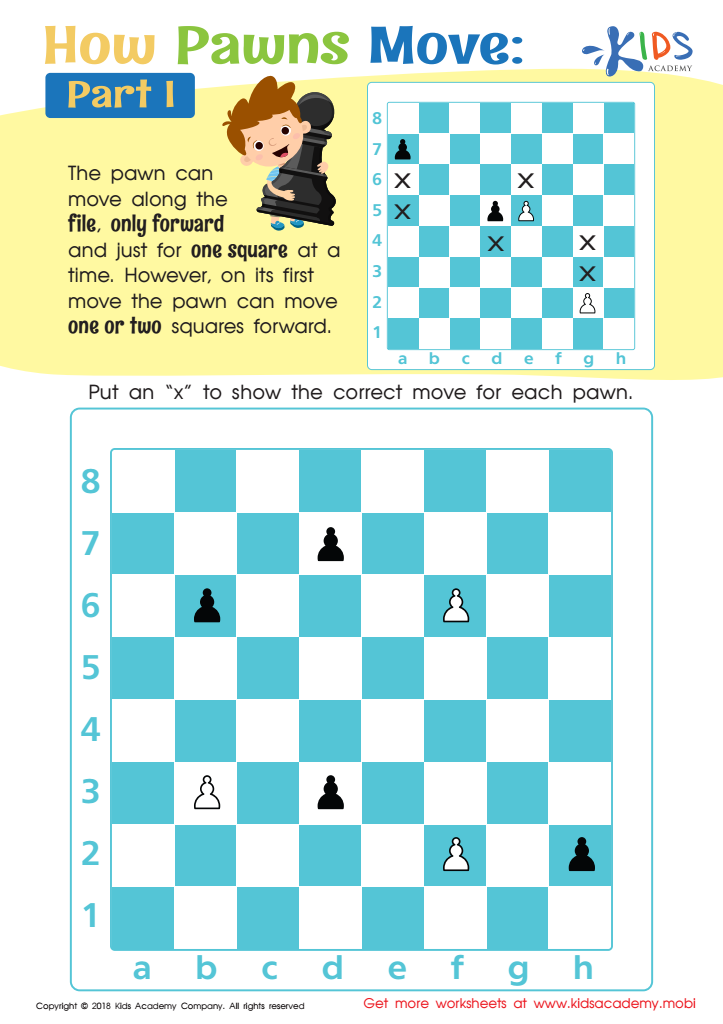
Pawns can only move forward along the file one square at a time. For its first move, a pawn can move one or two squares. Show your child how to move pawns by asking them to put an X for the correct move on this worksheet. This exercise will help them gain confidence in using pawns.
 Assign to My Students
How Pawns Move: Part I Worksheet
Worksheet
Notation of Check Worksheet
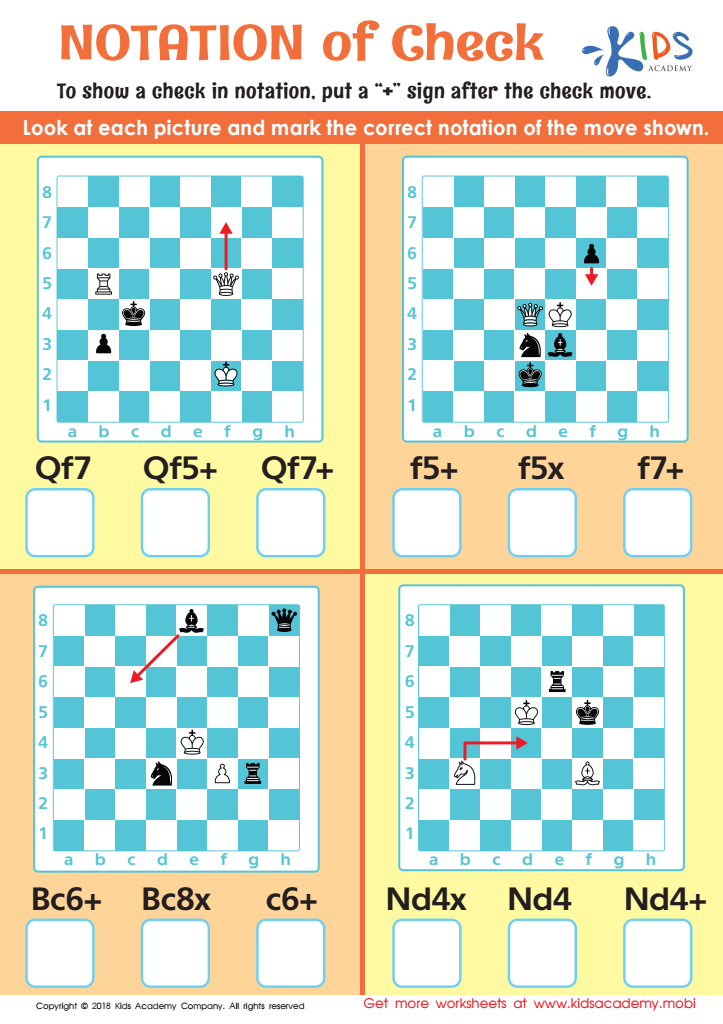
Chess is an addictive game! Once you know the basics of check and checkmate, you'll be hooked! Teach your little one to make check notation with this free PDF worksheet. They can use downloadable practice to look at each picture and mark the correct notation, strengthening their problem-solving skills while they learn to play - and win - this fun game!
Notation of Check Worksheet
Worksheet
What is Check? Worksheet
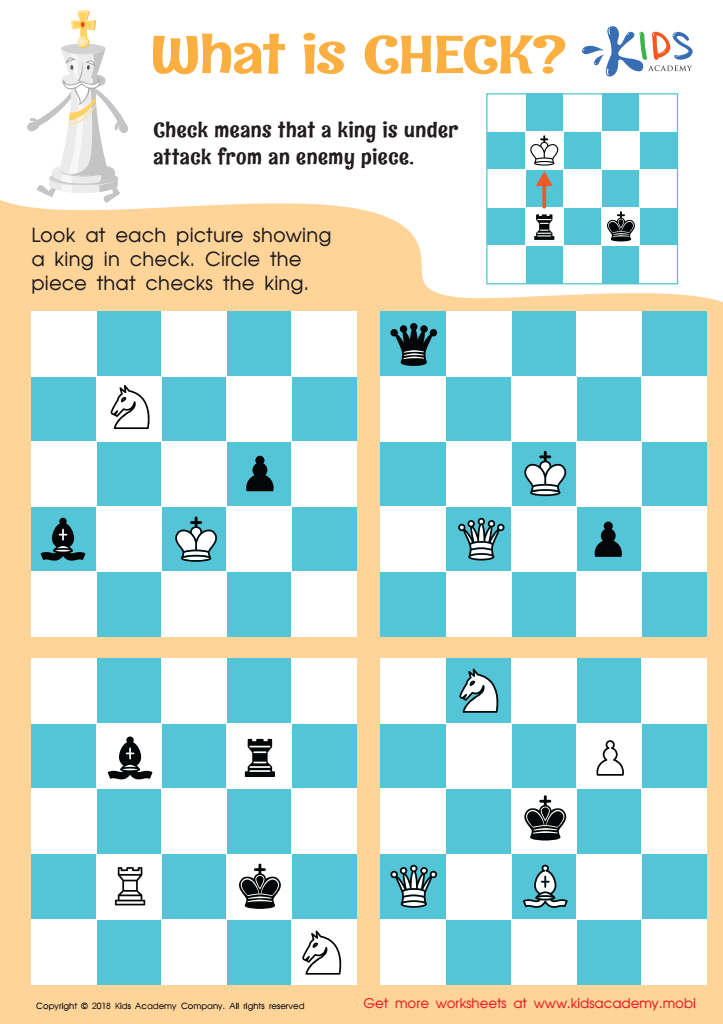
Check is an important move in chess where the opposing king is under attack. With this free PDF worksheet, kids can learn to make and identify check, and exercise their critical thinking and problem-solving skills. They'll look at each picture and identify which piece can check the king. Playing with check helps kids learn to play to win.
What is Check? Worksheet
Worksheet
Join Kids Academy for Free
Who is primarily going to use this learning content?






K.G.A.1 Geometry focuses on helping kindergarten students identify and describe two-dimensional shapes such as circles, squares, rectangles, and triangles. This foundational skill is essential for several reasons. Firstly, understanding shapes aids in cognitive development; children learn to categorize and make connections between the world around them, promoting critical thinking skills. Recognizing different shapes contributes to their early math literacy, setting the stage for more complex geometric concepts in later grades.
Moreover, incorporating geometry into daily activities fosters a comprehensive learning experience. Teachers and parents can create engaging, hands-on experiences that enhance a child's interest in learning. Activities like shape hunts, arts and crafts, or using building blocks not only solidify a child’s understanding but also encourage fine motor skills and spatial awareness.
Furthermore, an early grasp of geometric concepts supports later academic success. Children who have a solid understanding of shapes can better tackle subjects like measurement, algebra, and even science as they progress through their education. Thus, by supporting K.G.A.1 Geometry, parents and teachers are investing in a child's overall development, enhancing their confidence and capabilities in both math and everyday problem-solving. Engaging in these early learning experiences is vital for nurturing well-rounded, capable learners.