Easy Addition and Subtraction Word Problems Worksheets for Ages 3-8 - Page 2
37 filtered results
-
From - To
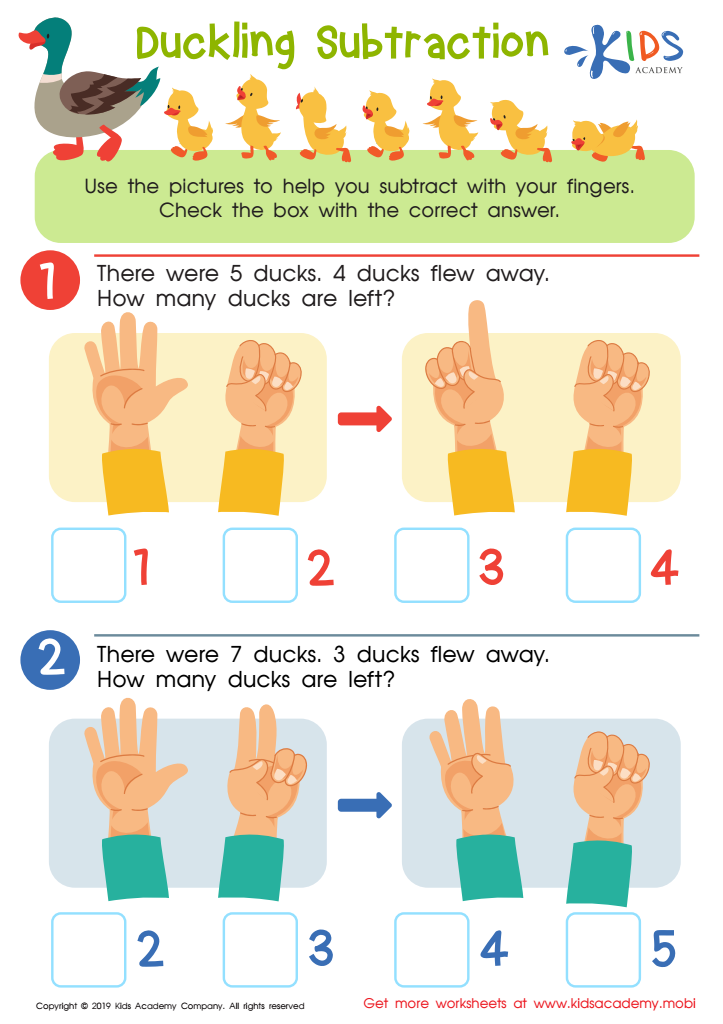
Duckling Subtraction Worksheet
 Assign to My Students
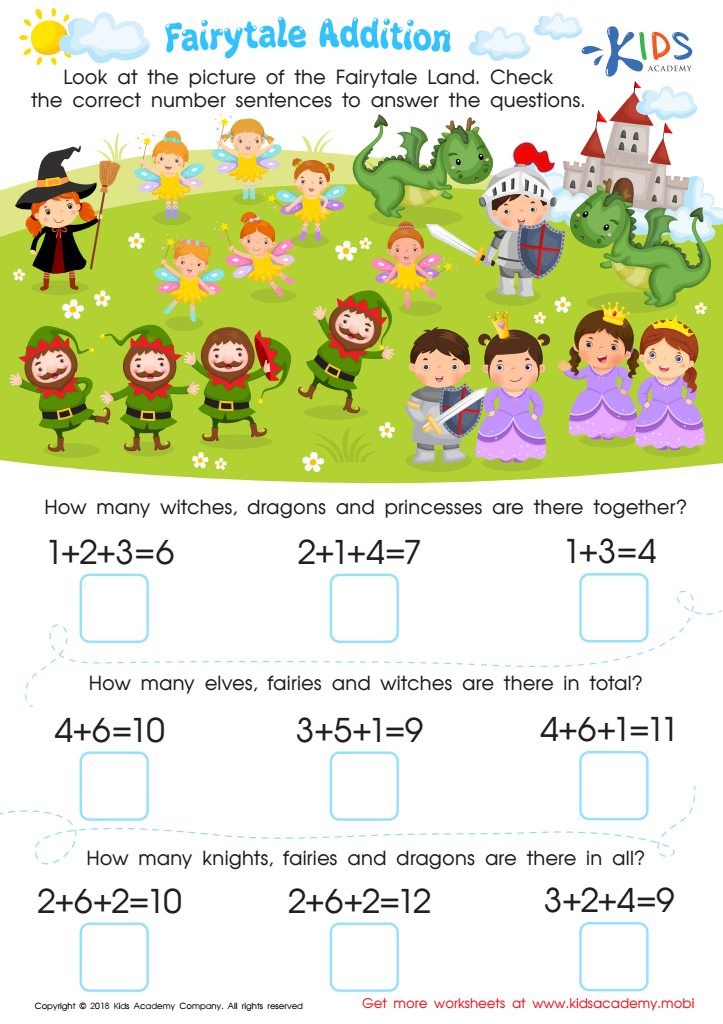
Fairytale Addition Worksheet
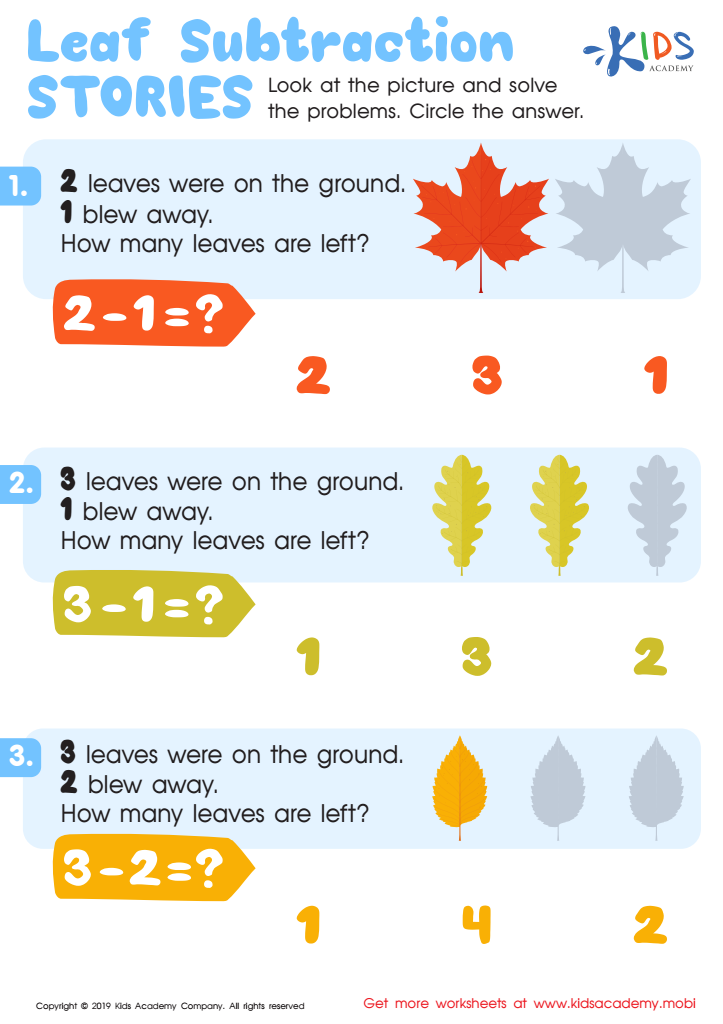
Leaf Subtraction Stories Worksheet
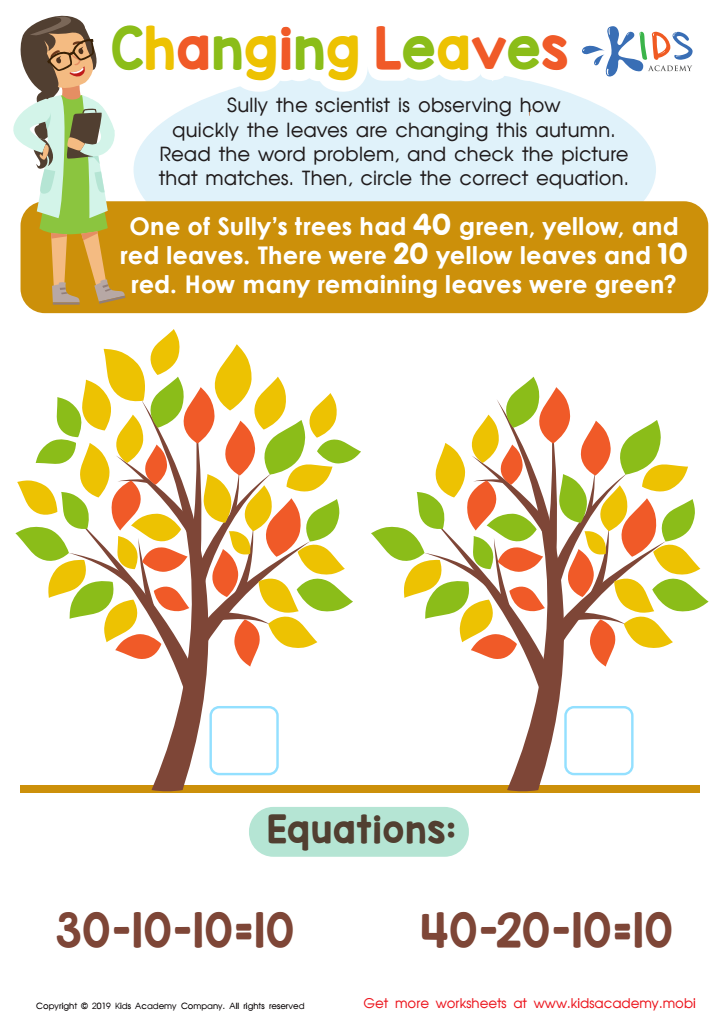
Changing Leaves Worksheet
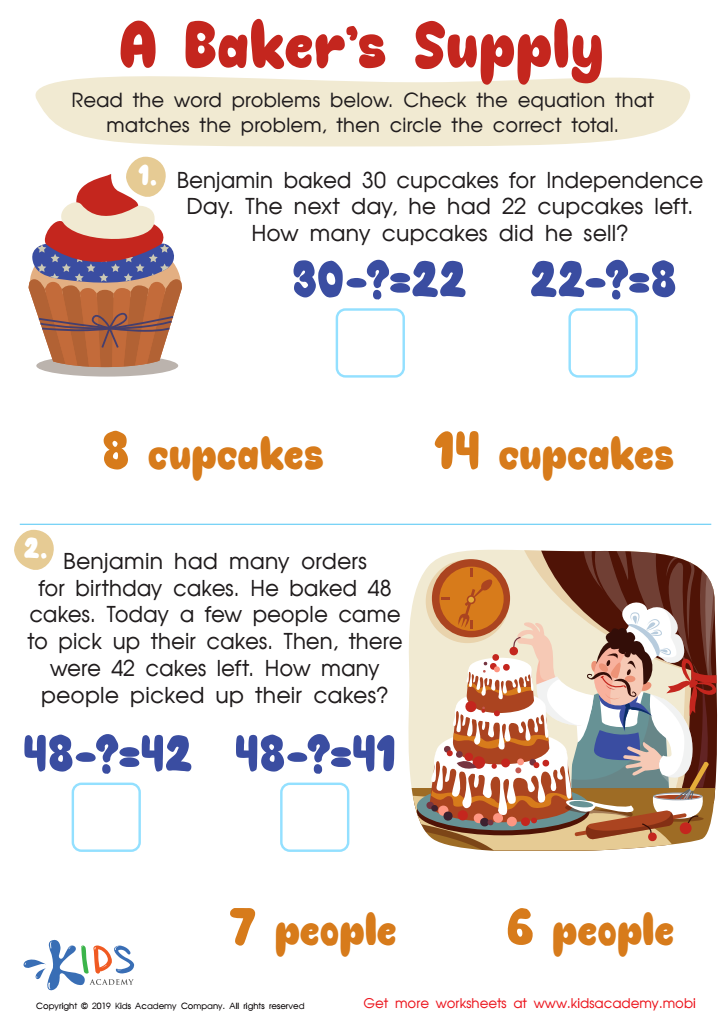
A Baker's Supply Worksheet
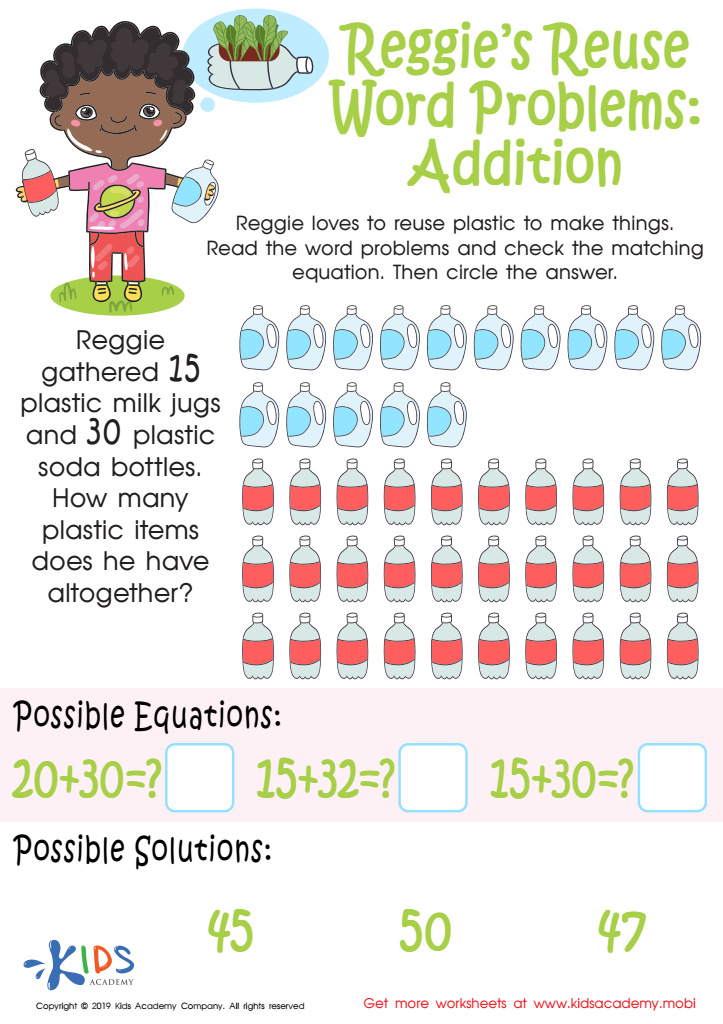
Reggie's Reuse Word Problems: Addition Worksheet
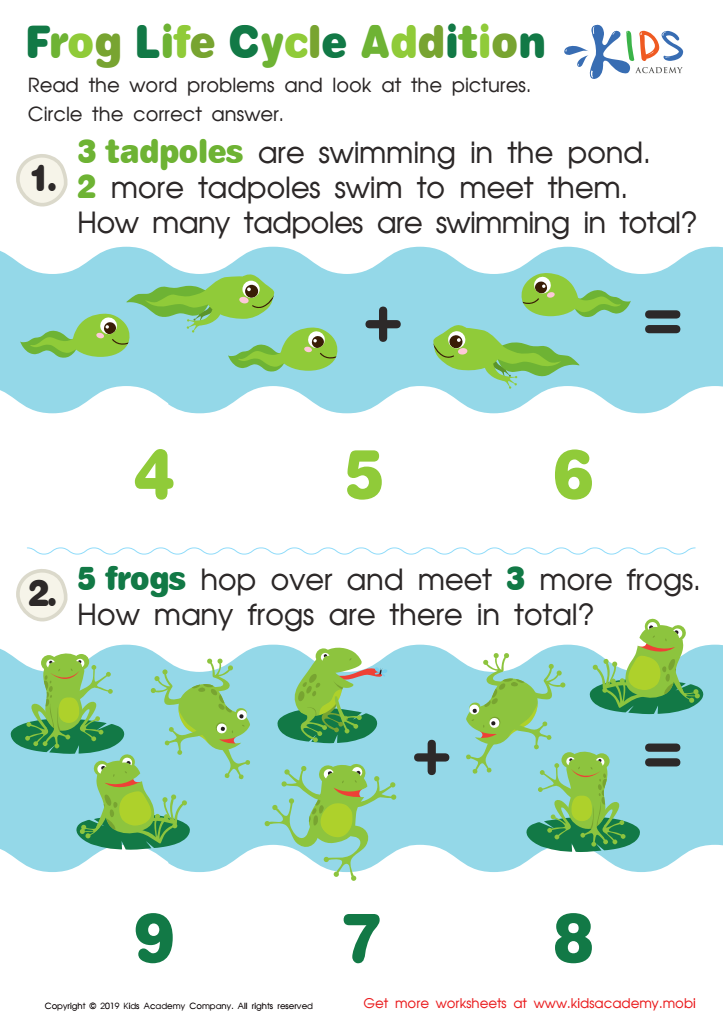
Frog Life Cycle Addition Worksheet
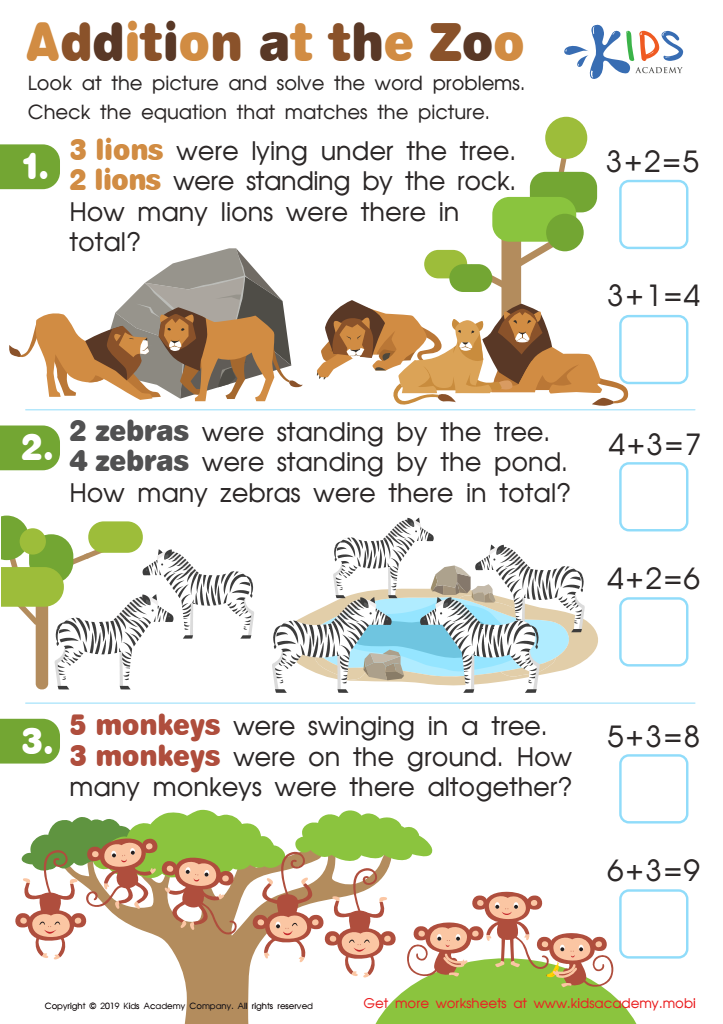
Addition at the Zoo Worksheet
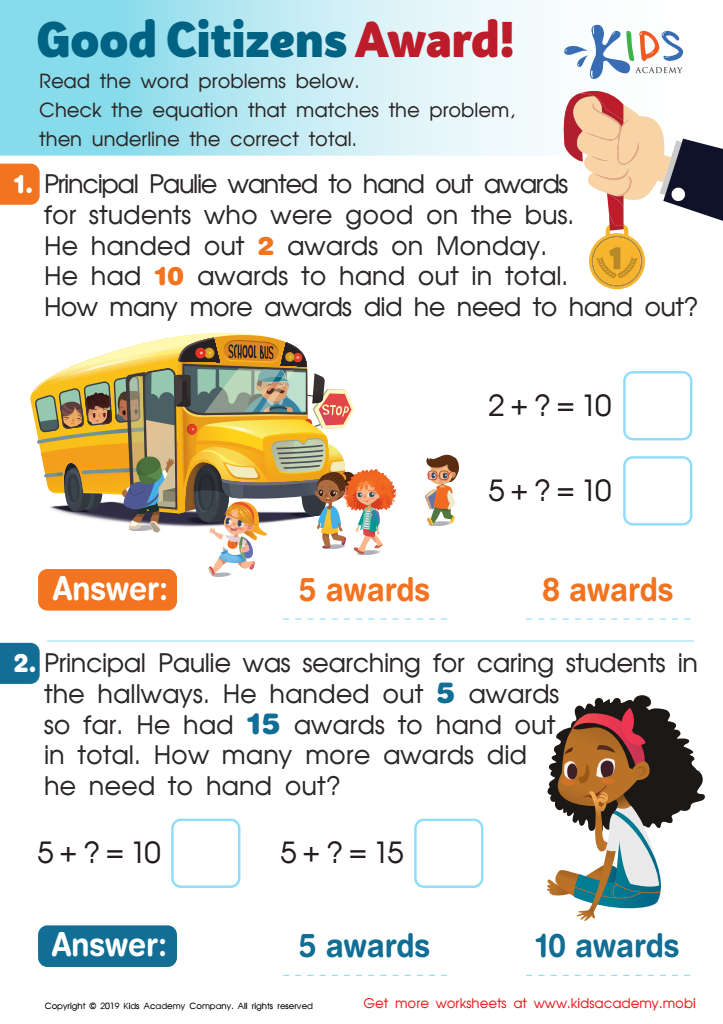
Good Citizens Award! Worksheet
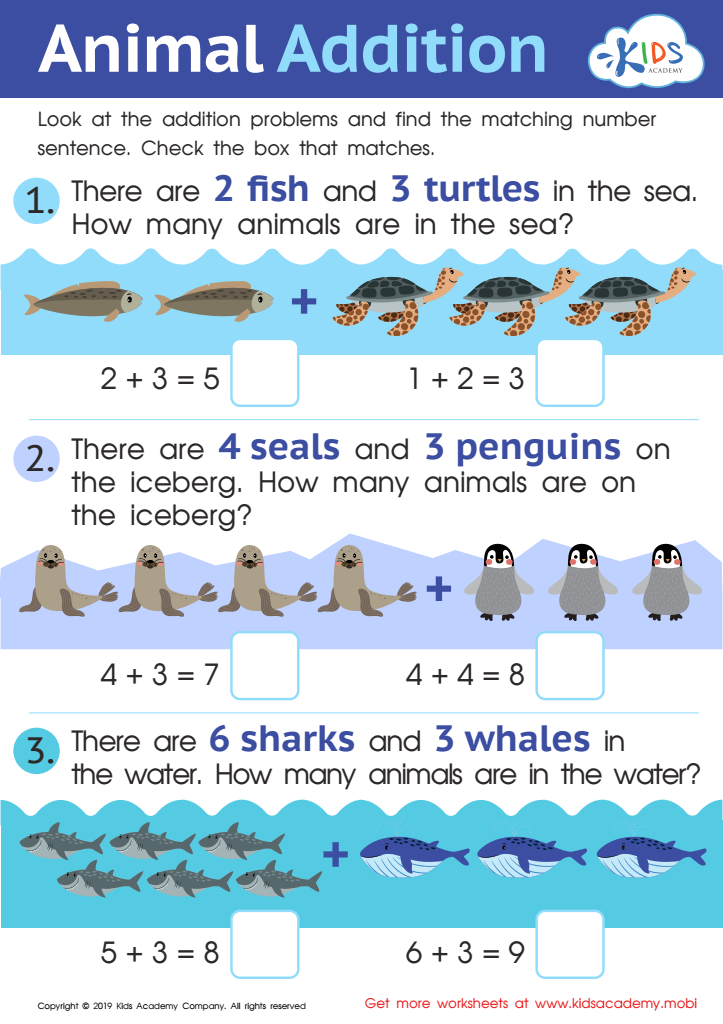
Animal Addition Worksheet
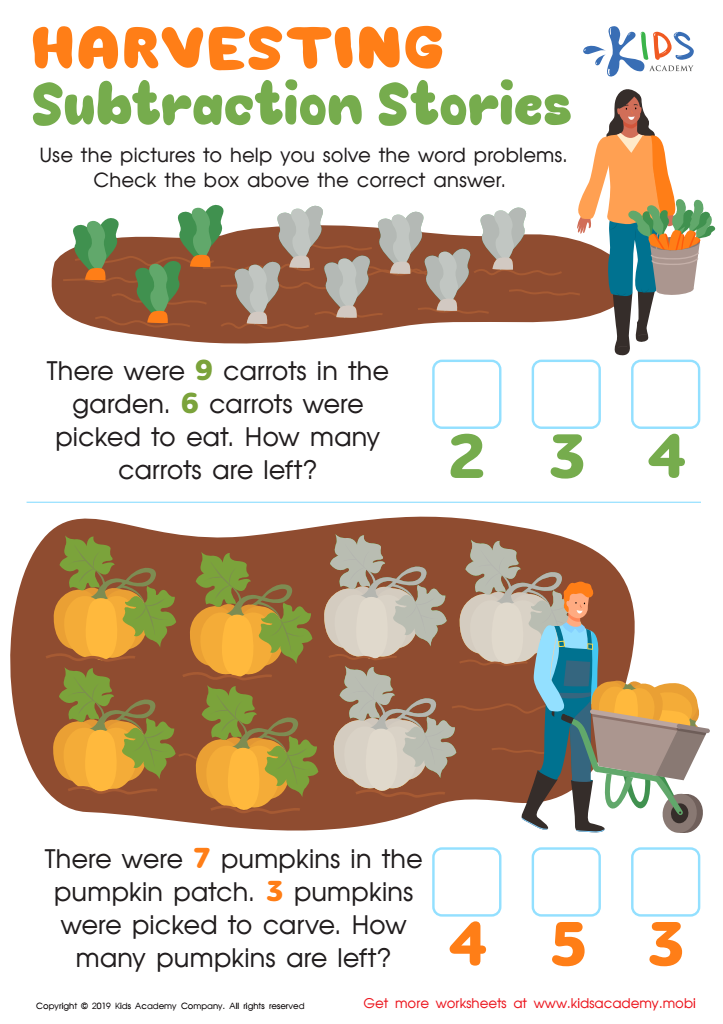
Harvesting Subtraction Stories Worksheet
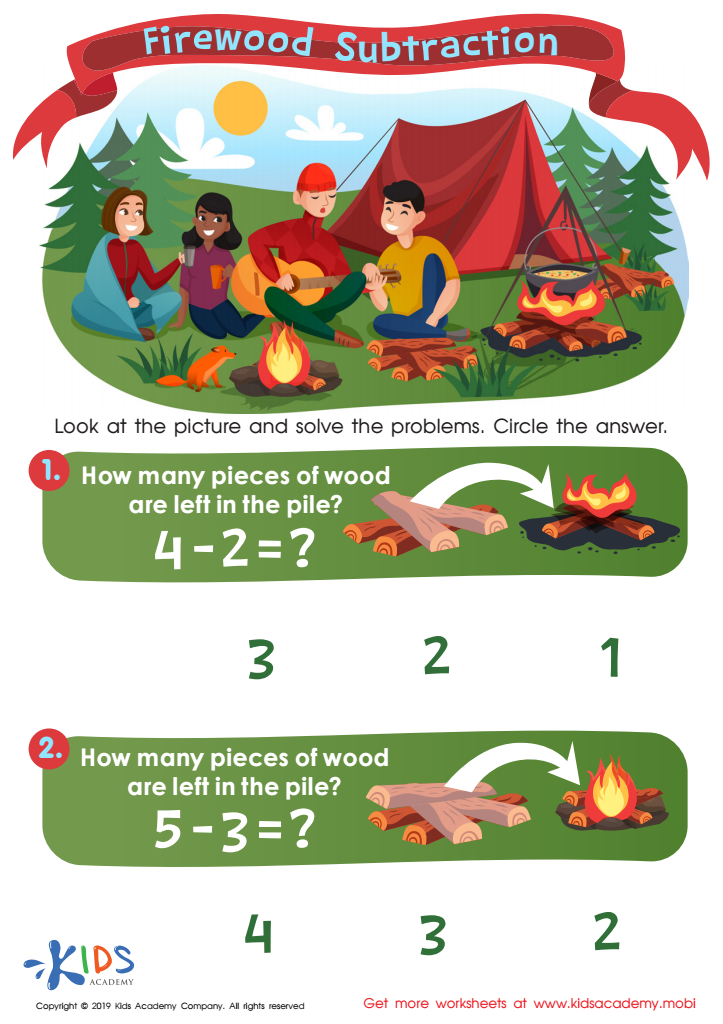
Firewood Subtraction Worksheet
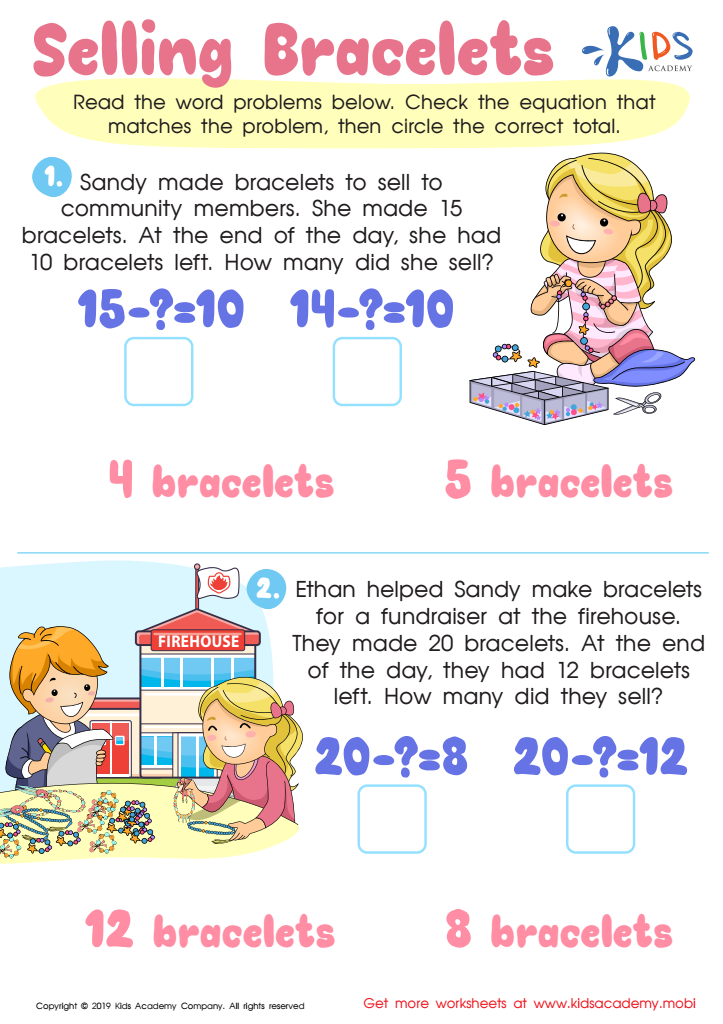
Selling the Bracelets Worksheet








Parents and teachers should prioritize Easy Addition and Subtraction Word Problems for children aged 3-8 because these foundational skills are crucial for early mathematical development. At this age, children are not only learning basic arithmetic but also enhancing their cognitive abilities, language skills, and problem-solving strategies. Word problems encourage them to apply math in real-life situations, making abstract concepts more tangible and relevant.
Engaging with word problems fosters critical thinking by challenging children to interpret and analyze information. This promotes comprehension, as they must extract meaningful data from narratives. Additionally, word problems help develop essential vocabulary associated with math—terms like "total," "more," and "left."
Furthermore, working on these problems in a supportive environment builds children’s confidence, reinforcing a positive attitude towards math that can last a lifetime. It provides opportunities for parents and teachers to interact with children, nurturing relationships while reinforcing learning. This collaboration fosters a growth mindset where mistakes are seen as learning moments.
In conclusion, Easy Addition and Subtraction Word Problems not only bolster numerical skills but also cultivate analytical thinking, language development, and emotional resilience, making them a valuable educational tool in early childhood learning.